


























Views
Downloads
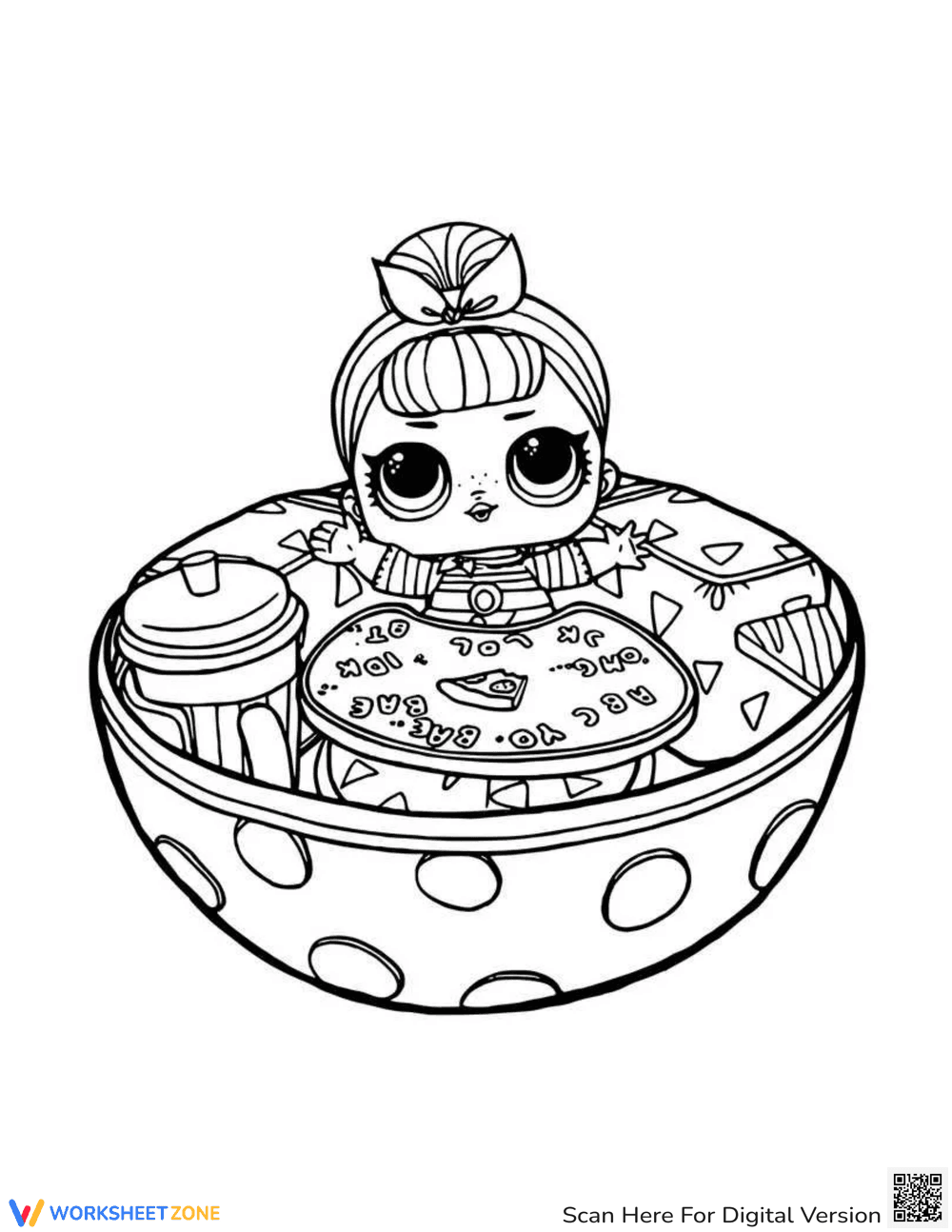

Essential LOL Surprise Coloring Page | Grade K-3
Paste this activity's link or code into your existing LMS (Google Classroom, Canvas, Teams, Schoology, Moodle, etc.).
Students can open and work on the activity right away, with no student login required.
You'll still be able to track student progress and results from your teacher account.
This LOL Surprise coloring page provides a high-interest creative outlet for students in Kindergarten through Grade 3. By engaging with familiar characters and embedded text, students develop essential fine motor control and letter recognition. It serves as a perfect bridge between artistic expression and early literacy engagement in a low-stakes environment.
At a Glance
- Grade: K-3 · Subject: English & Arts
- Standard:
CCSS.ELA-LITERACY.RF.K.1.D— Recognize and name all upper- and lowercase letters of the alphabet- Skill Focus: Fine motor skills & letter recognition
- Format: 1 page · 1 task · No answer key · PDF
- Best For: Early finishers and morning work
- Time: 15–20 minutes
Inside this resource, you will find a single-page, high-resolution coloring sheet featuring a popular doll character. The illustration includes various text elements like "ABC," "BAE," and "LOL" on a tray, providing opportunities for incidental letter identification. The bold lines are designed to support students as they practice staying within boundaries while using crayons or markers.
The zero-prep workflow for this worksheet is designed for maximum efficiency. First, print the single PDF page (30 seconds). Second, distribute the sheets to students during transition periods or as a reward (30 seconds). Third, review the completed artwork or ask students to point out specific letters they colored (1 minute). Total prep time is under 2 minutes, making it an ideal sub plan addition.
This activity aligns with `CCSS.ELA-LITERACY.RF.K.1.D`, focusing on the recognition of letters within a visual context. While primarily an artistic task, the inclusion of uppercase letters allows teachers to reinforce alphabet knowledge during creative time. Both standard codes can be copied directly into lesson plans, IEP goals, or district curriculum mapping tools.
Use this worksheet as a hook during a letter-recognition lesson or as a calming activity after recess. For a formative assessment, ask students to color only the vowels a specific color or to circle the "ABC" sequence before they begin coloring the character. It typically takes 15 to 20 minutes for a student to complete the full page with detail.
This resource is ideal for early elementary students who benefit from tactile engagement. It is particularly effective for English Language Learners (ELLs) and students with fine motor IEP goals who need engaging ways to practice grip and pressure. Pair this with a letter-tracing anchor chart or a character-based reading passage to create a thematic learning center.
Research from the RAND AIRS 2024 report emphasizes that high-interest, character-driven materials significantly increase student engagement and persistence in early childhood settings. By integrating familiar pop-culture icons with academic elements like the CCSS.ELA-LITERACY.RF.K.1.D standard, educators can lower the affective filter, making learning more accessible for diverse populations. Fine motor activities, such as coloring within defined borders, are foundational to handwriting development and spatial awareness. This 1-page printable provides a structured yet creative way to reinforce these skills without the pressure of formal testing. According to Fisher & Frey (2014), providing students with choice and relevant content fosters a positive classroom culture and encourages independent task completion. This worksheet serves as a versatile tool for teachers needing immediate, high-quality supplemental materials that require zero preparation while still maintaining a connection to core literacy standards and developmental milestones.


