


























Views
Downloads
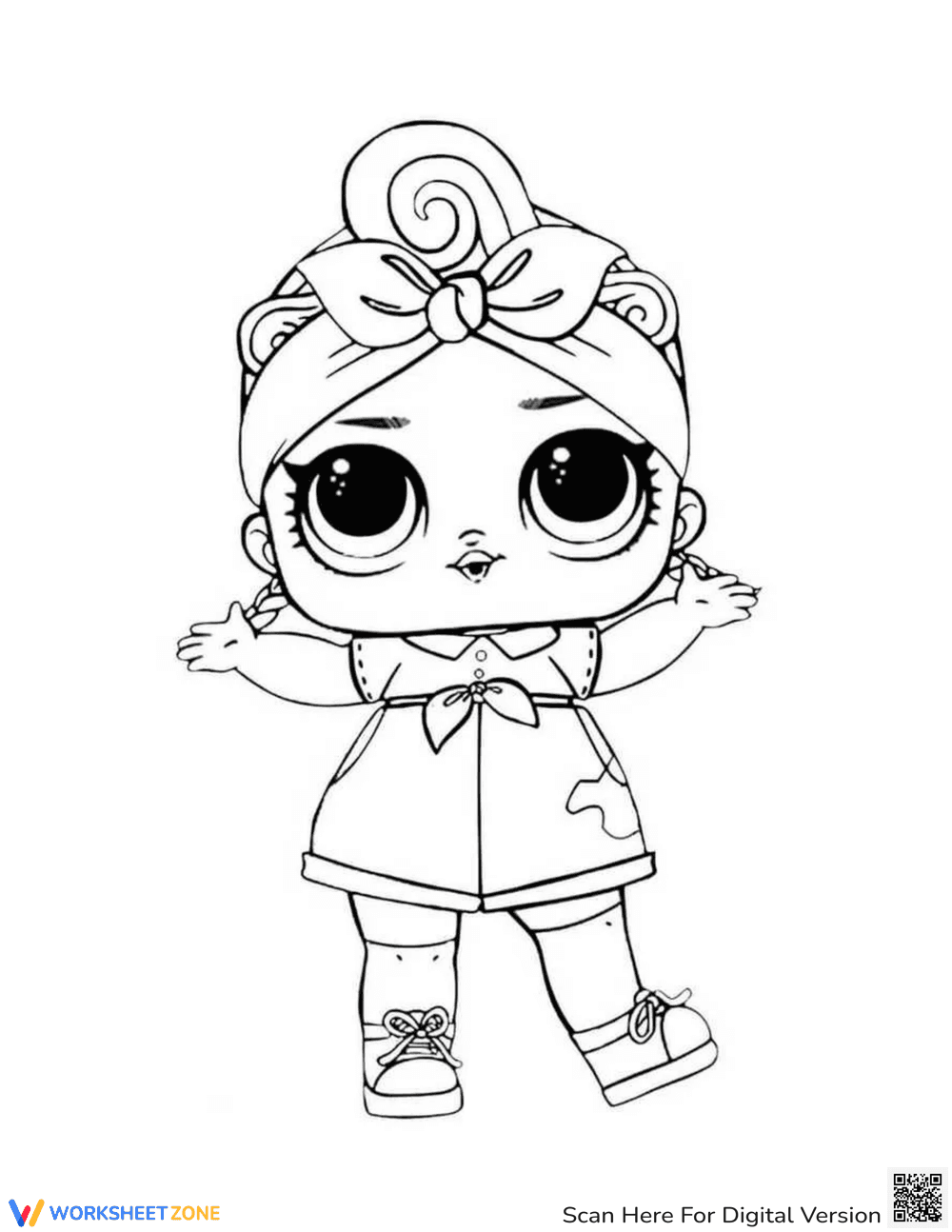

Printable LOL Doll Coloring Page | Grade K-3
Paste this activity's link or code into your existing LMS (Google Classroom, Canvas, Teams, Schoology, Moodle, etc.).
Students can open and work on the activity right away, with no student login required.
You'll still be able to track student progress and results from your teacher account.
This printable LOL Surprise doll coloring page provides young students with an engaging creative outlet while developing essential fine motor skills. By coloring this popular character, children practice grip control and spatial awareness, setting a strong foundation for early writing and visual expression in the classroom.
At a Glance
- Grade: K · Subject: English
- Standard:
CCSS.ELA-LITERACY.SL.K.5— Add drawings to descriptions to provide detail- Skill Focus: Fine motor control
- Format: 1 page · 1 problem · No answer key · PDF
- Best For: Morning work or early finishers
- Time: 10–15 minutes
Inside this single-page resource, educators will find a bold-line illustration of an LOL Surprise doll. The clear outlines help early learners practice staying within boundaries. No complex instructions are required, making it a straightforward independent activity. The page is formatted as a standard PDF for easy printing.
Zero-Prep Workflow
- Print (1 minute): Simply download the PDF and print the required number of copies. The black-and-white line art uses minimal ink.
- Distribute (1 minute): Hand out the sheets along with crayons, colored pencils, or markers. No extensive teacher modeling is necessary.
- Review (0 minutes): As a creative exercise, this requires no formal grading or answer key checking.
This resource requires under two minutes of teacher prep time, making it excellent for emergency sub plans.
Standards Alignment
This activity supports CCSS.ELA-LITERACY.SL.K.5: Add drawings or other visual displays to descriptions as desired to provide additional detail. While primarily a coloring task, it builds the foundational fine motor control necessary for students to eventually create their own detailed drawings and written narratives. Both standard codes can be copied directly into lesson plans, IEP goals, or district curriculum mapping tools.
How to Use It
This coloring page serves as an ideal morning work activity. As children arrive, they can immediately begin coloring, allowing the teacher time to handle morning routines. Alternatively, it functions perfectly as an early finisher reward during literacy centers. For a formative assessment observation tip, teachers can monitor students' pencil grip as they color within the lines. Expected completion time ranges from ten to fifteen minutes.
Who It's For
This worksheet is primarily designed for Kindergarten and first-grade students developing their fine motor skills and hand strength. It is highly accessible for diverse learners, requiring no reading comprehension to complete successfully. For differentiation, teachers can encourage advanced students to draw a background setting or write a descriptive sentence about the doll at the bottom of the page. It pairs naturally with early childhood read-alouds about fashion, toys, or self-expression.
Developing fine motor skills through activities like coloring is a critical precursor to early writing success. This resource aligns with CCSS.ELA-LITERACY.SL.K.5, helping students add drawings to descriptions to provide detail by first mastering basic tool control. According to a recent ScienceDirect TpT Analysis, integrating high-interest themes such as popular toys into foundational skill practice significantly increases student engagement and time on task. When children are motivated by the subject matter, they demonstrate greater persistence in refining their grip and spatial awareness. By utilizing this targeted coloring page, educators provide a developmentally appropriate challenge that bridges the gap between play and academic readiness. The structured boundaries of the illustration encourage precision, supporting the physical hand strength required for future handwriting tasks. This simple yet effective tool ensures young learners build confidence while practicing essential physical mechanics.


