




























Views
Downloads

Grade 5 Living or Non-Living — Essential No-Prep Worksheet

Paste this activity's link or code into your existing LMS (Google Classroom, Canvas, Teams, Schoology, Moodle, etc.).
Students can open and work on the activity right away, with no student login required.
You'll still be able to track student progress and results from your teacher account.
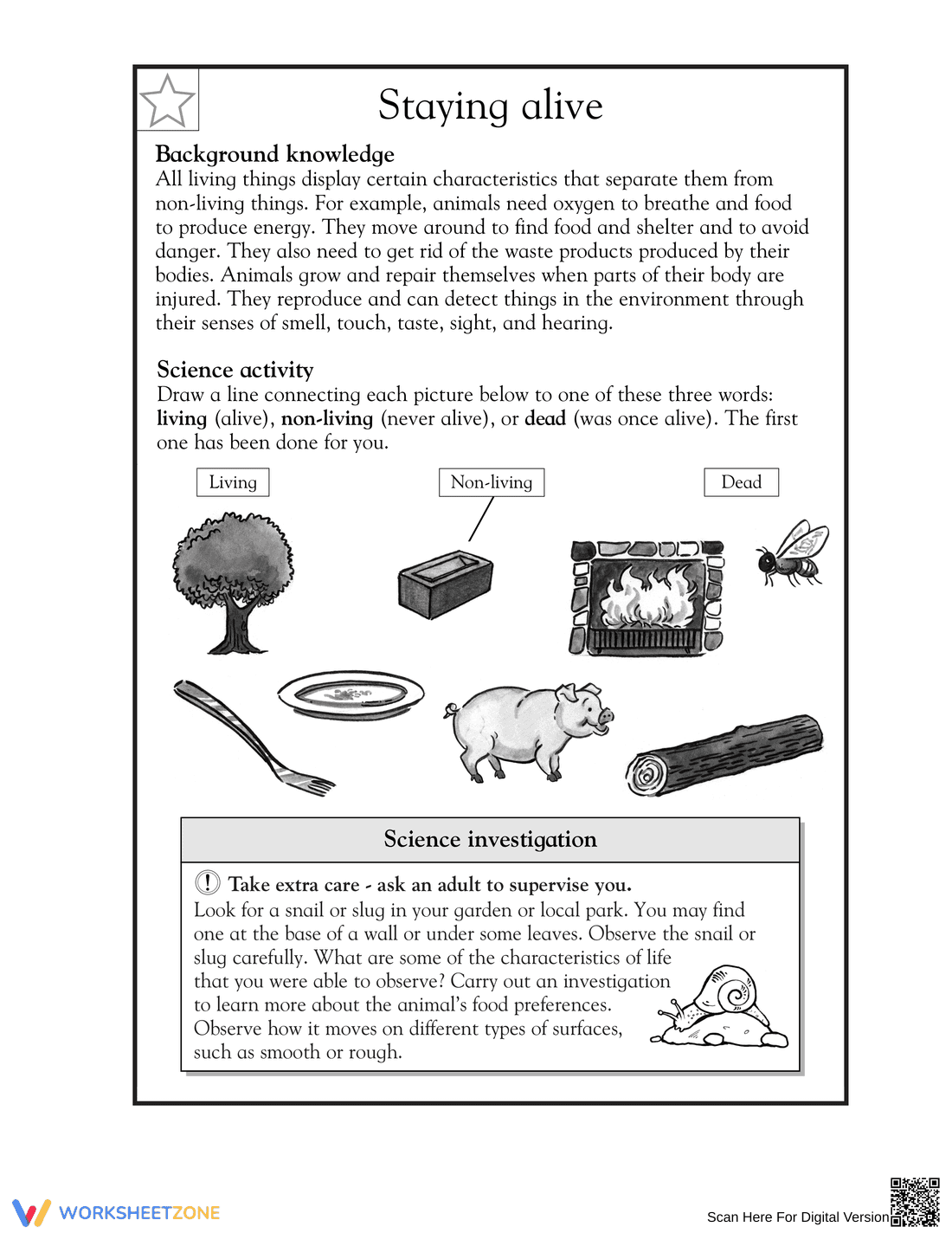
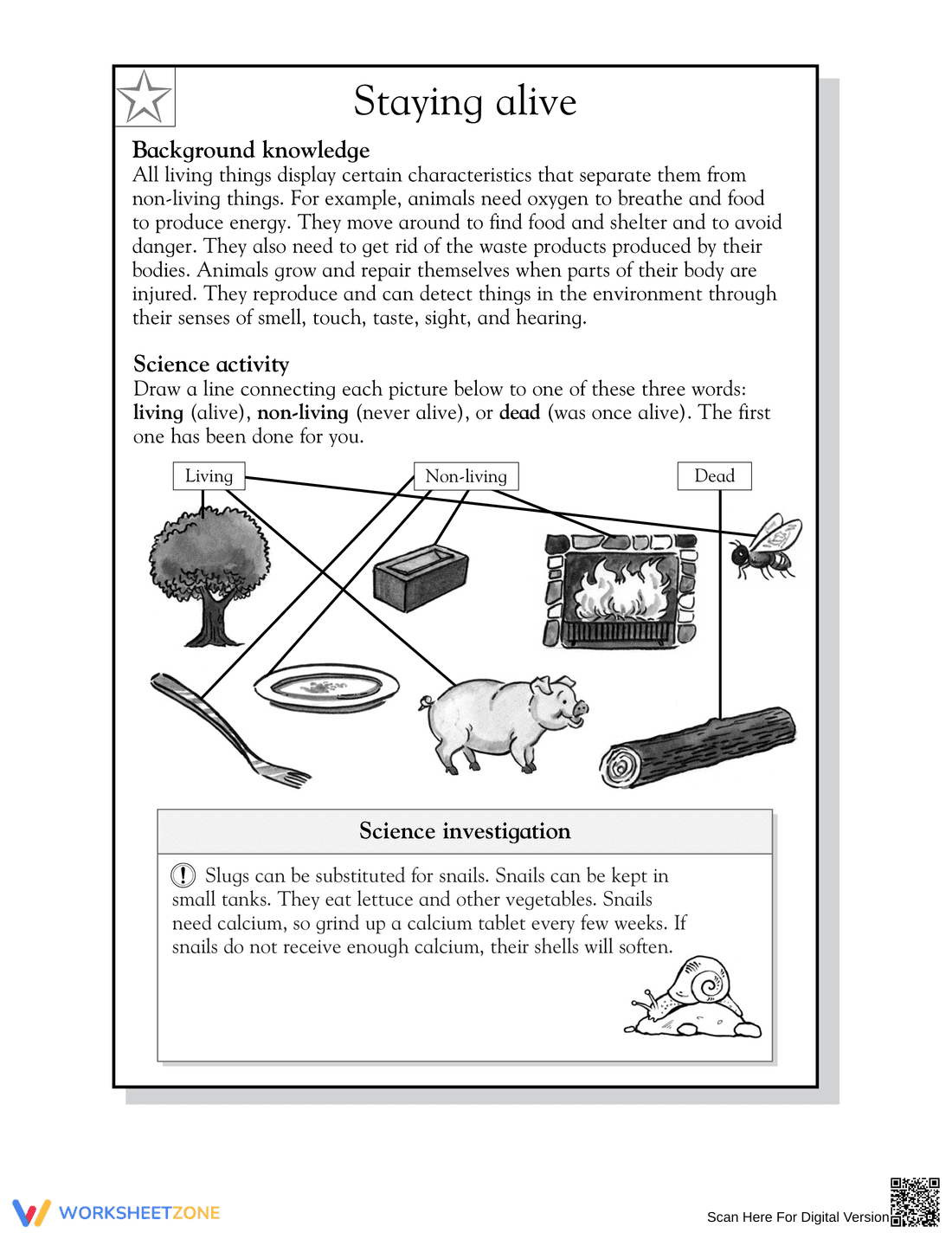
This Grade 5 science worksheet enables students to master the foundational skill of classifying objects as living, non-living, or dead by evaluating biological characteristics. By synthesizing background knowledge with observable evidence, learners develop a scientific lens for the natural world. This resource ensures accurate identification of life processes.
At a Glance
- Grade: 5 · Subject: Living Things
- Standard:
5-LS1-1— Identify that plants and animals have internal and external structures that support survival- Skill Focus: Classification of life processes
- Format: 1 page · 8 problems · Answer key included · PDF
- Best For: Introduction to life science and ecosystems
- Time: 20–30 minutes
What's Inside
This comprehensive one-page science resource features a "Background Knowledge" section detailing essential life characteristics such as respiration, nutrition, and reproduction. The core activity includes eight illustrated items—ranging from biological organisms like bees and pigs to inanimate objects like bricks and plates—which students must categorize. Additionally, a "Science Investigation" section provides an outdoor extension for observing real-world specimens in their habitats.
Zero-Prep Workflow
The zero-prep design allows teachers to implement this lesson immediately. Step one: Print the single-page PDF (30 seconds). Step two: Distribute to students for independent or small-group work (1 minute). Step three: Review the classification results using the integrated background text as a rubric (10 minutes). This streamlined process ensures that students remain engaged with the material without requiring extensive teacher setup or specialized materials.
Standards Alignment
This worksheet is primarily aligned with the Next Generation Science Standard `5-LS1-1`, which focuses on understanding the structures and processes that support life. By identifying the core requirements for staying alive, students build the prerequisite knowledge necessary for more complex ecosystem modeling and energy transfer studies. This standard code can be copied directly into lesson plans, IEP goals, or district curriculum mapping tools to ensure instructional compliance.
How to Use It
Use this worksheet as a diagnostic tool before beginning a unit on biology to gauge student understanding of life characteristics. Alternatively, assign the snail investigation as an exit ticket. For classroom instruction, pair the classification activity with a direct instruction session on life processes, allowing students to use the background text as a scaffolded reference during their work.
Who It's For
This resource is designed for Grade 5 students but is highly effective for mixed-ability classrooms requiring clear, visual supports. It serves as an excellent reinforcement tool for English Language Learners (ELL) due to the illustrated vocabulary and concise text. Homeschool educators will find the investigation section particularly valuable for bridging the gap between theoretical knowledge and hands-on nature study during outdoor learning sessions.
Standard `5-LS1-1` necessitates that students understand how living things interact with their environment to sustain life, a concept reinforced through the classification of living, non-living, and dead specimens in this resource. According to the ScienceDirect TpT Analysis, utilizing scaffolded classification tasks significantly improves retention of biological taxonomy among upper elementary learners. By providing students with eight specific items to analyze against a set of biological criteria, this worksheet facilitates the transition from rote memorization to evidence-based scientific reasoning. This evidence-based approach aligns with current instructional shifts that prioritize the application of background knowledge to novel scenarios, ensuring that Grade 5 students develop the critical thinking skills required for middle school life science. This resource serves as a valid instrument for documenting student progress toward standard mastery in diverse educational settings, from formal classrooms to independent study environments.


