


























Views
Downloads
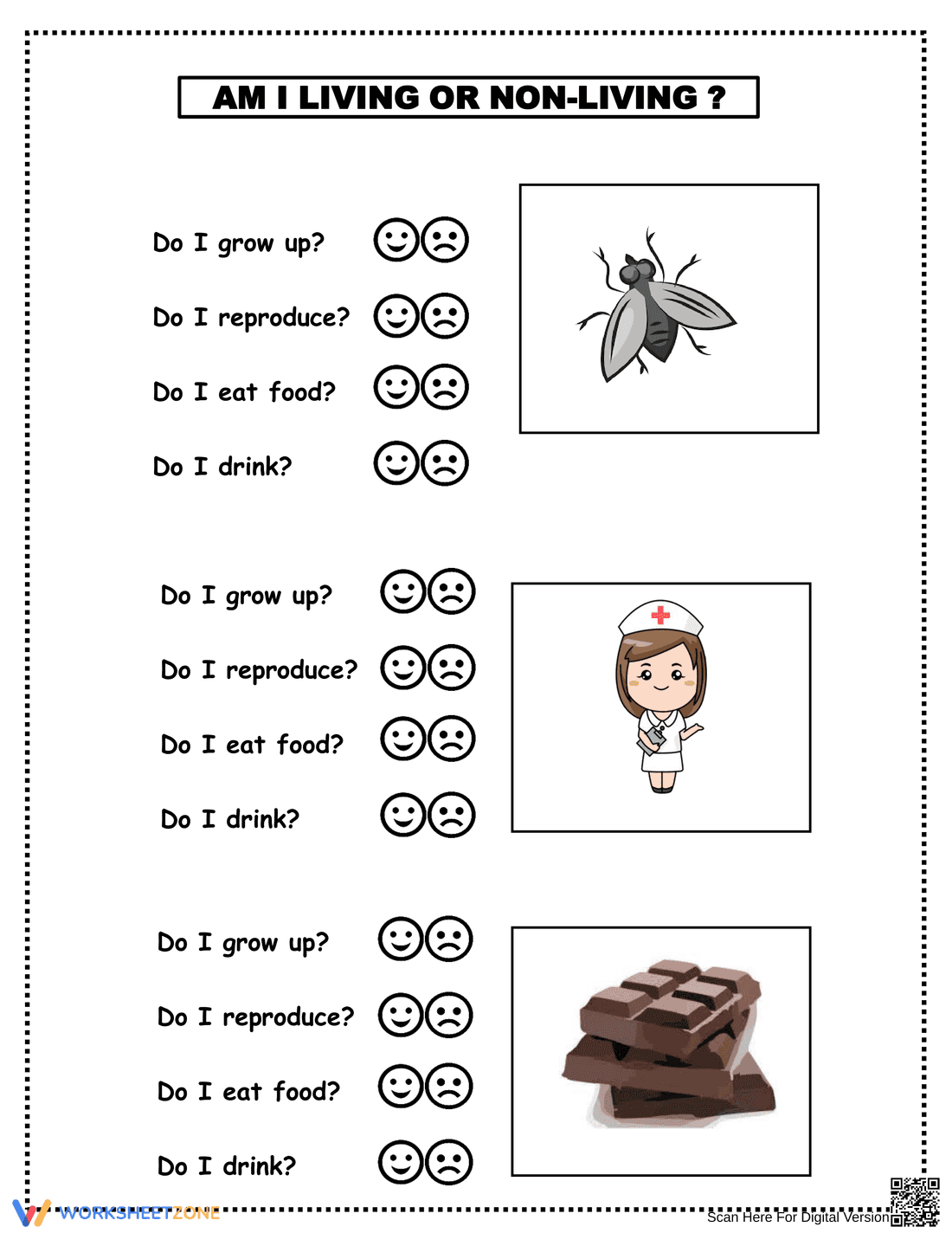

Printable Living vs Non-living Things Science Worksheet
Paste this activity's link or code into your existing LMS (Google Classroom, Canvas, Teams, Schoology, Moodle, etc.).
Students can open and work on the activity right away, with no student login required.
You'll still be able to track student progress and results from your teacher account.
This interactive Science worksheet provides a clear, visual framework for Kindergarten and Grade 1 students to distinguish between living and non-living entities. By examining specific characteristics like growth, reproduction, and nutritional needs, learners build foundational observation skills. This resource transforms abstract biological concepts into a concrete classification task that students can complete independently.
At a Glance
- Grade: 1 · Subject: Science
- Standard:
K-LS1-1— Use observations to describe patterns of what plants and animals need to survive- Skill Focus: Classifying living vs. non-living things
- Format: 1 page · 3 tasks · Answer key included · PDF
- Best For: Introduction to life science and biology
- Time: 10–15 minutes
What's Inside
The worksheet features three visual examples: a fly, a nurse, and chocolate. Each has a four-point checklist asking if the item grows, reproduces, eats, and drinks. Students record findings using happy and sad face icons, providing a high-engagement method for evaluating biological criteria. The clear PDF format ensures student focus.
Zero-Prep Workflow
First, print the single-page PDF, taking seconds. Second, distribute and briefly explain the icons, which takes one minute. Finally, review via the included answer key, requiring under two minutes of assessment. It is an ideal sub-plan or morning work option requiring zero teacher preparation before the lesson starts.
Standards Alignment
This resource aligns with `K-LS1-1`, requiring students to use observations to describe patterns of what plants and animals need to survive. By evaluating growth and nutrition, students gather evidence for their classifications. This standard code can be copied directly into lesson plans, IEP goals, or district curriculum mapping tools.
How to Use It
Use this as a "hook" during a life science unit to spark discussion. Alternatively, assign it as a formative assessment after a nature walk to verify application of biological criteria. Teachers should observe whether students correctly identify that nutrition is a universal requirement for animals and humans but not inanimate objects.
Who It's For
Designed for Kindergarten through Grade 2 students exploring the natural world. The icons make it effective for English Language Learners and students with IEPs who benefit from reduced linguistic load. It pairs naturally with a non-fiction passage about animal needs or a classroom anchor chart listing life requirements.
Effective science instruction in early childhood relies on structured observation and the identification of patterns, a process supported by the RAND AIRS 2024 report on foundational STEM literacy. This Grade 1 worksheet facilitates these cognitive shifts by requiring students to apply specific criteria—growth, reproduction, and nutrition—to diverse examples. According to the NGSS framework and supporting analysis from RAND, early exposure to classification tasks like distinguishing between living and non-living things builds the critical thinking skills necessary for later mastery of complex ecological systems. By using the K-LS1-1 standard code, educators can ensure that their curriculum remains aligned with evidence-based practices that promote scientific inquiry. This resource provides the necessary scaffolding for students to move from simple naming to evidence-based description, ensuring that every learner can access core biological concepts regardless of their initial reading level or previous scientific exposure.


