


























Views
Downloads
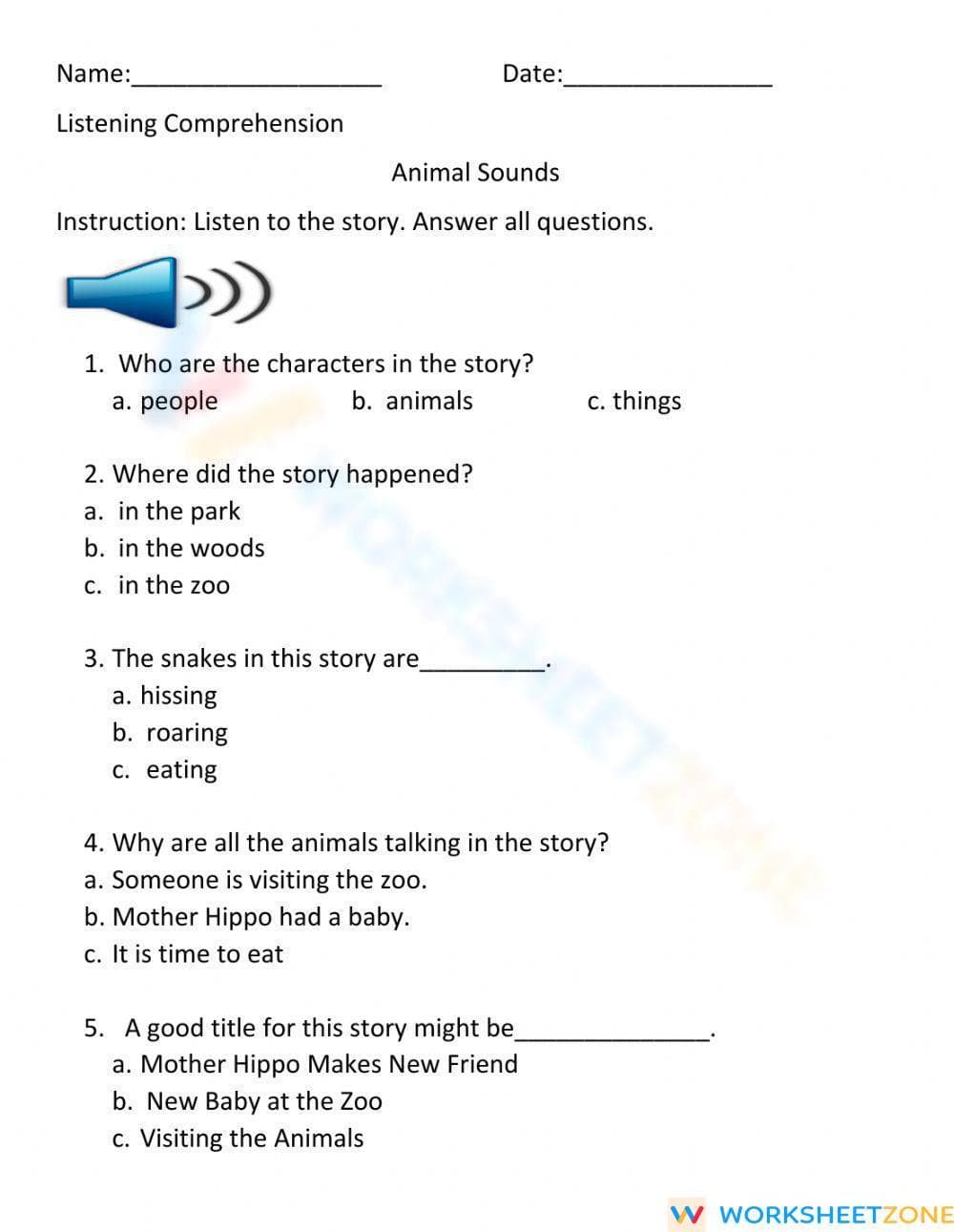

Grade 2 Listening Skills — Printable No-Prep Worksheet
Paste this activity's link or code into your existing LMS (Google Classroom, Canvas, Teams, Schoology, Moodle, etc.).
Students can open and work on the activity right away, with no student login required.
You'll still be able to track student progress and results from your teacher account.
This worksheet provides targeted practice in listening comprehension for second-grade students. Learners listen to a short story and then answer five questions to demonstrate their understanding of key ideas and details. It’s a straightforward tool designed to build foundational auditory processing and recall skills in a focused, measurable way.
At a Glance
- Grade: 2 · Subject: English Language Arts (ELA)
- Standard:
CCSS.ELA-LITERACY.SL.2.2— Recount key ideas or details from a text read aloud- Skill Focus: Listening Comprehension
- Format: 1 page · 5 problems · Answer key included · PDF
- Best For: Formative assessment or independent practice
- Time: 10–15 minutes
What's Inside
This single-page PDF contains a focused listening comprehension exercise. The page includes a short passage for the teacher to read aloud and five direct questions about the story. A complete answer key is included on a separate page for fast and easy grading.
A Seamless Zero-Prep Workflow
Designed for busy classrooms, this worksheet can be used in under two minutes:
- Step 1: Print. The single-page format makes printing a class set quick and efficient.
- Step 2: Distribute & Read. Pass out the worksheet. Read the designated story aloud one or two times as needed (5-7 minutes).
- Step 3: Review. After students complete the five questions (5-8 minutes), use the provided answer key to review answers as a class or grade individually.
Its self-contained design makes it an excellent resource for substitute plans or quick academic transitions.
Standards Alignment
This worksheet is directly aligned with Common Core standard CCSS.ELA-LITERACY.SL.2.2, requiring students to "recount or describe key ideas or details from a text read aloud." The five questions are crafted to elicit these key details, providing clear evidence of a student's ability to meet this benchmark. The standard code can be copied directly into lesson plans or curriculum maps.
How to Use It
This resource is highly versatile. Use it as a formative assessment after a direct instruction lesson to quickly gauge student understanding. Alternatively, set it up as an independent practice station where students listen to a recording of the story and work at their own pace. Observe students to check for focus and their ability to work independently. The entire activity is designed to be completed in just 10 to 15 minutes.
Who It's For
This activity is ideal for first to third-grade students developing auditory comprehension. While designed for on-grade-level second graders, it supports struggling third graders or challenges advanced first graders. Its simple format is accessible for many learners, including English Language Learners. Pair this worksheet with a visual anchor chart of "Who, What, When, Where, Why" to provide extra support.
This listening comprehension worksheet directly addresses CCSS.ELA-LITERACY.SL.2.2, a critical standard focused on a student's ability to recount key details from information presented orally. Developing auditory processing is a key predictor of later reading success, as it builds the mental framework for constructing meaning from language. Research consistently highlights the importance of explicit instruction in listening strategies. A major analysis by RAND AIRS (2024) emphasized that foundational literacy involves both decoding text and comprehending spoken language, with skills in one area often reinforcing the other. This simple, 5-question task provides a focused opportunity to practice and assess this essential skill. By asking students to recall specific information after hearing a story, the worksheet offers a reliable method for tracking progress against a core academic benchmark and identifying students who may need additional support in auditory processing or working memory.


