


























Views
Downloads
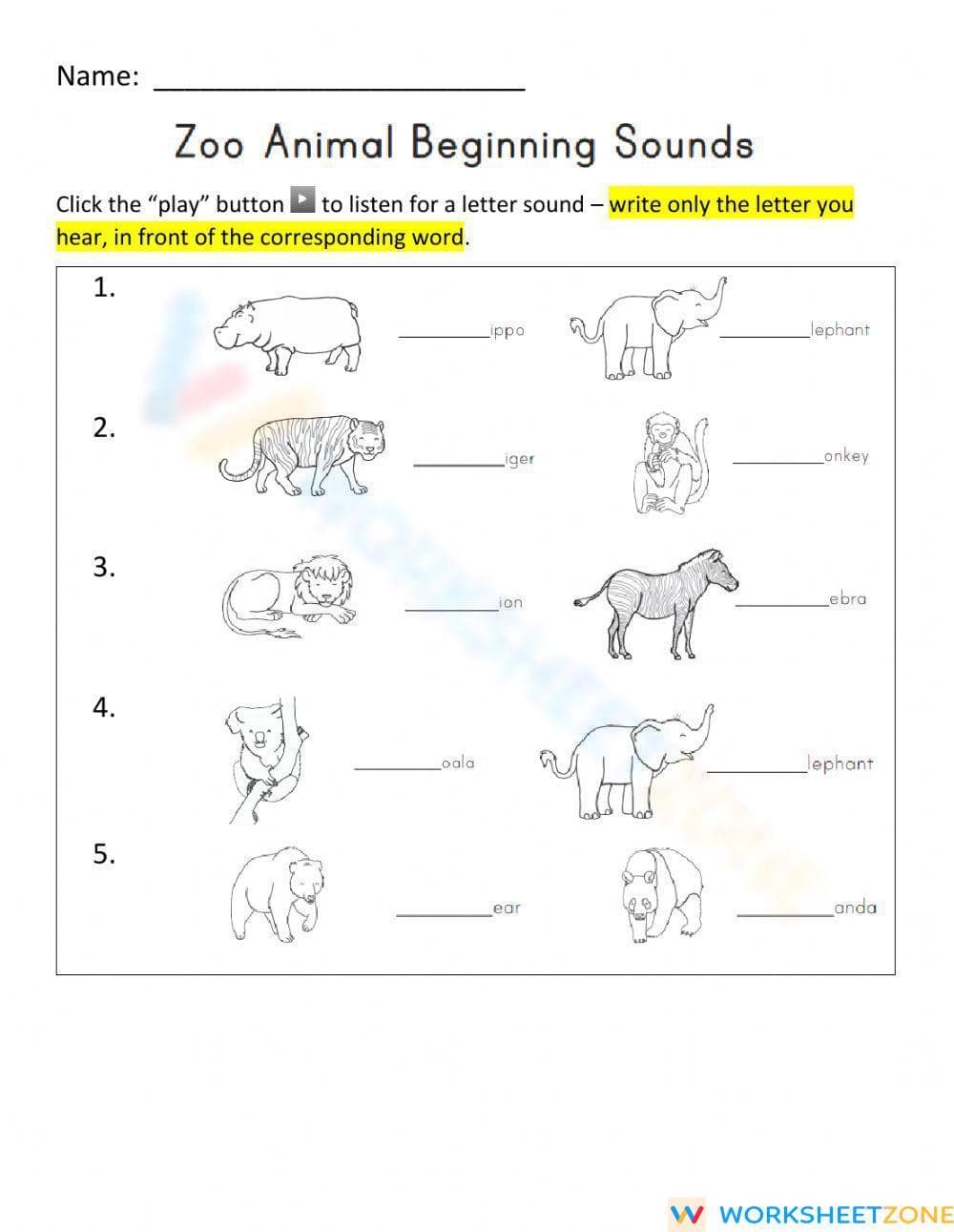

Kindergarten Beginning Sounds — Printable No-Prep Worksheet
Paste this activity's link or code into your existing LMS (Google Classroom, Canvas, Teams, Schoology, Moodle, etc.).
Students can open and work on the activity right away, with no student login required.
You'll still be able to track student progress and results from your teacher account.
This essential worksheet helps young learners master beginning sounds, a foundational phonological awareness skill. Students identify the initial sound of a pictured object and circle the corresponding letter, reinforcing letter-sound correspondence. It's a targeted, effective tool for building early reading skills in Kindergarten and Preschool students.
At a Glance
- Grade: Kindergarten · Subject: ELA
- Standard:
CCSS.ELA-LITERACY.RF.K.2.D— Isolate and pronounce initial sounds in words.- Skill Focus: Beginning Sounds
- Format: 1 page · 16 problems · Answer key included · PDF
- Best For: Phonics centers, morning work, or skill practice
- Time: 5–10 minutes
What's Inside
This single-page PDF download includes a worksheet with 16 distinct sound-identification tasks. Each task presents a clear, simple picture (e.g., apple, ball, cat) and three lowercase letters. An accompanying answer key provides immediate feedback for teachers or self-correction for students, making it a complete, self-contained activity.
A Zero-Prep Workflow for Busy Teachers
Designed for efficiency, this worksheet integrates into your lesson with minimal effort. The workflow is simple:
- 1. Print (1 min): The single, black-and-white page is fast and economical to print.
- 2. Distribute (1 min): With clear instructions embedded, no lengthy explanation is needed. Simply hand out the worksheet for immediate engagement.
- 3. Review (2-3 min): Use the included answer key to quickly review work or allow for self-correction.
The entire cycle takes under 5 minutes, making it ideal for substitute plans or morning work.
Standards-Aligned for Foundational Skills
This worksheet is directly aligned with a critical Common Core benchmark for early literacy, CCSS.ELA-LITERACY.RF.K.2.D. This standard requires students to "Isolate and pronounce the initial, medial vowel, and final sounds (phonemes)," and this activity specifically targets the initial sound. It also supports CCSS.ELA-LITERACY.RF.K.1.D (Recognize and name all upper- and lowercase letters). Both standard codes can be copied directly into lesson plans or curriculum maps.
How to Use This Worksheet
This resource is highly versatile. For whole-group instruction, project the worksheet and complete the first row together before independent work. It serves as a perfect 5-10 minute station during literacy centers. As a formative assessment, a teacher can quickly observe which students hesitate or confuse specific letter sounds (e.g., b/d), providing data for small group intervention. Its estimated completion time is between 5 and 10 minutes.
Who It's For
This worksheet is designed primarily for Kindergarten students developing phonological awareness. It's also suitable for advanced Preschool learners or as a review for Grade 1 students. The clear, uncluttered layout with recognizable images benefits all young learners, including English Language Learners and students with visual processing needs. Pair this activity with a physical alphabet chart to provide additional tactile support.
This activity provides focused practice on isolating initial phonemes, a key component of early literacy aligned with CCSS.ELA-LITERACY.RF.K.2.D. Mastering this skill—the ability to hear and identify the beginning sound in a word—is a strong predictor of future reading success. Research consistently shows that phonological awareness is a critical foundation for decoding. For instance, a comprehensive analysis by Fisher & Frey (2014) reinforces the importance of structured, explicit practice in foundational skills as part of a balanced literacy program. By engaging with the 16 clear tasks on this worksheet, students move from auditory discrimination to connecting that sound with its corresponding letter, a crucial step toward automaticity. This type of targeted, standards-aligned exercise provides the precise, repeatable practice necessary for students to internalize fundamental letter-sound relationships and build confidence as emerging readers.


