


























Views
Downloads
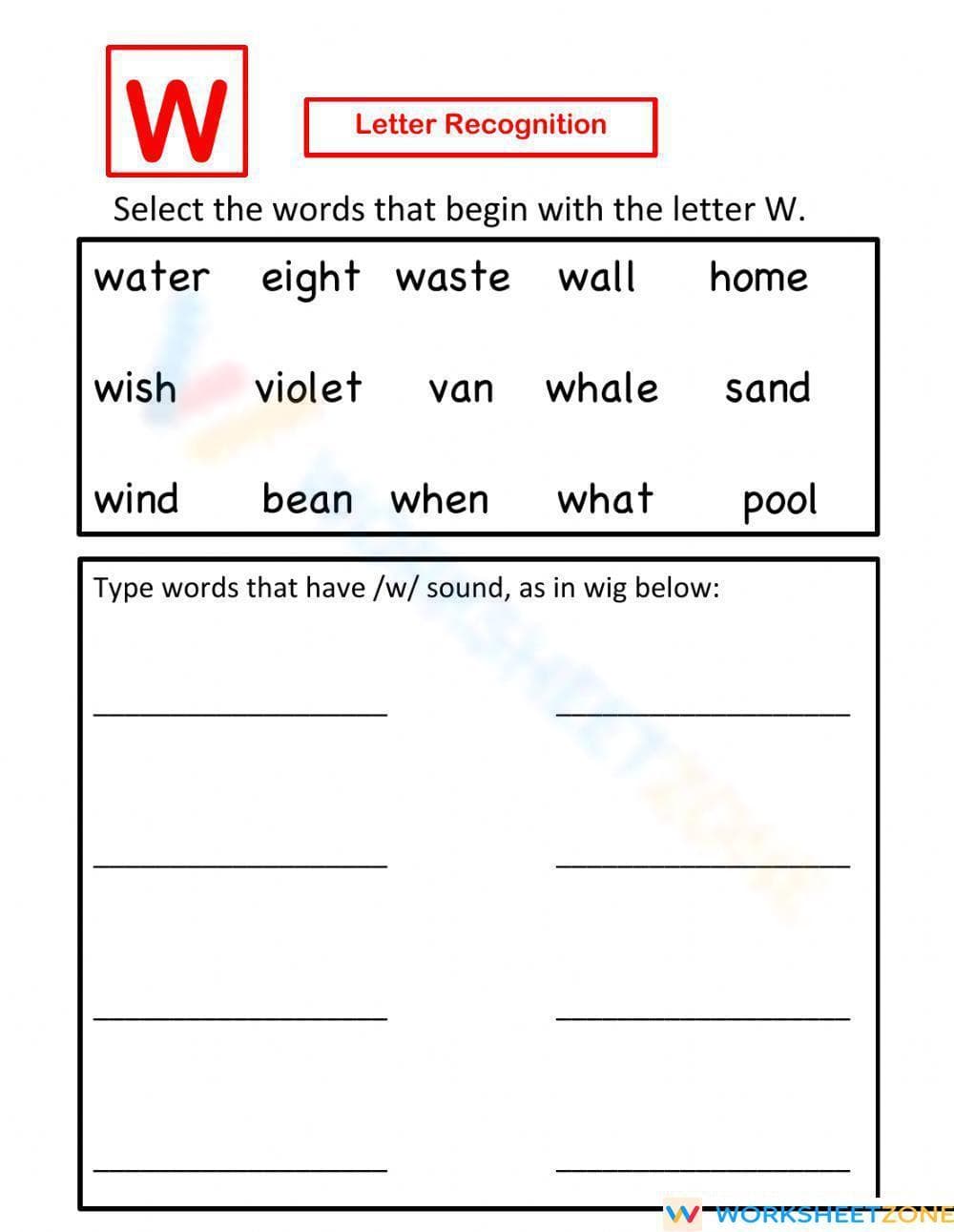

Kindergarten Letter W — Printable No-Prep Worksheet
Paste this activity's link or code into your existing LMS (Google Classroom, Canvas, Teams, Schoology, Moodle, etc.).
Students can open and work on the activity right away, with no student login required.
You'll still be able to track student progress and results from your teacher account.
This kindergarten worksheet provides targeted practice for recognizing and writing the letter W. Students will complete four distinct activities—tracing, writing, coloring, and identifying—to build foundational letter-sound correspondence and fine motor skills. It’s a comprehensive, single-page resource designed for early learners to achieve mastery with the letter W.
At a Glance
- Grade: Kindergarten · Subject: ELA / Alphabet
- Standard:
CCSS.ELA-LITERACY.RF.K.1.D— Recognize and name all upper- and lowercase letters of the alphabet.- Skill Focus: Letter Recognition (W), Letter Formation
- Format: 1 page · 4 problems · Answer key included · PDF
- Best For: Independent practice, literacy centers, or substitute plans.
- Time: 10–15 minutes
What's Inside
This single-page PDF includes everything needed for a complete lesson on the letter W. The worksheet is divided into four clear sections: a tracing and writing task to develop proper letter formation, a coloring activity to reinforce visual recognition, and a picture identification challenge where students circle images that begin with the 'W' sound. A full answer key is provided for quick and easy review.
Zero-Prep Workflow
Designed for the busy classroom, this resource streamlines teacher workflow with a simple three-step process. First, Print the single-page PDF, which takes less than 30 seconds. Next, Distribute it to students for immediate engagement. Finally, Review student work using the included answer key in just a few minutes. Total teacher preparation time is under two minutes, making this an ideal, reliable resource for substitute plans, morning work, or last-minute literacy block activities.
Standards Alignment
This worksheet is directly aligned with Kindergarten standard CCSS.ELA-LITERACY.RF.K.1.D, which requires students to "Recognize and name all upper- and lowercase letters of the alphabet." The activities provide focused practice on this foundational skill, ensuring students meet this key early literacy benchmark. Both standard codes can be copied directly into lesson plans, IEP goals, or district curriculum mapping tools.
How to Use It
This versatile worksheet is perfect for independent practice after a direct instruction lesson on the letter W. Place it in a literacy center with crayons and pencils for a self-guided activity. For formative assessment, observe which students can correctly identify the 'W' sound in the picture section, noting any common confusions with other letters. Most students will complete the worksheet in 10 to 15 minutes.
Who It's For
This resource is designed for kindergarten students and advanced preschoolers who are learning the alphabet. It offers clear, simple tasks that build confidence. For students needing extra support, a teacher can complete the tracing section with them. This worksheet pairs naturally with a letter W anchor chart or a read-aloud story featuring words that start with W.
Foundational skills like letter recognition are a cornerstone of early literacy development, directly impacting future reading fluency. This worksheet targets CCSS.ELA-LITERACY.RF.K.1.D, which focuses on naming and recognizing alphabet letters. Research consistently shows that explicit and repeated practice with letter formation and identification is critical for automaticity. According to the NAEP, students who enter first grade with strong alphabet knowledge are better positioned for reading success. This resource provides the structured repetition needed for mastery, isolating the letter W through tracing, writing, and sound identification tasks. The multi-modal approach (writing, coloring, circling) engages different learning pathways, a principle supported by numerous studies on early childhood pedagogy, to help students internalize the letter's shape and corresponding sound effectively and build a solid foundation for literacy.


