




























Views
Downloads

Letter M Beginning Sound Worksheet | Essential Grade K-2

Paste this activity's link or code into your existing LMS (Google Classroom, Canvas, Teams, Schoology, Moodle, etc.).
Students can open and work on the activity right away, with no student login required.
You'll still be able to track student progress and results from your teacher account.
This comprehensive Letter M beginning sound worksheet helps early learners identify, distinguish, and write the letter M through multi-sensory activities. Students move from visual discrimination in a letter hunt to phonemic awareness with picture sorting, finally solidifying their knowledge through guided tracing. It ensures students achieve phonological mastery of the /m/ sound before moving to blending.
At a Glance
- Grade: Kindergarten · Subject: ELA Phonics
- Standard:
CCSS.ELA-LITERACY.RF.K.3.A— Demonstrate basic knowledge of one-to-one letter-sound correspondences for the letter M- Skill Focus: Letter M Recognition & Phonemic Awareness
- Format: 3 pages · 31 problems · Answer key included · PDF
- Best For: Morning work or phonics centers
- Time: 15–20 minutes
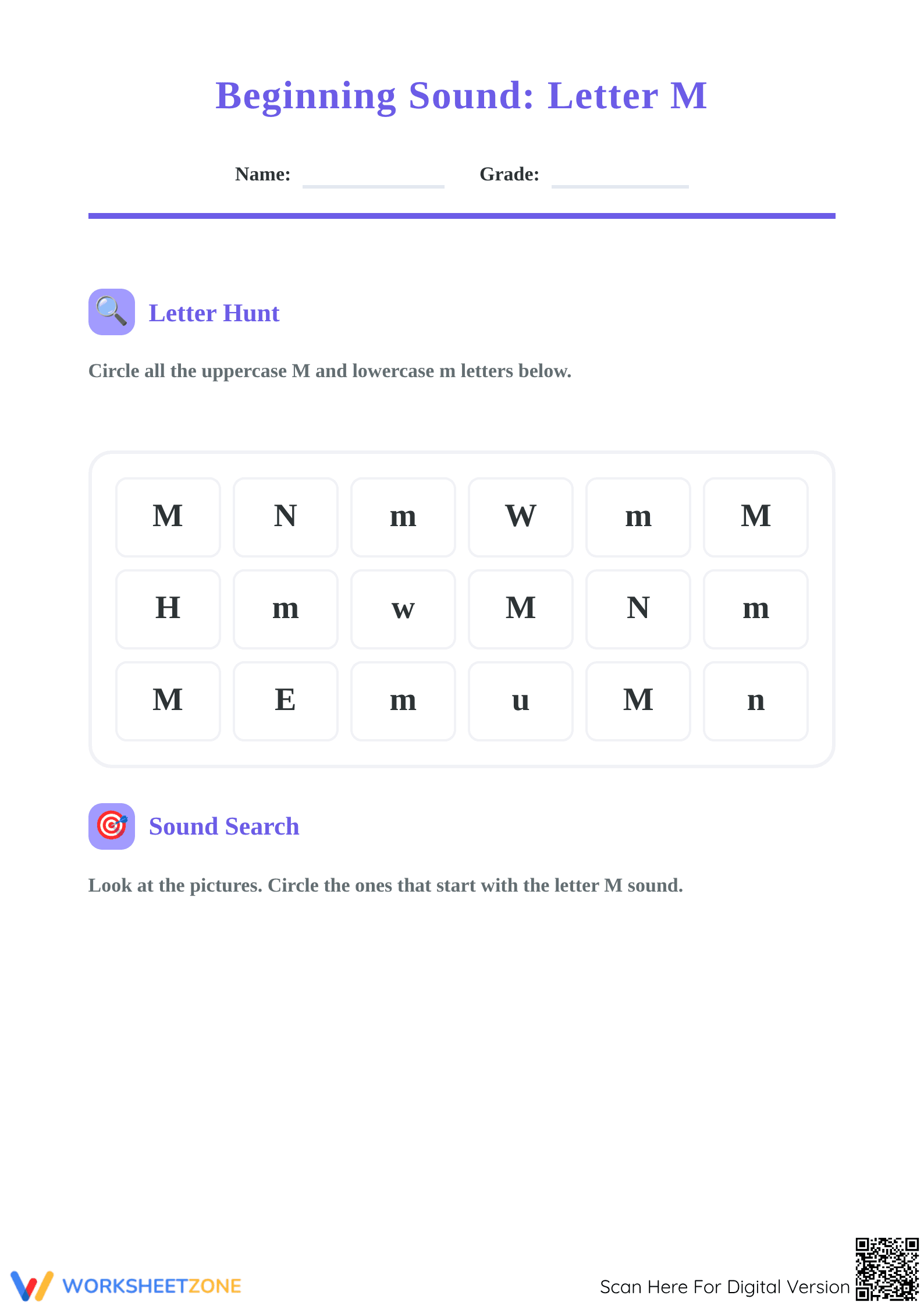
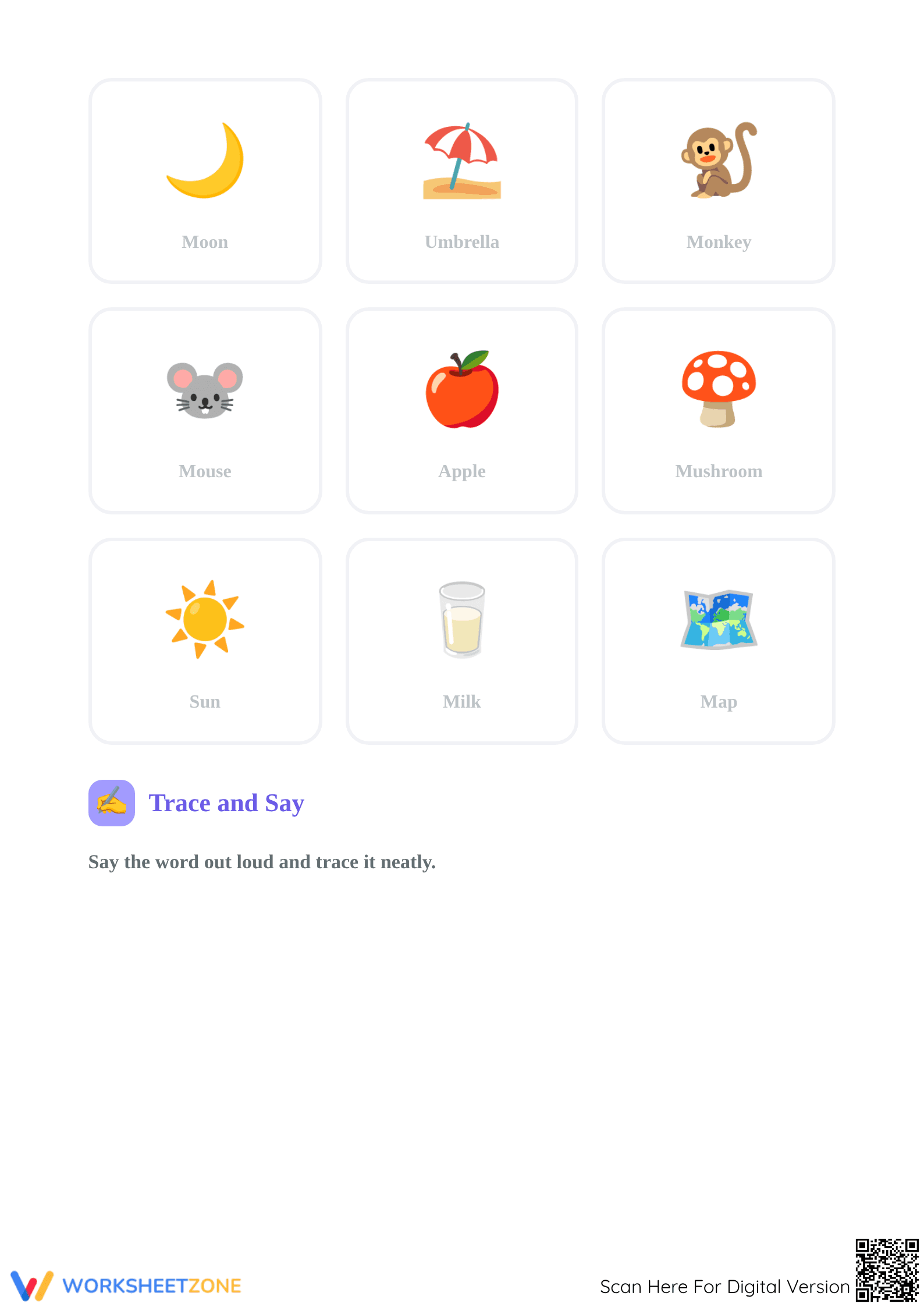
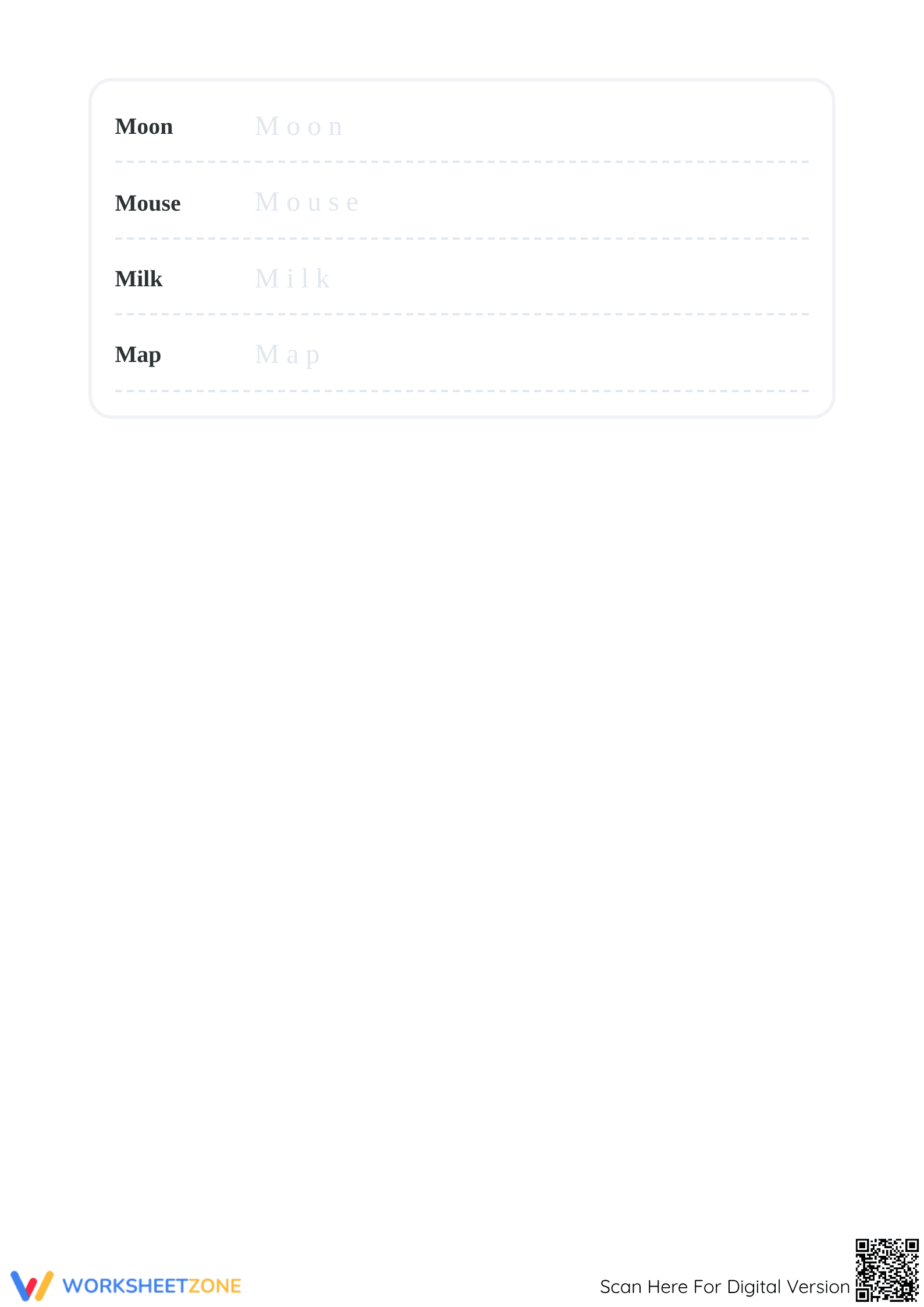
The packet contains three distinct pages of activities designed to build confidence. Page one features a "Letter Hunt" grid with 18 characters where students must isolate uppercase and lowercase M from visual distractors. Page two presents a "Sound Search" with 9 high-quality illustrations, requiring students to identify objects like "Monkey" and "Milk." Page three provides structured tracing for four key vocabulary words to link sound to print.
This resource is designed for immediate classroom implementation with a zero-prep workflow. Teachers can print the three-page PDF in under 2 minutes. Distribution is simple, and because the instructions are icon-supported and intuitive, students can begin working with minimal teacher guidance. The included answer keys allow for rapid grading or student self-correction, making this an ideal choice for emergency sub plans or independent station work.
Aligned to CCSS.ELA-LITERACY.RF.K.3.A, which requires students to demonstrate basic knowledge of one-to-one letter-sound correspondences by producing the primary sound for each consonant. It also supports CCSS.ELA-LITERACY.RF.K.1.D regarding uppercase and lowercase letter recognition. Both standard codes can be copied directly into lesson plans, IEP goals, or district curriculum mapping tools.
Use this during the independent practice phase of a phonics lesson after introducing the /m/ sound with an anchor chart. It also serves as an excellent formative assessment; observe students during the "Sound Search" to see if they can orally segment the beginning sound of "Umbrella" versus "Mouse." Expected completion time ranges from 15 to 20 minutes depending on student fine motor speed.
This is designed for Kindergarten students, though it provides valuable intervention for Grade 1 and Grade 2 students struggling with phonemic awareness. It pairs naturally with a "Letter M" alphabet storybook or a tactile salt-tray writing activity to reinforce the letter's shape and sound. The clear layout is particularly helpful for English Language Learners (ELL) building basic vocabulary.
Research from Fisher & Frey (2014) emphasizes the importance of gradual release and multi-modal practice in early literacy. This worksheet applies these principles by transitioning students from simple visual identification of the letter M to the more complex cognitive task of phonemic sound-matching. By providing 31 specific opportunities for engagement across three pages, the material ensures high-frequency exposure to the target phoneme. According to the RAND AIRS 2024 report on foundational skills, consistent practice with beginning sounds is a significant predictor of future reading fluency. This resource provides the structured repetition necessary for students to move from letter-sound correspondence to word-level blending. The inclusion of tracing tasks further bridges the gap between phonemic awareness and orthographic mapping, ensuring that the CCSS.ELA-LITERACY.RF.K.3.A standard is met with instructional depth and clarity.


