


























Views
Downloads

Letter H Beginning Sound Worksheet | Essential Grade K-1
Paste this activity's link or code into your existing LMS (Google Classroom, Canvas, Teams, Schoology, Moodle, etc.).
Students can open and work on the activity right away, with no student login required.
You'll still be able to track student progress and results from your teacher account.
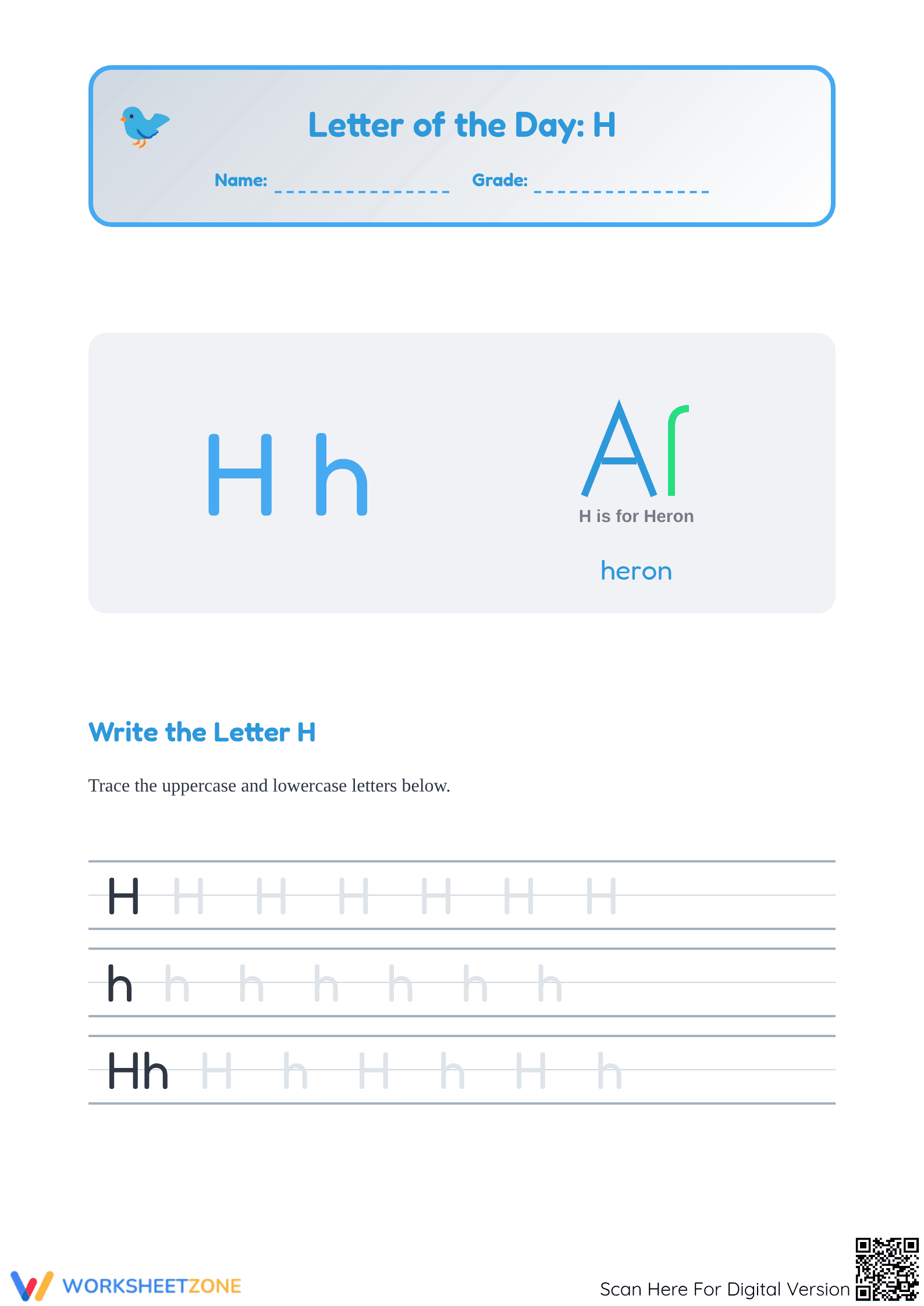
This Grade Kindergarten and Grade 1 phonics worksheet provides students with structured practice to master the letter H. By combining tactile tracing with visual identification and creative drawing, students develop a robust understanding of the letter-sound correspondence. This resource ensures students can identify, write, and produce the sound associated with the letter H in various contexts.
At a Glance
- Grade: Kindergarten · Subject: ELA Phonics
- Standard:
CCSS.ELA-LITERACY.RF.K.3.A— Demonstrate basic knowledge of one-to-one letter-sound correspondences for consonants- Skill Focus: Letter H identification and formation
- Format: 3 pages · 28 tasks · Answer key included · PDF
- Best For: Morning work or literacy centers
- Time: 15–20 minutes
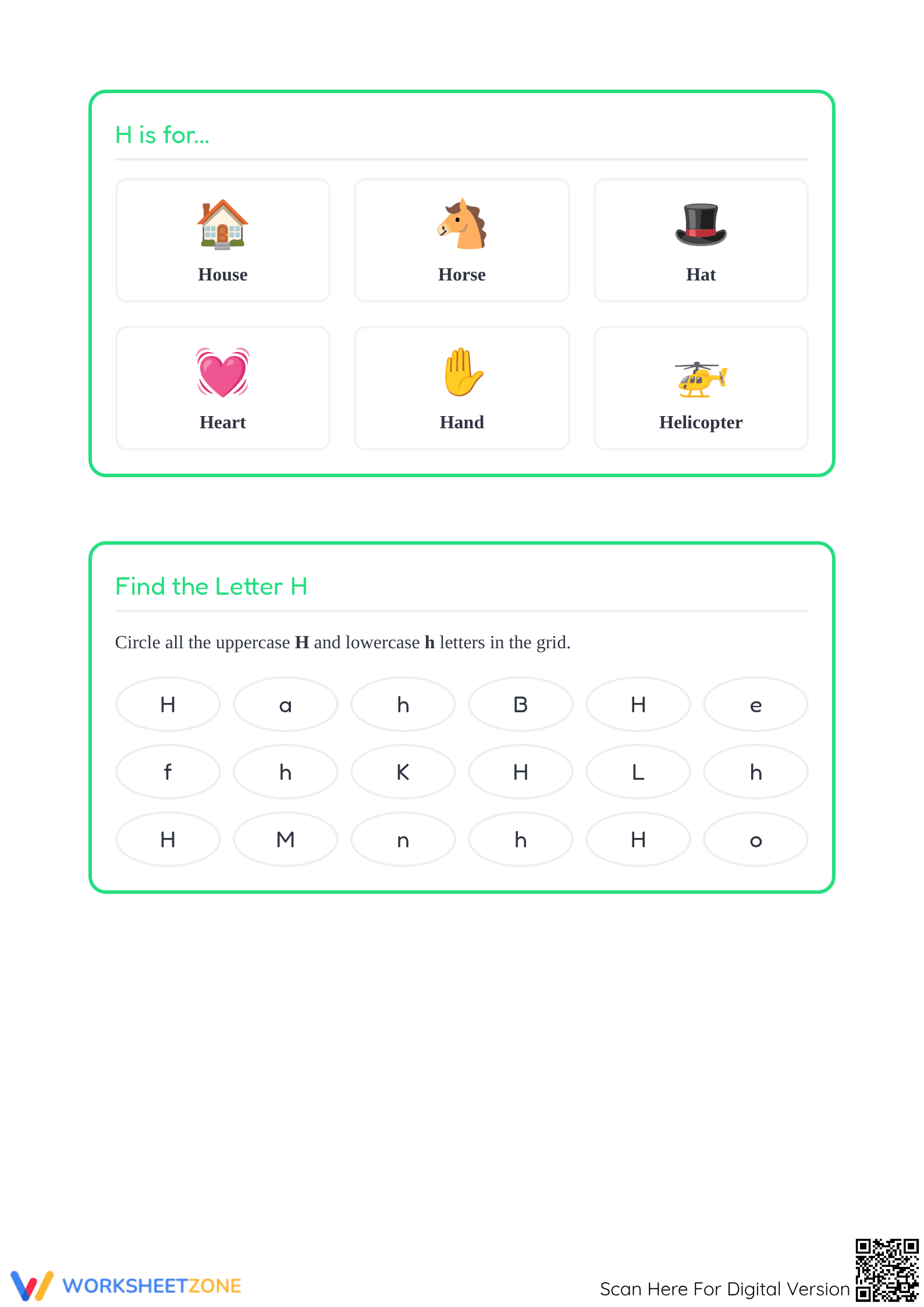
What's Inside: This comprehensive 3-page PDF includes a dedicated tracing section for both uppercase and lowercase H, a visual vocabulary bank featuring six high-frequency words like "helicopter" and "heart," a letter search grid containing 18 characters, and a creative drawing prompt. The layout is clean and distraction-free, featuring a helpful word bank and clear instructional headers for every task.
Zero-Prep Workflow: This resource is designed for immediate classroom implementation. First, print the three-page PDF for your entire class or small group, which takes approximately 30 seconds. Second, distribute the worksheets during your phonics block or as a transition activity, requiring only one minute of teacher time. Finally, review the "H is for..." section as a whole-class choral response to check for understanding in under two minutes. This makes it an ideal choice for emergency sub plans or busy morning routines.
Standards Alignment: This worksheet is primarily aligned to `CCSS.ELA-LITERACY.RF.K.3.A`, which requires students to demonstrate basic knowledge of one-to-one letter-sound correspondences. It also supports `CCSS.ELA-LITERACY.RF.K.1.D` by having students recognize and name upper- and lowercase letters of the alphabet. Both standard codes can be copied directly into lesson plans, IEP goals, or district curriculum mapping tools.
How to Use It: Assign this worksheet during the "You Do" phase of a gradual release lesson on the letter H. It works exceptionally well in a literacy center where students can rotate through the tracing and drawing tasks independently. For a formative assessment, observe students during the letter search grid task to identify those who may be confusing H with similar-looking letters like N or M. Completion typically takes 15 to 20 minutes.
Who It's For: This resource is tailored for Kindergarten students beginning their phonics journey, but it also serves as an excellent intervention tool for Grade 1 or Grade 2 students needing extra support. It is highly effective for English Language Learners (ELL) who benefit from the visual cues provided in the vocabulary section. Pair this with a letter H anchor chart for maximum instructional impact.
The systematic approach to letter acquisition presented in this resource aligns with the RAND AIRS 2024 findings regarding the necessity of multisensory phonics instruction for early literacy success. By engaging students in the specific skill of identifying the letter H and its corresponding phoneme, the worksheet builds the foundational decoding skills required for later reading fluency. Research from Fisher & Frey (2014) suggests that combining visual identification with motor-skill practice, such as tracing and drawing, significantly increases long-term retention of alphabetic principles. This worksheet provides exactly that balance, offering 28 discrete opportunities for students to interact with the target letter. As a result, educators can use this tool to provide evidence-based practice that meets the rigorous demands of the CCSS.ELA-LITERACY.RF.K.3.A standard while maintaining high student engagement through varied task types and clear, accessible formatting.


