


























Views
Downloads

Essential Color Words Worksheet | Kindergarten ELA
Paste this activity's link or code into your existing LMS (Google Classroom, Canvas, Teams, Schoology, Moodle, etc.).
Students can open and work on the activity right away, with no student login required.
You'll still be able to track student progress and results from your teacher account.
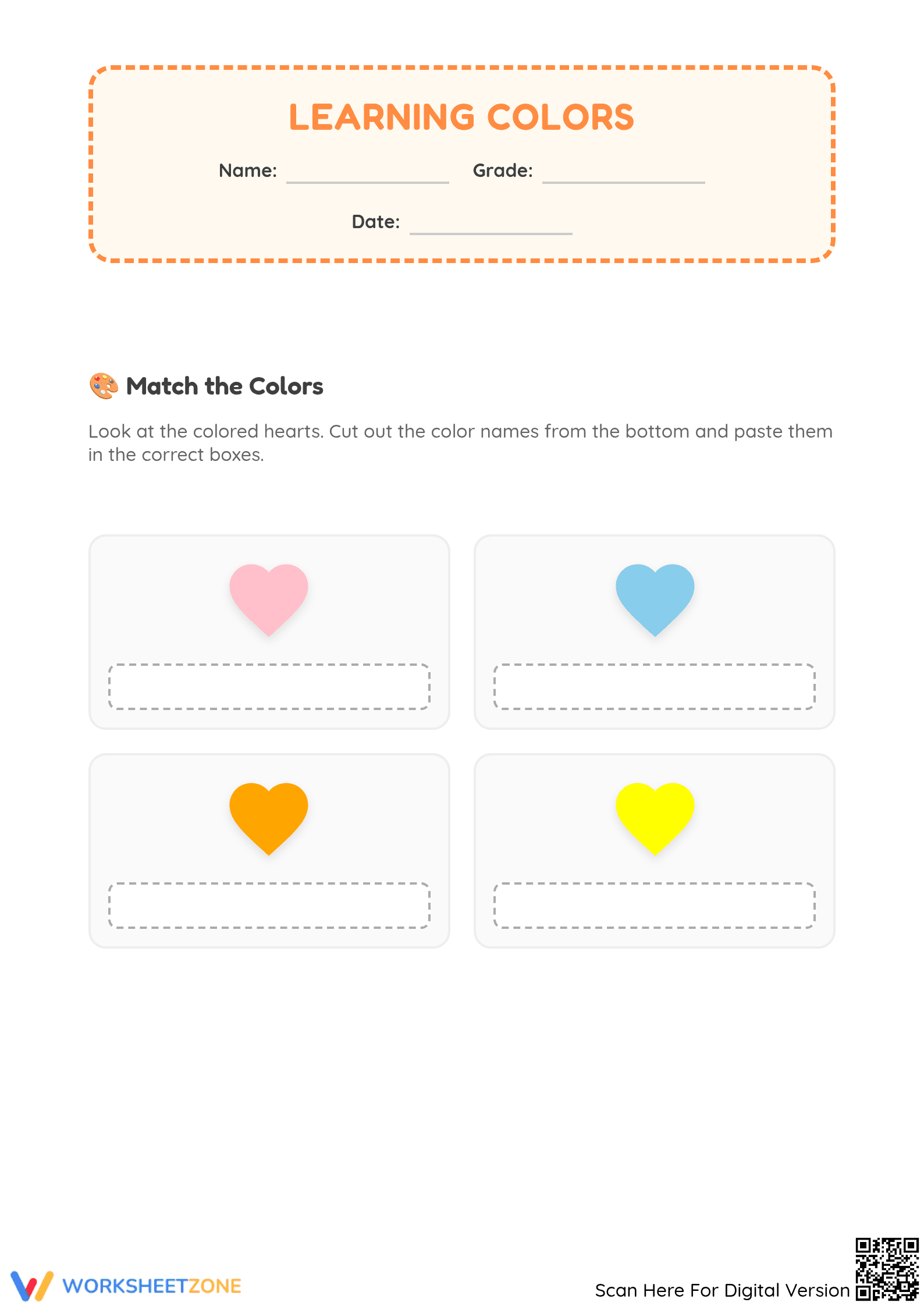
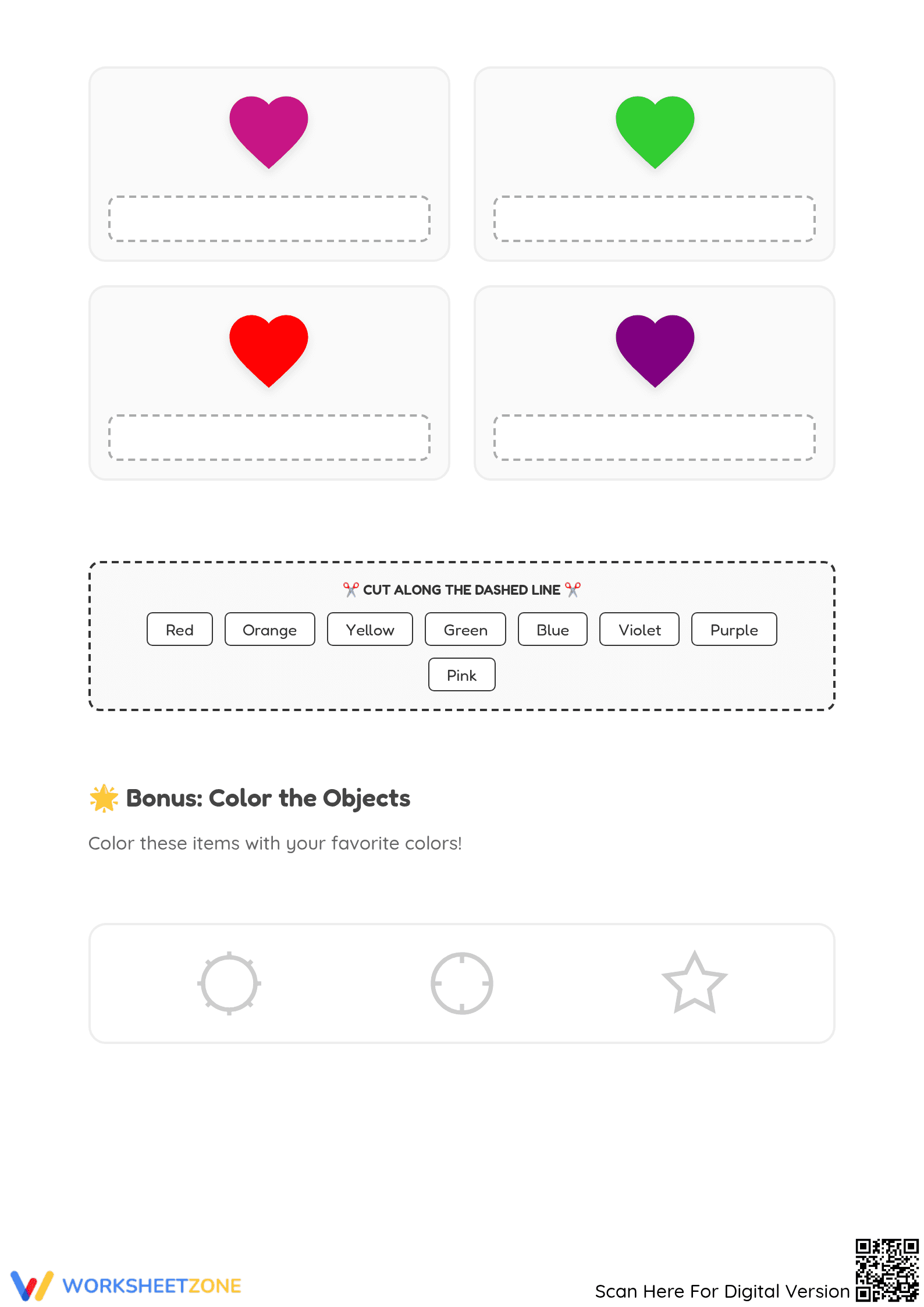
This essential color recognition worksheet helps early learners master the connection between visual hues and written language. Students practice identifying eight primary and secondary colors while developing the fine motor skills necessary for cutting and pasting. By the end of the activity, learners will have a concrete reference sheet for their literacy folders.
At a Glance
- Grade: Kindergarten · Subject: ELA
- Standard:
CCSS.ELA-LITERACY.L.K.5.A— Sort common objects into categories to gain a sense of the concepts represented- Skill Focus: Color word identification
- Format: 2 pages · 11 problems · Answer key included · PDF
- Best For: Independent literacy centers or morning work
- Time: 15–20 minutes
What's Inside: This two-page PDF features eight distinct heart-shaped color prompts including red, orange, yellow, green, blue, violet, purple, and pink. The second page contains a dedicated cut-out bank with clear, legible font for each color name. A bonus section at the bottom of the second page provides three additional objects for creative coloring, ensuring students stay engaged until the transition.
Zero-Prep Workflow: This resource is designed for immediate classroom implementation. First, print the two pages back-to-back or as separate sheets (1 minute). Second, distribute the materials along with scissors and glue sticks to your students (1 minute). Finally, review the completed matches as a whole group using the provided answer key to provide immediate feedback on sight word accuracy (3 minutes). Total teacher preparation time is under two minutes, making this an ideal choice for emergency sub plans.
Standards Alignment: This activity focuses on `CCSS.ELA-LITERACY.L.K.5.A`, which requires students to sort common objects into categories to gain a sense of the concepts the categories represent. By matching specific visual stimuli to their linguistic labels, students build the foundational vocabulary necessary for descriptive writing. Both standard codes can be copied directly into lesson plans, IEP goals, or district curriculum mapping tools.
How to Use It: Use this worksheet during the "You Do" phase of a gradual release lesson on adjectives or high-frequency words. It serves as an excellent formative assessment tool; observe students as they cut and paste to identify who may need additional support with color-word correspondence. The expected completion time is approximately 15 to 20 minutes depending on the student's scissor proficiency.
Who It's For: This resource is tailored for Preschool, Kindergarten, and Grade 1 students who are beginning to build their sight word vocabulary. It is particularly effective for English Language Learners (ELLs) who benefit from the direct visual-to-text association. Pair this worksheet with a color-themed anchor chart or a read-aloud of a popular color-focused picture book for a comprehensive lesson.
The integration of tactile manipulation with vocabulary acquisition is a proven method for increasing retention in early childhood education. According to Fisher & Frey (2014), the use of scaffolds like word banks and visual prompts allows students to engage with complex concepts while reducing cognitive load. This worksheet applies those principles by providing clear visual cues for each of the 8 color words, ensuring that the primary focus remains on the standard CCSS.ELA-LITERACY.L.K.5.A. By requiring students to physically move the word to the color, the activity reinforces the neural pathways associated with sight word recognition. Research indicates that multi-sensory approaches to literacy, such as cut-and-paste tasks, significantly improve the mastery of high-frequency words compared to passive observation. This resource provides a structured environment for students to demonstrate their understanding of color categories and descriptive language in a format that is both accessible and measurable for educators.


