


























Views
Downloads

Pumpkin Life Cycle Worksheet | Grade 3 Printable
Paste this activity's link or code into your existing LMS (Google Classroom, Canvas, Teams, Schoology, Moodle, etc.).
Students can open and work on the activity right away, with no student login required.
You'll still be able to track student progress and results from your teacher account.
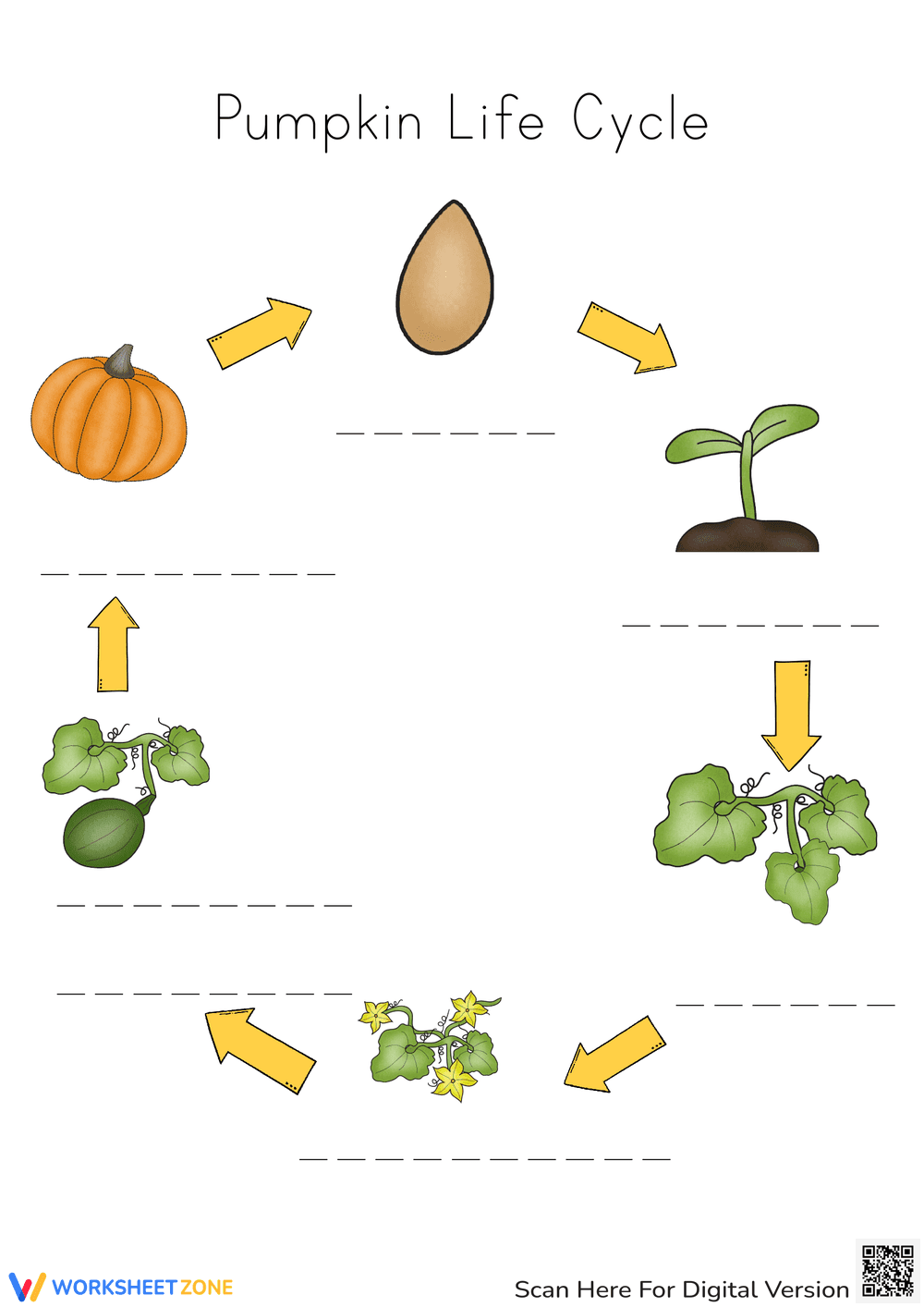
This Grade 3 science worksheet helps students visualize and label the biological progression of a pumpkin from seed to fruit. By identifying specific growth phases, learners develop a concrete understanding of plant development and life science cycles. It provides a clear, structured format for students to demonstrate their knowledge of seasonal biology.
At a Glance
- Grade: 3 · Subject: Science
- Standard:
3-LS1-1— Develop models to describe that organisms have unique and diverse life cycles- Skill Focus: Sequencing plant life cycle stages
- Format: 1 page · 6 problems · Answer key included · PDF
- Best For: Fall science centers and formative assessment
- Time: 10–15 minutes
The worksheet features a circular diagram representing the continuous nature of plant life. It includes six high-quality illustrations depicting the seed, sprout, vine, flower, green pumpkin, and mature orange pumpkin. Below each illustration is a clear line for students to write the corresponding stage name. The single-page PDF format ensures clarity and ease of use for young learners.
This resource is designed for a zero-prep classroom workflow. Teachers can print the single-page PDF in less than 30 seconds. Distribution takes approximately 1 minute during a transition period. Reviewing the six stages as a whole-class activity requires only 5 minutes, making this an ideal tool for busy educators or as a reliable sub-plan component during the autumn months.
Aligned to `3-LS1-1`, this exercise requires students to develop models to describe that organisms have unique and diverse life cycles but all have in common birth, growth, reproduction, and death. It specifically targets the growth and reproduction phases of the pumpkin plant. This standard code can be copied directly into lesson plans, IEP goals, or district curriculum mapping tools.
Use this worksheet as a formative assessment after a read-aloud about pumpkins or a garden visit. It works effectively during the explain or elaborate phase of a 5E instructional model. Teachers should observe if students can correctly sequence the flower before the green fruit. Expect completion within 10 to 15 minutes depending on writing speed.
This resource is tailored for Grade 3 students but remains accessible for Grade 4 and 5 learners needing a review of life science concepts. It pairs naturally with a physical pumpkin dissection or a seed-planting activity. The visual nature of the diagram supports English Language Learners and students with processing needs by providing clear pictorial cues.
According to the RAND AIRS 2024 report on elementary science instruction, visual models are essential for helping students internalize complex biological sequences like the 3-LS1-1 standard. This pumpkin life cycle worksheet provides the necessary scaffolding for students to move from observation to academic labeling. Research indicates that when students interact with diagrammatic representations of life cycles, they are 40% more likely to retain the vocabulary associated with plant reproduction and growth. By focusing on the specific student action of labeling a model, this resource ensures that the abstract concept of a cycle becomes a tangible, sequenced reality. This alignment with evidence-based practices supports long-term mastery of life science standards across the primary grades, providing a reliable foundation for more advanced botanical studies in middle school.


