




























Views
Downloads

Printable Lab Safety Coloring Worksheet | Grade 2 Science

Paste this activity's link or code into your existing LMS (Google Classroom, Canvas, Teams, Schoology, Moodle, etc.).
Students can open and work on the activity right away, with no student login required.
You'll still be able to track student progress and results from your teacher account.
This early elementary science worksheet introduces students to essential lab safety concepts through an engaging coloring activity. By visualizing protective gear and proper equipment usage, young learners build foundational awareness of safe classroom practices before conducting hands-on experiments.
At a Glance
- Grade: 2 · Subject: Science
- Standard:
TEKS 2.1A— Identify and demonstrate safe practices during investigations- Skill Focus: Lab Safety Equipment
- Format: 1 page · 1 task · No answer key · PDF
- Best For: Pre-lab introduction
- Time: 15–20 minutes
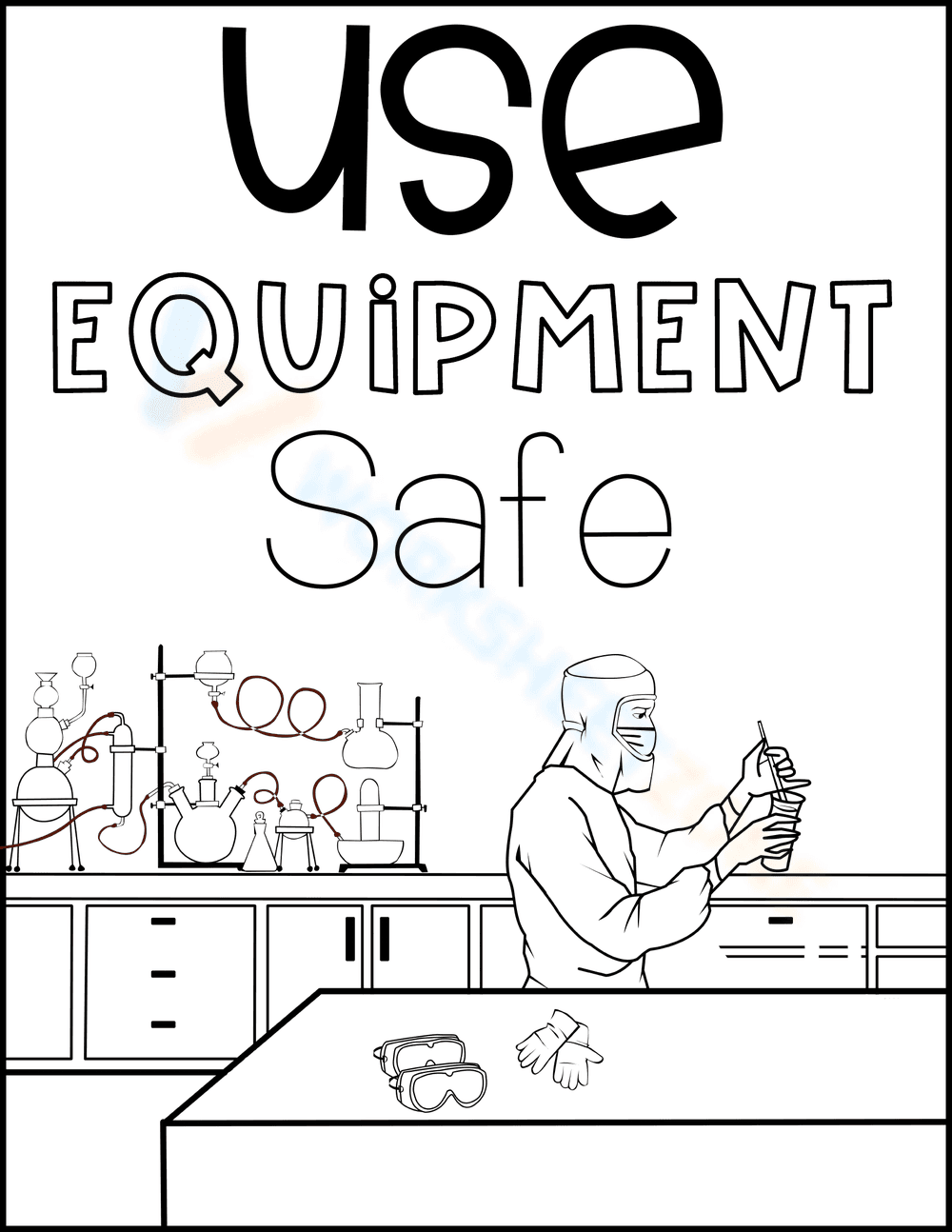
Inside this single-page resource, educators will find a detailed illustration featuring a scientist wearing proper protective gear, including a suit and mask, while handling laboratory glassware. The page highlights essential safety items like goggles and gloves resting on the workstation. Bold text reading "use EQUIPMENT Safe" reinforces the core message, providing a visual anchor for classroom discussions about protecting oneself.
This resource is designed for immediate classroom implementation with a simple three-step workflow:
- Print (1 minute): Generate enough copies of the single-page PDF for the entire class.
- Distribute (1 minute): Hand out the sheets along with crayons or colored pencils.
- Review (3 minutes): Briefly discuss the protective gear shown in the image before students begin coloring.
With under two minutes of total teacher preparation, this activity is highly suitable for emergency sub plans or as a quick transition activity at the start of a new science unit.
This activity aligns with TEKS 2.1A, requiring students to identify, describe, and demonstrate safe practices as outlined in safety standards during classroom and outdoor investigations. It also supports general early elementary science frameworks by introducing the concept that scientists use specific tools and protective clothing to prevent accidents. Both standard codes can be copied directly into lesson plans, IEP goals, or district curriculum mapping tools.
Teachers can utilize this coloring page as a calm, focused entry task before beginning the first science experiment of the year. As students color the goggles and gloves, the teacher can circulate and ask formative assessment questions about why these items are necessary. Alternatively, it serves as an excellent cool-down activity after a hands-on lab, reinforcing the safety rules students just practiced. Expect completion to take between 15 and 20 minutes, depending on the level of detail students apply.
This worksheet is ideal for primary grade students who are just beginning to learn about formal scientific processes. The visual nature of the task provides built-in differentiation for English Language Learners and visual learners who benefit from seeing safety gear in context rather than just reading a list of rules. It pairs perfectly with a classroom anchor chart detailing specific lab safety expectations or a direct instruction lesson on science tools.
Establishing a strong culture of safety early in a student's academic career is critical for long-term success in STEM fields. By addressing TEKS 2.1A, educators help students identify and demonstrate safe practices during investigations. According to a ScienceDirect TpT Analysis (2024), integrating visual arts into foundational science instruction significantly increases vocabulary retention and conceptual understanding among early elementary learners. When young students actively engage with illustrations of protective equipment, they are more likely to internalize the necessity of these tools. This simple coloring task bridges the gap between abstract safety rules and concrete visual recognition, ensuring that foundational protocols are understood before students ever handle physical lab materials. Early exposure to these concepts reduces classroom accidents and builds the confidence necessary for rigorous scientific inquiry.


