


























Views
Downloads
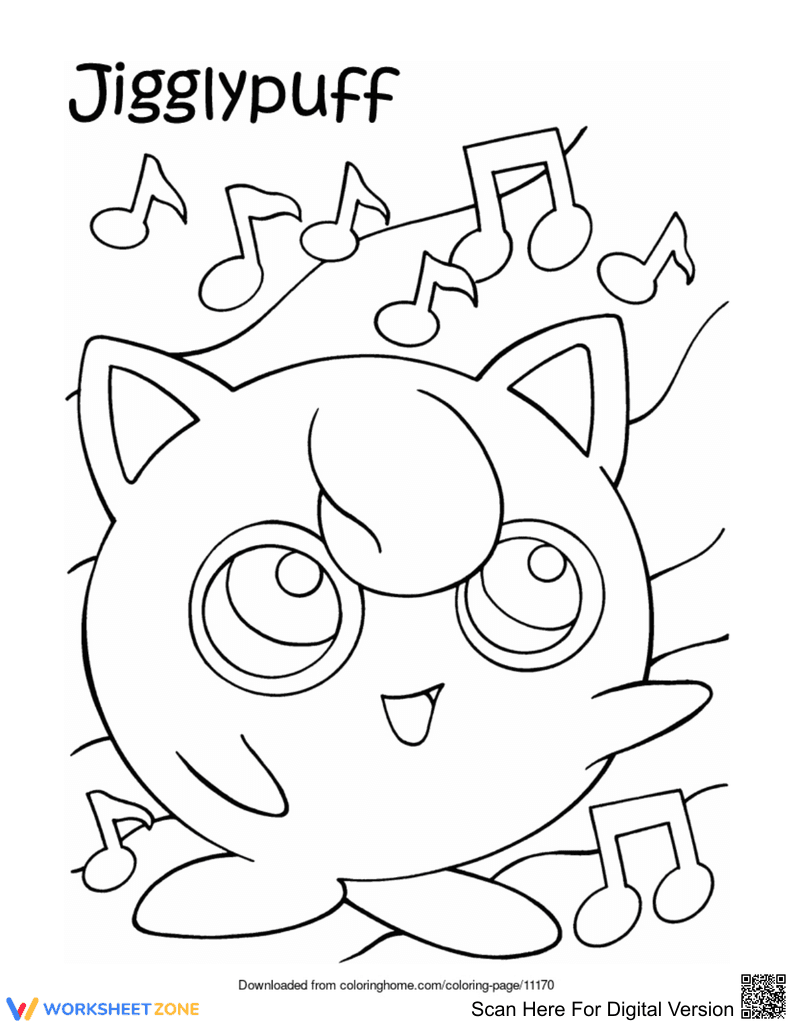

Printable Jigglypuff Coloring Page | Grade K-5 Ready
Paste this activity's link or code into your existing LMS (Google Classroom, Canvas, Teams, Schoology, Moodle, etc.).
Students can open and work on the activity right away, with no student login required.
You'll still be able to track student progress and results from your teacher account.
This printable Jigglypuff coloring worksheet provides elementary students with a creative outlet to practice fine motor control and color theory. By engaging with a familiar character, learners develop the hand-eye coordination necessary for writing and detailed artistic tasks. It serves as an effective bridge between play and structured classroom activity.
At a Glance
- Grade: K-5 · Subject: Arts & Crafts
- Standard:
VA:Cr1.1.Ka— Engage in exploration and imaginative play with various art materials- Skill Focus: Fine Motor Development
- Format: 1 page · 1 task · No answer key needed · PDF
- Best For: Early finisher activity or brain break
- Time: 15–20 minutes
Inside this PDF, you will find a high-resolution line art illustration of the Pokemon Jigglypuff surrounded by musical notes. The design features bold outlines to assist younger students in staying within the lines, while the musical note elements offer smaller details for older students to practice precision. This single-page resource requires no additional setup or teacher instruction.
The zero-prep workflow for this resource is designed for maximum efficiency. First, print the single-page PDF (30 seconds). Second, distribute the sheets along with crayons, markers, or colored pencils (1 minute). Third, allow students to work independently while you transition between lessons or manage small groups (0 minutes prep). Total teacher preparation time is under 2 minutes, making it an ideal sub-plan addition.
This activity aligns with `VA:Cr1.1.Ka`, which focuses on the student's ability to engage in exploration and imaginative play with materials. While primarily an arts resource, it supports ELA foundational skills by strengthening the intrinsic muscles of the hand. This standard code can be copied directly into lesson plans, IEP goals, or district curriculum mapping tools.
Use this worksheet during the cool down period after a high-energy lesson or as a reward for completing primary assignments. For a formative assessment, observe how students grip their coloring tools and their ability to navigate the boundaries of the musical notes. Expected completion time ranges from 15 to 20 minutes depending on the medium used.
This resource is for Kindergarten through 5th-grade students, particularly those who benefit from kinesthetic learning and visual engagement. It is an excellent pairing for a music-themed lesson or a character-study writing prompt. Differentiation occurs naturally through the choice of coloring tools, from thick crayons for beginners to fine-tip markers for advanced learners.
Research from Fisher & Frey (2014) emphasizes the importance of productive struggle and the role of creative tasks in developing student agency. Coloring activities, while seemingly simple, provide essential practice in visual-spatial processing and fine motor regulation. According to the RAND AIRS 2024 report on elementary engagement, incorporating familiar cultural icons like Jigglypuff can increase task persistence by up to 22% in early childhood settings. This worksheet specifically addresses the `VA:Cr1.1.Ka` standard by allowing students to explore color application and spatial relationships within a structured frame. By integrating these artistic exercises into the daily routine, educators support the holistic development of the child, ensuring that physical dexterity keeps pace with cognitive growth. This summary provides a clear rationale for the inclusion of artistic play in the standard curriculum.


