


























Views
Downloads
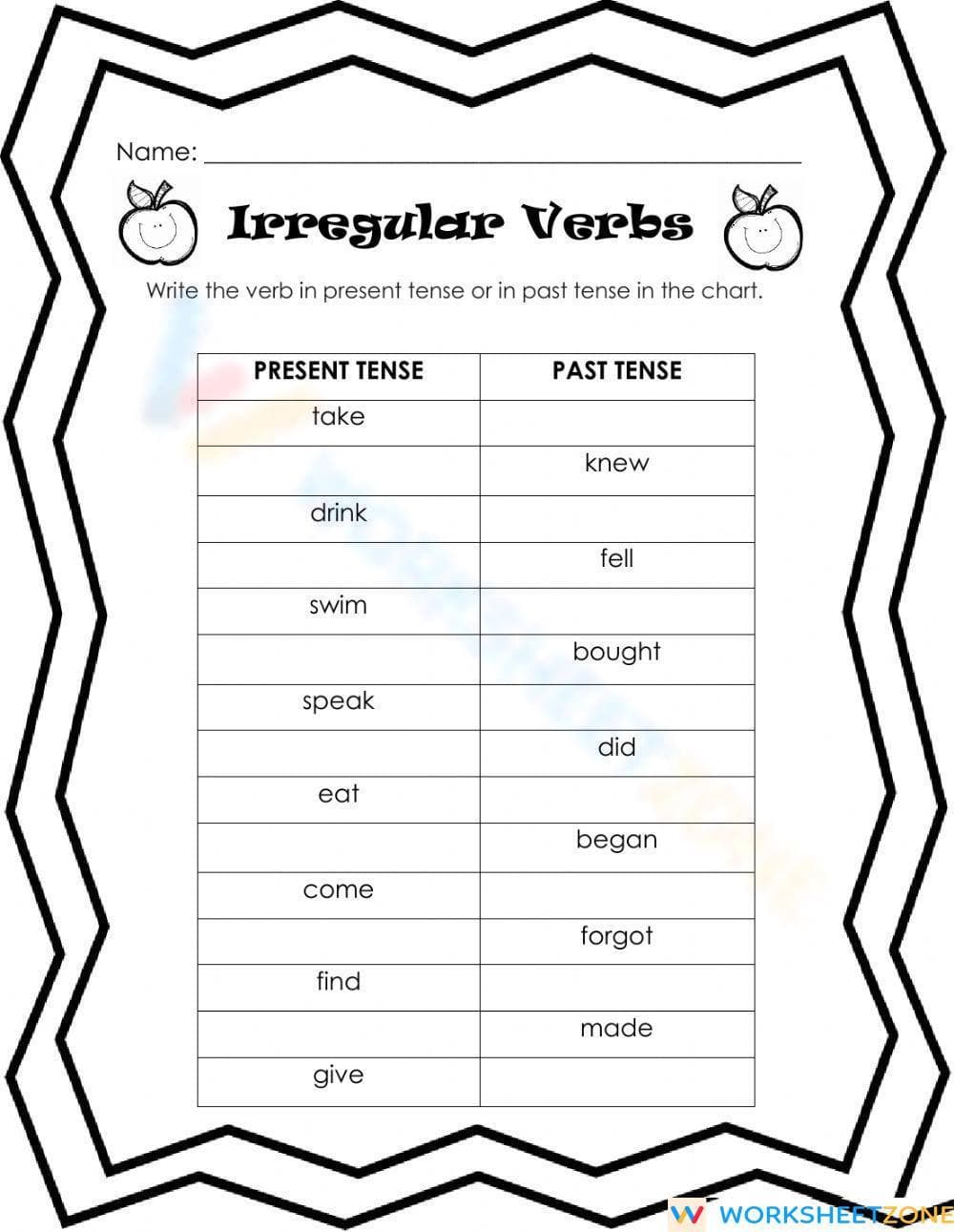

Grade 3 Irregular Verbs — Printable No-Prep Chart
Paste this activity's link or code into your existing LMS (Google Classroom, Canvas, Teams, Schoology, Moodle, etc.).
Students can open and work on the activity right away, with no student login required.
You'll still be able to track student progress and results from your teacher account.
This reference chart helps students in grades 2-4 master irregular verbs, a key component of grammatical accuracy. It provides a clear, organized list of common verbs and their past tense forms (simple and participle), moving beyond simple memorization to support correct application in writing and speaking.
At a Glance
- Grade: 2–4 · Subject: ELA / Grammar
- Standard:
CCSS.ELA-LITERACY.L.3.1.d— Form and use regular and irregular verbs.- Skill Focus: Irregular Verbs
- Format: 1 page · 1 comprehensive chart · Reference tool · PDF
- Best For: Writing support, grammar stations, student binders
- Time: 5–10 minutes (review/reference)
What's Inside
This single-page PDF contains a clearly organized three-column chart listing dozens of common irregular verbs. Columns for 'Base Form', 'Past Simple', and 'Past Participle' provide a quick reference for students during writing or grammar practice. No answer key is needed as it is a reference tool.
Zero-Prep Workflow
This resource is designed for immediate classroom use with minimal teacher effort. 1. Print (1 minute): Print a class set or individual copies for student writing folders. 2. Distribute (1 minute): Hand out the chart before starting a writing unit or have students place it in their binders for easy access. 3. Review (5 minutes): Briefly model how to find a verb and use the three forms correctly in a sentence. Total teacher preparation time is under two minutes, making this an ideal, reliable resource for substitute plans or daily grammar support.
Standards Alignment
The primary standard addressed is CCSS.ELA-LITERACY.L.3.1.d, which requires students to "Form and use regular and irregular verbs." This chart directly supports that objective by providing a comprehensive list of examples. It also supports the writing standard CCSS.ELA-LITERACY.W.3.5 (developing and strengthening writing) by serving as a key editing tool. Both standard codes can be copied directly into lesson plans, IEP goals, or district curriculum mapping tools.
How to Use It
Use this chart during a writing workshop to help students self-edit their work for correct verb tense. Students can keep the chart in their writing folder and refer to it when drafting or revising narratives. For a quick formative assessment, ask students to highlight five verbs from their own writing and check their forms using the chart; this gives you a rapid snapshot of their application skills. Expected completion time for a quick reference check is 1-2 minutes per student.
Who It's For
This resource is designed for students in Grades 2-4 who are learning to use past tense verb forms correctly. It is especially helpful for English Language Learners and students who need visual support for grammar rules. Pair this chart with a mentor text that includes a variety of irregular verbs to create a complete lesson on verb usage and author's craft.
Mastering irregular verbs is a crucial step in developing grammatical accuracy. This chart directly addresses standard CCSS.ELA-LITERACY.L.3.1.d, which requires students to form and use irregular verbs correctly. By providing an organized list of common verb forms, the tool reduces cognitive load, allowing students to focus on content. Research shows that explicit grammar instruction paired with tools for independent application improves writing. A major analysis by RAND AIRS 2024 confirmed that students with access to structured reference materials during writing demonstrate greater confidence and accuracy in their final drafts. This chart is a powerful scaffold, enabling students to internalize complex grammar rules through repeated, contextualized use and build a strong foundation for advanced sentence construction.


