




























Views
Downloads

Printable Women's Day Reading Worksheet | Grade 3 ELA

Paste this activity's link or code into your existing LMS (Google Classroom, Canvas, Teams, Schoology, Moodle, etc.).
Students can open and work on the activity right away, with no student login required.
You'll still be able to track student progress and results from your teacher account.
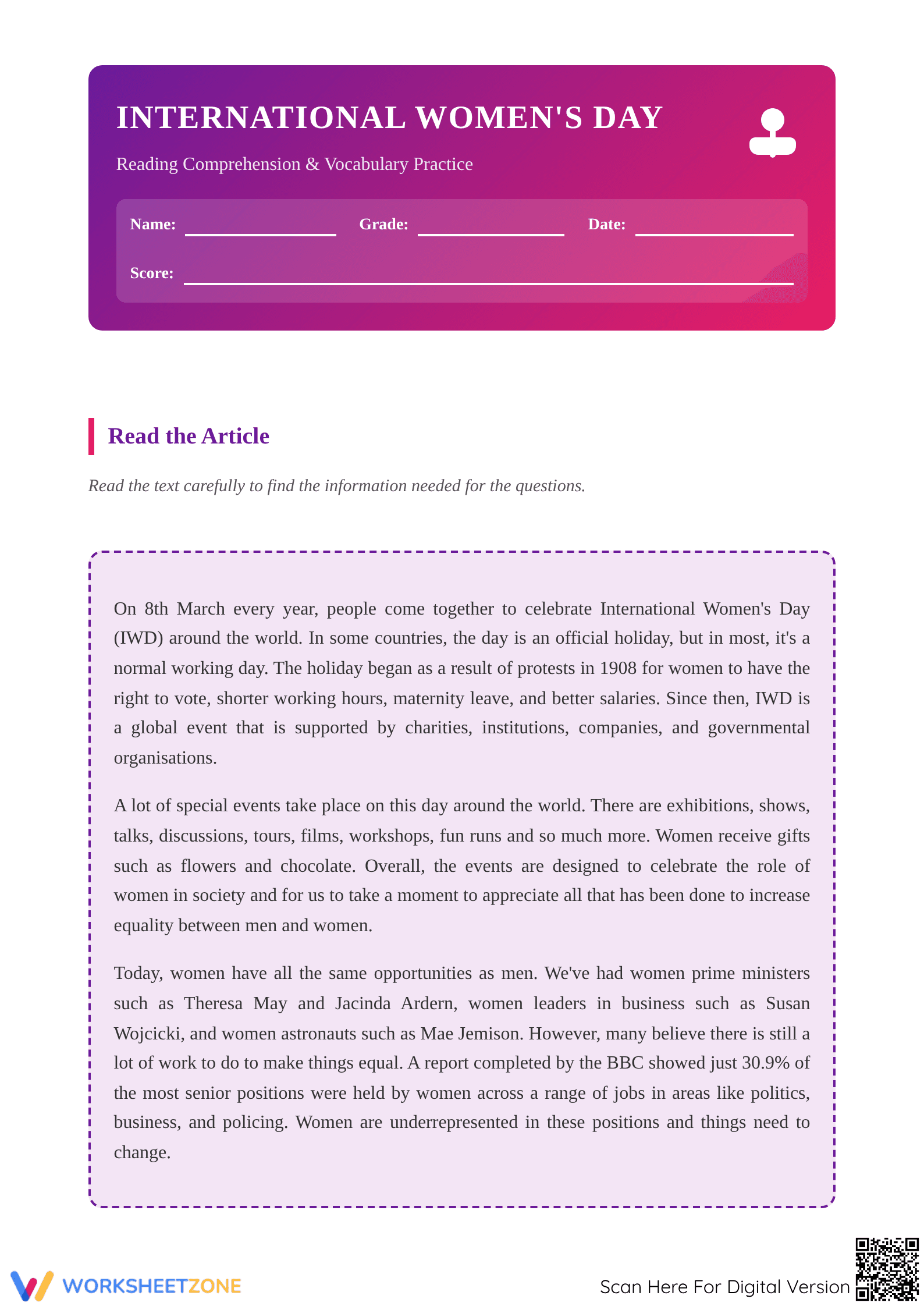
This reading comprehension worksheet builds informational text skills while introducing the history of International Women's Day. Students read a structured passage and apply their understanding through targeted questions, developing their ability to locate text evidence and determine vocabulary meaning.
At a Glance
- Grade: 3 · Subject: ELA
- Standard:
CCSS.ELA-LITERACY.RI.3.1— Answer questions using explicit text evidence- Skill Focus: Reading Comprehension & Vocabulary
- Format: 4 pages · 14 problems · Answer key included · PDF
- Best For: Independent practice and sub plans
- Time: 25–35 minutes
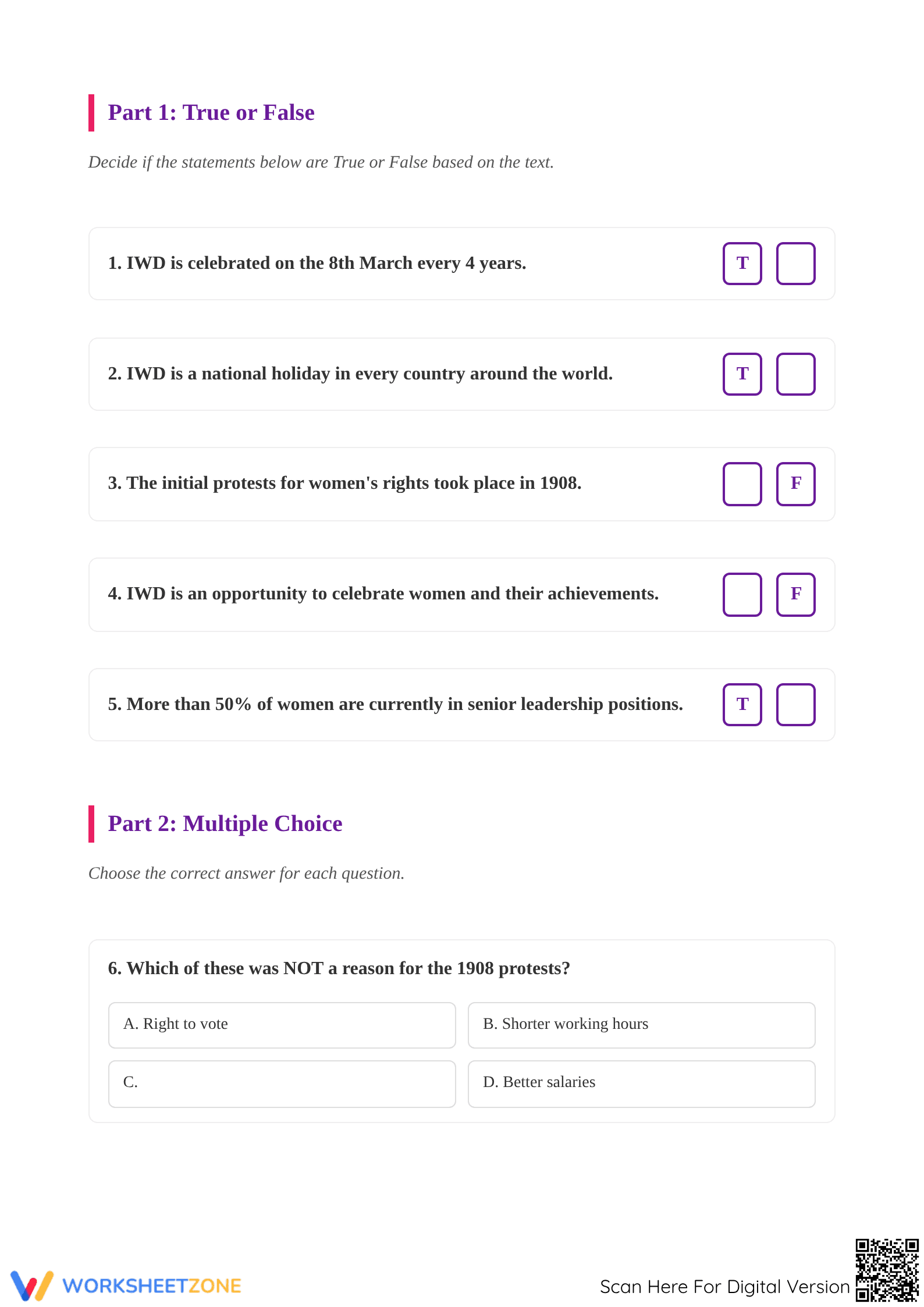
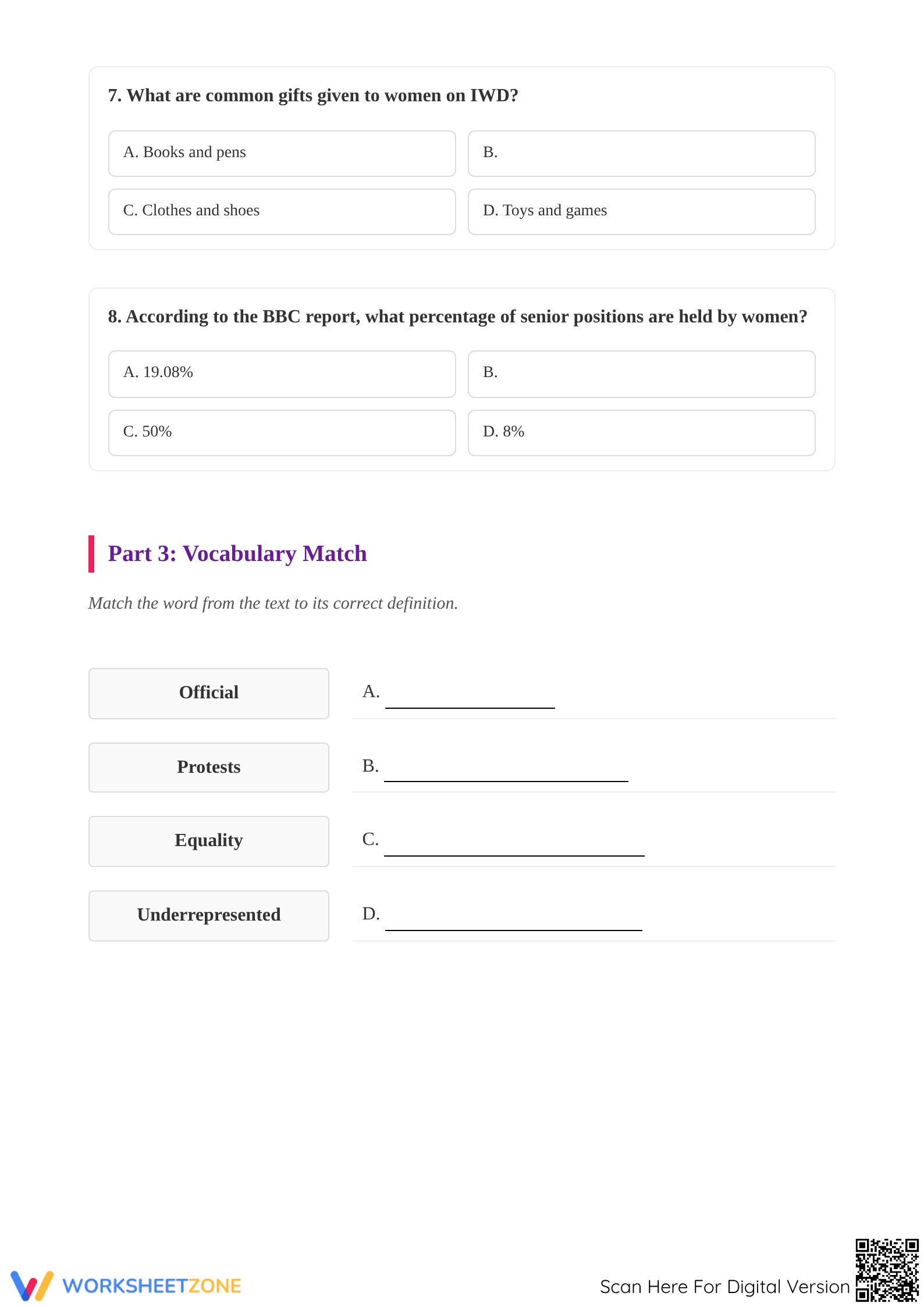
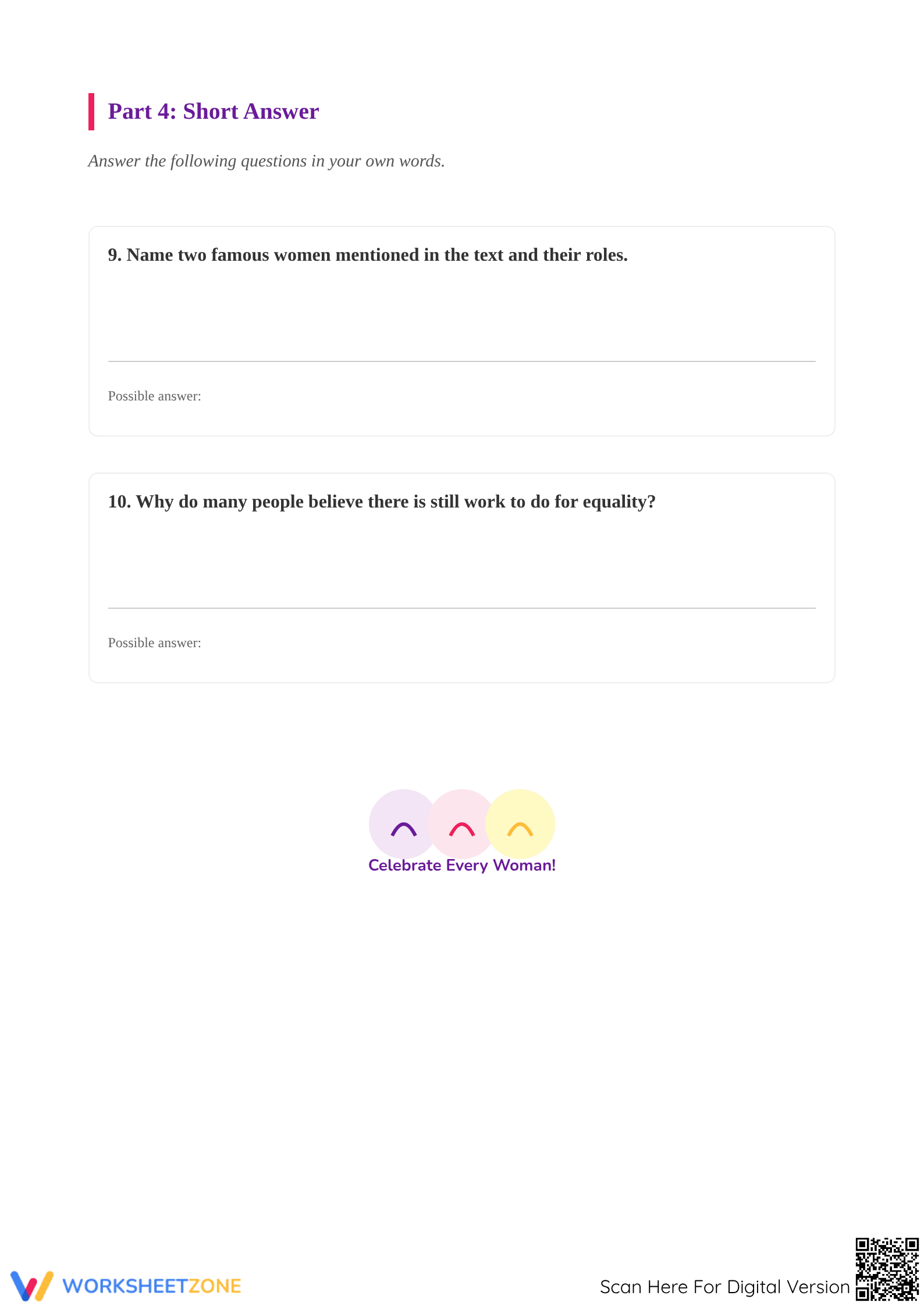
This resource features a one-page informational text followed by three pages of assessment tasks. The 14 problems are divided into true or false statements, multiple-choice questions, a vocabulary matching exercise, and short-answer responses. A complete answer key is provided for efficient grading.
Zero-Prep Workflow
- Print (1 minute): The four-page layout is formatted for standard printing. Simply print the student pages and keep the answer key for your records.
- Distribute (1 minute): Hand out the packets. The instructions are self-explanatory, allowing students to begin reading immediately without extensive teacher setup.
- Review (3 minutes): Use the included answer key to quickly check the true/false, multiple-choice, and vocabulary sections, leaving only the two short-answer questions for manual review.
With under two minutes of total teacher prep time, this is ideal for sub plans.
Standards Alignment
This resource is directly aligned to CCSS.ELA-LITERACY.RI.3.1: "Ask and answer questions to demonstrate understanding of a text, referring explicitly to the text as the basis for the answers." It also supports vocabulary development by requiring students to match domain-specific words to their definitions based on the reading. Both standard codes can be copied directly into lesson plans, IEP goals, or district curriculum mapping tools.
How to Use It
Deploy this worksheet during your March literacy block as independent practice. Alternatively, use it as a focused reading center activity. As a formative assessment tip, observe how students tackle the short-answer section; check if they flip back to the text to find specific evidence. Expected completion time ranges from 25 to 35 minutes.
Who It's For
Designed for third-grade students, this serves as excellent review for fourth graders. For differentiation, teachers can read the passage aloud to students who struggle with decoding. Pair this worksheet with a broader social studies lesson on historical figures or an anchor chart detailing how to find text evidence.
Aligning instructional materials to CCSS.ELA-LITERACY.RI.3.1 ensures students can answer questions using explicit text evidence, a foundational skill for academic success. According to a recent EdReports 2024 analysis, high-quality instructional materials that integrate cross-curricular topics, such as social studies and history, significantly improve reading comprehension outcomes. When students engage with meaningful informational texts, like this passage on International Women's Day, they build both background knowledge and critical literacy skills simultaneously. Structured practice with varied question types helps solidify these competencies. By requiring learners to return to the text to verify their answers, educators foster habits of close reading and analytical thinking. This targeted approach not only prepares students for standardized assessments but also equips them with the necessary tools to process complex informational media effectively throughout their educational journeys.


