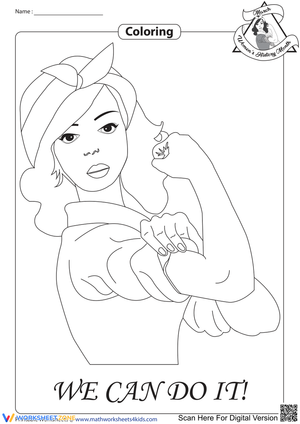
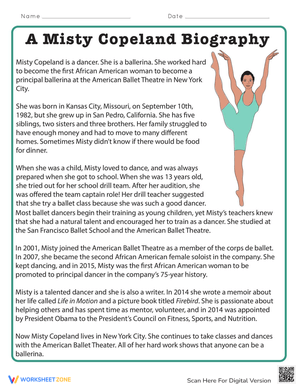
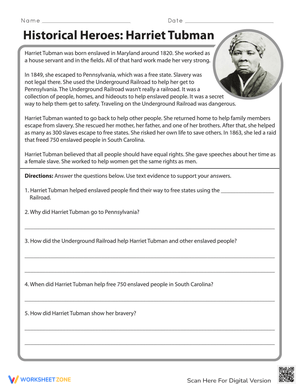
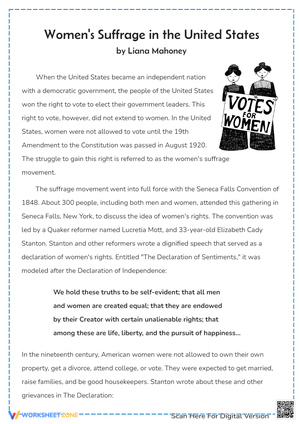
These women's history month worksheets resources give teachers a ready-made March toolkit that spans biography reading comprehension, graphic organizer research templates, vocabulary development, reflective writing, and cross-curricular STEM activities — all in printable formats that work across upper elementary and middle grades. Each worksheet is standalone, prints cleanly in black and white, and comes with an answer key where applicable. Pull one for a Monday morning warm-up or sequence the full collection across a four-week unit; the format supports both.
What's Inside the Set
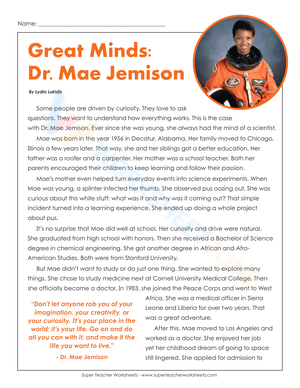
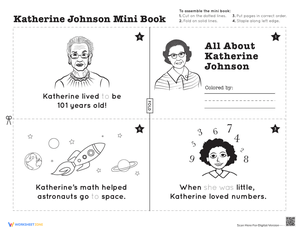
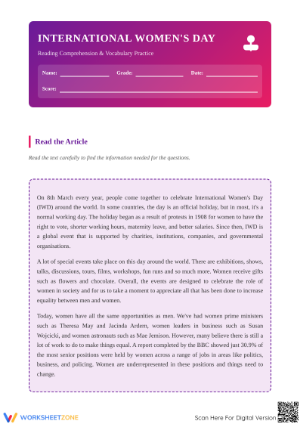
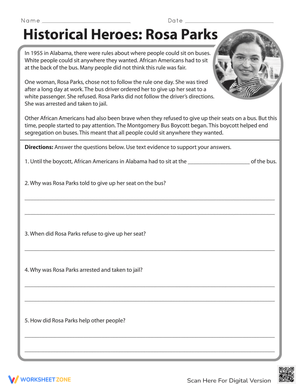
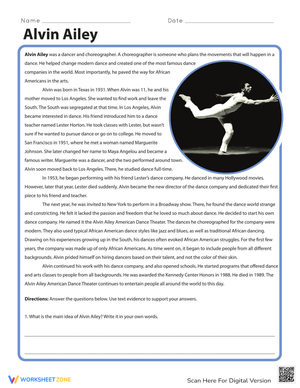
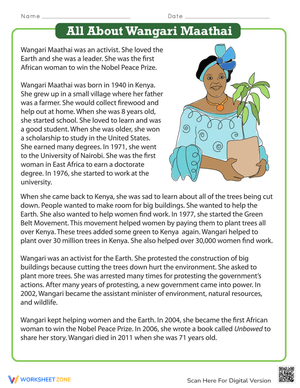
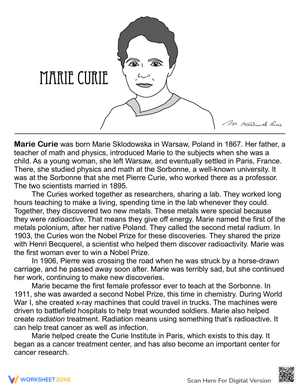
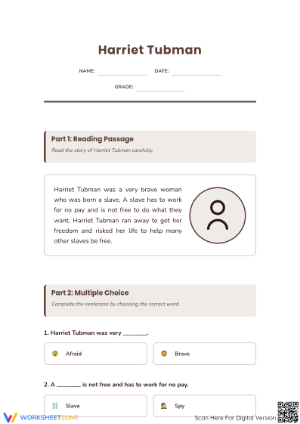
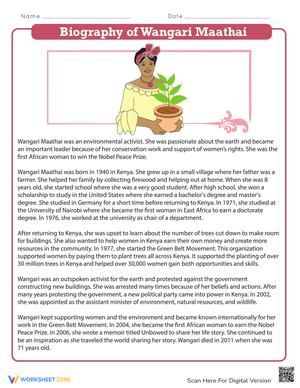
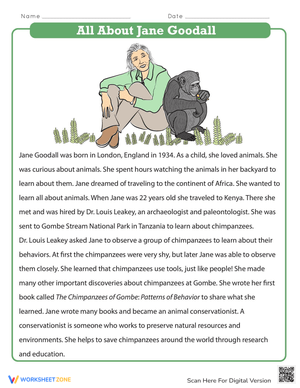
Reading comprehension passages anchor the collection. Each passage presents a biography at a specified complexity level paired with text-dependent questions that ask students to locate evidence, infer motivation, and evaluate lasting impact — not just recall dates. Figures covered include Harriet Tubman, Katherine Johnson, Dolores Huerta, Fannie Lou Hamer, and Mae Jemison, among others, with the roster deliberately extending past the four or five names that dominate most classroom posters.
The set includes five worksheet types:
- Biography graphic organizers — structured templates guiding students through early life, major obstacles, key accomplishments, and legacy; function as both research planning tools and formative checkpoints before final presentations.
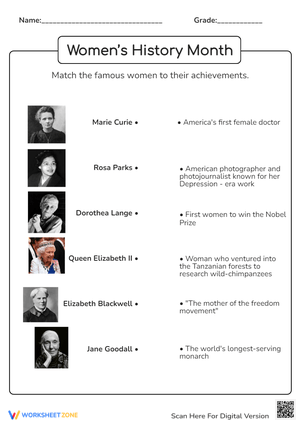
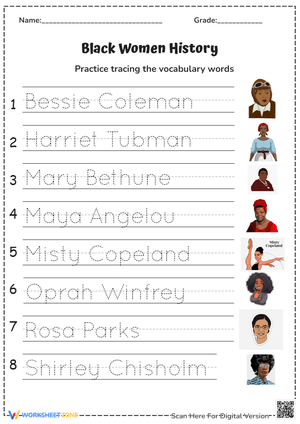
- Vocabulary activities — contextual matching and fill-in-the-blank tasks built around recurring unit terms: suffrage, advocacy, trailblazer, amendment, equity.
- Reflective and argumentative writing prompts — ranging from lower-stakes tasks ("describe one obstacle this woman faced and how she responded") to evidence-based argument paragraphs requiring cited textual support.
- STEM-focused worksheets — timeline sequencing, labeled invention diagrams, and short-answer activities spotlighting women including Alice Ball, Chien-Shiung Wu, and Edith Clarke.
- Comparison and analysis tasks — Venn diagrams and dual-biography activities that ask students to identify shared obstacles, contrasting approaches, and overlapping legacies across time periods.
How to Build These Worksheets Into Your Lesson Plans
Station rotations work particularly well with this set. Arrange four stations — a reading passage with comprehension questions, a biography graphic organizer with provided source material, a vocabulary activity, and a writing prompt — and rotate students every twelve to fifteen minutes. By the end of a single class period, every student has touched all four formats, which gives teachers an early read on where individual students need support before the unit deepens.
A week-long research structure uses the graphic organizer as the backbone: assign it on Monday, give students three work periods to research and draft, and hold brief share-outs on Friday. The organizer functions simultaneously as the planning document, the formative checkpoint, and the presentation outline. STEM timeline and diagram worksheets work well on Wednesday — the task type shifts away from heavy biography reading, which keeps engagement from flattening mid-week.
When selecting from women's history month worksheets downloads, aligning your choices to the NWHA's annual theme gives the unit a conceptual thread students carry across all of March. The National Women's History Alliance designates a new focus each year — recent themes have centered on women in leadership, women in healing, and women advocating for equity. If the theme is leadership, pull the political figures and community organizer passages to the front of the sequence. Students leave with a more coherent argument about women's historical contributions rather than a list of disconnected biographies.
Frequent Student Errors Worth Watching For
The biography graphic organizer's "obstacles overcome" field produces the most consistently thin student responses. Students write "she faced discrimination because she was a woman" and consider the field complete. The obstacle is named but never examined — there is no specificity about what form the discrimination took, what it cost the subject, or how she responded to it. This pattern appears across grade levels. Running a brief whole-class discussion around one worked example before students complete their own organizers reduces it significantly.
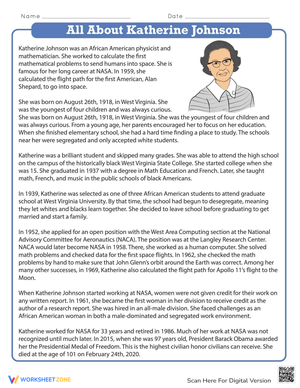
In reflective and argument writing, a different pattern emerges: students drift from textual evidence into personal assertion mid-paragraph without marking the transition. A student writing about Katherine Johnson will cite two strong details from the passage and then pivot abruptly to "I think women are still underestimated today" — not wrong, but untethered from the text. Writing prompts that include a structured response frame ("In the text, the author states... / This matters because... / In my view...") reduce that drift without removing the student's voice or opinion from the writing.
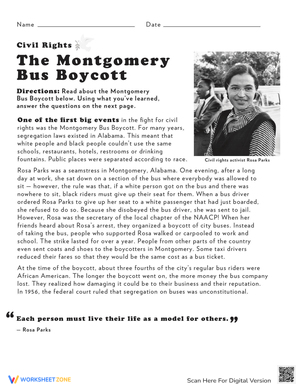
At the upper elementary level, students frequently confuse figures whose stories share surface similarities. Rosa Parks and Ruby Bridges are the most common mix-up, but similar conflation appears at middle school with Dorothy Height and Fannie Lou Hamer. A brief comparison activity placed early in the unit — before students write about individual figures independently — catches the confusion before it shows up in a final product.
Standard Alignment
Reading comprehension worksheets align to CCSS.ELA-LITERACY.RI.4.3 and RI.5.3, which require students to explain events in historical texts using specific details and describe connections between events and concepts. At middle school, analysis-level passages address RI.6.6 and RI.7.6, standards focused on determining an author's point of view and distinguishing it from the reader's own. Biography research organizers connect to W.4.7, W.5.7, and W.6.7 — the short research project standards running through grades four to seven — while the argument writing prompts address W.4.1 through W.7.1. These standards cluster in the upper elementary and middle school sequence because that is when students are developmentally ready to handle secondary source material alongside structured argument-making, which is precisely what Women's History Month biography work exercises.
Adjusting the Worksheets for a Range of Learners
For students reading below grade level, pre-identifying the six to eight content vocabulary terms most critical to each passage — and adding brief glosses before printing — keeps the cognitive load on historical thinking rather than vocabulary decoding. A second practical adjustment is pairing the passage with a read-aloud audio source, then having students complete the worksheet after listening rather than after silent reading. Both approaches preserve the rigor of the comprehension questions while removing a barrier that is not the skill being assessed.
Women's history month worksheets collections that offer the same biography subject at two reading levels — Katherine Johnson at 600L and at 850L, for example — are the most flexible option for mixed-ability classrooms. Every student researches the same figure and participates in the same discussion; the texts differ, but the conversation does not have to. For students who move through worksheets quickly, a strong extension is asking them to identify one detail the passage author chose to omit and write a paragraph explaining what that omission might reflect about how history gets told and preserved.
Frequently Asked Questions
Do these worksheets cover figures beyond the most commonly taught names?
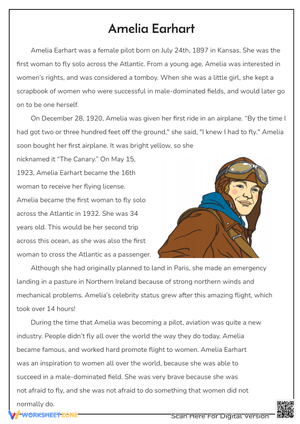
The collection extends well past Harriet Tubman, Amelia Earhart, and Susan B. Anthony. Passages and organizers feature scientists, labor organizers, artists, and political leaders from varied ethnic and cultural backgrounds — figures whose contributions are significant but whose names rarely appear on the posters that go up every March. The STEM worksheets in particular spotlight women such as Alice Ball, Chien-Shiung Wu, and Edith Clarke, whose work was largely excluded from mainstream curriculum until recently.
Are these worksheets appropriate for both elementary and middle school students?
Yes, because the formats span reading levels and task demands. The graphic organizers and lower-complexity reading passages suit grades three through five; the analysis-level comprehension questions, argument writing prompts, and primary-source comparison tasks are built for grades six through eight. Teachers across grade bands in the same building regularly pull from the same women's history month worksheets set because the materials are genuinely level-differentiated — not just formatted differently.
How do these worksheets function as formative assessment tools?
Reviewing completed graphic organizers before students move to a final product reveals thin content knowledge, underdeveloped claims, and vocabulary gaps while there is still time to address them. Reading comprehension worksheets with short-answer questions show whether students are making inferences or only locating surface details. The argument writing prompts, especially those with structured response frames, make the quality of student reasoning visible in a way that discussion-only instruction does not.












 Interactive Worksheet Maker
 Quiz Maker
 Word Search Maker
 Crossword Puzzle Maker
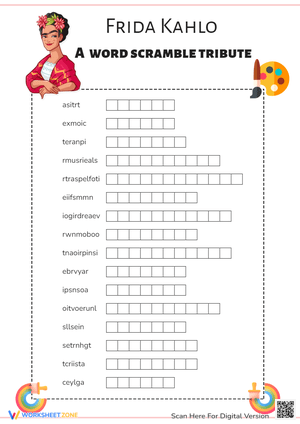
 Word Scramble Generator
 Sentence Scramble Generator
 Handwriting Worksheet Generator
 Name Tracing Generator
 Fill In The Blank Generator