


























Views
Downloads
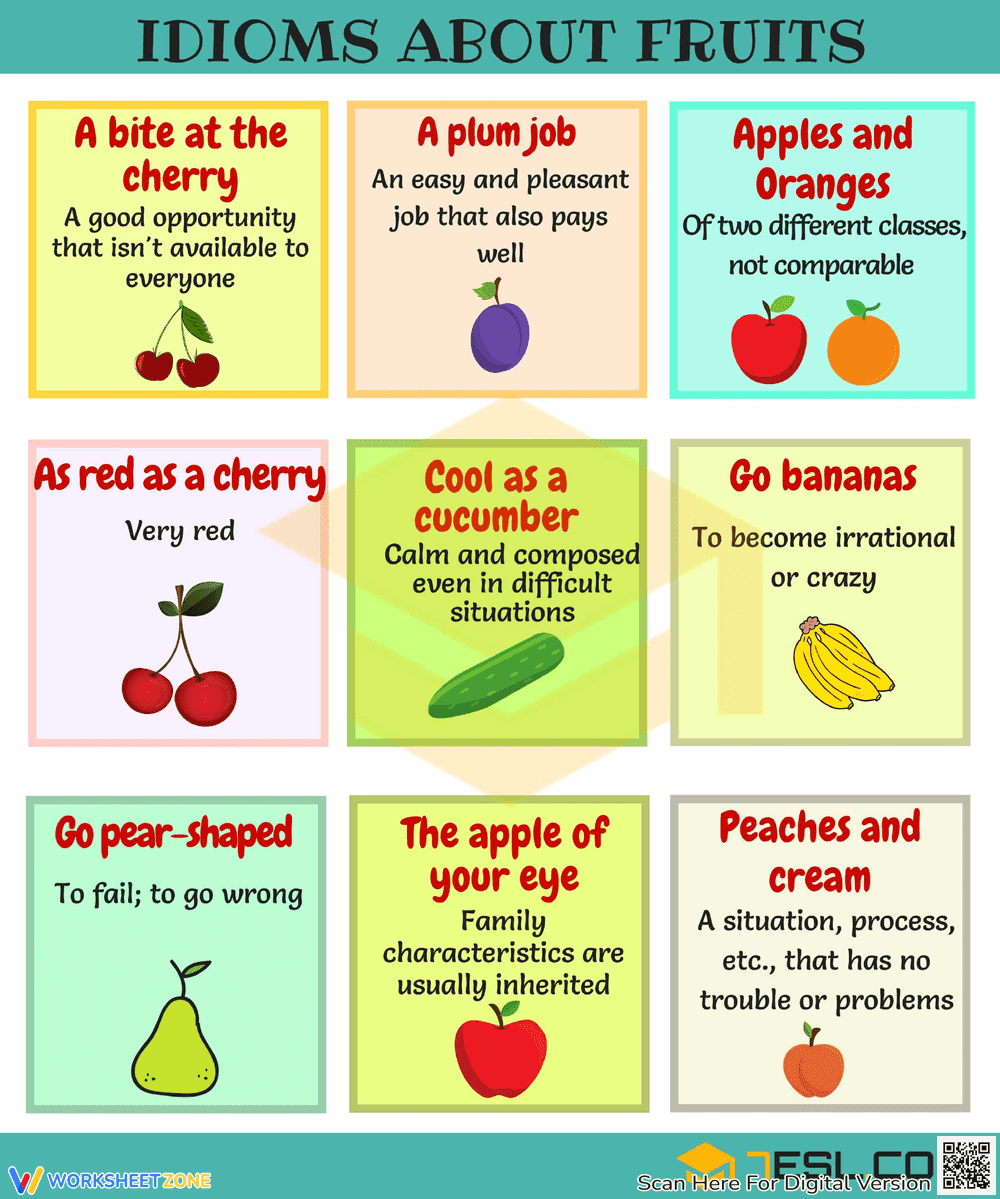

Fruit Idioms Guide | Essential Grade 3-6 ELA
Paste this activity's link or code into your existing LMS (Google Classroom, Canvas, Teams, Schoology, Moodle, etc.).
Students can open and work on the activity right away, with no student login required.
You'll still be able to track student progress and results from your teacher account.
This Grade 3-6 fruit idioms reference sheet helps students decode figurative language through visual cues and clear definitions. By providing concrete examples of common expressions like 'cool as a cucumber' or 'go bananas,' students build the linguistic flexibility needed for advanced reading comprehension and creative writing. It simplifies complex metaphorical concepts into digestible, illustrated blocks.
At a Glance
- Grade: 3-6 · Subject: ELA
- Standard:
CCSS.ELA-LITERACY.L.4.5.B— Recognize and explain the meaning of common idioms and adages- Skill Focus: Figurative Language & Idioms
- Format: 1 page · 9 entries · Reference Guide · PDF
- Best For: Vocabulary centers, writing folders, and ELL support
- Time: 5–10 minutes of direct instruction or independent review
What's Inside
The resource features nine distinct fruit-themed idioms, each in a color-coded box for easy visual tracking. Every entry includes the idiom in bold, a concise definition, and a supporting illustration. This single-page PDF serves as a permanent reference tool that students can keep in their desks or ELA binders for quick consultation during independent work.
Zero-Prep Workflow
This resource is designed for maximum efficiency, making it an ideal sub-plan addition. The workflow consists of three simple steps:
- Print: Generate the single-page guide in approximately 30 seconds.
- Distribute: Hand out physical copies or display the PDF on a smartboard in 1 minute.
- Review: Spend 30 seconds explaining the visual layout before students begin their independent work.
Total teacher preparation time is under two minutes, allowing you to focus on instruction rather than logistics.
Standards Alignment
This worksheet aligns with `CCSS.ELA-LITERACY.L.4.5.B`, which requires students to recognize and explain the meaning of common idioms, adages, and proverbs. It also supports L.5.5.B by expanding the student's repertoire of figurative language. Both standard codes can be copied directly into lesson plans, IEP goals, or district curriculum mapping tools.
How to Use It
Use this guide during the 'Introduction to New Material' phase of a figurative language unit. It works exceptionally well as a formative assessment tool; ask students to write a sentence using one of the idioms and observe if they apply the context correctly. The expected completion time for a quick review or 'scavenger hunt' activity is approximately 10 minutes.
Who It's For
This resource is ideal for upper elementary students, particularly English Language Learners (ELLs) who often struggle with non-literal language. It pairs naturally with a descriptive writing prompt or a short story passage containing dialogue. The visual support ensures that students with different processing speeds can access the content simultaneously.
Understanding figurative language is a critical milestone in literacy development, as idioms often represent a significant barrier to reading fluency for intermediate learners. This resource targets CCSS.ELA-LITERACY.L.4.5.B by providing explicit definitions for 9 common fruit-based expressions. According to Fisher & Frey (2014), visual anchors and clear definitions in vocabulary instruction significantly improve the retention of non-literal phrases. By isolating these idioms from dense text, students can focus on the semantic shift between the literal fruit and the figurative meaning. This structured approach aligns with the gradual release of responsibility, moving from teacher-led identification to independent application. Research from the NAEP indicates that students who master figurative language early demonstrate higher proficiency in standardized reading assessments. This printable guide provides the necessary scaffolding to bridge the gap between basic decoding and deep comprehension of nuanced English prose.


