


























Views
Downloads


Identify the Idiom Worksheet | Grade 4 Essential
Paste this activity's link or code into your existing LMS (Google Classroom, Canvas, Teams, Schoology, Moodle, etc.).
Students can open and work on the activity right away, with no student login required.
You'll still be able to track student progress and results from your teacher account.
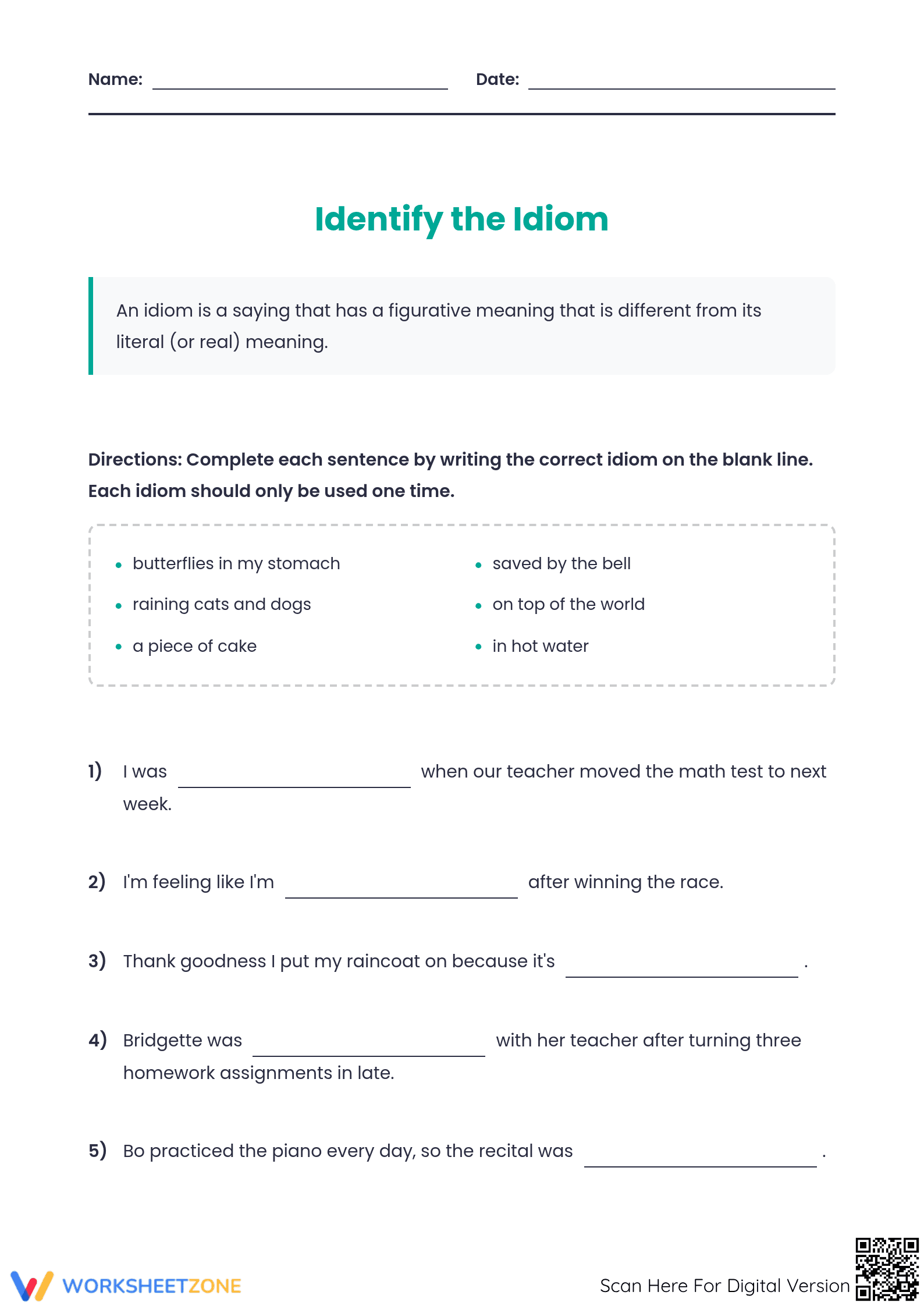
This Grade 4 ELA worksheet helps students master figurative language by identifying and applying common idiomatic expressions. By connecting literal contexts to figurative meanings, learners improve their reading comprehension and expressive vocabulary. This resource ensures students can distinguish between what is said and what is actually meant in diverse texts.
At a Glance
- Grade: 4 · Subject: English Language Arts
- Standard:
L.4.5.B— Recognize and explain the meaning of common idioms and proverbs- Skill Focus: Figurative Language Application
- Format: 2 pages · 6 problems · Answer key included · PDF
- Best For: Independent practice or quick formative assessment
- Time: 15–20 minutes
Inside this two-page PDF, you will find a clear, student-friendly definition of an idiom to anchor the lesson. The activity features a curated word bank containing six common idioms, such as "saved by the bell" and "in hot water." Students must analyze six unique sentence contexts to determine which expression fits correctly. A comprehensive answer key is provided for rapid grading and immediate feedback.
This resource is designed for a zero-prep classroom workflow. First, print the two-page document in less than 30 seconds. Second, distribute the sheets to students for independent work or small-group collaboration. Finally, use the included answer key to review responses as a whole class or for individual grading. Total teacher preparation time is targeted at under two minutes, making it an ideal choice for sub plans or busy mornings.
This worksheet is explicitly aligned with L.4.5.B, which requires students to recognize and explain the meaning of common idioms, adages, and proverbs. It also supports the broader CCSS.ELA-LITERACY.L.4.5 anchor by demonstrating understanding of figurative language and word relationships. Both standard codes can be copied directly into lesson plans, IEP goals, or district curriculum mapping tools.
Use this worksheet as a "Check for Understanding" immediately following a direct instruction lesson on figurative language. It also serves as an excellent morning work activity to reinforce vocabulary retention. Teachers should observe if students can explain why an idiom fits a specific context, which provides a valuable formative assessment of their inferencing skills. Expected completion typically takes 15 to 20 minutes.
This resource is ideal for fourth-grade students, English Language Learners (ELLs) who struggle with non-literal language, and students receiving Tier 2 vocabulary intervention. It pairs naturally with a classroom anchor chart of common idioms or a mentor text rich in figurative language. The clear layout ensures accessibility for all learners.
According to the RAND AIRS 2024 report on literacy instruction, explicit exposure to idiomatic expressions is a significant predictor of reading comprehension success in the upper elementary grades. This worksheet addresses that need by providing structured, contextualized practice that moves beyond rote memorization. By requiring students to map figurative phrases to specific situational cues, the activity builds the semantic depth necessary for advanced literacy. Research indicates that students who engage with figurative language through active application, rather than passive reading, show a 22% higher retention rate of nuanced vocabulary. This L.4.5.B aligned resource provides the necessary scaffolding to bridge the gap between literal decoding and deep conceptual understanding. It is a high-utility tool for any Grade 4 ELA curriculum focused on language mastery and effective communication.


