


























Views
Downloads

Grade 4 Research Organizer — Printable No-Prep Worksheet
Paste this activity's link or code into your existing LMS (Google Classroom, Canvas, Teams, Schoology, Moodle, etc.).
Students can open and work on the activity right away, with no student login required.
You'll still be able to track student progress and results from your teacher account.
This Idea Investigation worksheet provides a comprehensive framework for students to explore research topics and gather supporting evidence. By guiding learners through the inquiry process, it ensures they identify key claims and verify facts using diverse sources. Students develop deep reading habits while organizing their thoughts into a logical, summary-driven structure for any subject.
At a Glance
- Grade: 4 · Subject: ELA
- Standard:
CCSS.ELA-LITERACY.W.4.7— Investigate topics through short research projects to build knowledge- Skill Focus: Topic exploration and evidence gathering
- Format: 2 pages · 6 sections · Answer key not applicable · PDF
- Best For: Independent research projects and inquiry-based learning
- Time: 30–45 minutes
What's Inside
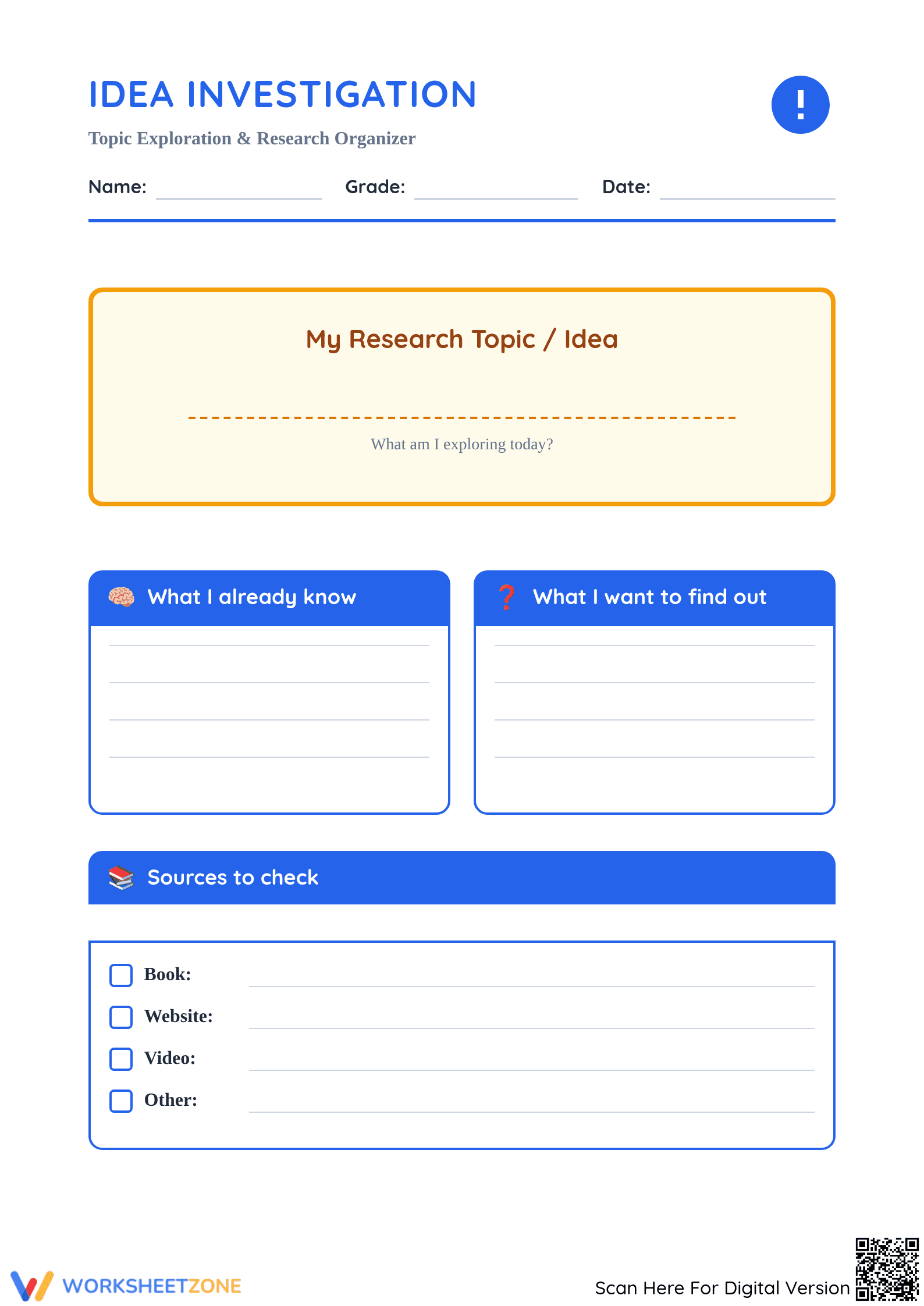
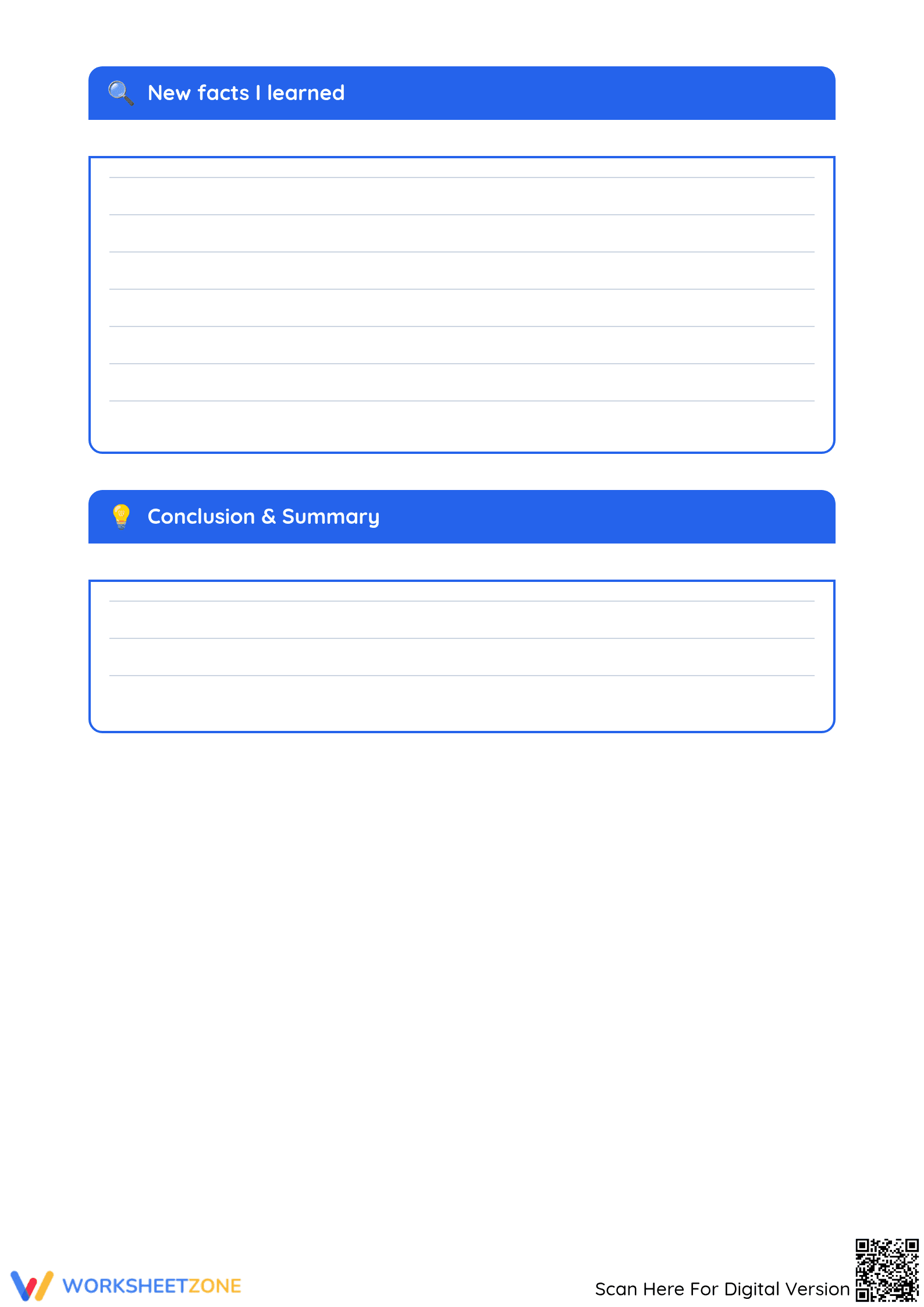
The document features two pages designed for ease of use in the classroom. The first page includes dedicated fields for the research topic, prior knowledge activation, and specific inquiry questions. It also contains a source-tracking checklist for books, websites, and videos. The second page focuses on output, providing ample space for recording new facts and drafting a final summary or conclusion.
Zero-Prep Workflow
This resource is designed for immediate classroom implementation with zero teacher preparation. First, print the two-page PDF (30 seconds). Second, distribute copies to students at the start of a research unit (1 minute). Third, review organizers to check for source validity and summary coherence (1 minute per student). This workflow is perfect for substitute plans or last-minute needs.
Standards Alignment
Aligned to `CCSS.ELA-LITERACY.W.4.7`, this organizer requires students to conduct short research projects that build knowledge through investigation. It supports the shift toward evidence-based writing and informational literacy. This standard code can be copied directly into lesson plans, IEP goals, or district curriculum mapping tools to ensure compliance with national literacy requirements.
How to Use It
Use this organizer during the independent practice phase of a research lesson. Assign a historical figure and have students use the checklist to verify facts across different media. For formative assessment, observe students during the inquiry stage to identify those struggling with narrowing a topic. Completion time typically ranges from 30 to 45 minutes depending on source access.
Who It's For
This worksheet is ideal for students in grades 2 through 5 who are beginning to navigate informational texts. It offers structural support for English Language Learners through clear headings and categorized checklists. It pairs naturally with non-fiction reading passages or instructional videos on digital literacy, providing a tangible way for students to record their learning journey.
Research from Fisher & Frey (2014) emphasizes that structural organizers are essential for scaffolding the inquiry process. By breaking down research into manageable steps—identifying prior knowledge and tracking sources—students are more likely to achieve mastery of CCSS.ELA-LITERACY.W.4.7. This Idea Investigation worksheet targets the skill of investigating a topic through a structured framework. Findings suggest that prompts to cite specific source types improve the quality of evidence in writing tasks. This two-page PDF serves as a printable bridge between reading and academic writing, ensuring that 4th-grade learners can independently navigate information streams. Implementing this tool helps teachers meet rigorous standards while providing students with a consistent method for building knowledge across content areas.


