


























Views
Downloads

Printable Adjectives Worksheet | Grade 3 ELA
Paste this activity's link or code into your existing LMS (Google Classroom, Canvas, Teams, Schoology, Moodle, etc.).
Students can open and work on the activity right away, with no student login required.
You'll still be able to track student progress and results from your teacher account.
This comprehensive language arts worksheet provides Grade 3 students with focused practice on forming and using comparative and superlative adjectives. Through a series of structured tasks, learners will move from identifying base forms to correctly applying adjective variations in sentences, building a core grammar skill essential for clear and descriptive writing.
At a Glance
- Grade: 3 · Subject: ELA / Language Arts
- Standard:
CCSS.ELA-LITERACY.L.3.1.G— Form and use comparative and superlative adjectives and adverbs.- Skill Focus: Comparative and Superlative Adjectives
- Format: 3 pages · 45 problems · Answer key included · PDF
- Best For: Independent practice, grammar review, assessment
- Time: 20–30 minutes
What's Inside
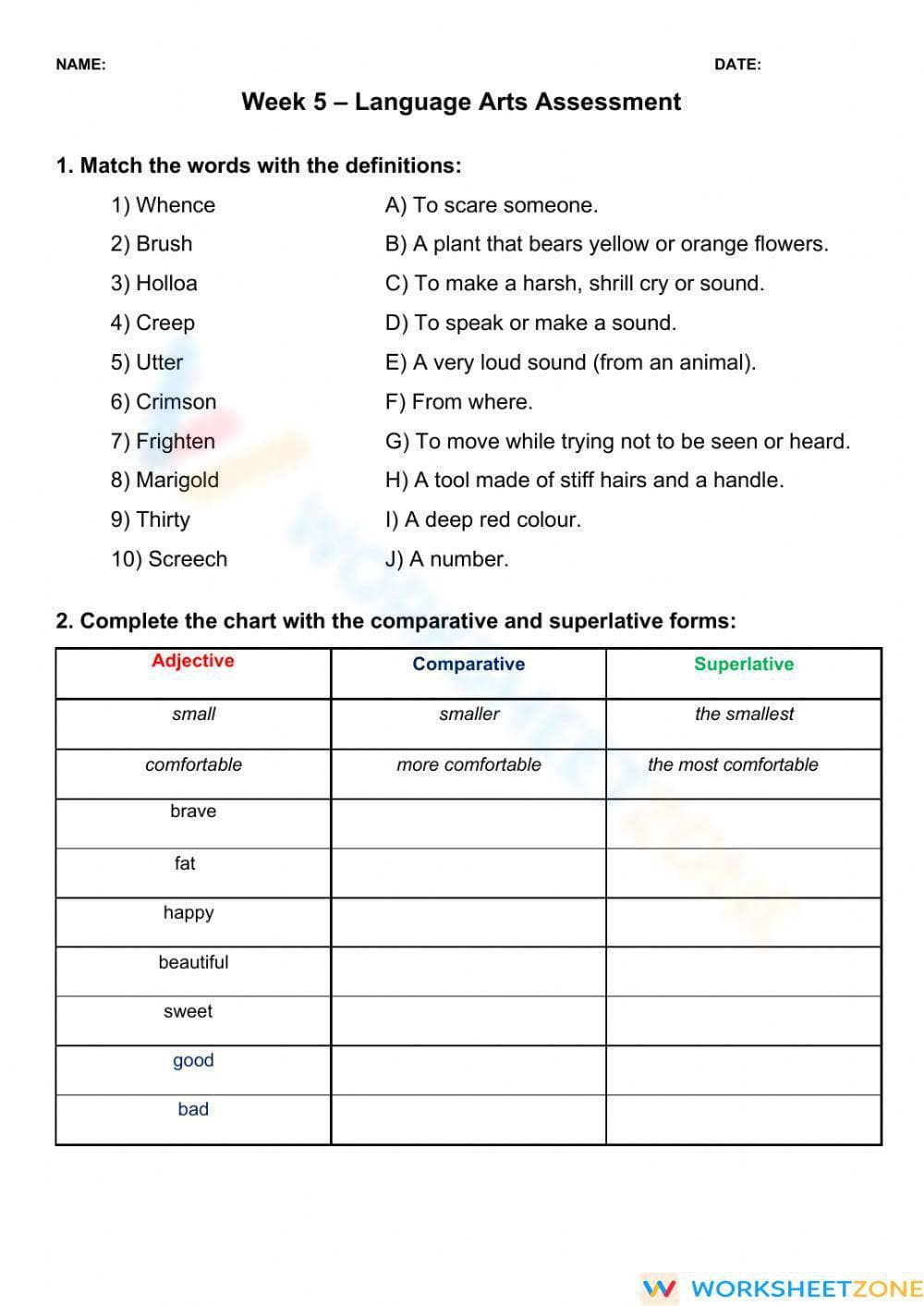
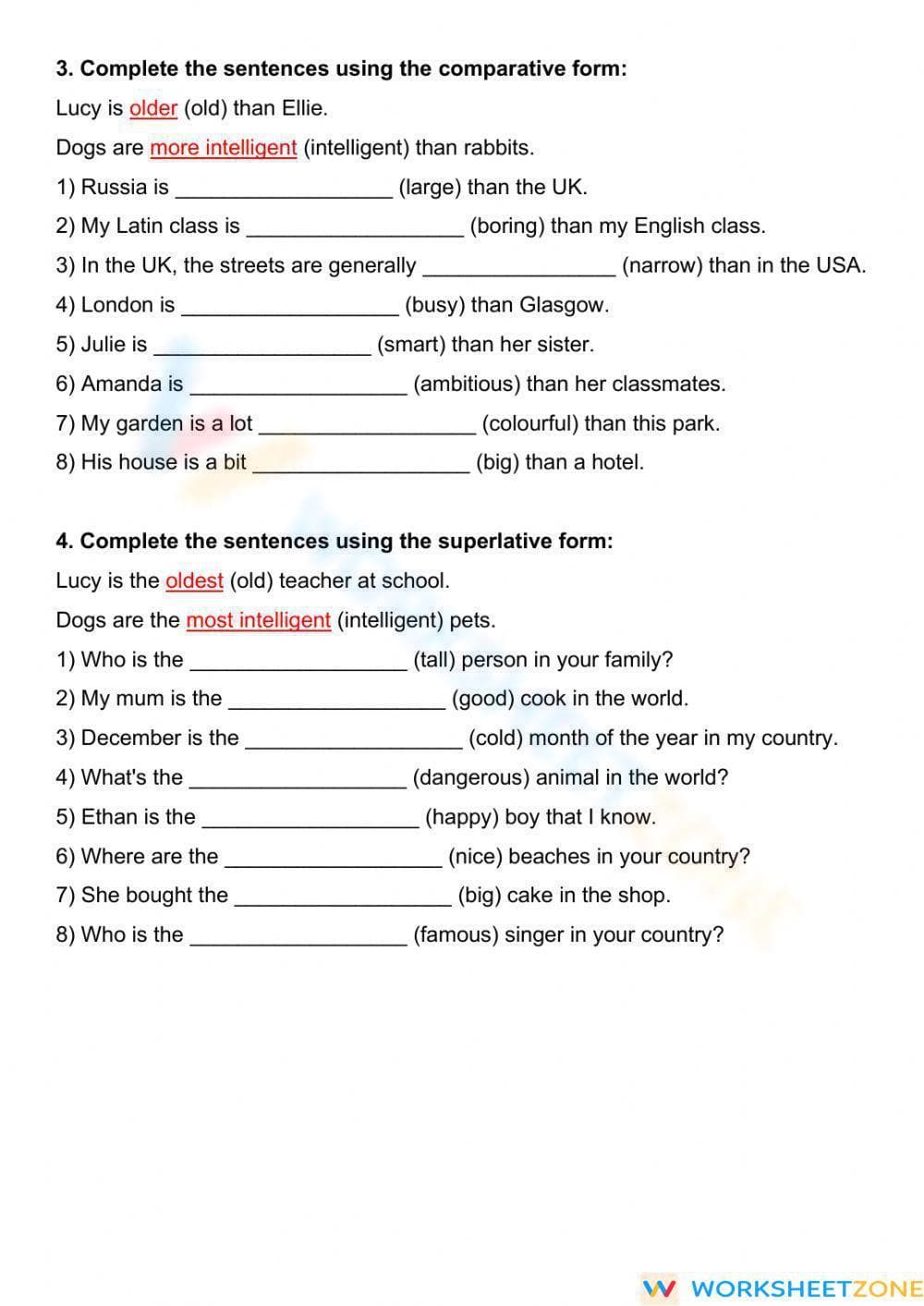
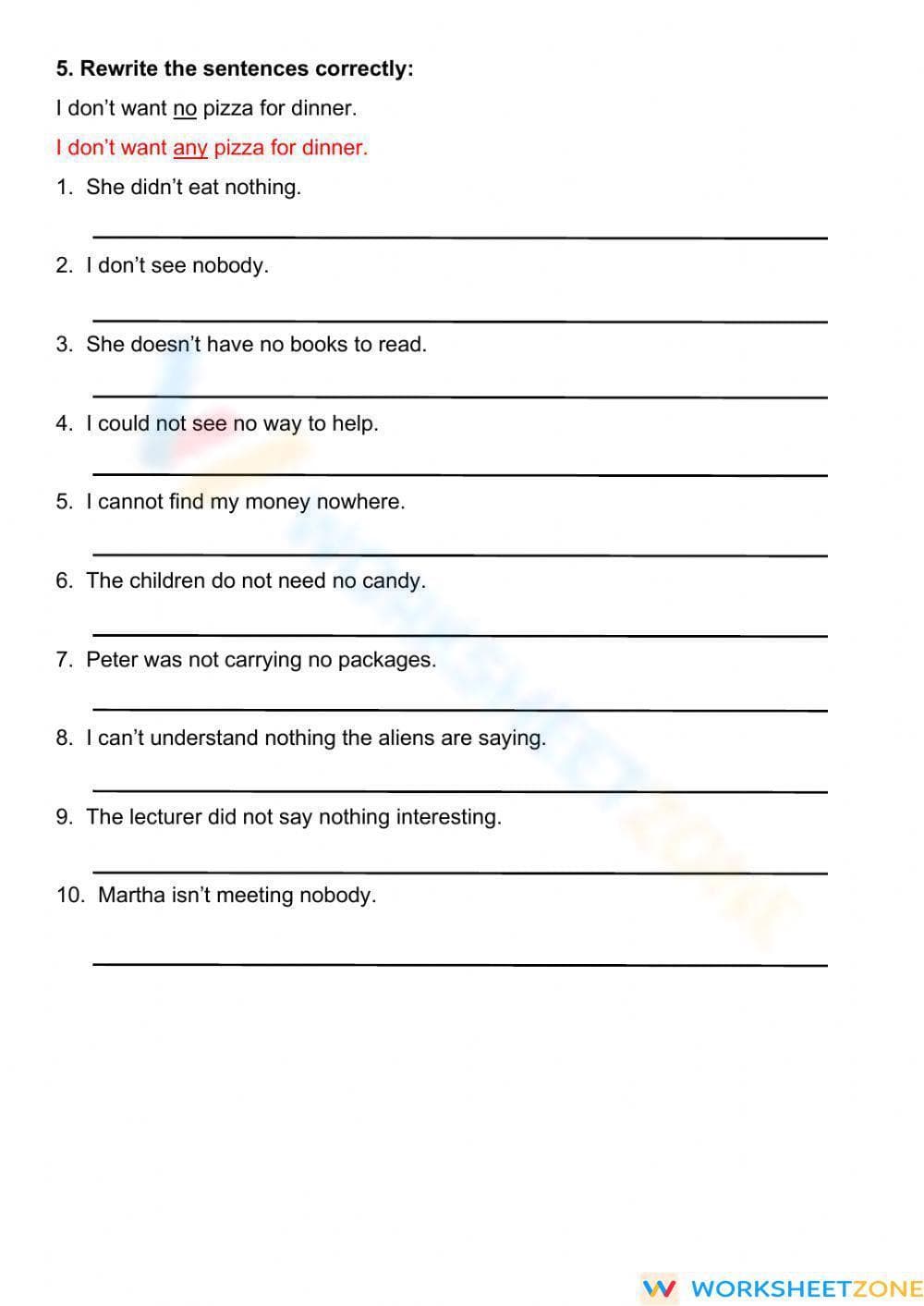
This three-page resource assesses key Grade 3 skills. It begins with a vocabulary matching warm-up. The core tasks include a chart for converting adjectives, two sections for completing 16 sentences with the correct form, and a final section correcting 10 double negatives. An answer key is provided for easy grading.
Skill Progression: From Recognition to Application
This worksheet uses a gradual release model to build mastery with adjectives.
- Guided Practice: A clear chart task reinforces the rules for forming comparatives and superlatives for 9 regular and irregular adjectives.
- Supported Practice: Students then complete 16 sentences where the base adjective is provided, allowing them to focus on applying the correct form in context.
- Independent Practice: The final task on correcting double negatives challenges students to apply broader grammar rules independently.
This structure is effective for reinforcing a direct instruction lesson.
Standards-Aligned for Your Classroom
This worksheet directly aligns with Common Core standard CCSS.ELA-LITERACY.L.3.1.G: Form and use comparative and superlative adjectives and adverbs. The exercises provide targeted practice for this key grammatical benchmark and also touch on general conventions of standard English (L.3.1). These codes can be copied directly into lesson plans or curriculum maps.
How to Use This Worksheet
Use this resource as a pre-assessment, a post-assessment, or a homework assignment. For formative assessment, circulate as students work on the sentence completion task. Note which students struggle with irregular forms versus multi-syllable words to inform small group instruction. Most students can complete all sections in 20-30 minutes.
Who It's For
This worksheet is designed for third-grade students learning grammar. It also serves as a great review for fourth graders or a challenge for advanced second graders. The clear sections and focused tasks make it accessible for diverse learners. Pair it with an anchor chart showing adjective rules for extra visual support.
This worksheet provides targeted practice for a foundational grammar skill identified as crucial in the Common Core State Standards. By asking students to form and use comparative and superlative adjectives, it directly addresses the requirements of CCSS.ELA-LITERACY.L.3.1.G. Mastering this skill allows students to add precision and detail to their writing. Research from Fisher & Frey (2014) emphasizes the importance of purposeful, scaffolded instruction that moves learners from guided to independent practice, a structure reflected in this worksheet's design. The progression from a fill-in-the-chart task to contextual sentence completion helps solidify understanding. Providing students with structured opportunities to apply grammar rules, as this resource does, is more effective than decontextualized drills. This standards-aligned tool gives educators a reliable method for assessing and reinforcing a key element of descriptive writing, which is a consistent focus in elementary literacy education.


