


























Views
Downloads

Printable Codominance Worksheet | Grade 9-10 Biology
Paste this activity's link or code into your existing LMS (Google Classroom, Canvas, Teams, Schoology, Moodle, etc.).
Students can open and work on the activity right away, with no student login required.
You'll still be able to track student progress and results from your teacher account.
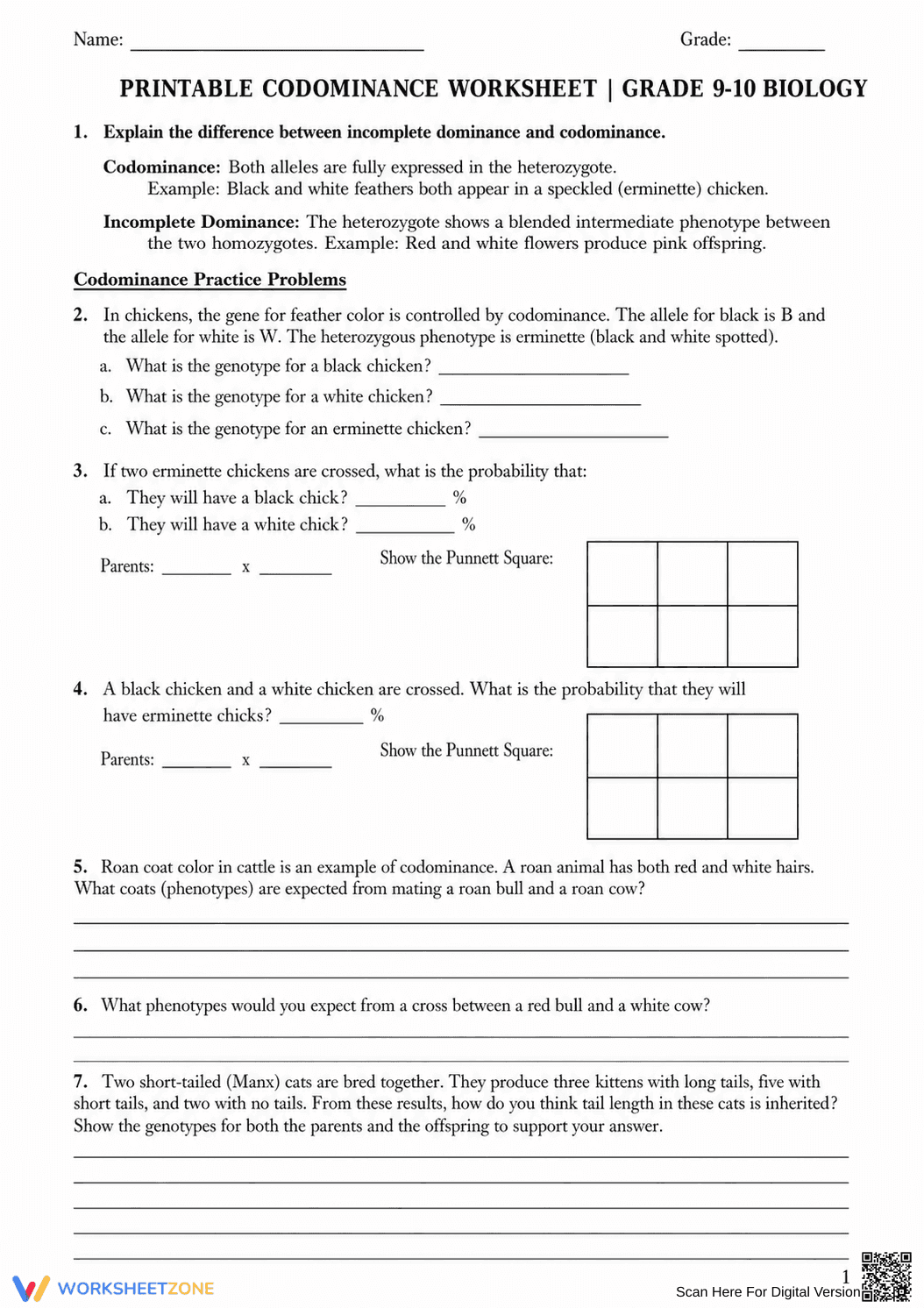
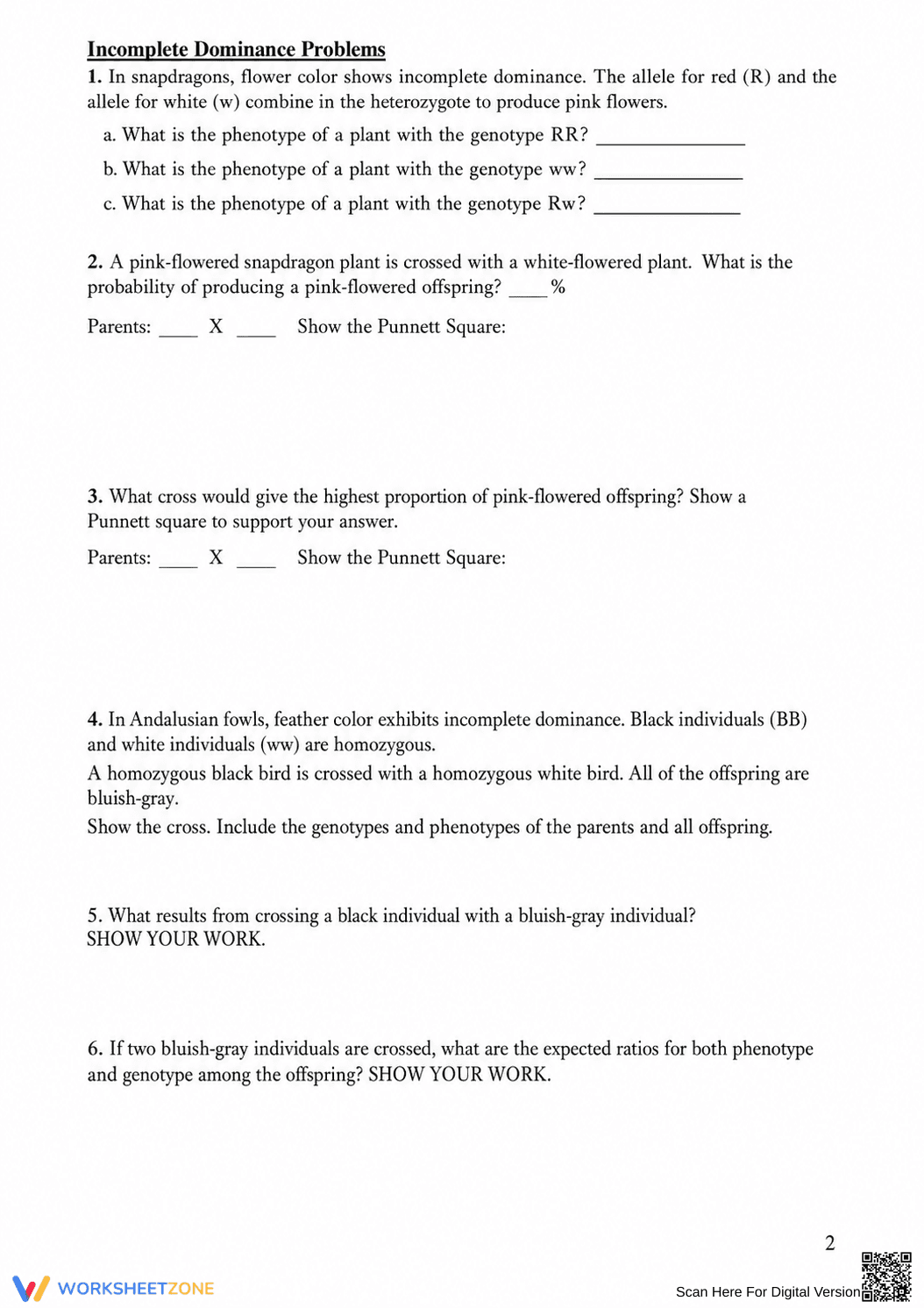
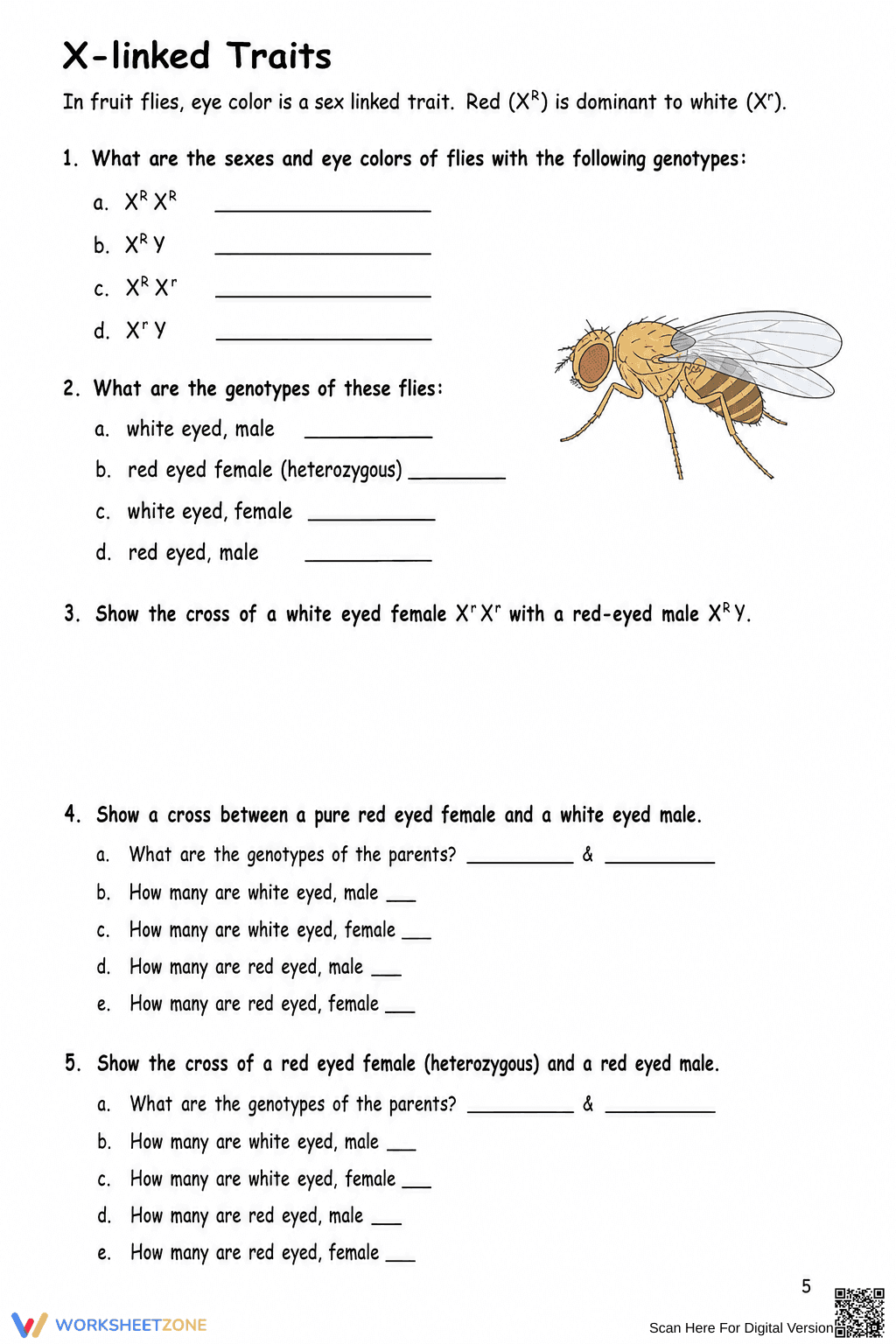
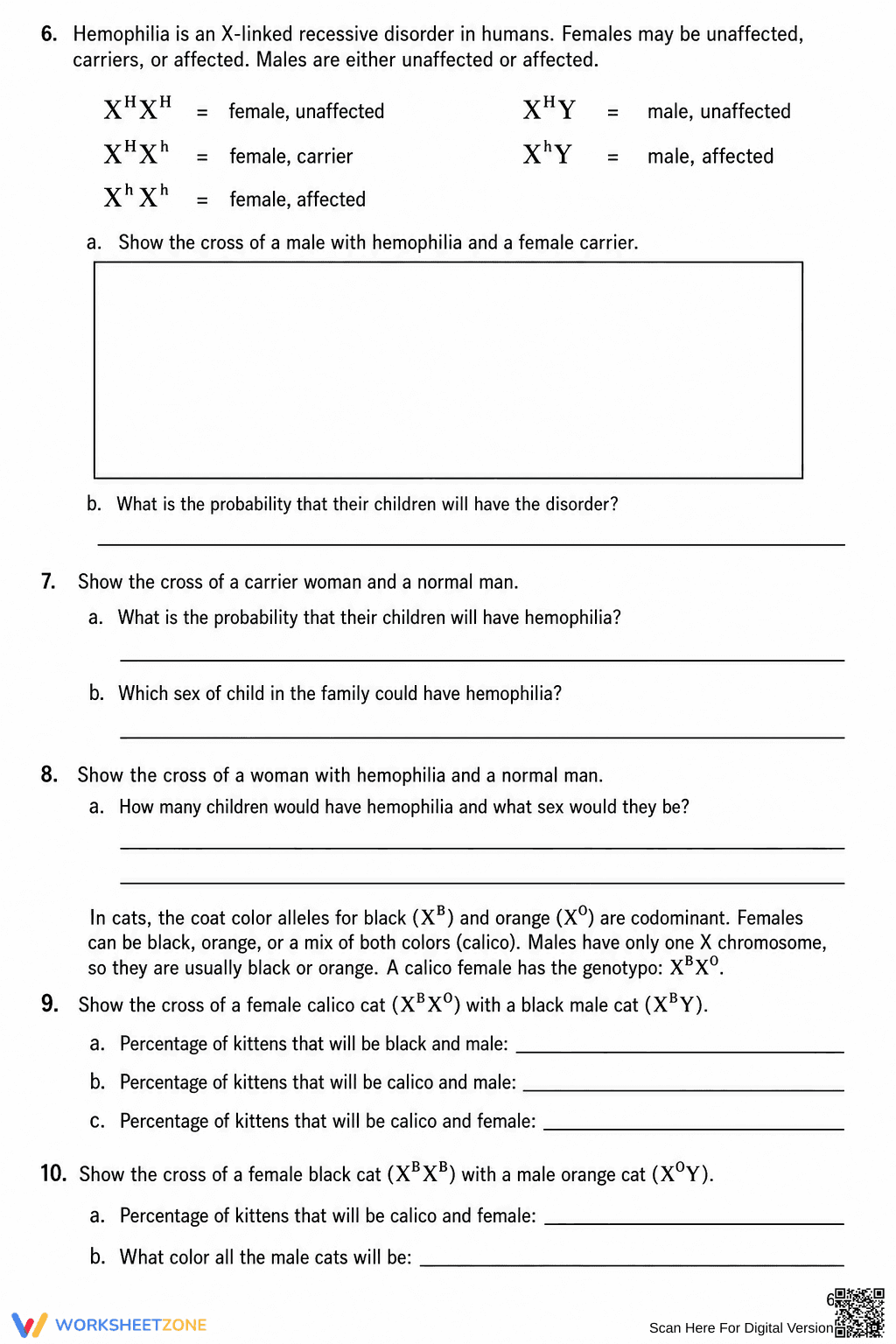
This Grade 9-10 Biology worksheet provides comprehensive practice for mastering complex inheritance patterns, including codominance and incomplete dominance. Students use Punnett squares to calculate phenotypic ratios and solve genetic mysteries. By the end of these 32 problems, learners will accurately predict offspring outcomes for blood types and X-linked traits.
At a Glance
At a Glance
- Grade: 9-10 · Subject: Biology
- Standard:
HS-LS3-3— Apply probability to explain trait variation and distribution in populations- Skill Focus: Codominance and Incomplete Dominance
- Format: 6 pages · 32 problems · Answer key included · PDF
- Best For: Independent practice and review
- Time: 45–60 minutes
What's Inside
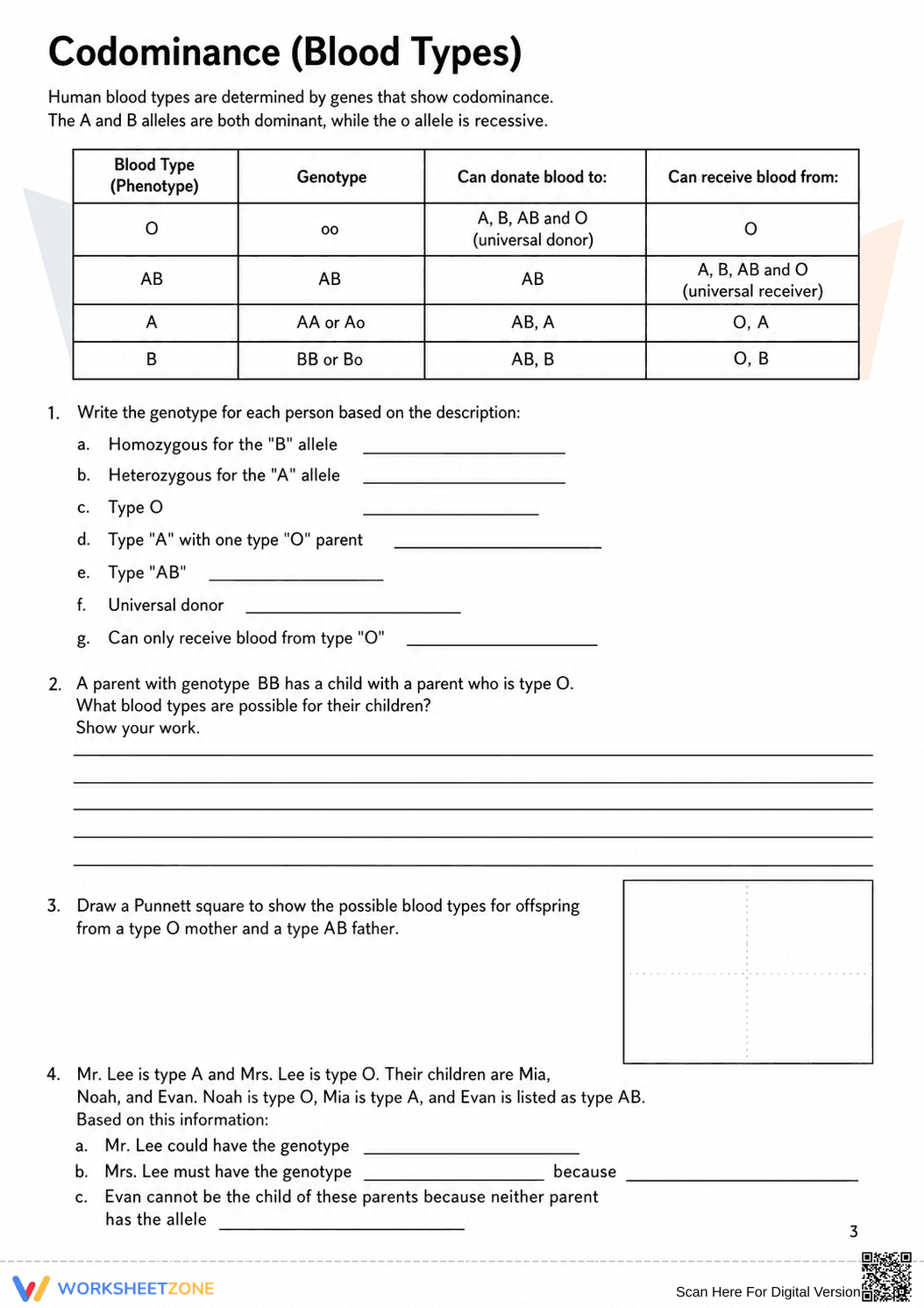
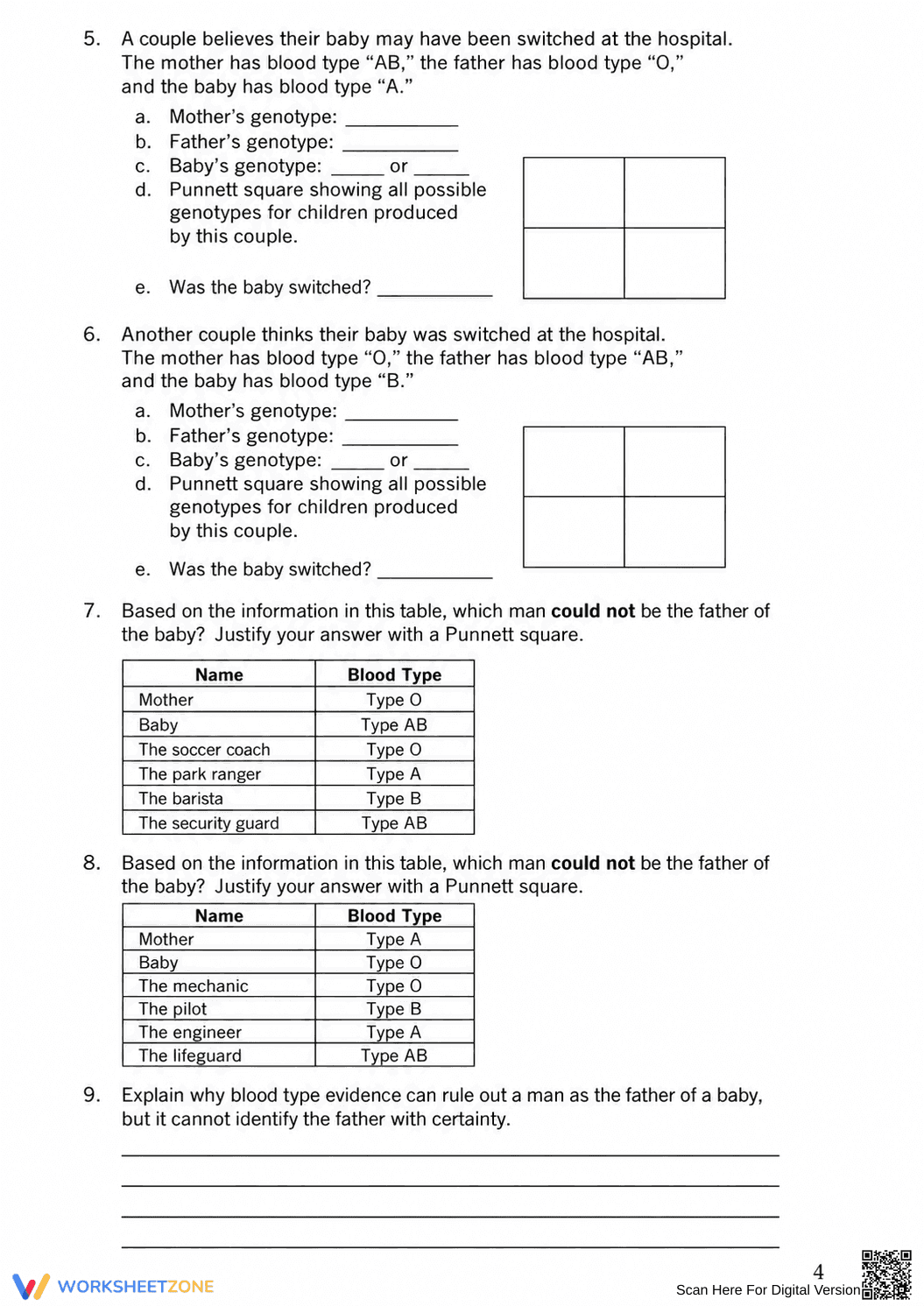
This six-page packet features 32 multi-part problems that guide students through various non-Mendelian genetics concepts. The resource includes dedicated sections for incomplete dominance, codominance, human blood typing, and sex-linked traits. Students will encounter genotype identification and extensive Punnett square construction. Clear examples and reference tables, such as a blood type donation chart, support independent work.
Skill Progression
- Guided practice: The first few problems introduce definitions and provide reference tables, such as the blood type chart, to help students identify basic genotypes and phenotypes.
- Supported practice: Students transition to setting up Punnett squares for single-trait crosses, calculating basic percentages and ratios for offspring in controlled scenarios.
- Independent practice: The final sections challenge students with complex applications, including paternity mysteries and multi-generational X-linked trait tracking.
This gradual-release approach ensures students build confidence before tackling advanced genetic probability questions.
Standards Alignment
This resource is aligned to HS-LS3-3: Apply concepts of statistics and probability to explain the variation and distribution of expressed traits in a population. It also supports foundational understanding of chromosomal inheritance. Both standard codes can be copied directly into lesson plans, IEP goals, or district curriculum mapping tools.
How to Use It
Deploy this packet as a comprehensive review activity after direct instruction on non-Mendelian genetics. It works well as a multi-day homework assignment or a collaborative in-class lab alternative. As a formative assessment tip, monitor students while they complete the blood type paternity questions; this section reveals whether they grasp how multiple alleles interact. Expect students to spend 45 to 60 minutes completing the entire packet.
Who It's For
This worksheet is designed for high school biology students in grades 9 and 10. It is easily differentiated by assigning specific sections based on student readiness. It pairs perfectly with visual anchor charts demonstrating Punnett square setups or interactive digital genetics simulations.
Mastering complex inheritance patterns requires repeated, structured practice with statistical models. This resource aligns with HS-LS3-3, helping students apply probability to explain trait variation and distribution. According to a ScienceDirect TpT Analysis, explicit instruction combined with immediate application in varied contexts significantly improves student retention of abstract scientific concepts. By transitioning from simple incomplete dominance crosses to complex X-linked pedigrees, this worksheet minimizes cognitive overload while maximizing skill acquisition. The structured use of Punnett squares serves as a vital visual scaffold, enabling learners to translate abstract genetic principles into concrete mathematical probabilities. This evidence-based approach ensures that students not only memorize genetic rules but can actively apply them to novel, real-world biological scenarios, fostering deeper scientific literacy, critical thinking, and analytical reasoning in the high school biology classroom.


