




























Views
Downloads


Homeostasis Lab Worksheet: HS-LS1-3 — Grade 9-12 Aligned

Paste this activity's link or code into your existing LMS (Google Classroom, Canvas, Teams, Schoology, Moodle, etc.).
Students can open and work on the activity right away, with no student login required.
You'll still be able to track student progress and results from your teacher account.
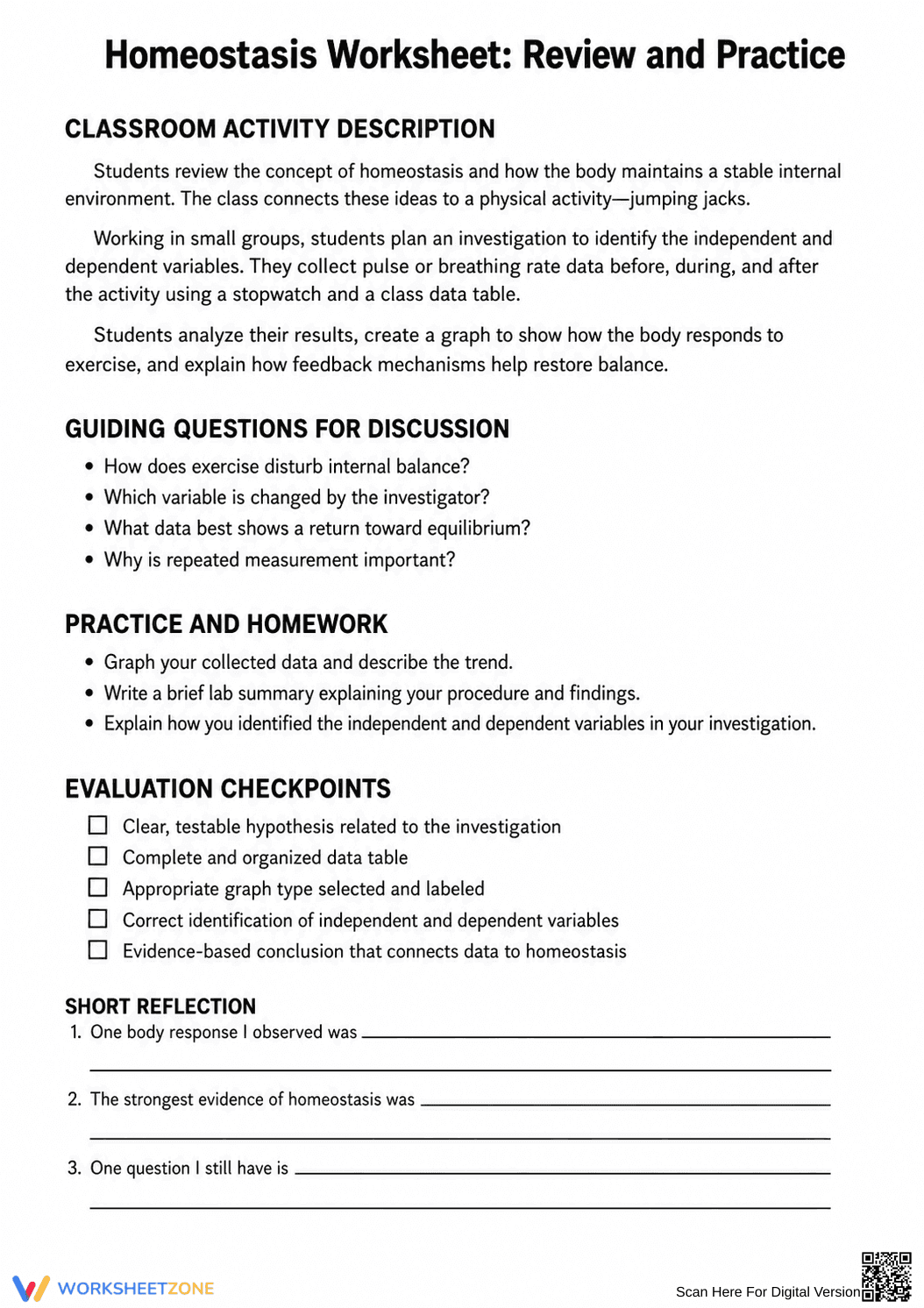
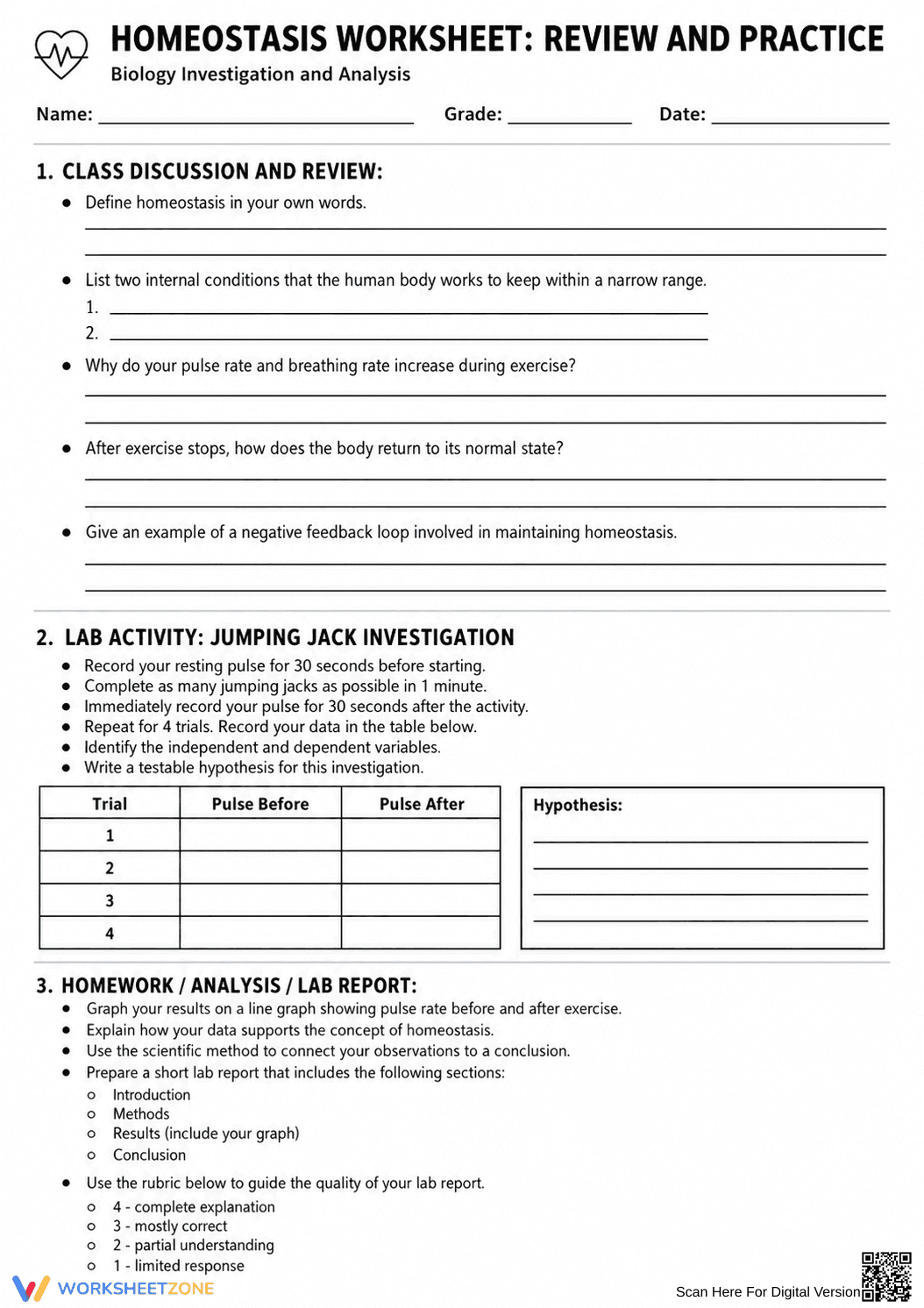
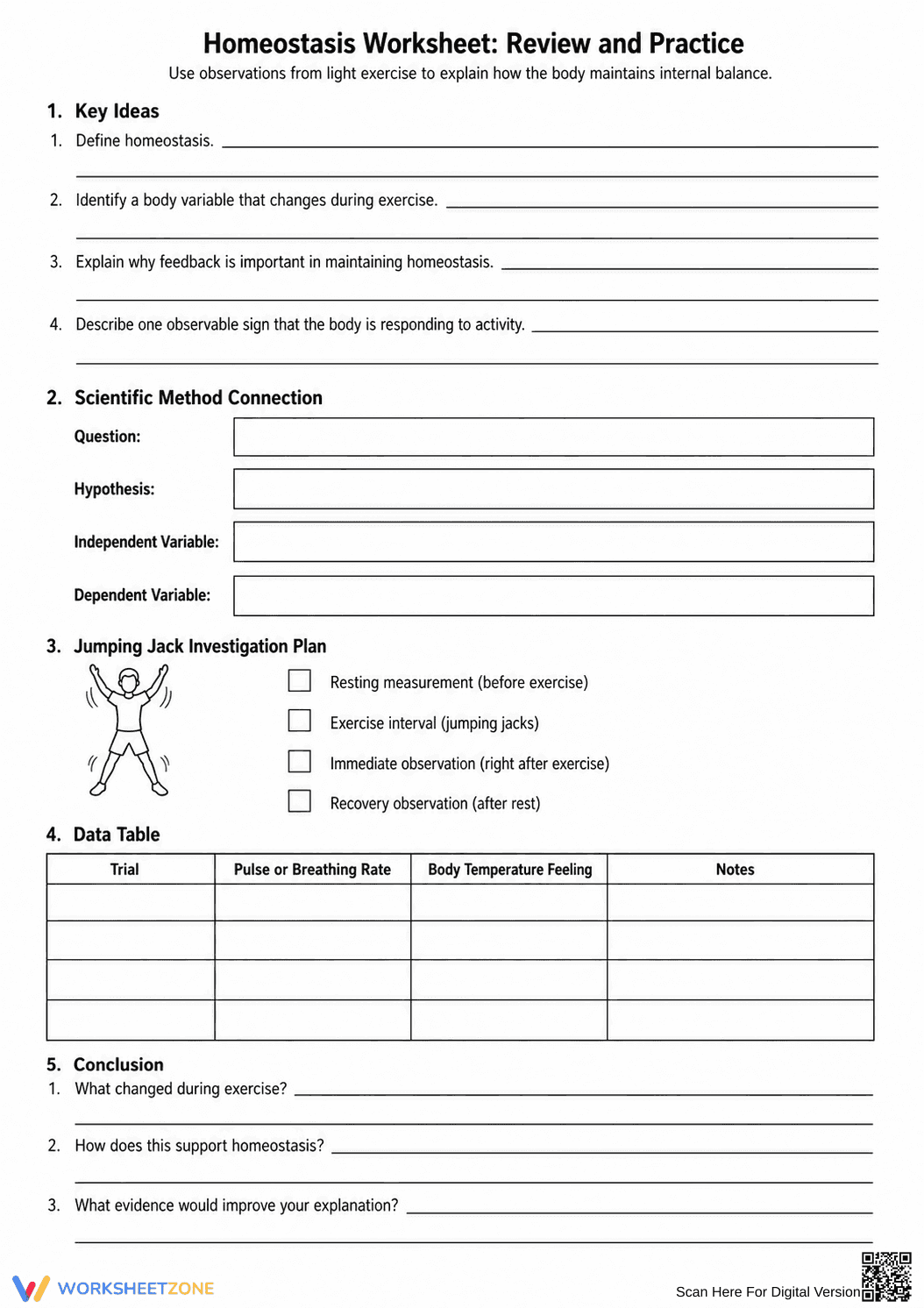
This comprehensive biology lab worksheet guides high school students through the process of investigating and maintaining homeostasis. By connecting a physical jumping jack activity to internal biological balance, students actively collect data, apply the scientific method, and analyze variables to understand how the human body responds to exercise.
At a Glance
- Grade: 9-12 · Subject: Biology
- Standard:
HS-LS1-3— Plan and conduct an investigation on feedback mechanisms.- Skill Focus: Homeostasis and Data Analysis
- Format: 7 pages · 15 problems · Rubric included · PDF
- Best For: Lab activities and performance tasks
- Time: 45–60 minutes
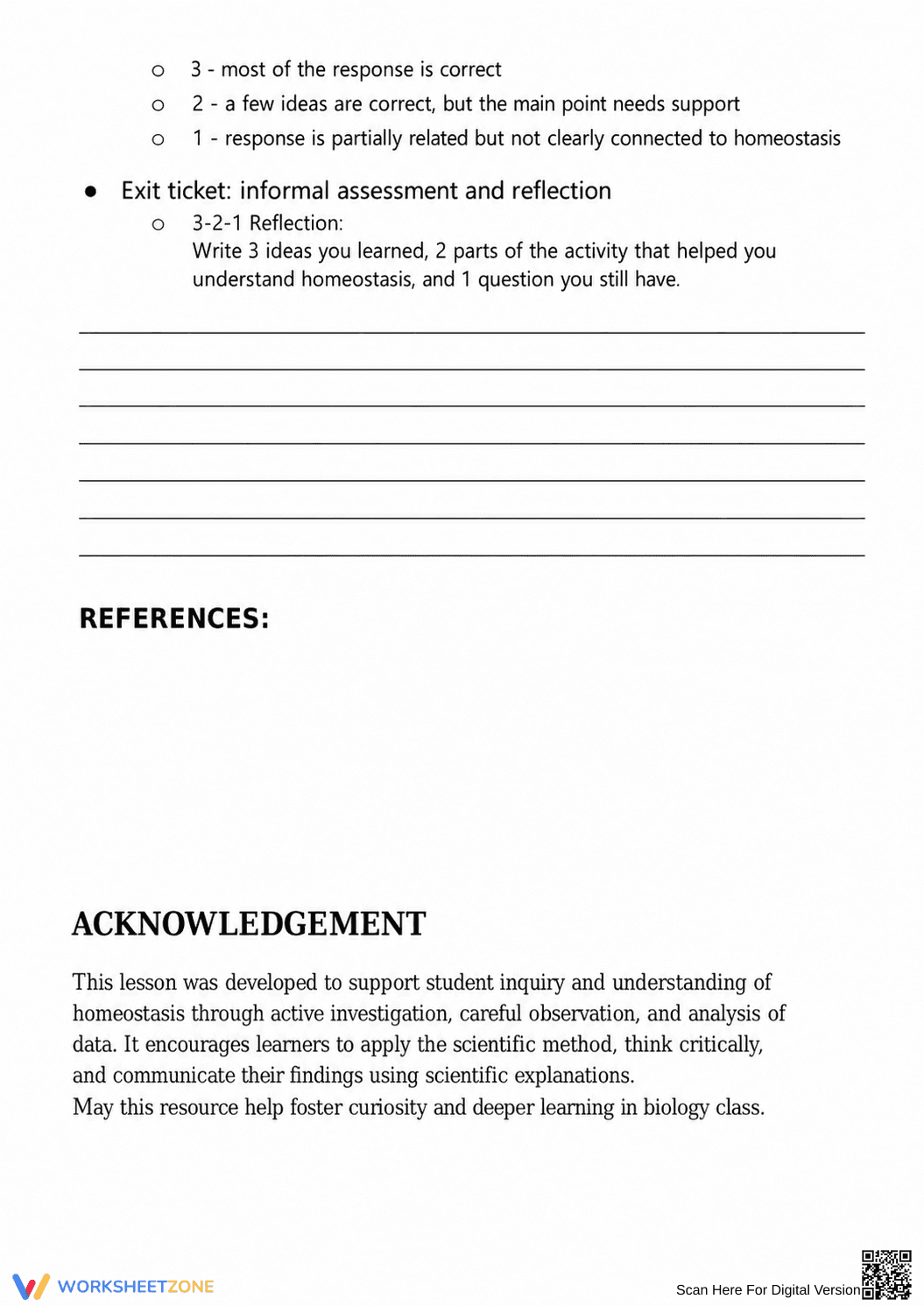
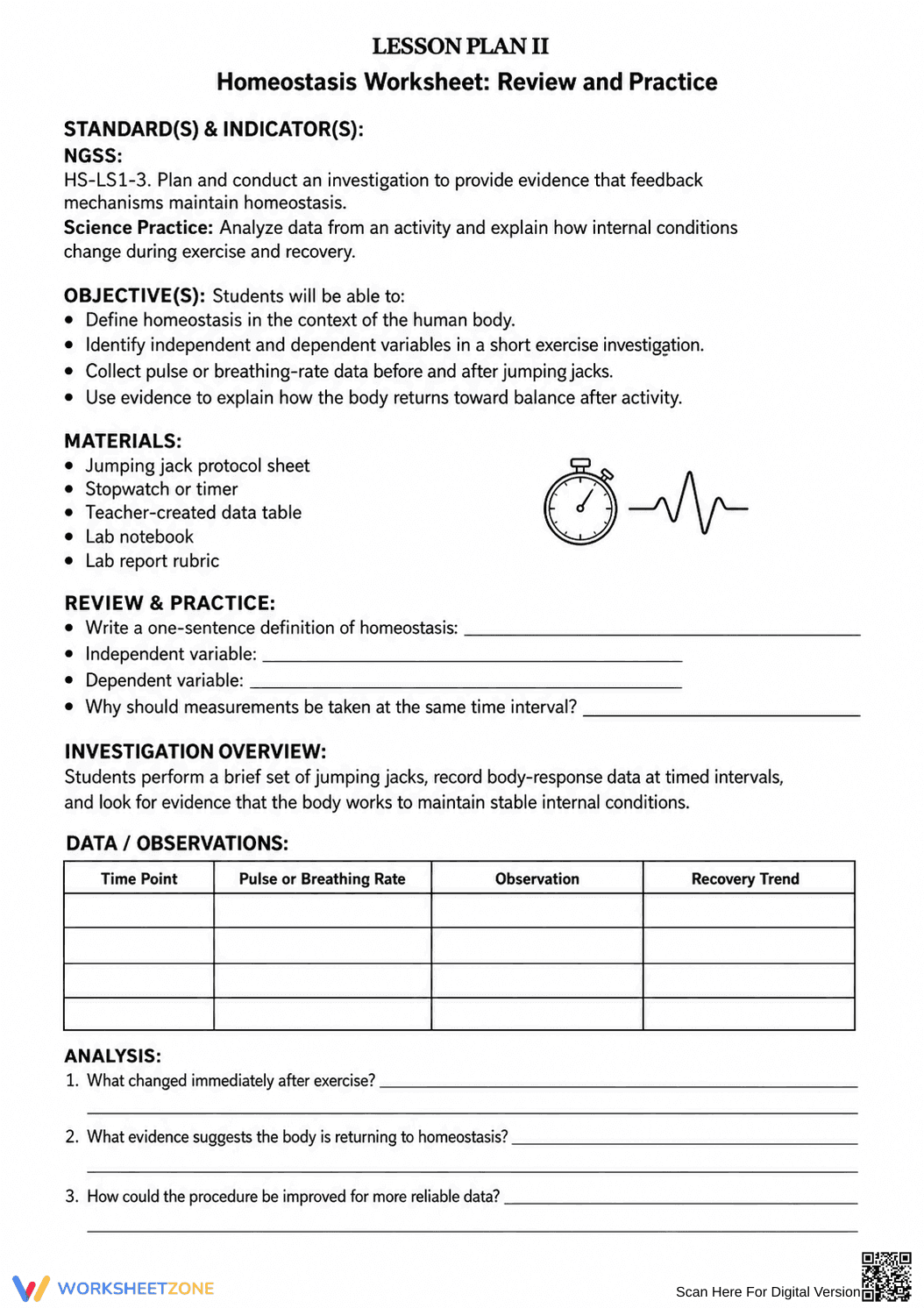
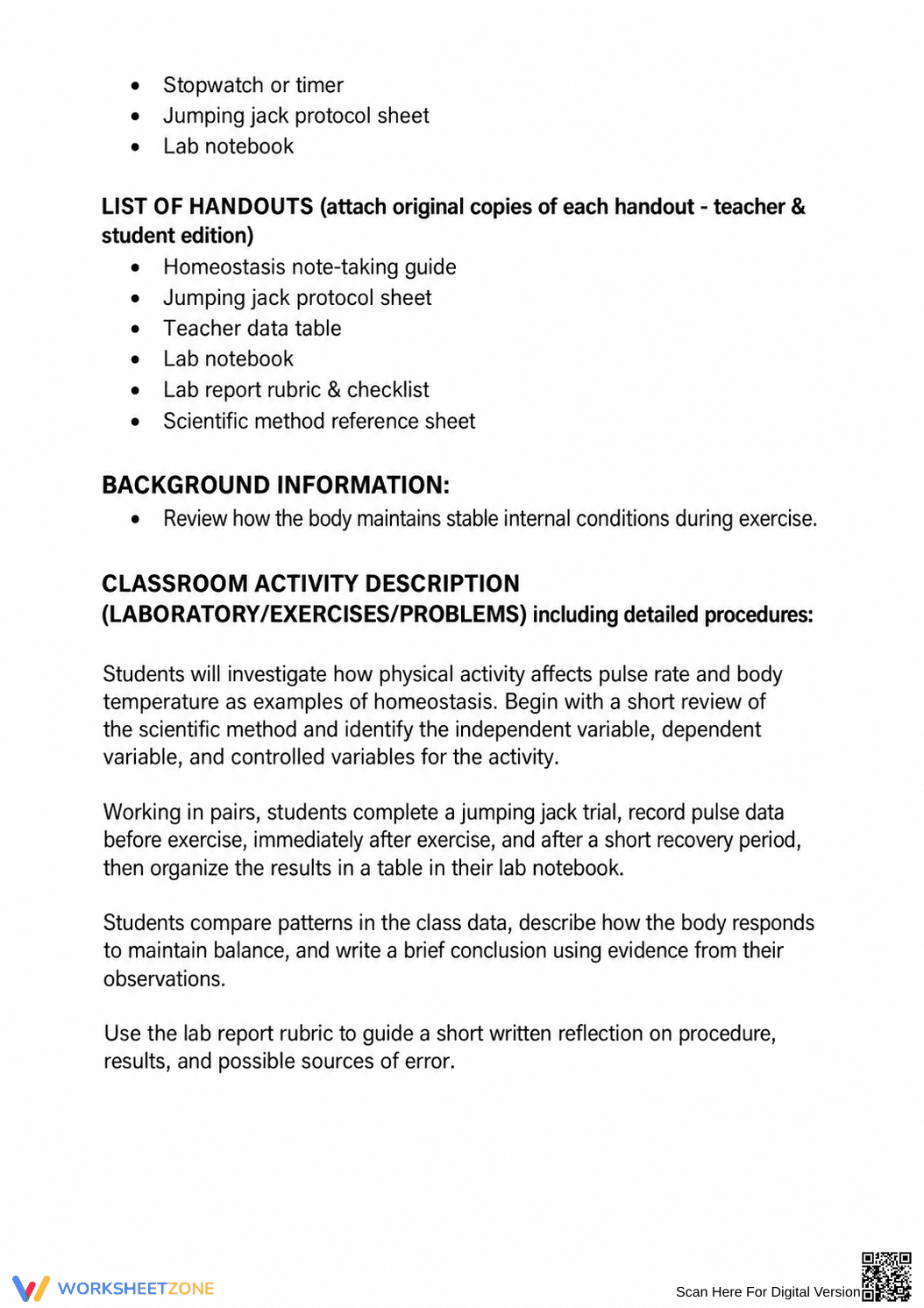
This 7-page packet includes a lesson plan, investigation guides, and data tables. Students receive a jumping jack protocol, a note-taking guide, and spaces to record pulse rates. The resource features a built-in rubric and evaluation checkpoints to help learners organize findings, graph results, and write an evidence-based conclusion.
The included evaluation rubric provides clear mastery evidence by assessing students on a four-point scale, from limited responses to complete, evidence-based explanations. Each section of the lab maps directly to critical sub-skills, such as identifying independent and dependent variables, organizing data tables, and graphing trends. Teachers can use the evaluation checkpoints to determine if a student is approaching, meeting, or exceeding the standard. These structured scores can be entered directly into gradebooks, IEP progress notes, or standard-based grading systems.
This resource is strictly aligned to HS-LS1-3: Plan and conduct an investigation to provide evidence that feedback mechanisms maintain homeostasis. It also supports science and engineering practices related to analyzing data and constructing explanations based on empirical evidence. Both standard codes can be copied directly into lesson plans, IEP goals, or district curriculum mapping tools.
Deploy this lab activity during direct instruction on human body systems to provide a concrete, hands-on experience with feedback loops. Alternatively, use it as a summative performance task after teaching the scientific method. As students perform the jumping jack trials, circulate the room to observe their data collection techniques—this serves as an excellent formative assessment to ensure they are accurately measuring pulse rates at the correct intervals. Expect the entire investigation, including the written lab report, to take between 45 and 60 minutes to complete.
This worksheet is designed for high school biology and life science students in grades 9 through 12. The structured data tables and step-by-step procedure make it accessible for diverse learners, while the formal lab report requirement provides rigorous extension opportunities for advanced students. It pairs perfectly with an introductory direct instruction lesson on negative and positive feedback loops or an anchor chart detailing the scientific method.
Aligning classroom instruction with rigorous science standards requires materials that bridge theoretical concepts and practical application. This resource specifically targets HS-LS1-3, focusing on the essential student ability to plan and conduct an investigation on feedback mechanisms. According to EdReports 2024, high-quality science instructional materials must integrate core disciplinary ideas with hands-on science and engineering practices to foster deep conceptual understanding and long-term retention. By engaging students in a physical jumping jack activity to measure homeostasis, this comprehensive lab packet ensures learners are not just memorizing biological definitions, but actively observing and quantifying biological phenomena in real time. The structured approach to data collection, graphing, and analysis supports evidence-based reasoning, a critical competency for college and career readiness. Utilizing this investigation allows educators to accurately measure student proficiency in scientific inquiry while maintaining strict alignment with national educational frameworks.


