


























Views
Downloads
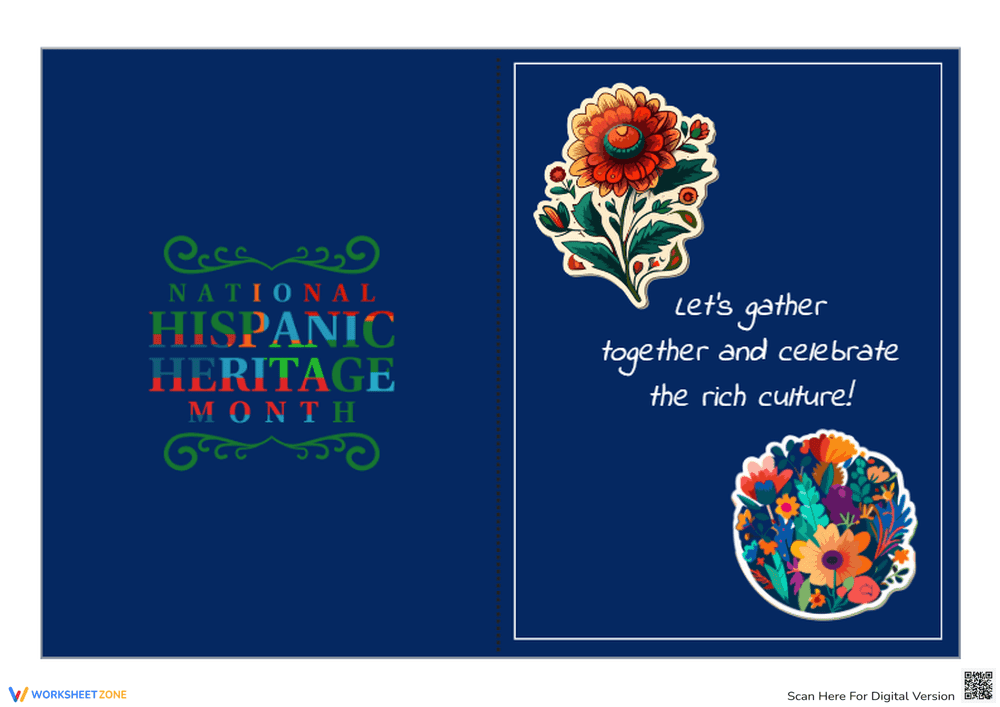

Hispanic Heritage Month Card | Grade 1-3 Printable
Paste this activity's link or code into your existing LMS (Google Classroom, Canvas, Teams, Schoology, Moodle, etc.).
Students can open and work on the activity right away, with no student login required.
You'll still be able to track student progress and results from your teacher account.
This Hispanic Heritage Month greeting card provides a creative outlet for students in Grades 1-3 to celebrate cultural diversity. By assembling and personalizing this card, learners express appreciation for Hispanic contributions while practicing fine motor skills and written expression. It serves as a meaningful bridge between social studies content and artistic creation.
At a Glance
- Grade: 1–3 · Subject: Social Studies
- Standard:
CCSS.ELA-LITERACY.W.2.2— Write informative texts to convey ideas and information about cultural celebrations- Skill Focus: Cultural Awareness & Fine Motor
- Format: 1 page · 1 project · No answer key needed · PDF
- Best For: Seasonal cultural celebration and creative writing
- Time: 15–20 minutes
What's Inside
Inside this resource, you will find a single-page PDF template featuring vibrant floral motifs and a pre-printed celebratory message. The layout is designed for easy folding, creating a professional-looking greeting card. It includes a dedicated space for students to add their own personalized messages or drawings, encouraging individual expression within a structured cultural framework.
Zero-Prep Workflow
The zero-prep workflow for this activity is designed for maximum efficiency. First, print the single-page template for each student (30 seconds). Second, distribute the sheets along with scissors and coloring tools (1 minute). Third, allow students to fold, decorate, and write their messages (15 minutes). Total teacher preparation time is under 2 minutes, making it an ideal choice for busy classroom schedules or last-minute sub plans.
Standards Alignment
This activity aligns with `CCSS.ELA-LITERACY.W.2.2`, which requires students to write informative or explanatory texts to convey ideas. By writing a message inside the card, students practice summarizing the significance of the holiday. This standard code can be copied directly into lesson plans, IEP goals, or district curriculum mapping tools.
How to Use It
Use this card as a concluding activity after a lesson on Hispanic leaders or traditions. It works well as a formative assessment to see if students can articulate the "rich culture" mentioned on the card. Expect completion within 20 minutes. Observe how students choose to decorate the interior to gauge their engagement with the cultural themes presented.
Who It's For
This resource is perfect for elementary students in general education or ESL/ELL settings who are exploring multicultural holidays. It pairs naturally with a read-aloud about Hispanic Heritage Month or a classroom anchor chart listing influential Hispanic figures and their achievements.
Cultural celebration activities like this greeting card are supported by research emphasizing the importance of inclusive curriculum. According to Fisher & Frey (2014), integrating creative tasks with social studies content enhances student engagement and retention of complex societal concepts. This Grade 1-3 resource specifically targets CCSS.ELA-LITERACY.W.2.2 by providing a scaffolded environment for students to practice informative writing within a cultural context. By focusing on the "rich culture" of Hispanic Heritage Month, the worksheet helps build a classroom environment that values diversity and global awareness. The 1-page design ensures that the cognitive load remains focused on the cultural message rather than complex assembly. Such activities are essential for developing the "social-emotional and cultural competencies" highlighted in recent NAEP frameworks, ensuring students see themselves and others reflected in their daily academic work.


