


























Views
Downloads

Helping Verbs Worksheet | Grade 3-4 Essential Practice
Paste this activity's link or code into your existing LMS (Google Classroom, Canvas, Teams, Schoology, Moodle, etc.).
Students can open and work on the activity right away, with no student login required.
You'll still be able to track student progress and results from your teacher account.
Helping verbs are the building blocks of complex tenses and moods in English. This Grade 3 and 4 grammar worksheet provides a focused environment for students to distinguish between auxiliary verbs and the main actions they support. By mastering these helping words, students improve their reading fluency and writing precision.
At a Glance
- Grade: 3-4 · Subject: ELA
- Standard:
CCSS.ELA-LITERACY.L.3.1— Demonstrate command of the conventions of standard English grammar and usage- Skill Focus: Helping and Main Verbs
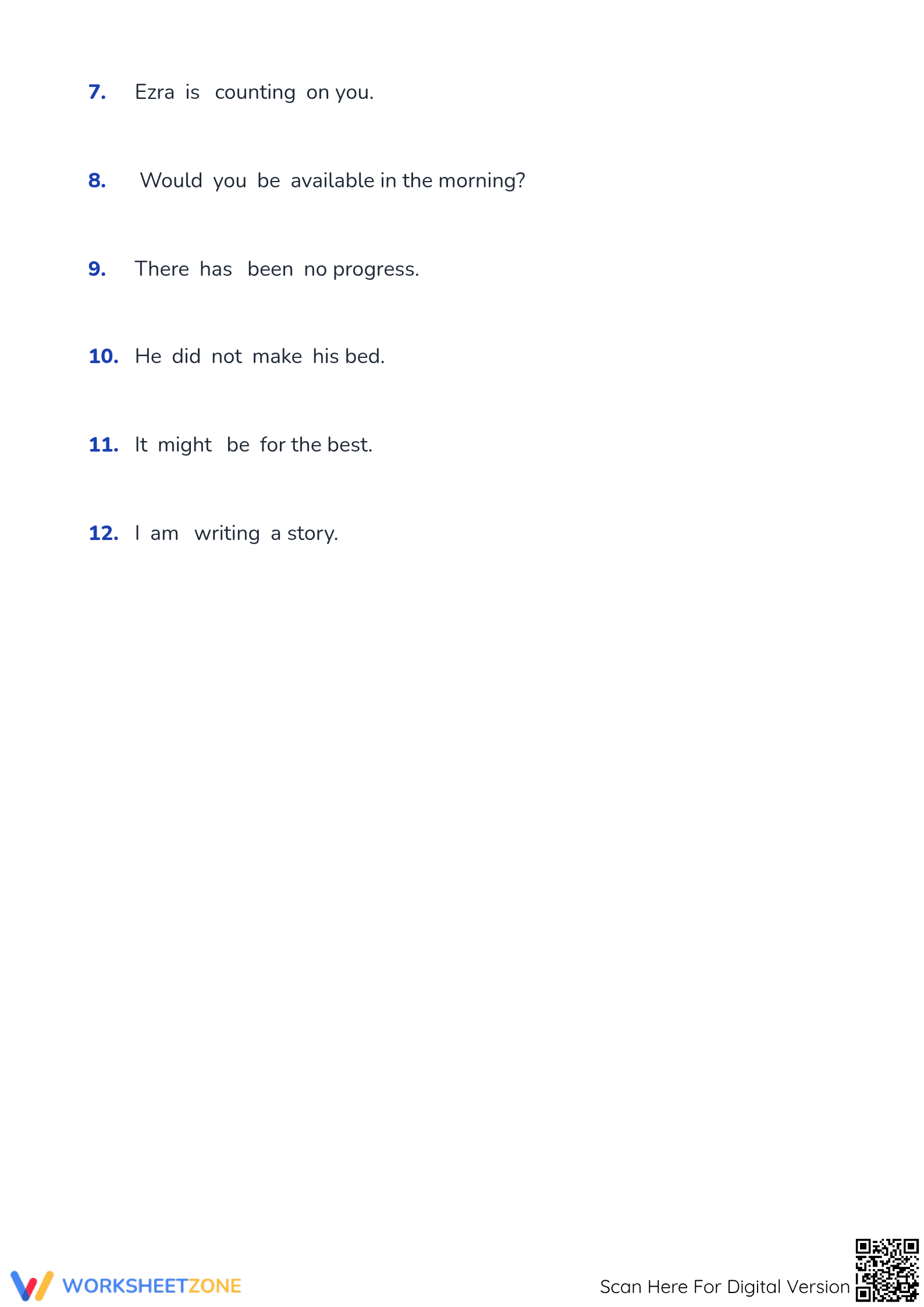
- Format: 2 pages · 12 problems · Answer key included · PDF
- Best For: Independent practice or grammar review
- Time: 15–20 minutes
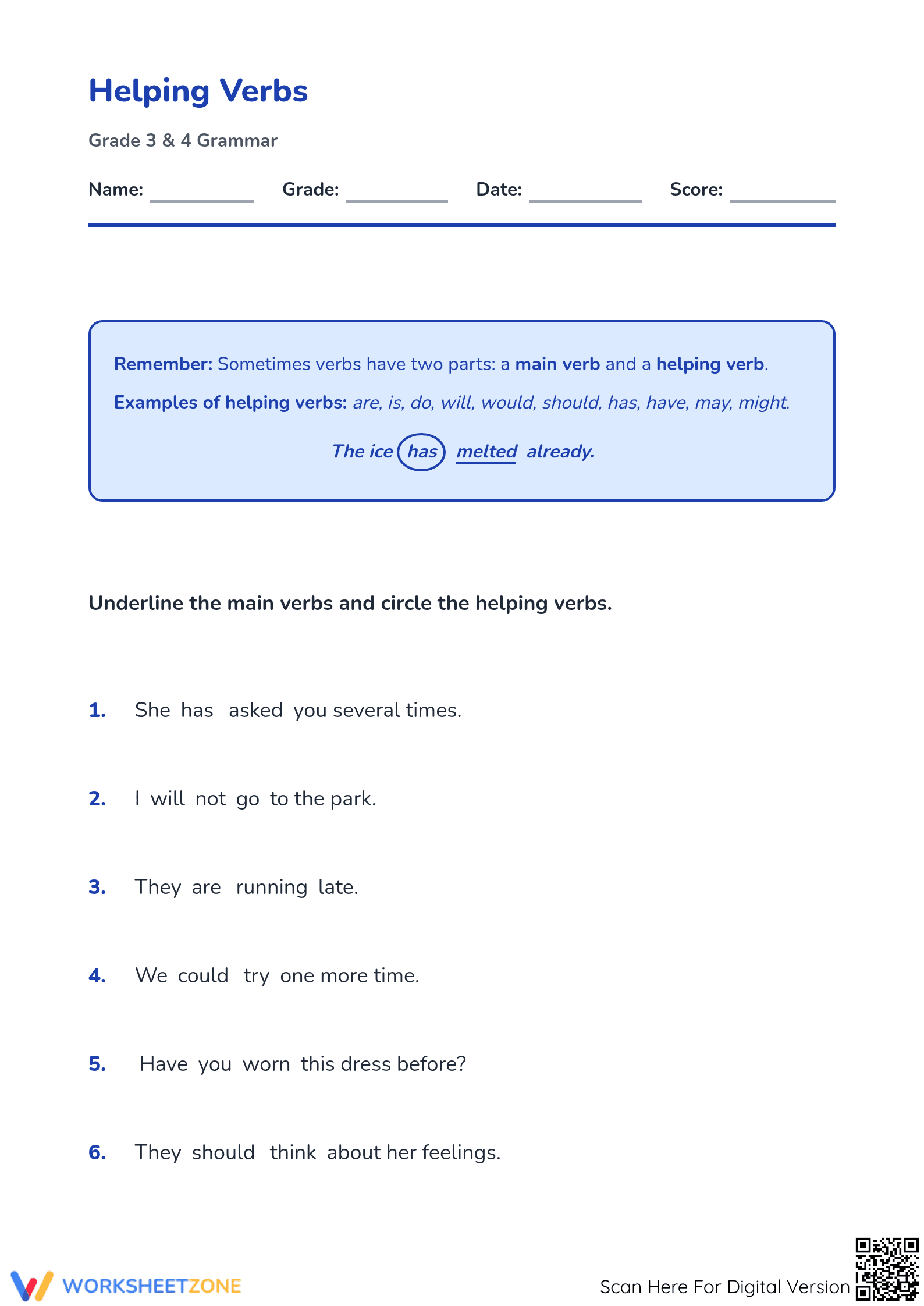
What's Inside: This comprehensive two-page PDF features 12 carefully crafted sentences designed to challenge and reinforce verb identification. The first page includes a helpful "Remember" box that defines the two verb parts and lists common examples like "has," "will," and "should." Each task requires students to circle the helping verb and underline the main verb, providing a clear visual representation of sentence structure.
Zero-Prep Workflow: This resource is designed for immediate classroom implementation. Teachers can print the two-page set in under 30 seconds. Distribution takes less than a minute, as the instructions are self-explanatory. Reviewing the 12 items using the included answer key takes approximately 5 minutes of class time. Total teacher preparation time is less than 2 minutes.
Standards Alignment: This worksheet aligns with `CCSS.ELA-LITERACY.L.3.1`, which requires students to demonstrate command of the conventions of standard English grammar and usage when writing or speaking. Specifically, it supports the identification of verb strings and auxiliary usage. This standard code can be copied directly into lesson plans, IEP goals, or district curriculum mapping tools.
How to Use It: Use this as a formative assessment after a direct instruction lesson on verb tenses. Alternatively, assign it as a quiet bell-ringer activity to settle the class. While students work, circulate to observe if they are correctly identifying "is" or "has" as helping verbs rather than main verbs. Completion typically ranges from 15 to 20 minutes depending on student proficiency.
Who It's For: This resource is tailored for third and fourth-grade students, but it also serves as an excellent intervention tool for older students or English Language Learners (ELL) who need extra support with auxiliary structures. It pairs naturally with a classroom anchor chart listing common helping verbs or a short reading passage where students can hunt for similar verb patterns.
According to Fisher & Frey (2014), the gradual release of responsibility begins with clear modeling and moves into supported practice, such as the structured identification tasks found in this helping verbs resource. By isolating the auxiliary verb from the main verb in 12 distinct contexts, students build the linguistic awareness necessary for mastering complex verb tenses. Research from the NAEP indicates that students who demonstrate a strong grasp of foundational grammar conventions, including the proper use of helping verbs, consistently perform better on standardized writing assessments. Aligned to `CCSS.ELA-LITERACY.L.3.1`, this printable tool ensures that Grade 3 and 4 students meet national benchmarks for language conventions while reducing teacher workload through its ready-to-use format. The inclusion of a clear example and a reference list of common auxiliary verbs supports independent student success.


