


























Views
Downloads


Bigger Fish to Fry Idiom Worksheet | Essential Grade 3-6
Paste this activity's link or code into your existing LMS (Google Classroom, Canvas, Teams, Schoology, Moodle, etc.).
Students can open and work on the activity right away, with no student login required.
You'll still be able to track student progress and results from your teacher account.
This figurative language worksheet helps Grade 3-6 students master the common idiom "he has bigger fish to fry" through targeted context-clue practice. By connecting abstract phrases to real-world priorities, students develop the linguistic flexibility needed to decode informal English expressions and improve overall reading comprehension.
At a Glance
- Grade: 3-6 · Subject: ELA (Literature)
- Standard:
CCSS.ELA-LITERACY.L.4.5.B— Recognize and explain the meaning of common idioms, adages, and proverbs in context- Skill Focus: Figurative Language · Idioms
- Format: 3 pages · 11 problems · Answer key included · PDF
- Best For: Daily grammar warm-ups or literacy centers
- Time: 15–20 minutes
This three-page PDF package provides 11 unique problems spread across three instructional phases. It features clear visual aids, multiple-choice meaning checks, context application exercises, and original sentence writing prompts. A comprehensive answer key is included to facilitate immediate feedback and student self-correction during independent work periods.
Skill Progression
- Guided practice: The initial meaning check uses visual cues and multiple-choice options to establish the foundational definition of the idiom.
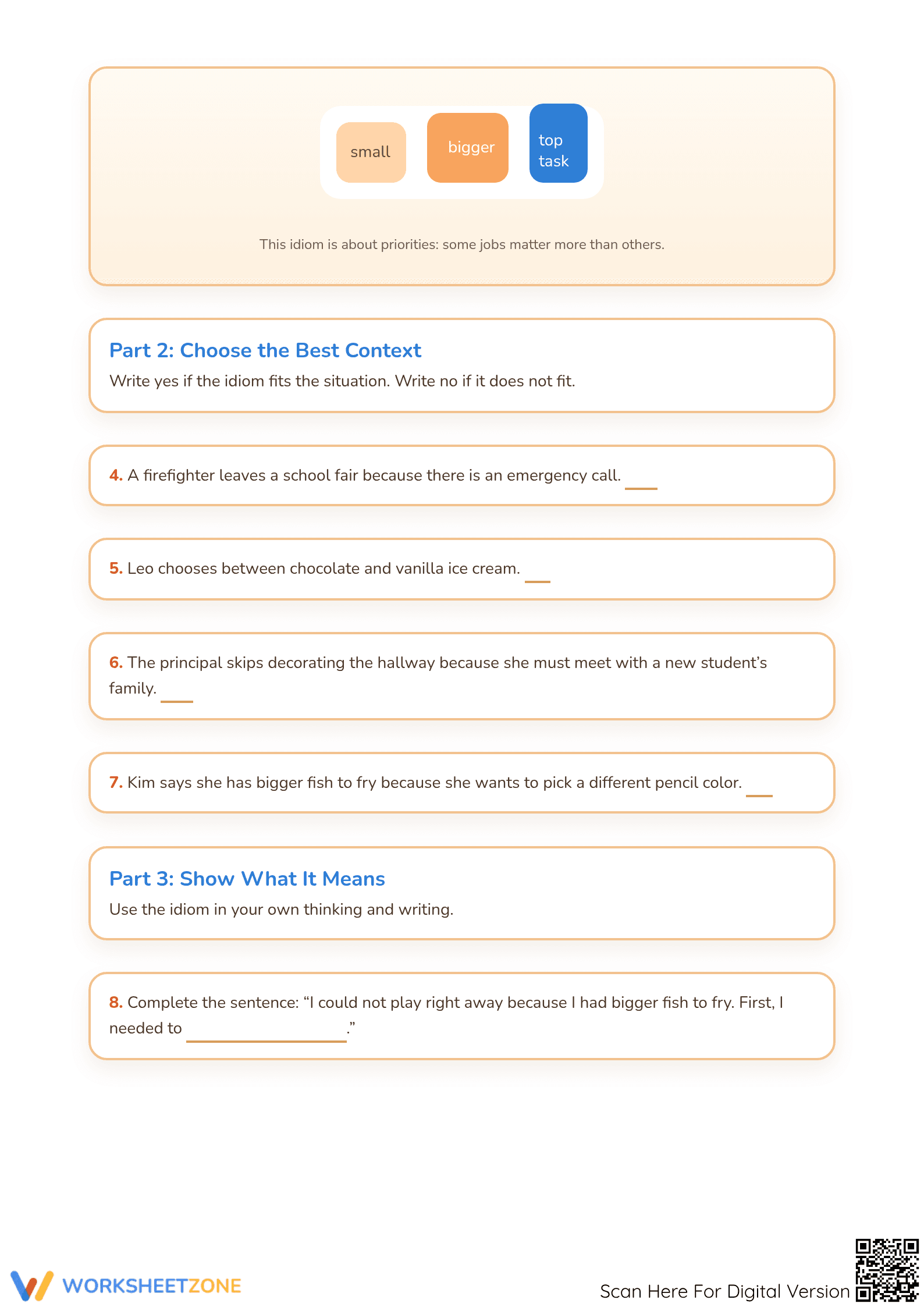
- Supported practice: Students analyze four distinct scenarios to determine if the idiom correctly applies to the situation's priority level.
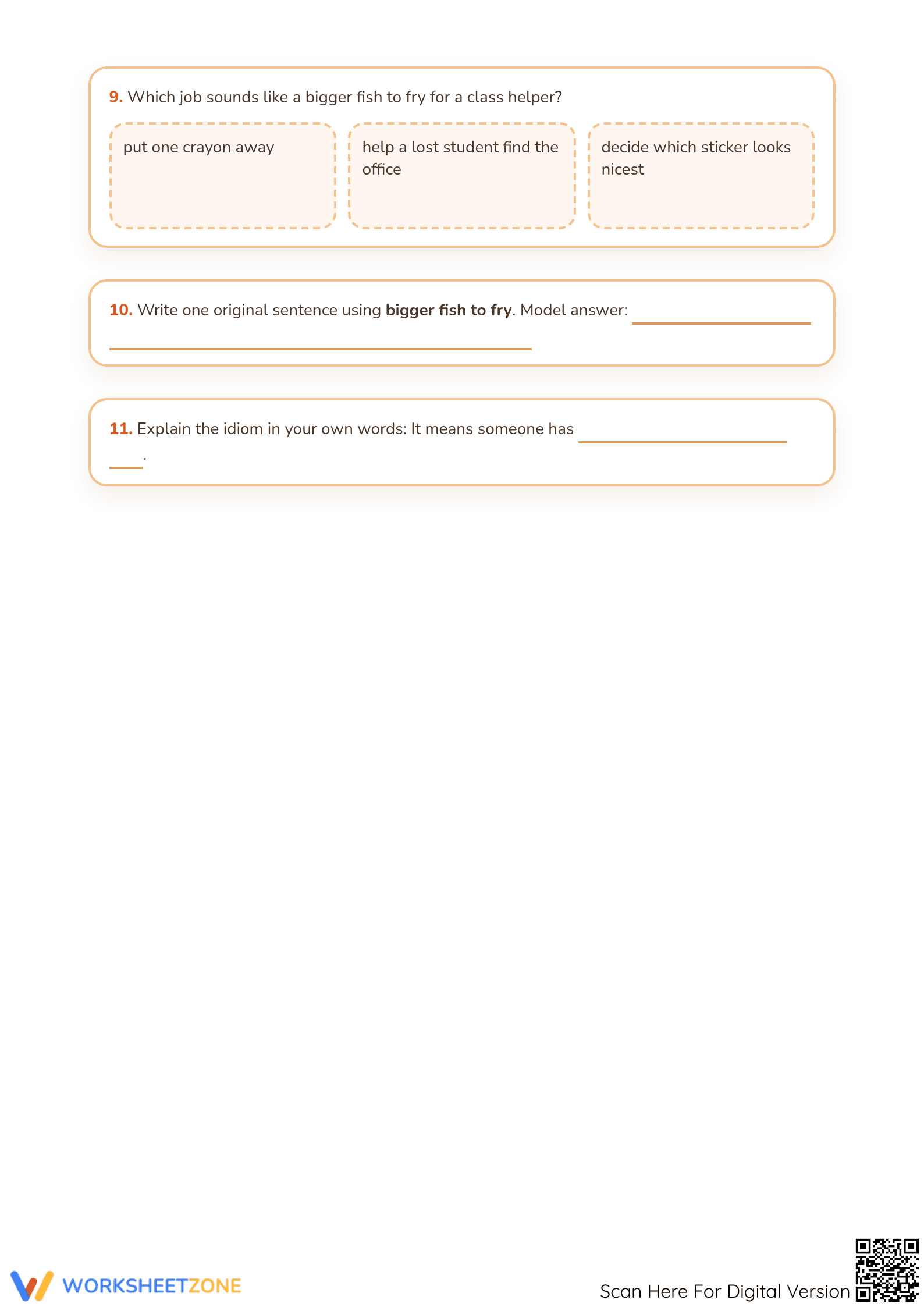
- Independent practice: The final section requires students to generate original sentences and explain the idiom in their own words.
This gradual-release "I Do, We Do, You Do" model ensures students move from recognition to authentic application.
Standards Alignment
This resource is primarily aligned to CCSS.ELA-LITERACY.L.4.5.B, which requires students to recognize and explain common idioms. It also supports CCSS.ELA-LITERACY.L.3.5.A by helping students distinguish literal from nonliteral meanings. Both standard codes can be copied directly into lesson plans, IEP goals, or district curriculum mapping tools.
How to Use It
Introduce this worksheet after a direct instruction lesson on figurative language. Use the "Choose the Best Context" section as a formative assessment check—observe if students can distinguish between "small" and "bigger" tasks. This 20-minute activity works perfectly as a bell-ringer or a station in a rotating literacy center.
Who It's For
Designed for upper elementary students (Grades 3-6), this worksheet is ideal for general education classrooms, ESL/ELL support groups, and speech-language therapy sessions. Pair this with a figurative language anchor chart or a short narrative passage containing various idioms.
According to an EdReports 2024 analysis, high-quality ELA materials must provide explicit instruction in figurative language to bridge the gap between literal decoding and deep reading comprehension. The "Bigger Fish to Fry" worksheet addresses CCSS.ELA-LITERACY.L.4.5.B by moving beyond simple memorization into contextual application. By requiring students to evaluate the "priority" of different tasks (e.g., distinguishing between choosing ice cream and answering an emergency call), the resource builds the semantic mapping skills highlighted in Fisher & Frey (2014) regarding the gradual release of responsibility. This systematic approach ensures that Grade 3-6 learners don't just recognize the phrase but can employ it correctly in their own writing and speech. This alignment with research-backed instructional models provides educators with a reliable tool for developing the nuance required for middle-school level text analysis and informal communication mastery.


