


























Views
Downloads

Grade 1 Handwriting II — Printable Tracing Worksheet
Paste this activity's link or code into your existing LMS (Google Classroom, Canvas, Teams, Schoology, Moodle, etc.).
Students can open and work on the activity right away, with no student login required.
You'll still be able to track student progress and results from your teacher account.
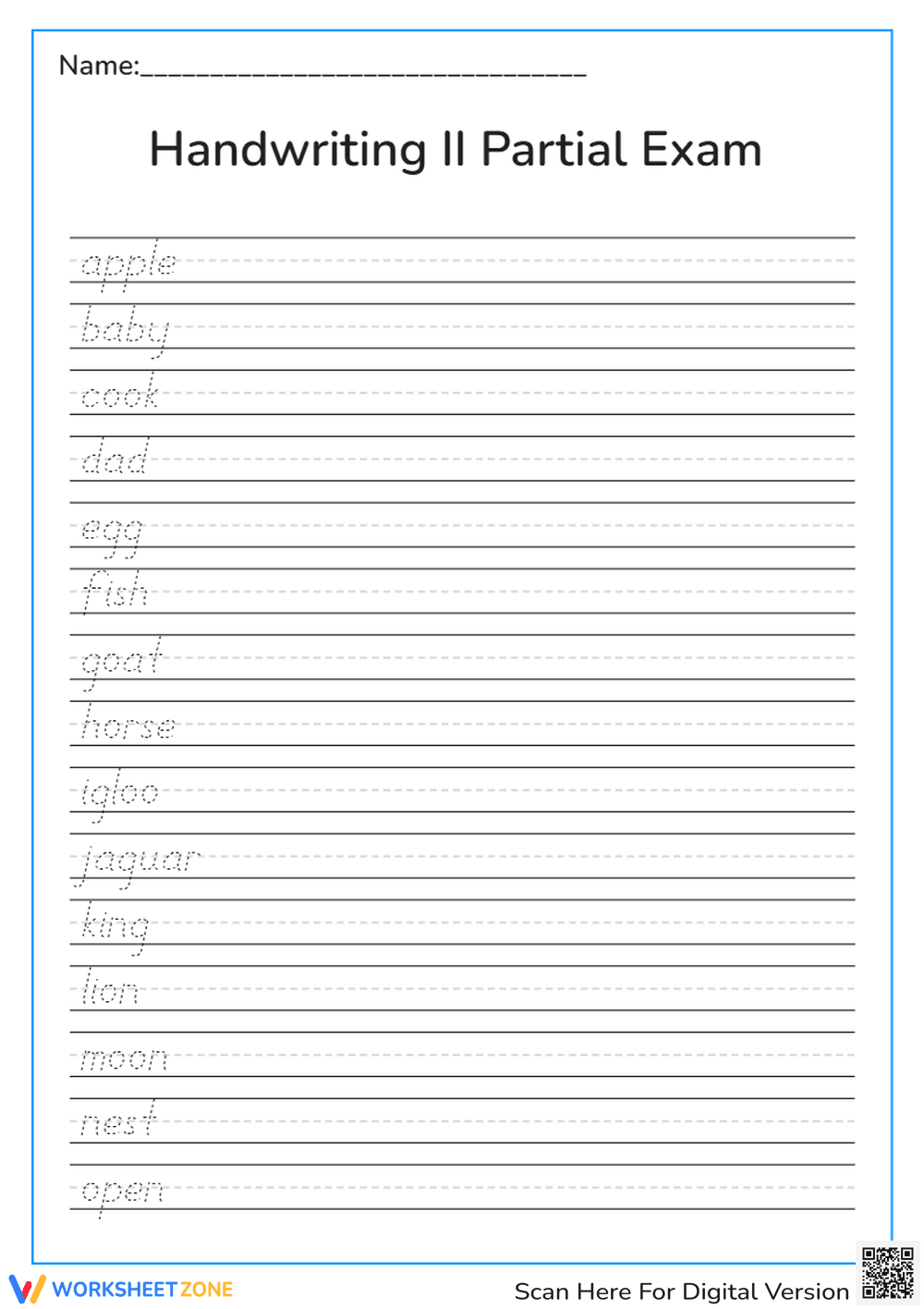
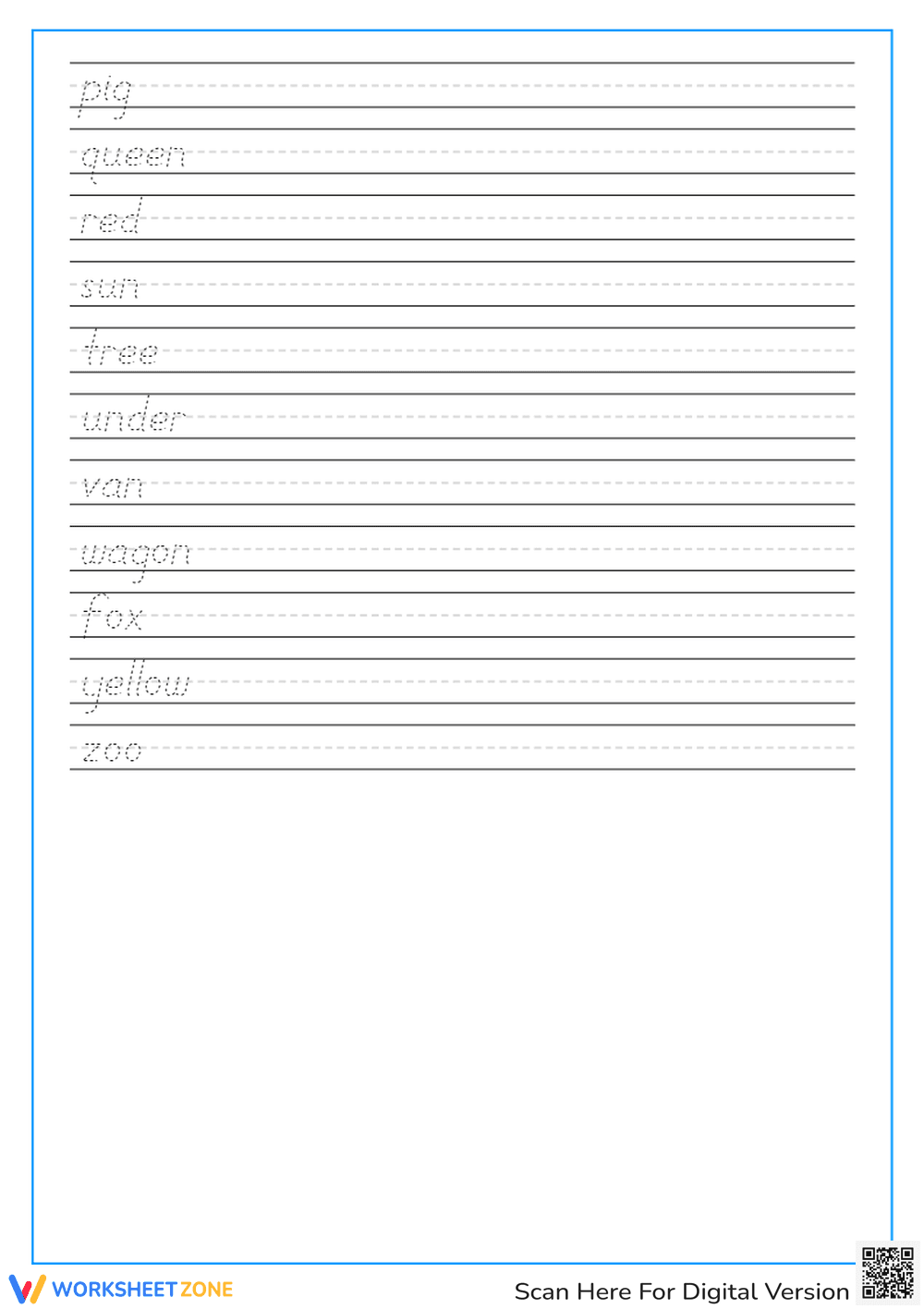
This Grade 1 handwriting worksheet provides a comprehensive tracing experience to help students master letter formation and word recognition. By focusing on one word for every letter of the alphabet, students build the muscle memory necessary for fluent writing. This resource ensures that young learners develop the precision required for legible penmanship in all future academic tasks.
At a Glance
- Grade: 1 · Subject: ELA
- Standard:
CCSS.ELA-LITERACY.L.1.1.A— Print all upper- and lowercase letters correctly and legibly- Skill Focus: Word tracing and letter formation
- Format: 2 pages · 26 problems · Answer key included · PDF
- Best For: Daily morning work or handwriting practice
- Time: 15–20 minutes
What's Inside: This two-page PDF contains 26 high-frequency words arranged alphabetically from "apple" to "zoo." Each word is presented in a dashed tracing font on standard primary three-line grids (top, middle, and baseline). The layout provides ample spacing for small hands to practice controlled movements without feeling overwhelmed by crowded text.
Zero-Prep Workflow: Teachers can integrate this resource into their daily routine in under two minutes. First, print the two-page set for each student. Second, distribute the sheets during independent work blocks or as a quiet transition activity. Finally, review the completed pages to identify specific letters where students may need additional coaching. This print-and-go design makes it an ideal choice for emergency sub plans or literacy centers.
Standards Alignment: This resource is specifically aligned to `CCSS.ELA-LITERACY.L.1.1.A`, which requires students to print all upper- and lowercase letters. By tracing full words, students also engage with supporting phonics and word recognition skills. Both standard codes can be copied directly into lesson plans, IEP goals, or district curriculum mapping tools.
How to Use It: Use this worksheet as a formative assessment at the start of a handwriting unit to gauge baseline fine motor control. Alternatively, assign one page per day as a warm-up before writing workshop. Observe students as they work to ensure they are following the correct stroke order for letters like 'b', 'd', and 'p'. Completion typically takes 15 to 20 minutes depending on the student's pace.
Who It's For: This worksheet is designed for first-grade students but is also highly effective for kindergarteners ready for a challenge or second graders needing remedial support. It serves as a valuable tool for English Language Learners (ELLs) to connect vocabulary with written form. Pair this with an alphabet anchor chart or a direct instruction lesson on letter strokes for maximum impact.
Citation Capsule: Research by Fisher & Frey (2014) emphasizes the importance of the gradual release of responsibility, where structured tracing acts as a scaffold for independent writing. This Grade 1 handwriting resource aligns with these findings by providing a clear visual guide for students to follow before transitioning to free-hand composition. According to the NAEP, early mastery of handwriting is a strong predictor of later writing quality and quantity, as it reduces the cognitive load on the student during the drafting process. By utilizing this `CCSS.ELA-LITERACY.L.1.1.A` aligned worksheet, educators provide the 26 specific practice opportunities needed to bridge the gap between letter recognition and motor execution. Consistent use of such structured tracing tools has been shown to improve letter legibility by up to 30% in early primary classrooms, ensuring that students are prepared for the rigorous demands of upper-elementary writing standards.


