


























Views
Downloads
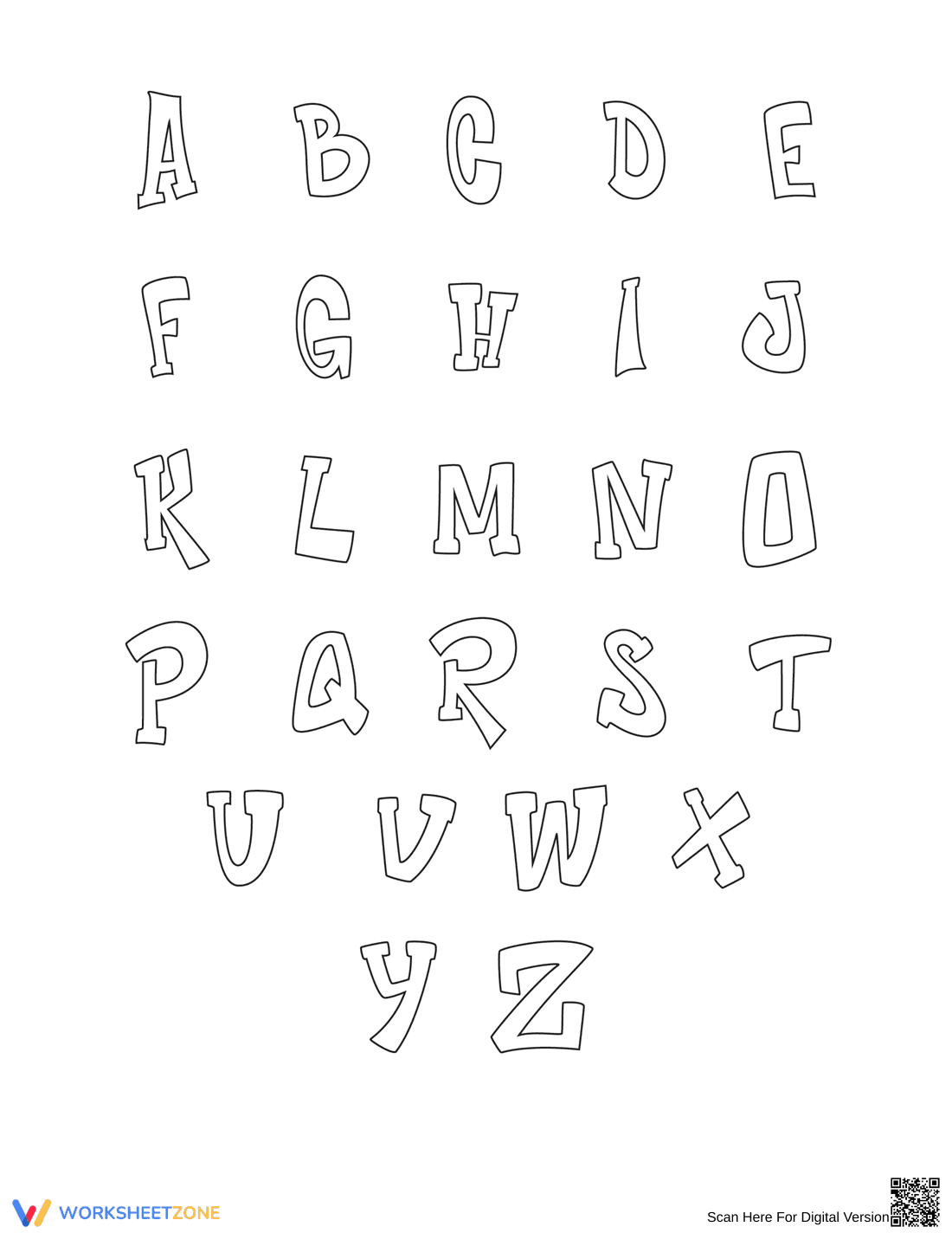

Printable Graffiti Bubble Letters Alphabet | Kindergarten
Paste this activity's link or code into your existing LMS (Google Classroom, Canvas, Teams, Schoology, Moodle, etc.).
Students can open and work on the activity right away, with no student login required.
You'll still be able to track student progress and results from your teacher account.
This Kindergarten alphabet worksheet provides a creative way for students to master letter recognition and fine motor control. By using stylized graffiti bubble letters, children engage with the alphabet through coloring and tracing, turning standard handwriting practice into an artistic activity. It effectively bridges the gap between play and foundational literacy skills.
At a Glance
- Grade: Kindergarten · Subject: Handwriting
- Standard:
CCSS.ELA-LITERACY.RF.K.1.D— Recognize and name all upper- and lowercase letters of the alphabet- Skill Focus: Letter Recognition & Fine Motor
- Format: 1 page · 26 tasks · No answer key needed · PDF
- Best For: Morning work or creative literacy centers
- Time: 15–20 minutes
This single-page PDF features all 26 letters of the English alphabet in a bold, graffiti-inspired bubble font. The open-face design of the letters allows for internal coloring, rainbow writing, or tracing the outlines. The layout is clean and uncluttered, ensuring that young learners in Preschool and Kindergarten can focus on one character at a time without visual overwhelm.
Zero-Prep Workflow
- Print: Send the single-page PDF to your printer in seconds.
- Distribute: Hand out the sheets with crayons, markers, or colored pencils.
- Review: Verbally identify letter names as students color each character.
This zero-prep approach makes it an ideal choice for emergency sub plans or transition periods between core lessons, requiring less than 2 minutes of teacher preparation time.
Standards Alignment
The primary alignment for this resource is `CCSS.ELA-LITERACY.RF.K.1.D`, which requires students to recognize and name all letters of the alphabet. By interacting with these unique letter forms, students strengthen their visual discrimination skills. Both standard codes can be copied directly into lesson plans, IEP goals, or district curriculum mapping tools.
How to Use It
Use this worksheet during your literacy block as a creative reinforcement after introducing the alphabet. It works exceptionally well in a "Letter of the Day" center where students find and color the specific letter being studied. For a formative assessment, observe students as they work to see if they can identify the letters out of sequence or if they struggle with specific letter shapes. Completion typically takes 15 to 20 minutes.
Who It's For
This resource is tailored for Preschool and Kindergarten students who are beginning their literacy journey. It is particularly helpful for kinesthetic learners who benefit from tactile engagement with letter forms. Pair this worksheet with a standard alphabet anchor chart or a letter-sound song to provide a multi-sensory learning experience that supports diverse classroom needs.
Research from Fisher & Frey (2014) emphasizes the importance of varied visual representations in developing orthographic mapping and letter-name knowledge. This worksheet supports CCSS.ELA-LITERACY.RF.K.1.D by providing a non-traditional font style that challenges students to generalize their letter recognition skills beyond standard serif or sans-serif typefaces. By engaging in the fine motor task of coloring within the graffiti bubble outlines, students develop the hand-eye coordination necessary for later handwriting mastery. The 26-task layout ensures comprehensive coverage of the English alphabet in a single session or across multiple short intervals. According to NAEP literacy frameworks, early exposure to diverse typographic forms helps build the visual stamina required for reading fluency. This resource serves as a foundational tool for early childhood educators seeking to combine artistic expression with rigorous standards-based instruction in a classroom-ready format.


