


























Views
Downloads


Giggle Giggle Quack Worksheet | Grade 1 Printable ELA
Paste this activity's link or code into your existing LMS (Google Classroom, Canvas, Teams, Schoology, Moodle, etc.).
Students can open and work on the activity right away, with no student login required.
You'll still be able to track student progress and results from your teacher account.
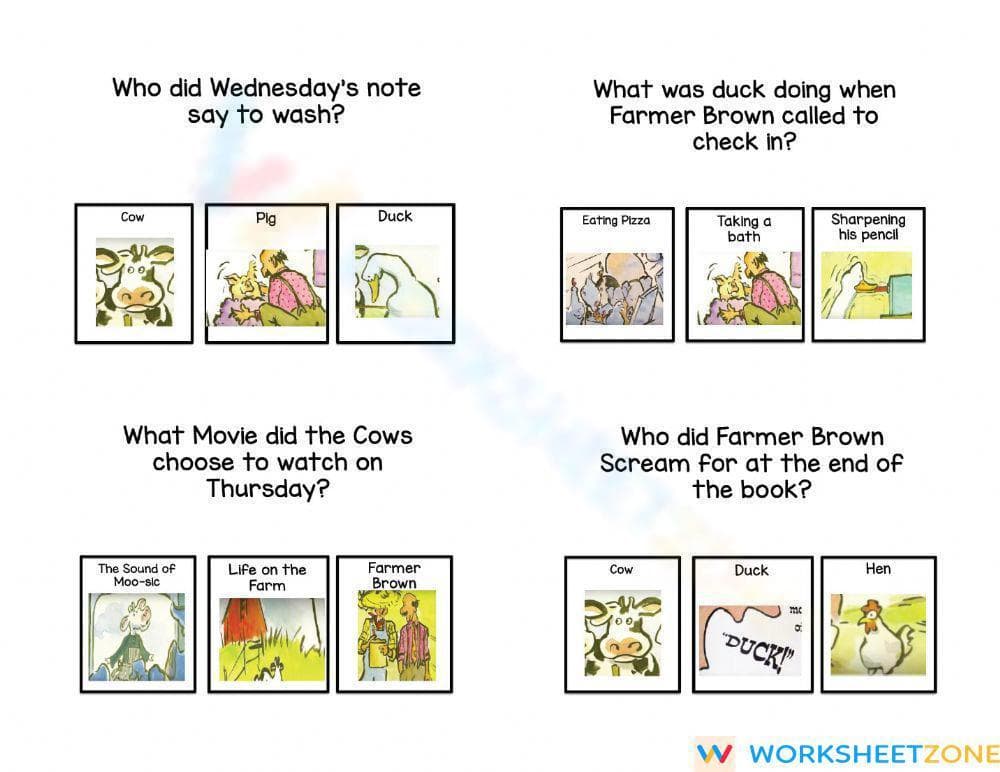
This Grade 1 Giggle Giggle Quack worksheet helps students identify key details in Doreen Cronin's book. By answering questions about the farm characters, learners demonstrate plot understanding. This resource ensures students can recall events and connect visual evidence to the narrative, building essential literacy foundations through an engaging and humorous context.
At a Glance
- Grade: 1 · Subject: ELA Literature
- Standard:
CCSS.ELA-LITERACY.RL.1.1— Ask and answer questions about key details in a text- Skill Focus: Reading Comprehension
- Format: 2 pages · 8 problems · Answer key included · PDF
- Best For: Literacy centers and independent reading checks
- Time: 15–20 minutes
What's Inside
Inside this two-page resource, teachers will find eight comprehension questions with visual answer choices. Each task includes a clear question stem, such as identifying who looked after the farm. The format supports early readers by providing pictorial cues alongside text, facilitating a smooth transition to independent analysis and ensuring that all students can participate regardless of their decoding level.
Zero-Prep Workflow
The zero-prep workflow is designed for classroom efficiency. First, print the document in seconds. Second, distribute the sheets during your literacy block; no explanation is needed as visual cues are self-explanatory. Finally, review responses quickly using the clear layout. This process allows educators to focus on instruction rather than administration, making it an ideal choice for busy mornings or unexpected substitute needs.
Standards Alignment
This worksheet is aligned to CCSS.ELA-LITERACY.RL.1.1, requiring students to answer questions about key details. By focusing on narrative details, tasks ensure students meet first-grade requirements. This standard code can be copied directly into lesson plans or curriculum mapping tools to document student progress toward mastery. The activity specifically targets the recall of character actions and plot points essential for early literary success.
How to Use It
Use this worksheet as a formative assessment after reading Giggle Giggle Quack. Observe the student's ability to match notes to visual answers, which indicates decoding and comprehension skills. The completion time is twenty minutes, making it perfect for small-group stations or independent packets. Teachers can use the results to identify which students may need more support with identifying character-driven plot changes.
Who It's For
This resource is ideal for Grade 1, though it fits advanced Kindergarteners. The reliance on visual aids pairs naturally with anchor charts tracking the farm animals. It is effective for students needing scaffolding in identifying character motivations within a humorous story. Inclusion specialists will find the visual answer choices particularly helpful for students with diverse learning needs or those just beginning their reading journey.
The design of this worksheet aligns with the principles of evidence-based literacy instruction as highlighted in the RAND AIRS 2024 report. Research indicates that using visual supports within reading comprehension tasks significantly lowers the cognitive load for early learners, allowing them to focus on the semantic meaning of the text rather than just word recognition. This worksheet targets the CCSS.ELA-LITERACY.RL.1.1 standard by requiring students to extract specific details about Farmer Brown and the animals' antics. By providing 8 distinct tasks that require evidence-based selection, the resource reinforces the student's ability to recall narrative events and identify key components of the plot. This approach to literacy assessment is proven to help educators identify specific gaps in a student's ability to process and retain information from a read-aloud or independent reading session, ensuring a robust foundation for future ELA success.


