


























Views
Downloads

Grade 3 Frog Life Cycle — Printable No-Prep Worksheet
Paste this activity's link or code into your existing LMS (Google Classroom, Canvas, Teams, Schoology, Moodle, etc.).
Students can open and work on the activity right away, with no student login required.
You'll still be able to track student progress and results from your teacher account.
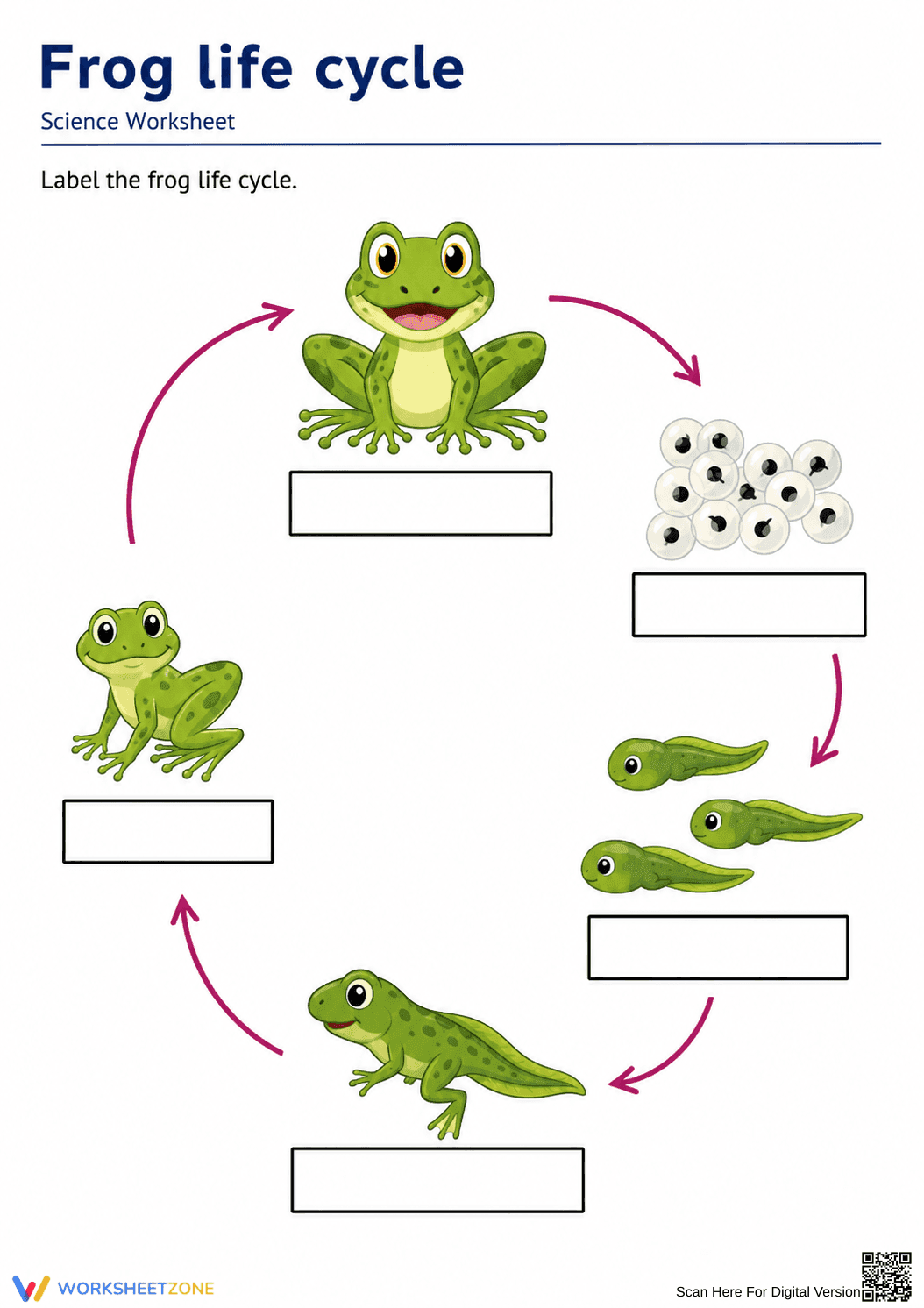
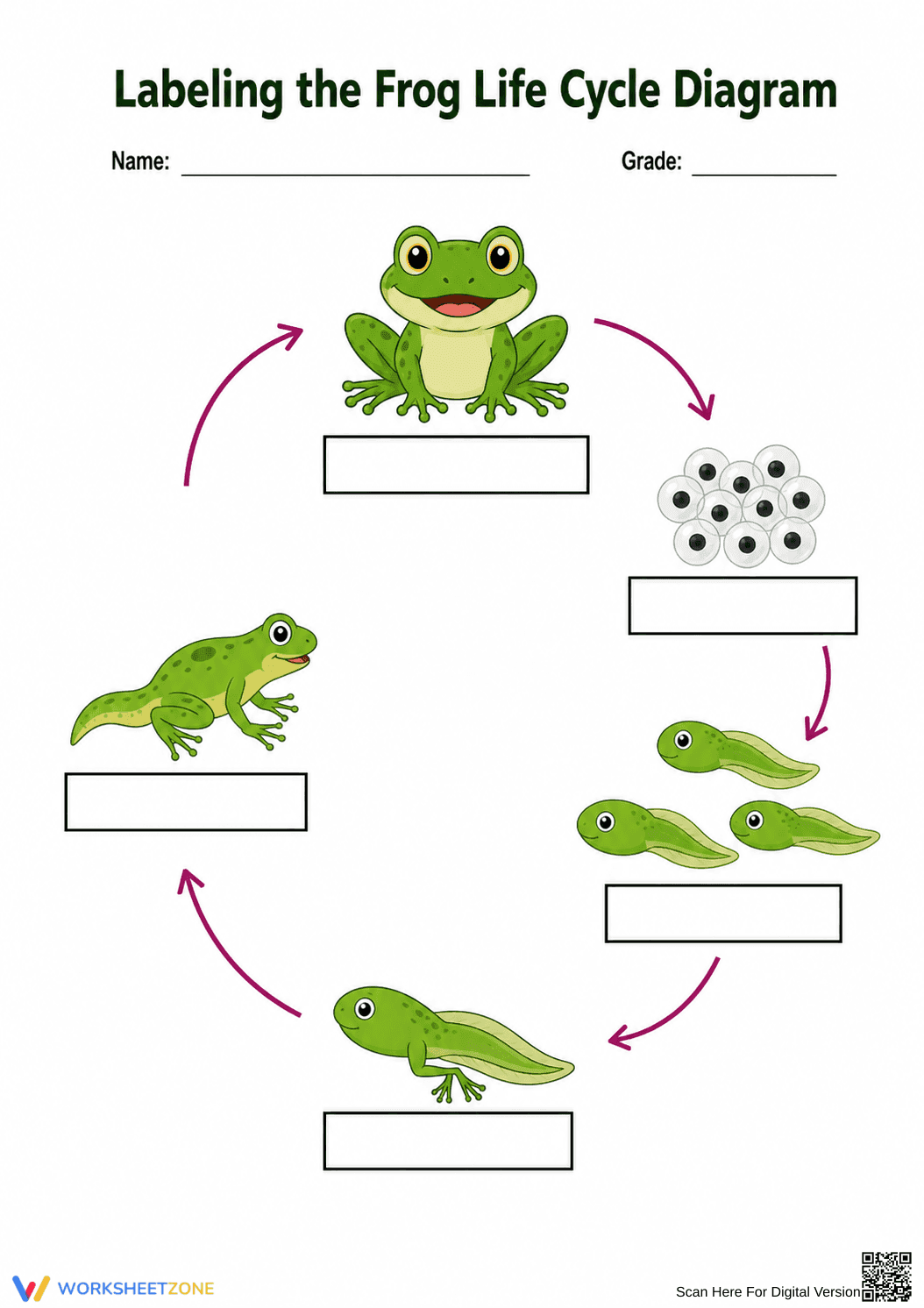
This Grade 3 science worksheet helps students master metamorphosis by labeling a clear frog life cycle diagram. Identifying each phase builds essential biological vocabulary and visualizes how living things grow.
At a Glance
- Grade: 3 · Subject: Science
- Standard:
3-LS1-1— Describe that organisms have unique and diverse life cycles.- Skill Focus: Labeling the frog life cycle
- Format: 2 pages · 5 problems · Answer key included · PDF
- Best For: Independent practice and science centers
- Time: 10–15 minutes
Inside this resource, educators will find a straightforward diagram featuring five stages of a frog's development: eggs, tadpole, tadpole with legs, froglet, and adult frog. The worksheet includes five blank boxes prompting students to apply scientific terminology. A complete answer key is provided to ensure accurate grading.
Zero-Prep Workflow
This resource is designed for immediate classroom application:
- Print (1 minute): Download the PDF and print copies. The design ensures clear reproduction.
- Distribute (1 minute): Hand out during your science block or place in a center.
- Review (3 minutes): Use the answer key to quickly check student work.
With under two minutes of prep time, this activity is an excellent addition to any sub plan.
Standards Alignment
This activity aligns with Next Generation Science Standard 3-LS1-1: Develop models to describe that organisms have unique and diverse life cycles. By completing the diagram, students actively model the continuous nature of amphibian reproduction. Both standard codes can be copied directly into lesson plans, IEP goals, or district curriculum mapping tools.
How to Use It
Use this diagram as independent practice immediately following direct instruction on amphibian metamorphosis. Alternatively, assign it as a quick formative assessment at the end of a unit. While students work, observe whether they correctly identify the transitional "froglet" stage, which requires attention to limb development. Expected completion time is 10 to 15 minutes.
Who It's For
Designed for third-grade science students, this worksheet also serves as review for fourth graders. For students needing support, provide a word bank on the board. It pairs naturally with informational texts about pond ecosystems or hands-on observations of live tadpoles.
Aligning elementary science instruction with 3-LS1-1 requires students to describe that organisms have unique and diverse life cycles. According to a recent ScienceDirect TpT Analysis, providing students with clear, sequential visual models significantly improves their retention of complex biological processes such as amphibian metamorphosis. When young learners actively engage with structured diagrams by labeling specific developmental stages, they transition from passive observers to active participants in their own scientific education. This hands-on interaction directly reinforces essential academic vocabulary and helps students accurately conceptualize the continuous loop of birth, growth, reproduction, and death inherent in all living things. By integrating these targeted visual aids into daily elementary science curricula, educators can effectively foster a deeper, more intuitive understanding of natural phenomena, ensuring that foundational life science concepts are firmly established for future academic success across all STEM disciplines.


