


























0
Views
0
Downloads

0.0
0
Save
0 Likes
Share
Fraction Practice: Who Has More?
0 Views
0 Downloads
Paste this activity's link or code into your existing LMS (Google Classroom, Canvas, Teams, Schoology, Moodle, etc.).
Students can open and work on the activity right away, with no student login required.
You'll still be able to track student progress and results from your teacher account.
Information
Description
What It Is:
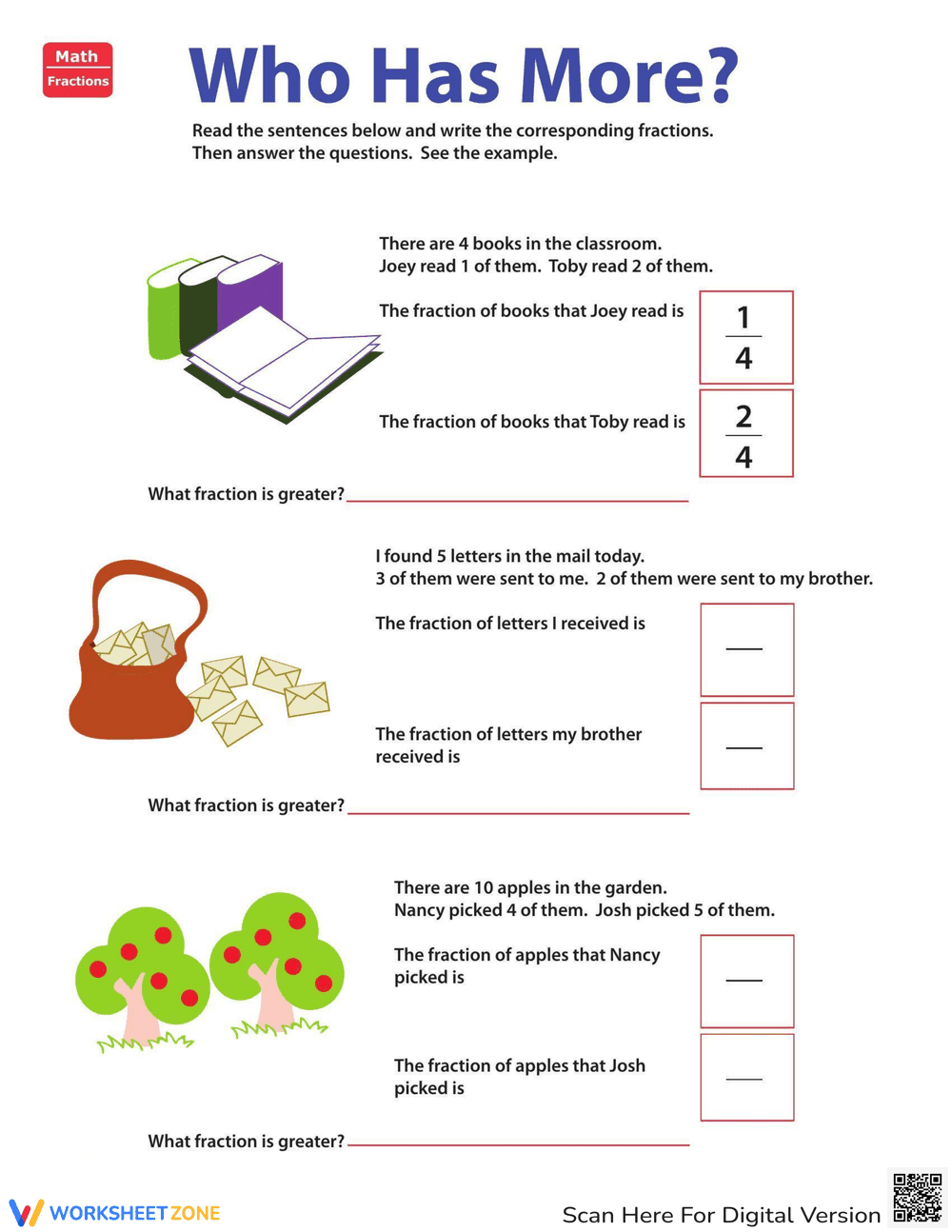
A fun and visual comparing fractions worksheet where students read short real-life stories and determine which fraction is greater. Each scenario helps children connect math to daily life situations like reading books, sharing letters, or picking apples.
Why Use It:
This worksheet strengthens fraction comparison and reasoning skills through relatable, story-based questions. It encourages critical thinking and helps learners visualize fractions in context instead of relying solely on numbers.
How to Use It:
• Read each story problem carefully.
• Write the correct fractions for each person or situation.
• Compare the fractions and decide who has more.
• Great for guided math practice, group work, or independent study.
Grade Suitability:
Best for Grades 3–5.
• Grade 3: Understanding basic fraction concepts.
• Grade 4–5: Comparing and reasoning about fractions in word problems.
Target Users:
Perfect for teachers, students, and homeschool parents who want to make learning fractions interactive, engaging, and story-driven.
A fun and visual comparing fractions worksheet where students read short real-life stories and determine which fraction is greater. Each scenario helps children connect math to daily life situations like reading books, sharing letters, or picking apples.
Why Use It:
This worksheet strengthens fraction comparison and reasoning skills through relatable, story-based questions. It encourages critical thinking and helps learners visualize fractions in context instead of relying solely on numbers.
How to Use It:
• Read each story problem carefully.
• Write the correct fractions for each person or situation.
• Compare the fractions and decide who has more.
• Great for guided math practice, group work, or independent study.
Grade Suitability:
Best for Grades 3–5.
• Grade 3: Understanding basic fraction concepts.
• Grade 4–5: Comparing and reasoning about fractions in word problems.
Target Users:
Perfect for teachers, students, and homeschool parents who want to make learning fractions interactive, engaging, and story-driven.


