


























Views
Downloads
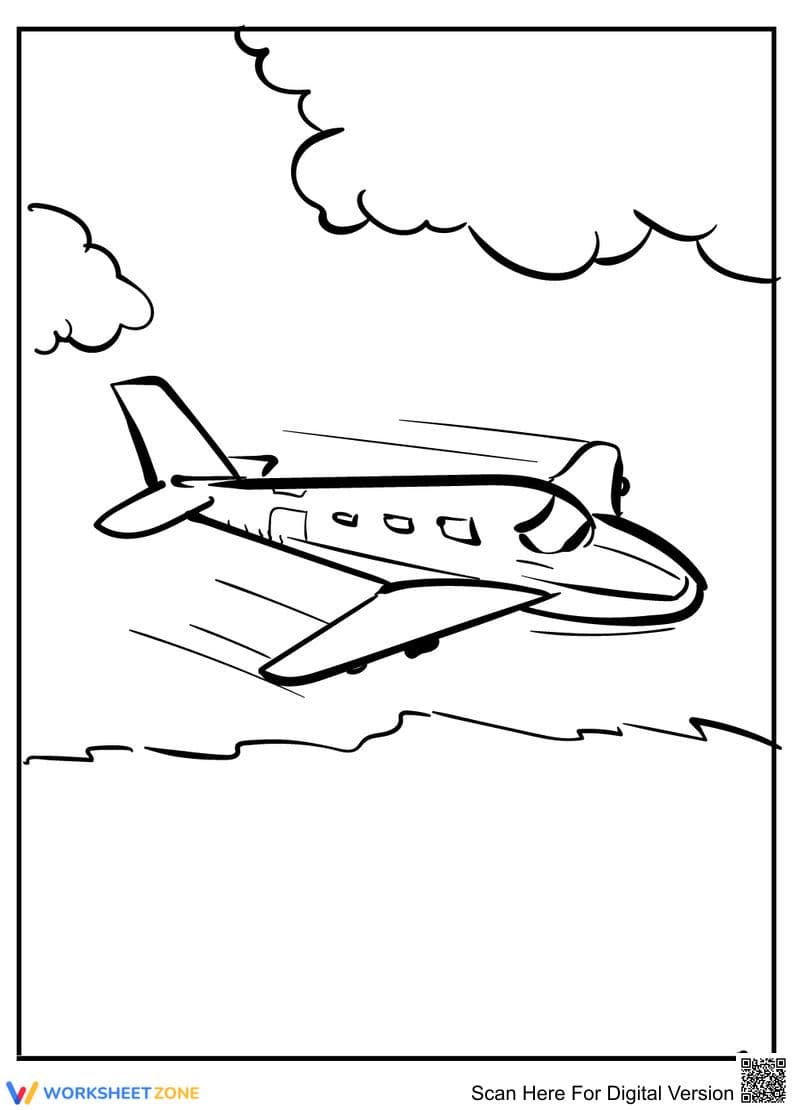

Fast Airplane Coloring Page — Printable K-2 Worksheet
Paste this activity's link or code into your existing LMS (Google Classroom, Canvas, Teams, Schoology, Moodle, etc.).
Students can open and work on the activity right away, with no student login required.
You'll still be able to track student progress and results from your teacher account.
This fast airplane coloring page provides young students with an engaging way to develop essential fine motor skills and hand-eye coordination. By focusing on the dynamic lines of the flying aircraft, early learners practice grip control and spatial awareness while expressing their creativity through independent art activities.
At a Glance
- Grade: K · Subject: English
- Standard:
CCSS.ELA-LITERACY.W.K.3— Use drawing to narrate an event- Skill Focus: Fine motor skills
- Format: 1 page · 1 task · No answer key · PDF
- Best For: Morning work or centers
- Time: 10–15 minutes
Inside this single-page download, educators will find a bold-line illustration of an airplane soaring through the sky. The worksheet features clear, thick borders that guide young hands as they practice staying within the lines. The design includes background elements like clouds and motion lines, offering students multiple areas to apply different colors. No answer key is required, making it a purely creative exercise.
This resource is designed for immediate classroom implementation with an efficient zero-prep workflow. First, print the PDF document, taking less than thirty seconds. Next, distribute the pages with crayons or markers, requiring about one minute. Finally, review the students' completed artwork, offering praise for effort. Total teacher preparation time is under two minutes, making this an excellent option for emergency sub plans or early finisher bins.
This activity aligns with CCSS.ELA-LITERACY.W.K.3, which encourages students to use a combination of drawing, dictating, and writing to narrate a single event. While primarily a coloring task, educators can easily extend the activity by asking students to dictate a short story about where the fast airplane is traveling. Both standard codes can be copied directly into lesson plans, IEP goals, or district curriculum mapping tools.
Teachers can utilize this coloring page during morning arrival to help students settle into the classroom routine calmly. It also serves as an effective cool-down activity after recess or physical education. As a formative assessment observation tip, watch how students hold their coloring tools; this provides immediate feedback on their pencil grip development and fine motor readiness for handwriting tasks. The expected completion time ranges from ten to fifteen minutes, depending on the child's attention to detail.
This resource is primarily designed for Kindergarten and first-grade students who are actively refining their fine motor control. It offers natural differentiation, as students can choose to simply color the main shapes or add intricate details and background stories depending on their developmental level. It pairs wonderfully with a read-aloud book about transportation or a direct instruction lesson on different modes of travel.
Integrating drawing and coloring activities into early childhood education is a critical component of foundational literacy and motor development. Aligned with CCSS.ELA-LITERACY.W.K.3, this worksheet allows students to use drawing to narrate an event, fostering both physical coordination and narrative thinking. According to Fisher & Frey (2014), incorporating structured visual arts tasks in the primary grades significantly enhances students' spatial reasoning and fine motor endurance, which are direct precursors to successful handwriting acquisition. By engaging with this fast airplane illustration, young learners practice the sustained attention and grip control necessary for future academic tasks. This simple yet effective activity bridges the gap between creative expression and essential physical development, ensuring students build the stamina required for more complex writing assignments as they progress.


