


























Views
Downloads

Finding Adjectives Worksheet | Grade 1-2 Essential
Paste this activity's link or code into your existing LMS (Google Classroom, Canvas, Teams, Schoology, Moodle, etc.).
Students can open and work on the activity right away, with no student login required.
You'll still be able to track student progress and results from your teacher account.
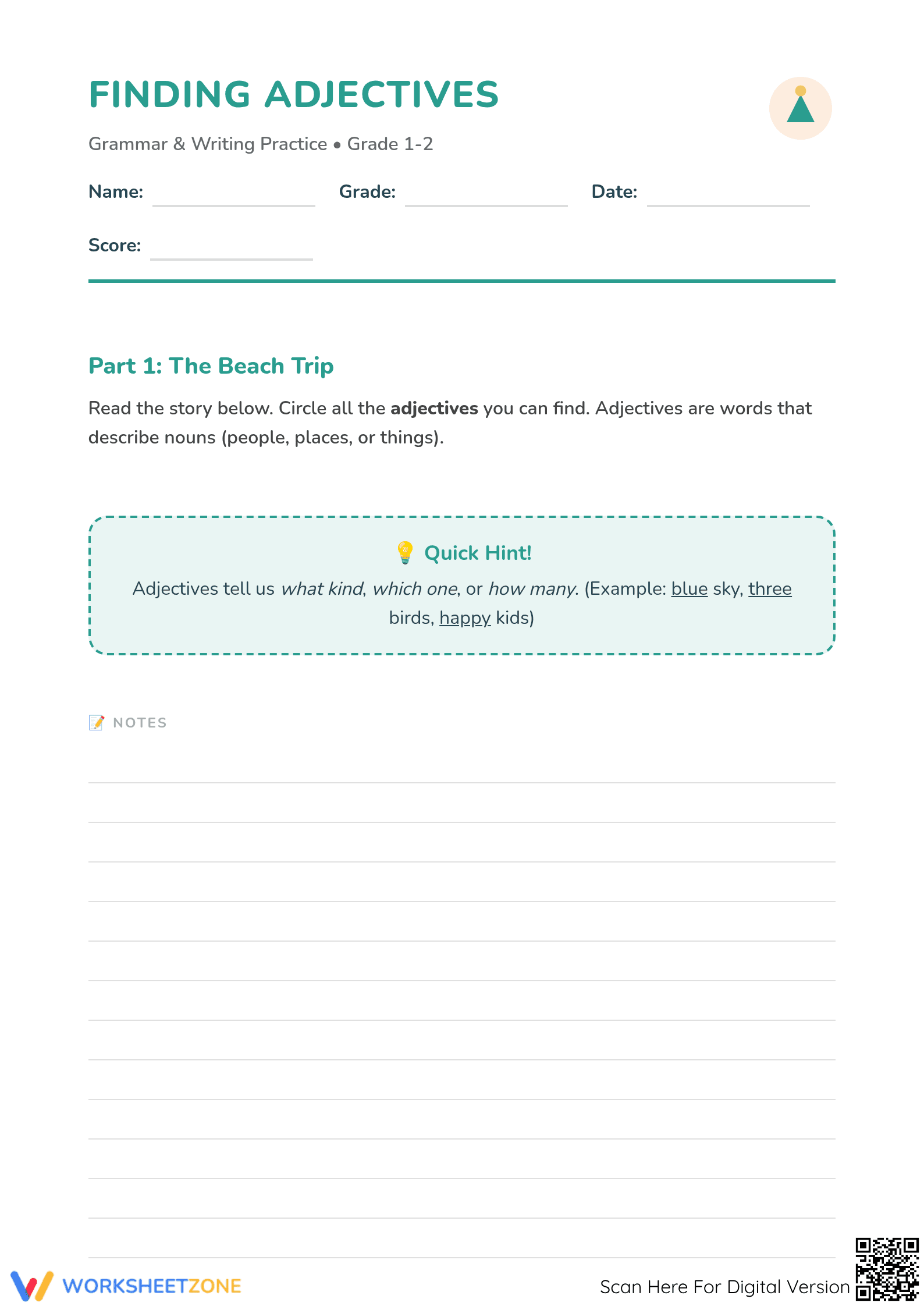
This Grade 1-2 grammar worksheet provides comprehensive practice for identifying and using adjectives within a narrative context. Students engage with a beach-themed story to locate descriptive words before moving toward independent sentence construction. By the end of these three pages, learners will demonstrate a clear understanding of how adjectives modify nouns to provide detail and variety in writing.
At a Glance
- Grade: 1-2 · Subject: ELA
- Standard:
CCSS.ELA-LITERACY.L.1.1.F— Use frequently occurring adjectives to describe people, places, and things- Skill Focus: Adjective Identification & Usage
- Format: 3 pages · 25+ problems · Answer key included · PDF
- Best For: Independent practice or literacy centers
- Time: 20–30 minutes
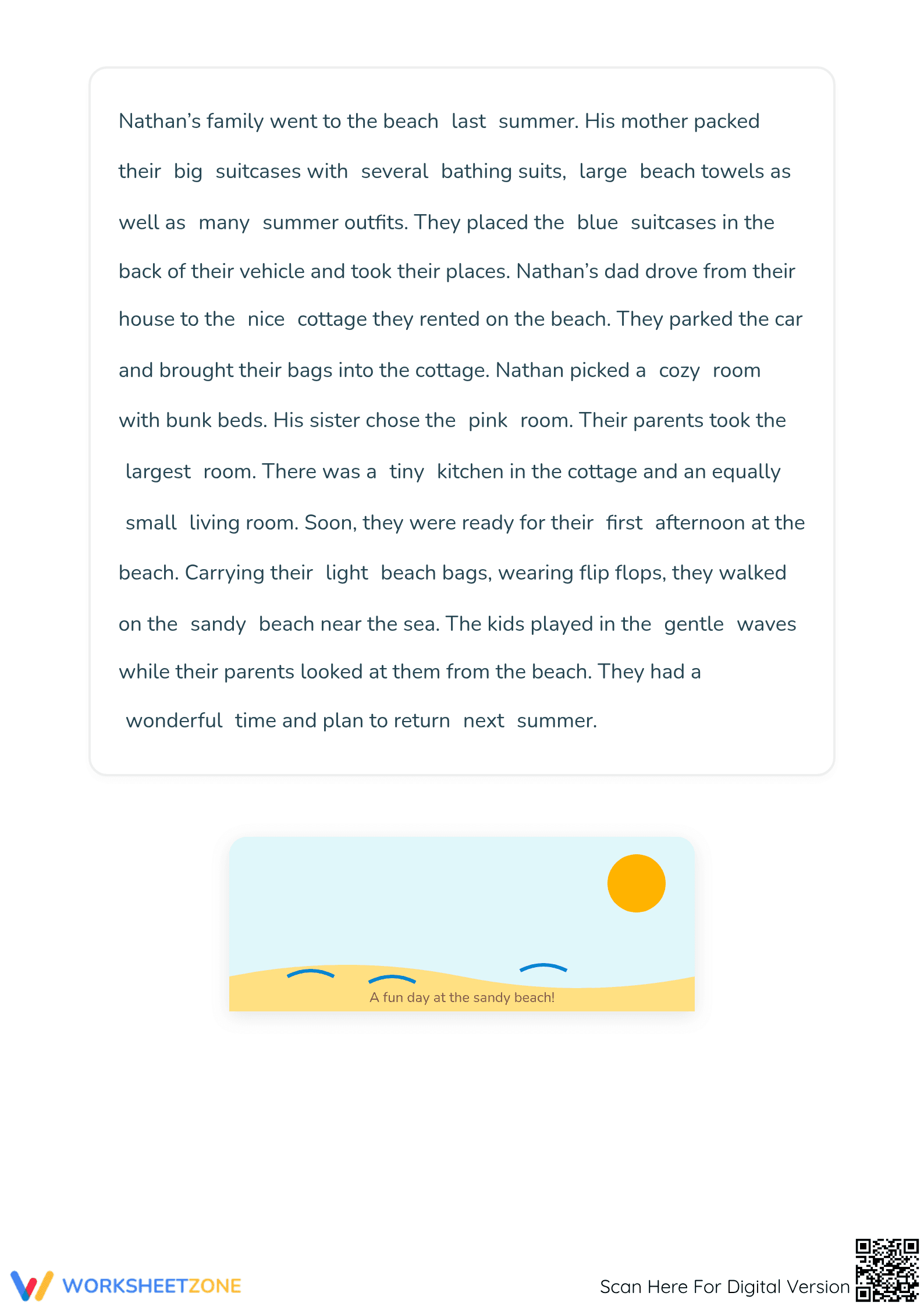
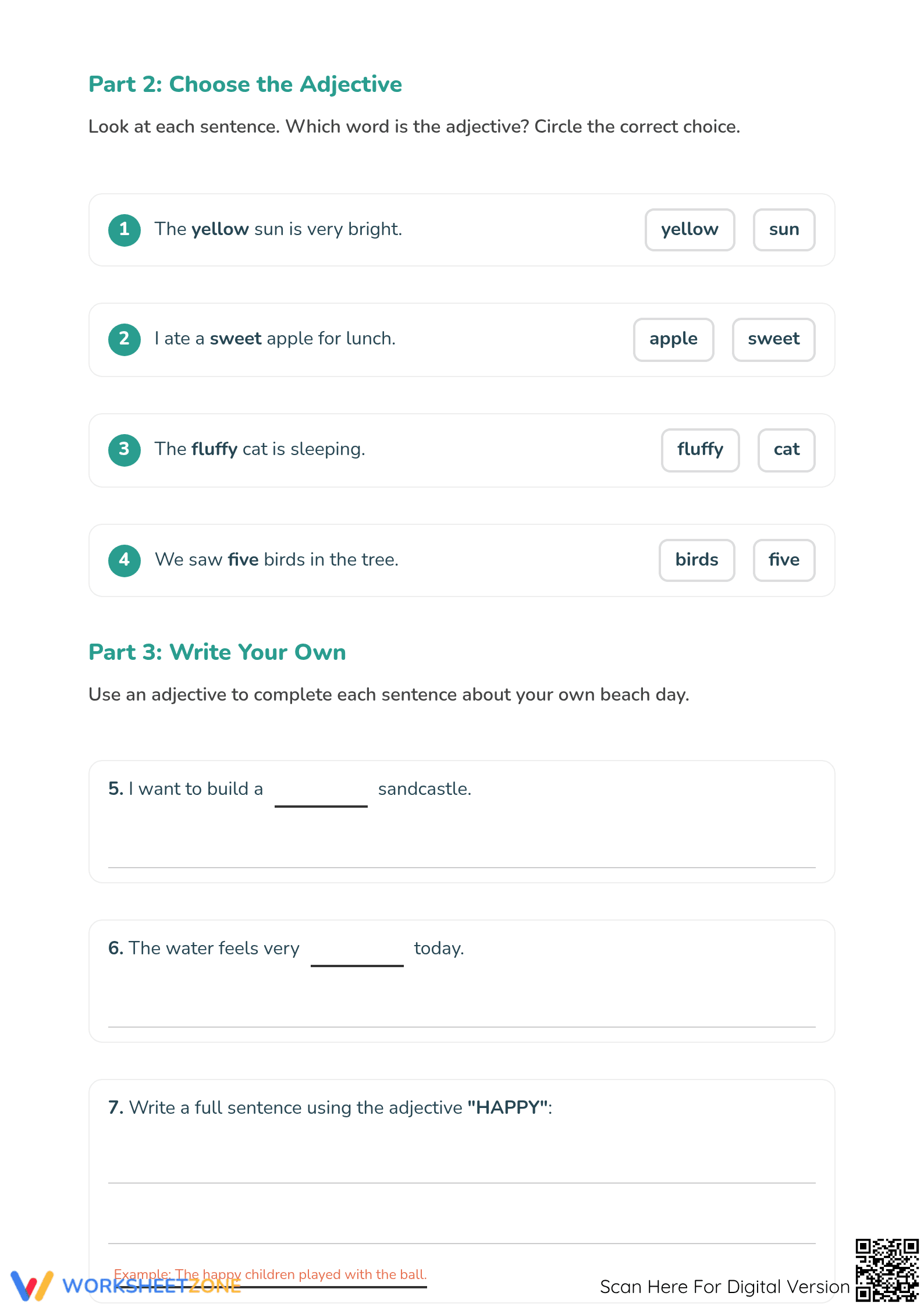
The packet contains three distinct sections across three pages. Part 1 features a full-page narrative titled "The Beach Trip," where students must circle adjectives hidden within the text. Part 2 offers four multiple-choice sentences to isolate specific modifiers. Part 3 transitions to application, requiring students to fill in blanks and write an original sentence using the word "HAPPY." A complete answer key is provided for all 25 identification points.
The zero-prep workflow is designed for immediate classroom implementation. First, print the three-page PDF (30 seconds). Second, distribute the packets to students during your grammar block or as a morning work assignment (1 minute). Third, use the included answer key to review the story together on an interactive whiteboard or for quick grading (1 minute). Total teacher preparation time is under three minutes, making this an ideal resource for busy mornings or sub plans.
This resource aligns with CCSS.ELA-LITERACY.L.1.1.F, which requires students to use frequently occurring adjectives. It also supports CCSS.ELA-LITERACY.L.2.1.E by reinforcing the distinction between adjectives and the nouns they describe. Both standard codes can be copied directly into lesson plans, IEP goals, or district curriculum mapping tools to ensure instructional alignment.
Use this worksheet during the "You Do" phase of a gradual release lesson on descriptive language. It serves as an excellent formative assessment after a whole-class reading of a descriptive text. Teachers should observe students during Part 1 to see if they are confusing adjectives with nouns or verbs. Expected completion typically takes 20 to 30 minutes depending on student reading speed and proficiency.
This is designed for first and second-grade students who are beginning to expand their writing beyond simple subject-verb sentences. It is particularly helpful for English Language Learners (ELLs) who benefit from the "Quick Hint" box and the contextual clues provided in the beach story. Pair this with a sensory bin activity or a descriptive anchor chart for maximum instructional impact.
Grammar instruction in the early grades is most effective when skills are situated within meaningful texts rather than isolated drills. This worksheet targets CCSS.ELA-LITERACY.L.1.1.F by requiring students to identify frequently occurring adjectives within a cohesive narrative. According to Fisher & Frey (2014), the transition from identification to application—as seen in the progression from circling words in a story to writing original sentences—is critical for linguistic mastery. Research from the RAND AIRS 2024 report suggests that high-quality, standards-aligned supplemental materials improve student engagement by providing structured scaffolds like the "Quick Hint" box included here. By engaging with over 25 specific instances of descriptive language, students build the cognitive pathways necessary for advanced reading comprehension and expressive writing. This resource provides the necessary repetition and contextual variety required for Grade 1 and Grade 2 learners to internalize word classes effectively.


