


























Views
Downloads


Printable Long E Sound Mastery Worksheet | Grade 3-4 ELA
Paste this activity's link or code into your existing LMS (Google Classroom, Canvas, Teams, Schoology, Moodle, etc.).
Students can open and work on the activity right away, with no student login required.
You'll still be able to track student progress and results from your teacher account.
Mastering the long "e" vowel sound is a foundational step in developing fluent reading and precise spelling. This comprehensive phonics packet guides third and fourth-grade students through the nuances of vowel discrimination. By identifying, categorizing, and applying long "e" words in context, learners solidify their phonetic awareness and bridge the gap between decoding and comprehension.
At a Glance
- Grade: 3–4 · Subject: ELA · Phonics
- Standard:
CCSS.ELA-LITERACY.RF.3.3— Apply grade-level phonics and word analysis skills to decode words accurately- Skill Focus: Long vs. Short "E" Discrimination
- Format: 3 pages · 26 tasks · Answer key included · PDF
- Best For: Literacy centers and independent vowel practice
- Time: 25–35 minutes
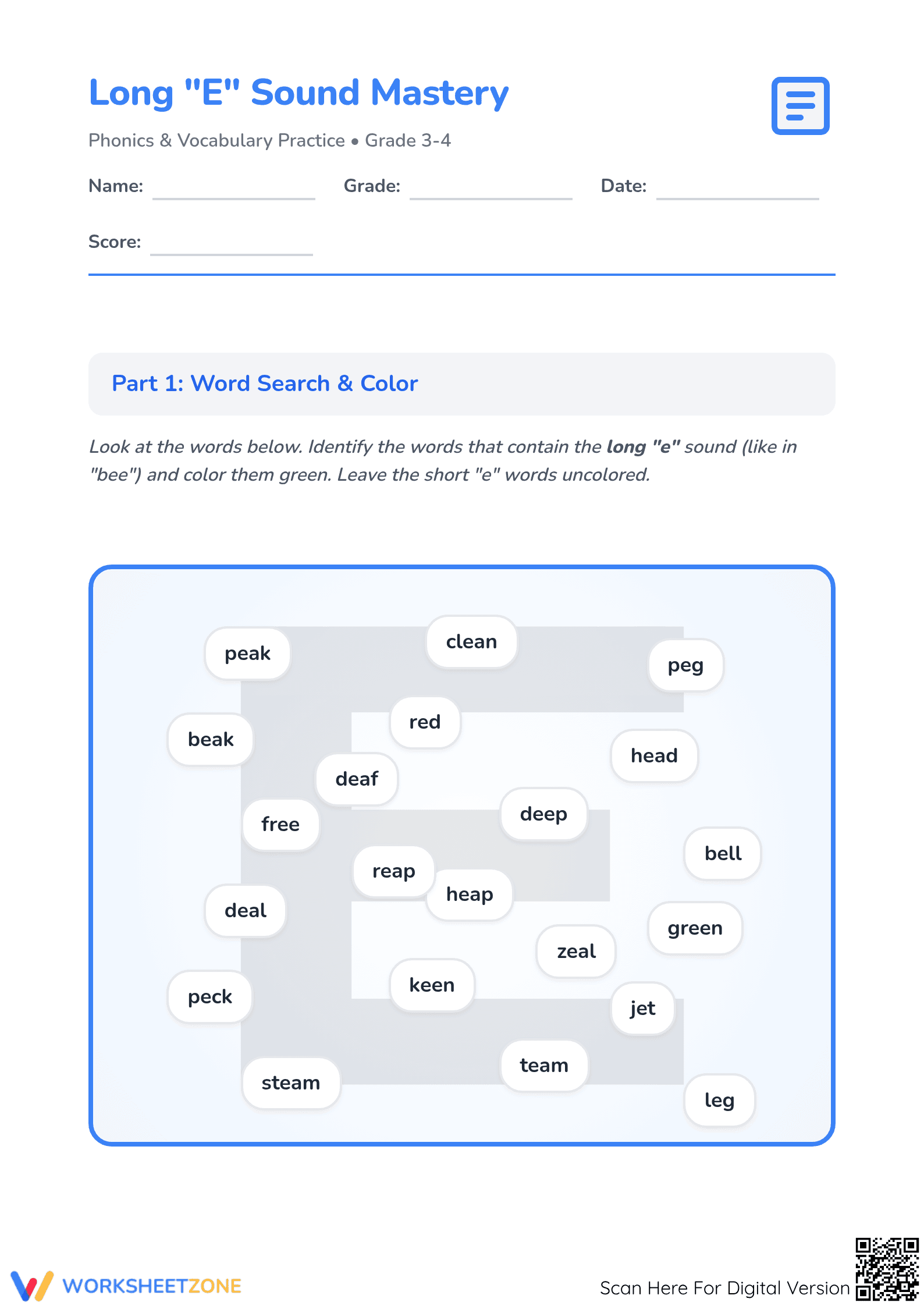
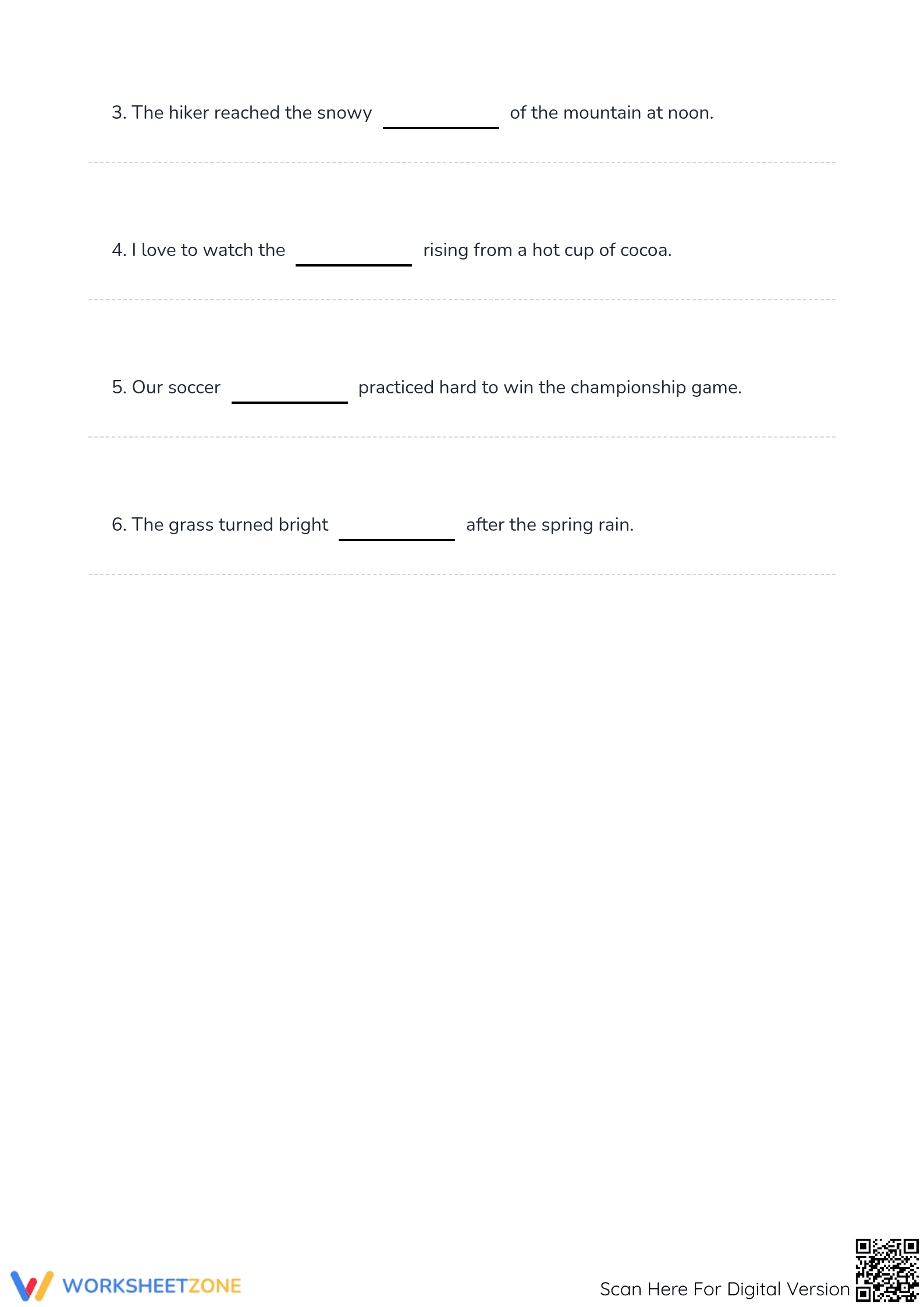
This three-page instructional resource provides a multi-sensory approach to phonics. Students interact with a custom "E" shaped word bank containing 20 different words. The packet includes a visual word search and color-coding activity, a structured categorization table for phonetic sorting, and a six-sentence cloze activity to practice using target vocabulary in meaningful contexts. A full answer key ensures rapid grading.
The Learning Path
- Guided Practice: Students begin with visual discrimination, evaluating 20 words (like "beak" and "peck") to identify the long "e" sound.
- Supported Practice: Learners categorize their findings into a dual-column table, reinforcing the structural differences between long and short vowel spelling patterns.
- Independent Practice: Students apply their knowledge by completing sentences, requiring them to select the correct long "e" word to satisfy semantic and syntactic requirements.
This "I Do, We Do, You Do" scaffolding ensures students move from recognition to application with confidence.
Standards Alignment
This resource is directly aligned to `CCSS.ELA-LITERACY.RF.3.3`, which requires students to know and apply grade-level phonics and word analysis skills in decoding words. Specifically, it targets the ability to distinguish between long and short vowel sounds in common spelling patterns. This standard code can be copied directly into lesson plans, IEP goals, or district curriculum mapping tools.
How to Use It
Use this packet as a focused formative assessment following a direct instruction lesson on "ee" and "ea" vowel teams. Educators can observe Part 1 to quickly identify students struggling with phonetic auditory discrimination before they proceed to the writing tasks. It also serves as an excellent extension activity for early finishers or a targeted intervention for students needing extra decoding support. Completion typically takes 30 minutes.
Who It's For
This worksheet is ideal for third and fourth graders working toward reading fluency, as well as English Language Learners (ELLs) mastering English vowel sounds. It pairs naturally with an anchor chart detailing common long "e" patterns like -ea-, -ee-, and final -e. The clear layout supports students with executive functioning challenges by providing distinct, numbered steps for every section.
The "Long 'E' Sound Mastery" worksheet integrates systematic phonics instruction with contextual application to drive literacy growth. Research by Fisher & Frey (2014) emphasizes that vowel sound discrimination is most effective when students move beyond isolated recognition into meaningful categorization and sentence-level usage. By utilizing `CCSS.ELA-LITERACY.RF.3.3`, this resource ensures that Grade 3-4 learners are practicing the specific decoding skills required for transition into complex informational texts. The 26-task sequence provides the high-frequency repetition necessary for neural orthographic mapping, a process critical for spelling automaticity. Data from NAEP indicates that students who master these phonetic foundations in upper elementary grades show significantly higher reading comprehension scores in later years. This printable resource offers the structured, standards-aligned environment needed to bridge the gap from phonetic awareness to reading fluency, making it an essential component of any research-based ELA curriculum focused on mastery of English vowel correspondences.


