



























Essential Ocean Habitats Word Search | Grades 7–8 Science
Paste this activity's link or code into your existing LMS (Google Classroom, Canvas, Teams, Schoology, Moodle, etc.).
Students can open and work on the activity right away, with no student login required.
You'll still be able to track student progress and results from your teacher account.
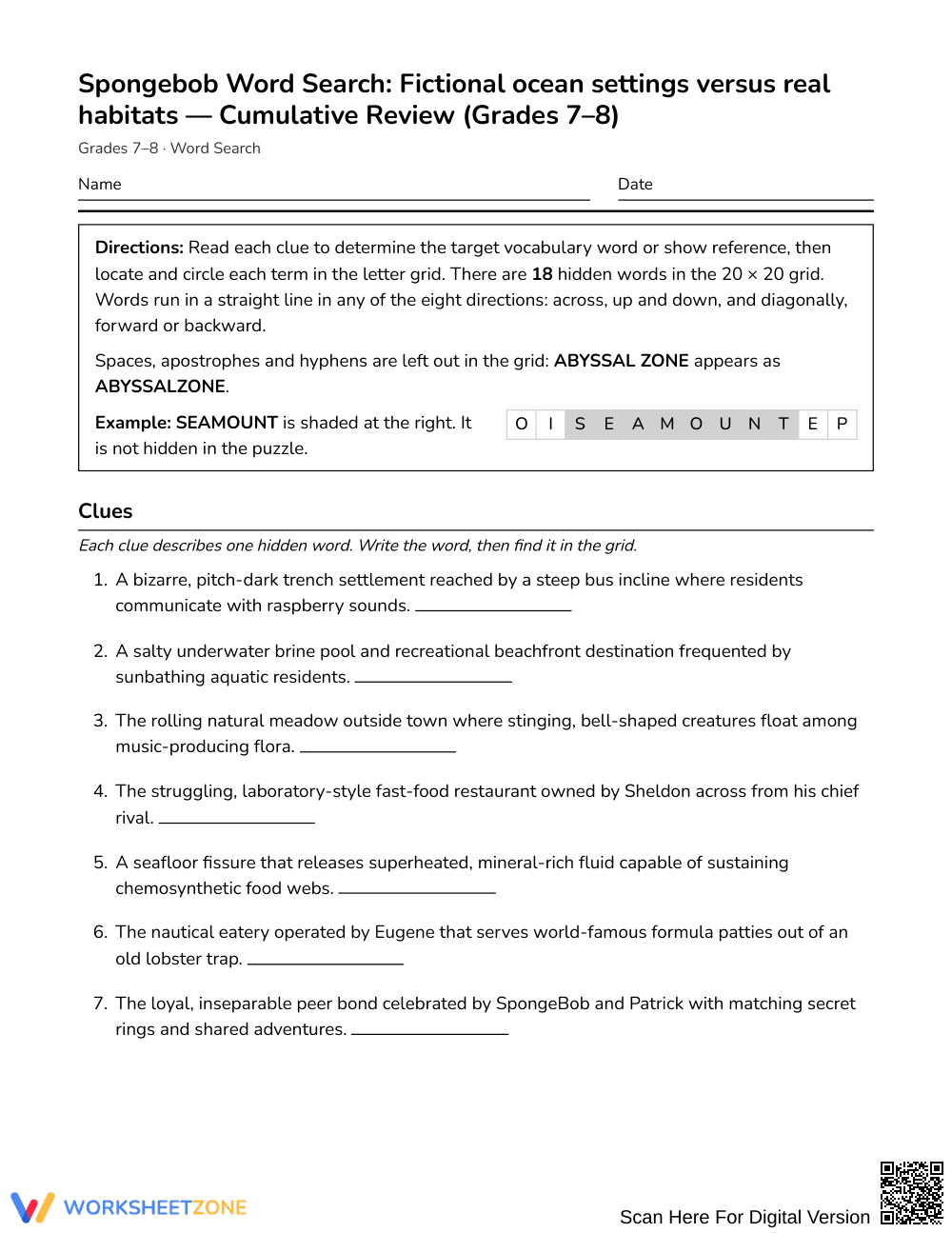
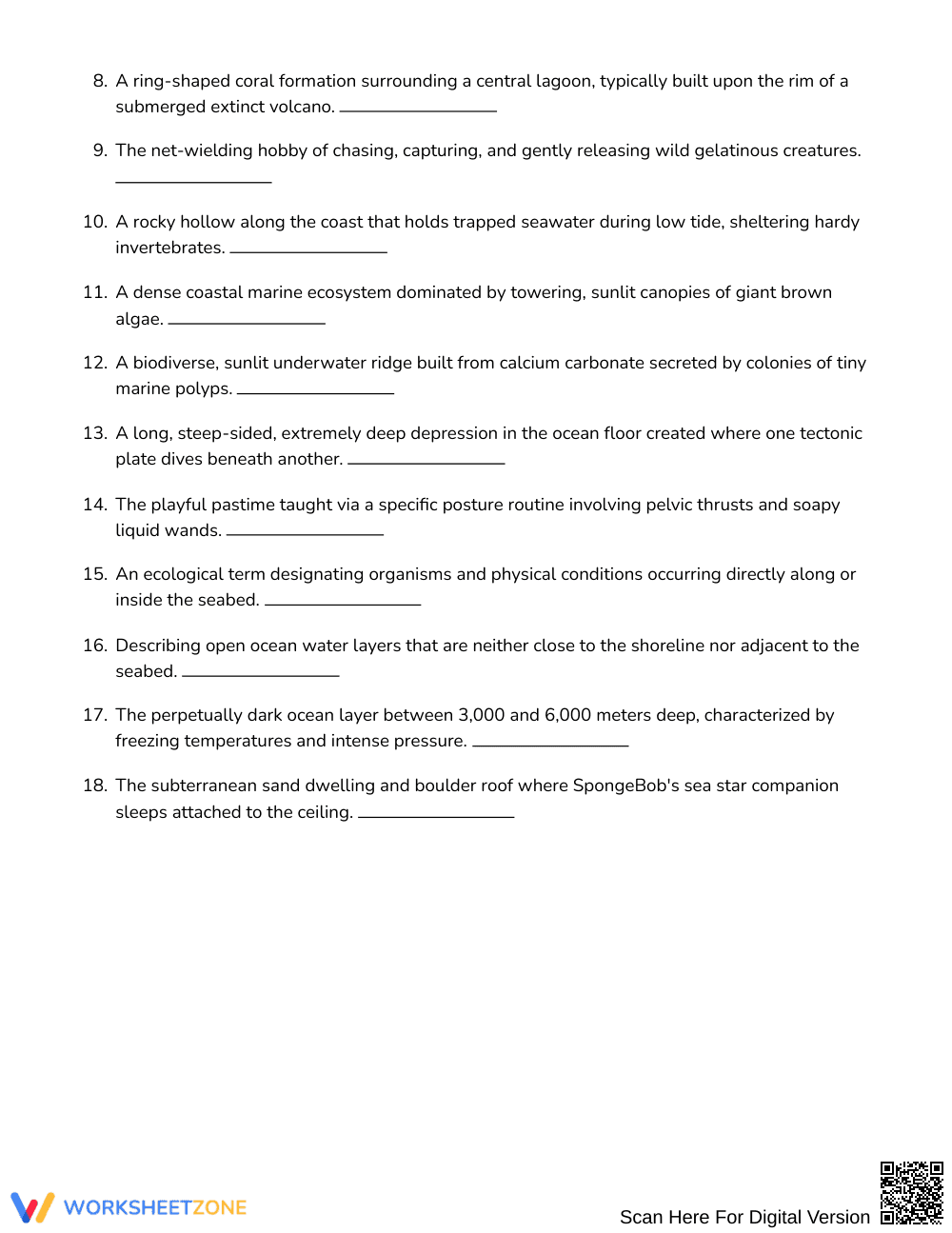
Reinforce marine science concepts with this interactive word search that bridges fictional ocean settings and authentic marine ecosystems. Designed for middle school science classes, this activity challenges students to decode 18 science and popular culture terms using descriptive clues, connecting engaging pop-culture references with real-world oceanographic terminology like benthic zones, hydrothermal vents, and pelagic layers.
At a Glance
- Grade: Grades 7–8 · Subject: Science
- Standard: Not standards-assessed — vocabulary enrichment
- Skill Focus: Fictional ocean settings versus real habitats
- Format: 3 pages · 18 words · Answer key included · PDF
- Best For: Vocabulary review and fast finisher engagement
- Time: 20–30 minutes
What's Inside
This 3-page printable science resource contains an 18-word puzzle accompanied by a complete clue-based reference list and a comprehensive 4-page answer key. Rather than relying on a simple word bank, the activity provides rich scientific and contextual clues that require students to recall or deduce target marine vocabulary before locating each term.
Puzzle Mechanics and Structure
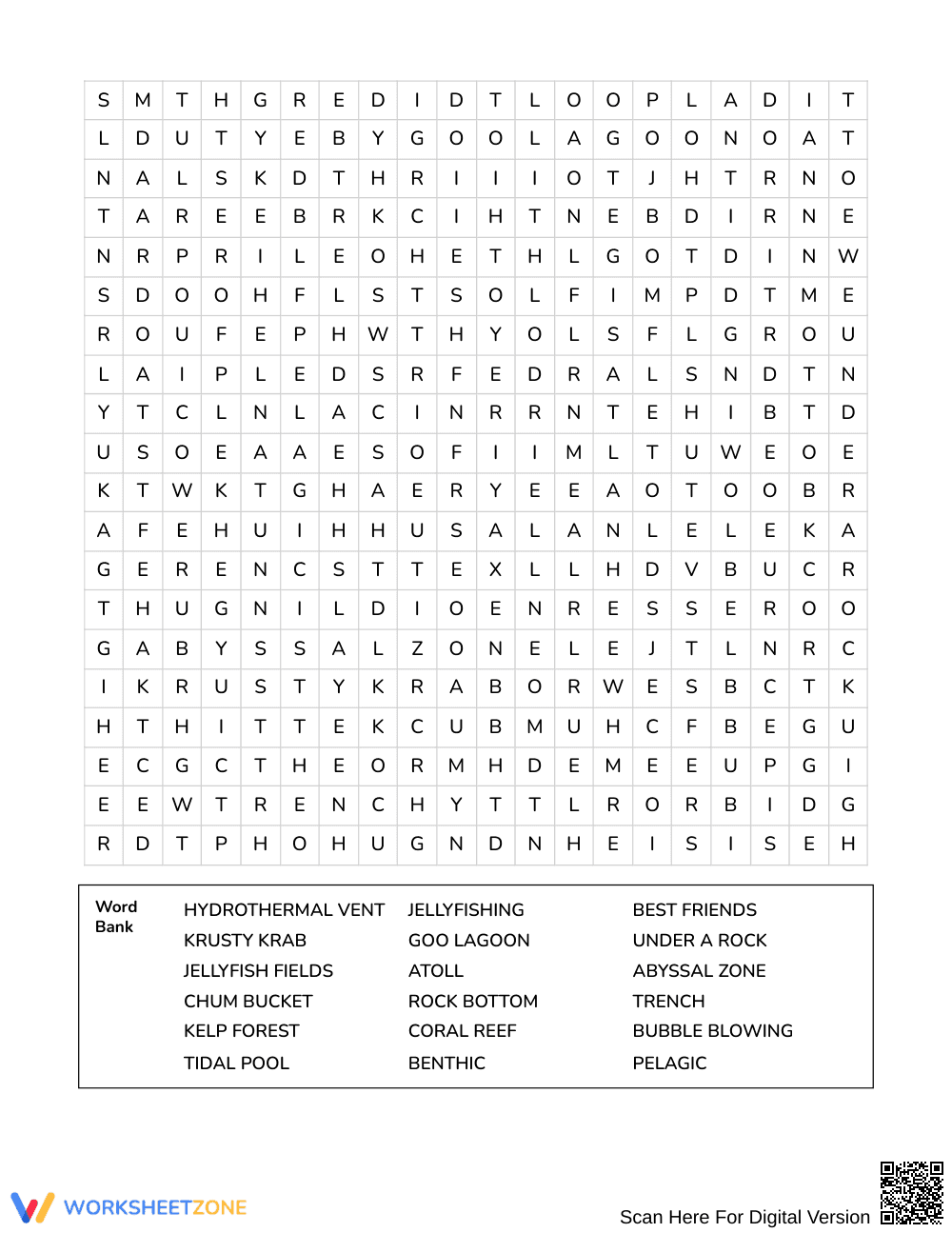
This puzzle presents a challenging 20-by-20 letter grid containing 18 hidden vocabulary terms. Words run in all eight possible directions: North, Northeast, East, Southeast, South, Southwest, West, and Northwest. Students read through the clue list to identify target terms, cross-referencing their knowledge of marine zones, coastal formations, and fictional underwater locales before searching the scrambled grid.
Standards Alignment
This activity serves strictly as vocabulary enrichment and cumulative review for marine science units. It is not aligned to a specific state or national science standard, making it an ideal low-stakes reinforcement tool that strengthens domain-specific terminology alongside engaging cultural references.
How to Use It
Deploy this puzzle immediately after direct instruction on marine biomes as an engaging formative check. As students work, circulate to observe whether they correctly match clues like abyssal zones or benthic layers without consulting their textbooks. Alternatively, use it as a low-stress review activity before a unit assessment or as a rewarding sub plan. Most students complete the full 18-word puzzle within 20 to 30 minutes.
Who It's For
This activity is designed for Grades 7–8 science classrooms studying aquatic ecosystems, oceanography, or marine ecology. It provides built-in differentiation: struggling readers benefit from the detailed contextual clues, while advanced learners test their recall speed. Pair this word search with an ocean zones diagram or an introductory lesson on benthic versus pelagic habitats.
Vocabulary enrichment activities that integrate contextual clues strengthen domain-specific recall by bridging prior knowledge with rigorous terminology. Research from Fisher & Frey (2014) emphasizes that intentional vocabulary acquisition occurs most reliably when learners encounter content words in varied, engaging contexts that demand active retrieval rather than passive memorization. By contrasting fictional ocean settings with authentic ecological zones such as hydrothermal vents, atolls, and abyssal depths, this Grades 7–8 science word search prompts students to actively synthesize ecological definitions. Although designed as an unassessed enrichment resource rather than a formal standards-aligned assessment, the puzzle utilizes clue-driven retrieval to solidify 18 marine science terms across a 20-by-20 grid. This playful yet rigorous retrieval practice supports long-term retention of oceanographic concepts, validating gamified vocabulary review as a beneficial instructional supplement in middle school science curricula.


