































Essential Compare Projectile Worksheet | Grade 8‑12 Science

Paste this activity's link or code into your existing LMS (Google Classroom, Canvas, Teams, Schoology, Moodle, etc.).
Students can open and work on the activity right away, with no student login required.
You'll still be able to track student progress and results from your teacher account.
Opening
Students will master the skill of comparing projectile motion scenarios by completing structured tables and brief explanations. This worksheet guides them through real‑world examples, reinforcing how horizontal and vertical components interact and why different launch conditions produce distinct outcomes in physics.
At a Glance
- Grade: Grades 8–12 · Subject: Science
- Standard:
— Students compare projectile motion scenarios using tables and brief reasoning- Skill Focus: compare two relevant cases, structures, processes, organisms, materials, or systems with a table or Venn-style organizer and short reasoning
- Format: 4 pages · 36 problems · Answer key included · PDF
- Best For: Practice comparing motion cases in physics
- Time: 15–20 minutes
What’s Inside
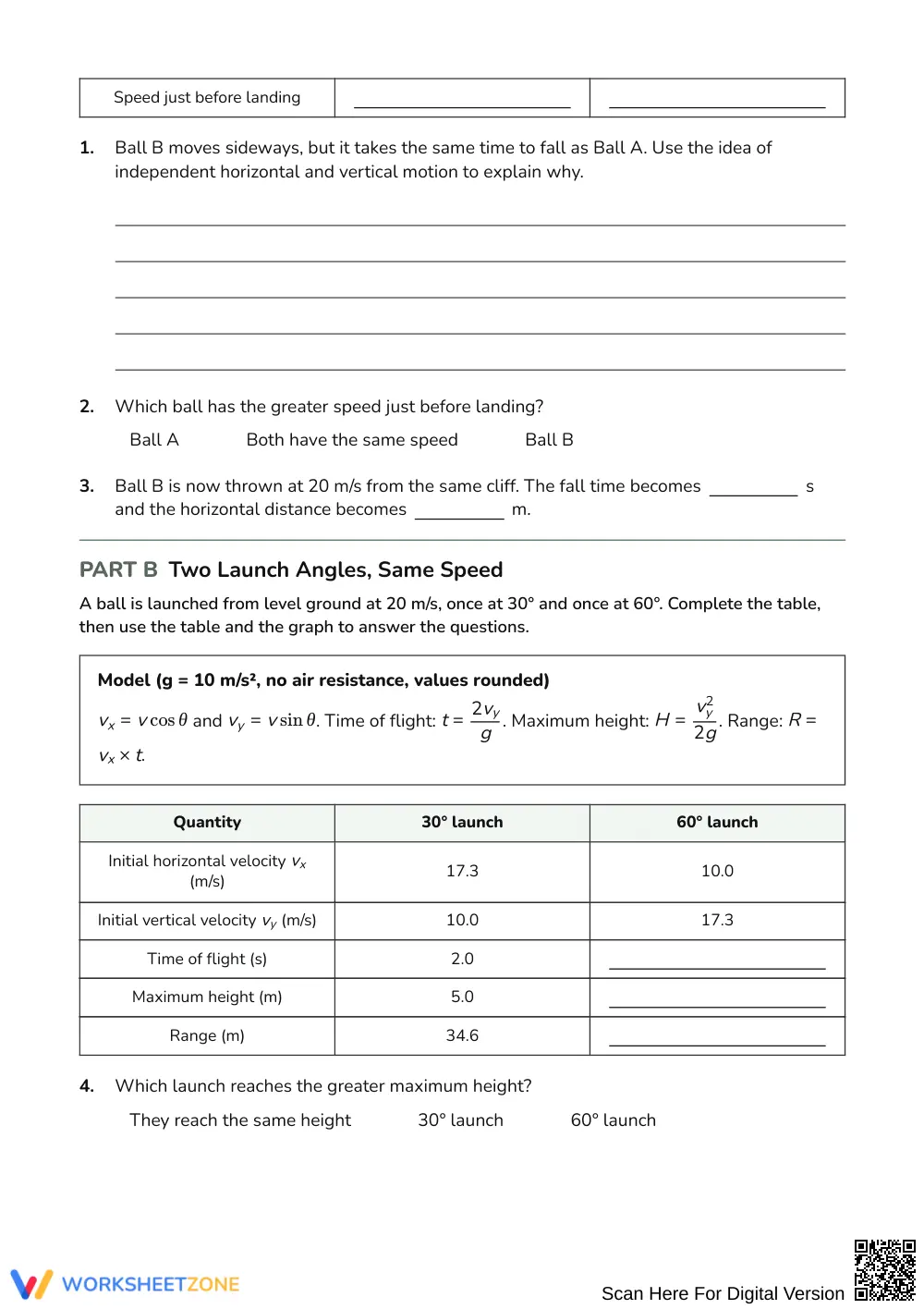
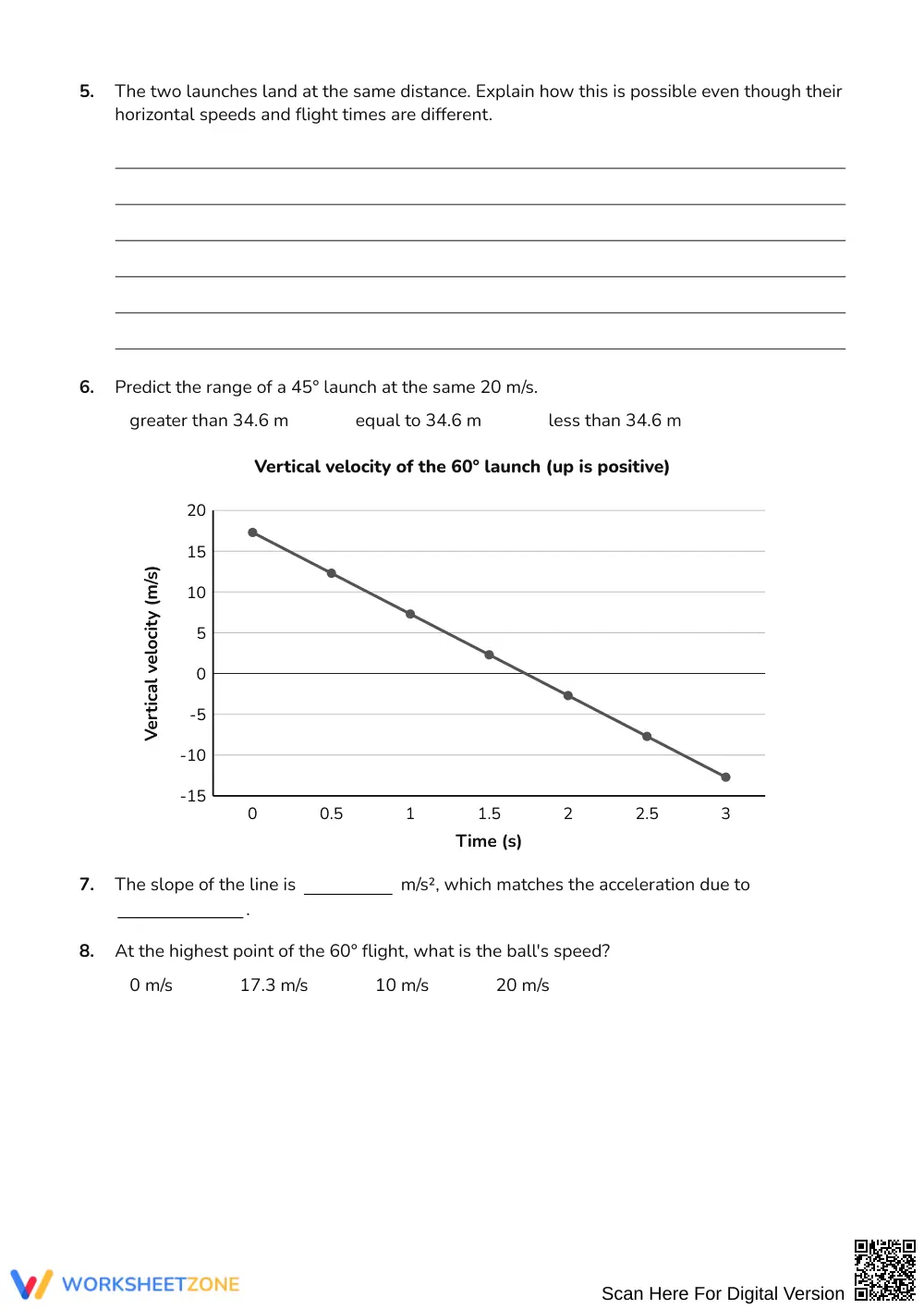
The packet contains four double‑sided pages filled with 36 comparison tasks, a worked example in Part A, a Venn‑style organizer in Part C, and a separate answer key PDF for quick grading.
Skill Progression
- Guided practice (12 tasks): students fill a partially completed table with teacher‑provided values and sentence frames.
- Supported practice (12 tasks): students complete full tables using a word bank and short‑answer prompts.
- Independent practice (12 tasks): students create their own Venn‑style comparisons and justify reasoning without scaffolds.
The sequence follows the gradual‑release model of I Do, We Do, You Do.
Standards Alignment
This worksheet aligns with the Next Generation Science Standards (NGSS) for high‑school physics, specifically the standard that requires students to analyze and compare different motion scenarios to determine how variables such as initial velocity and launch angle affect trajectory and range. Both concepts can be directly entered into lesson plans, IEP goals, or district curriculum mapping tools.
How to Use It
Use the worksheet as a pre‑lab activity to activate prior knowledge, then as a post‑lab review to solidify understanding. During class, circulate to note misconceptions; a quick exit ticket can capture each student’s explanation of why launch angle affects range.
Who It’s For
Designed for high‑school science students (grades 8‑12) who need concrete practice comparing motion cases. The organizer pairs well with a classroom anchor chart on projectile equations and the accompanying teacher‑led demonstration of a ball launch.
Research shows that structured comparison activities boost conceptual mastery in physics (Fisher & Frey 2014). By requiring students to fill tables and articulate reasoning, this worksheet aligns with NGSS expectations that learners analyze motion variables and communicate findings. The blend of worked examples, word banks, and open‑ended Venn organizers supports diverse learners and promotes deeper understanding of independent horizontal and vertical motion. Teachers can confidently assign this resource, knowing it reflects evidence‑based practices and prepares students for higher‑order assessments. A study by the National Center for Education Statistics found that students who regularly compare multiple physics scenarios improve their problem‑solving scores by up to 15 percent. Implementing this worksheet in a blended‑learning environment also aligns with findings that mixed instructional formats increase engagement and retention. Access the full PDF, answer key, and teacher notes now.


