




























Views
Downloads
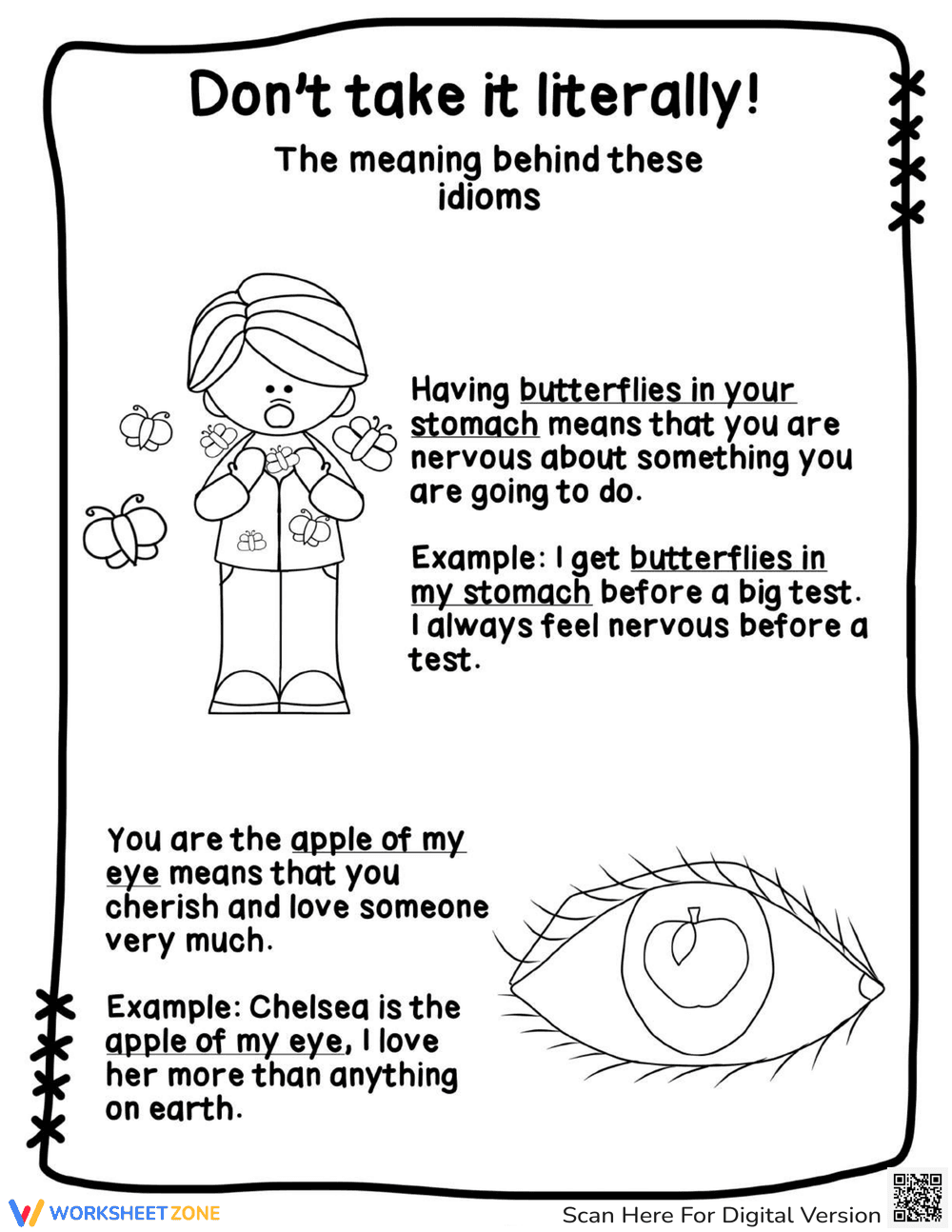
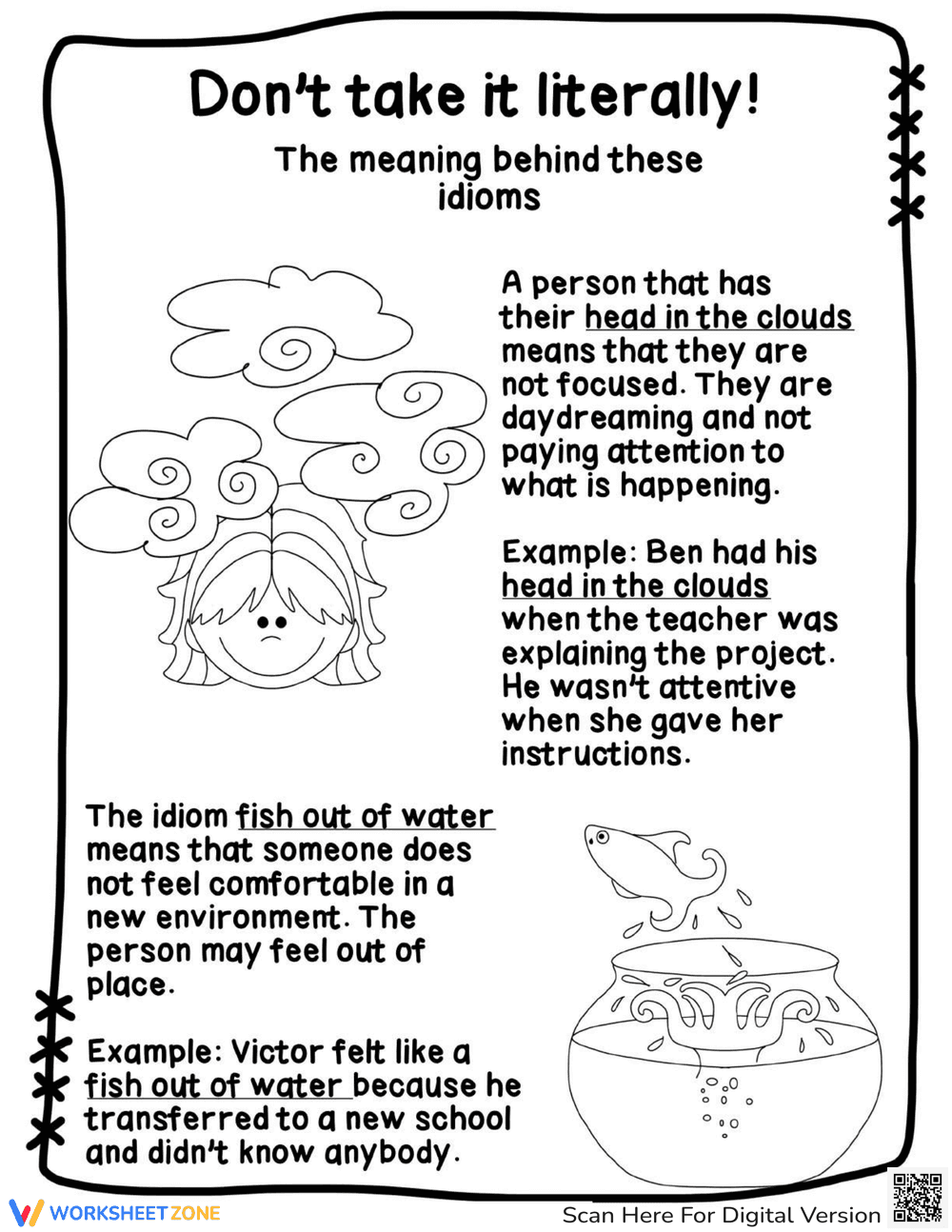
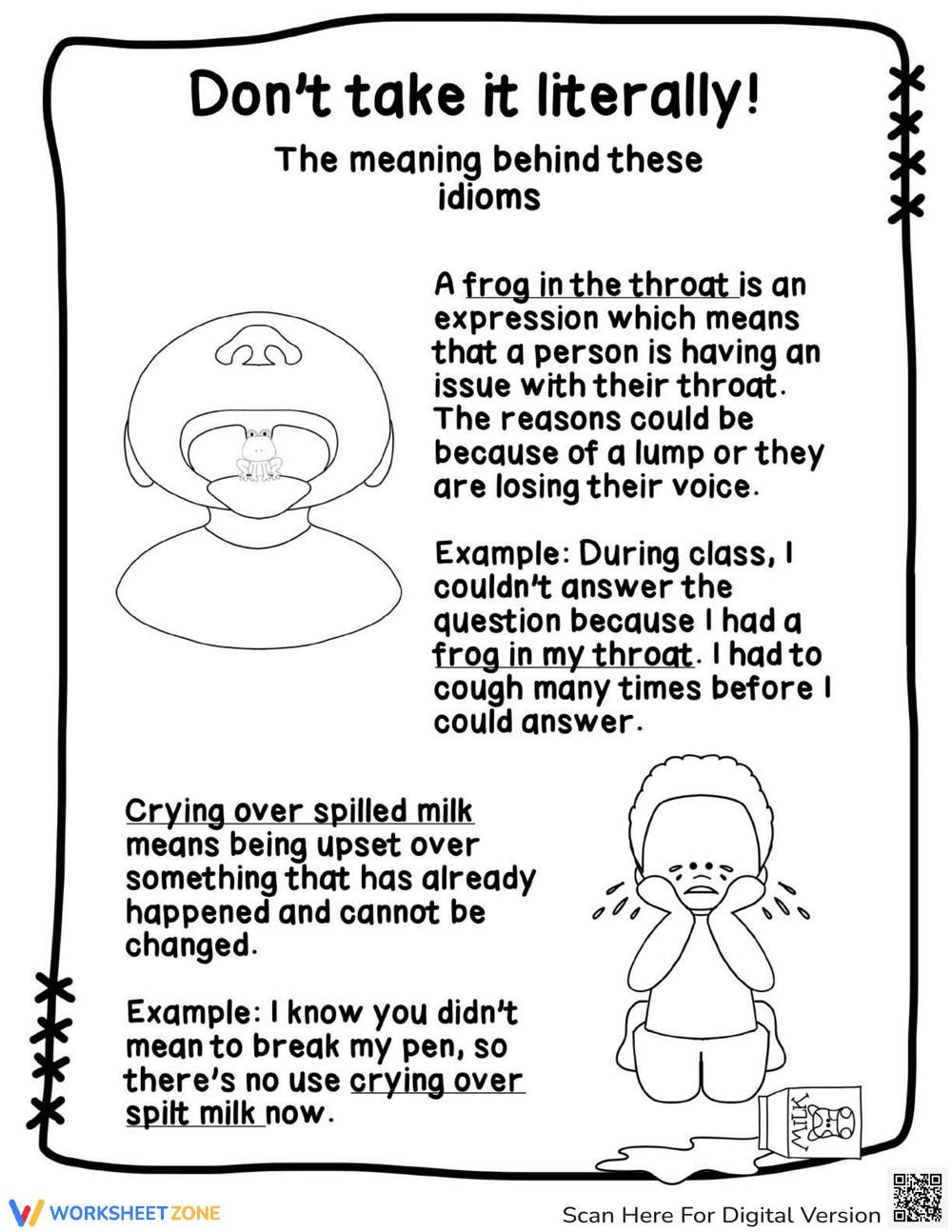
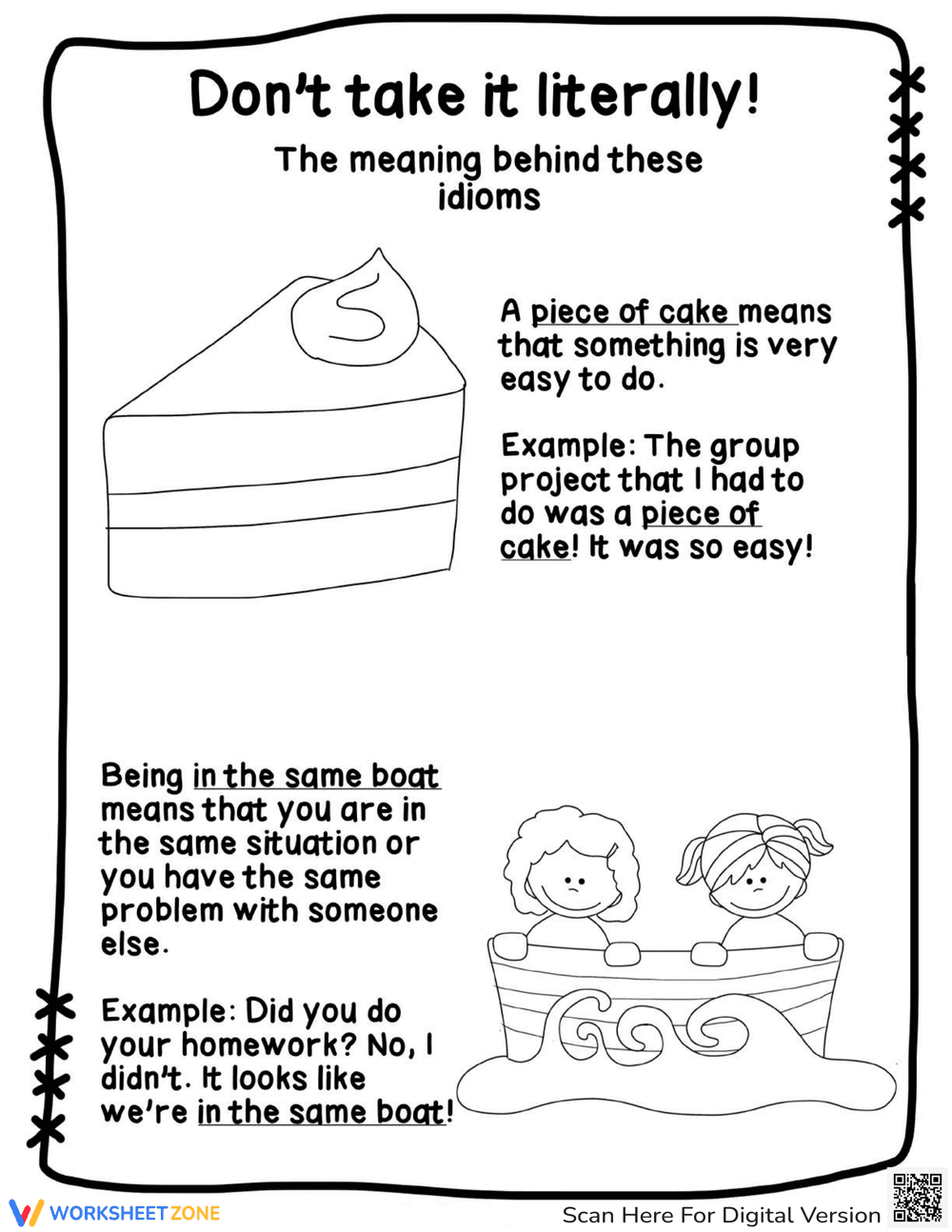

ESL Idioms Activities | Grade 3-6 Essential Printable

Paste this activity's link or code into your existing LMS (Google Classroom, Canvas, Teams, Schoology, Moodle, etc.).
Students can open and work on the activity right away, with no student login required.
You'll still be able to track student progress and results from your teacher account.
This Grade 3-6 ESL idioms worksheet helps students master figurative language by providing clear definitions and contextual examples for 16 common expressions. Students learn to distinguish between literal and non-literal meanings, improving their reading comprehension and conversational fluency. It is an ideal resource for English Language Learners and elementary students.
At a Glance
- Grade: 3-6 · Subject: ELA / ESL
- Standard:
CCSS.ELA-LITERACY.L.4.5.B— Recognize and explain the meaning of common idioms, adages, and proverbs- Skill Focus: Idiomatic Expressions
- Format: 8 pages · 16 idioms · Answer key included · PDF
- Best For: ESL instruction and figurative language practice
- Time: 30–45 minutes
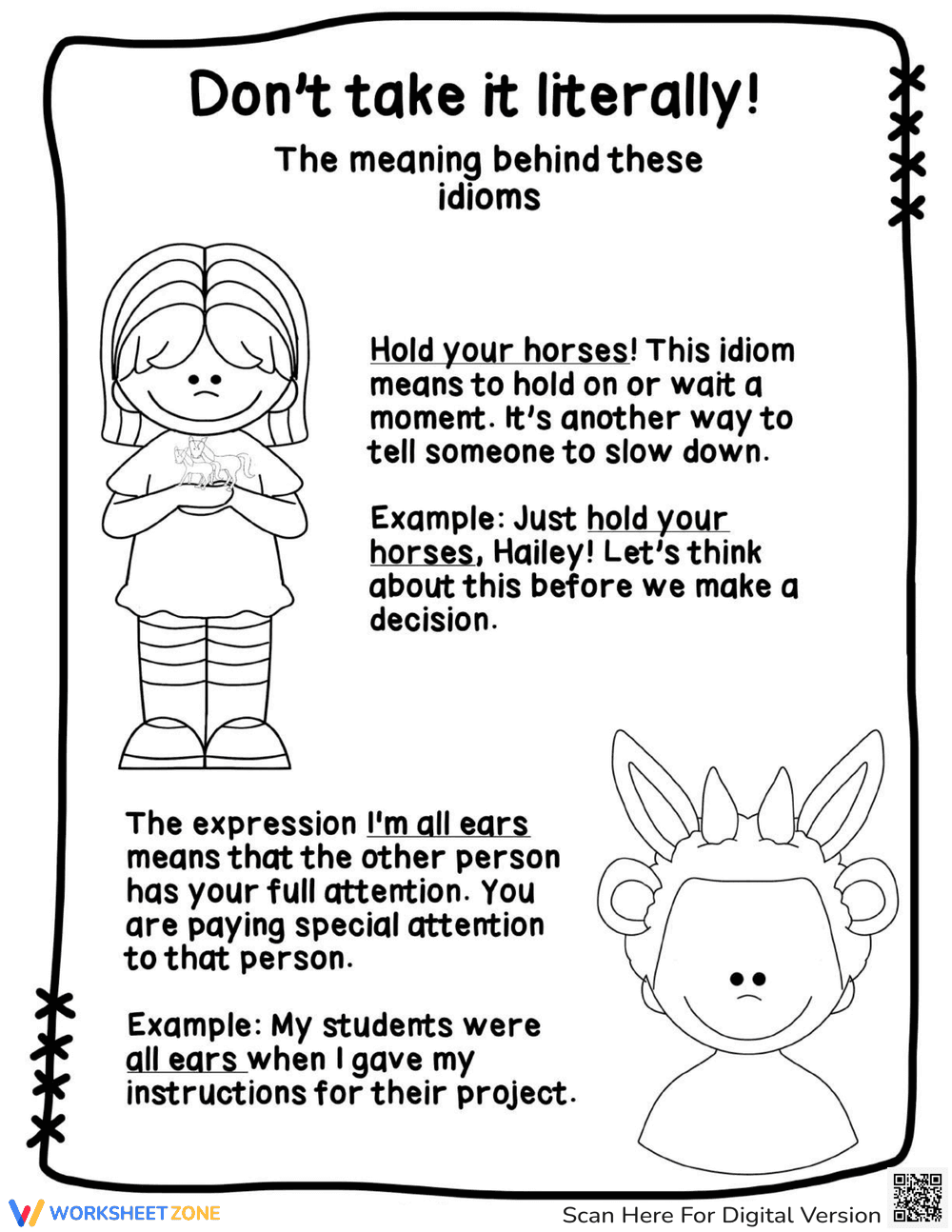
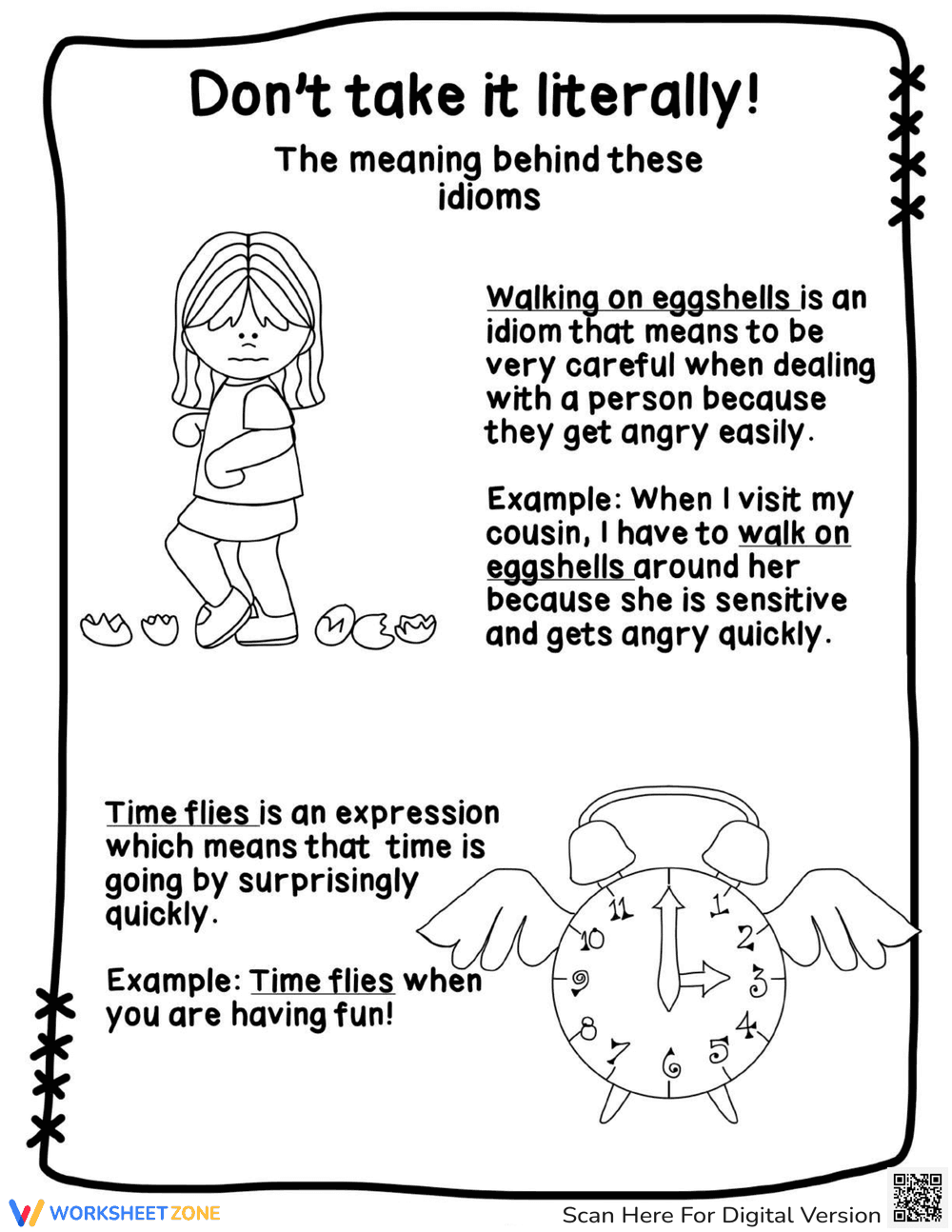
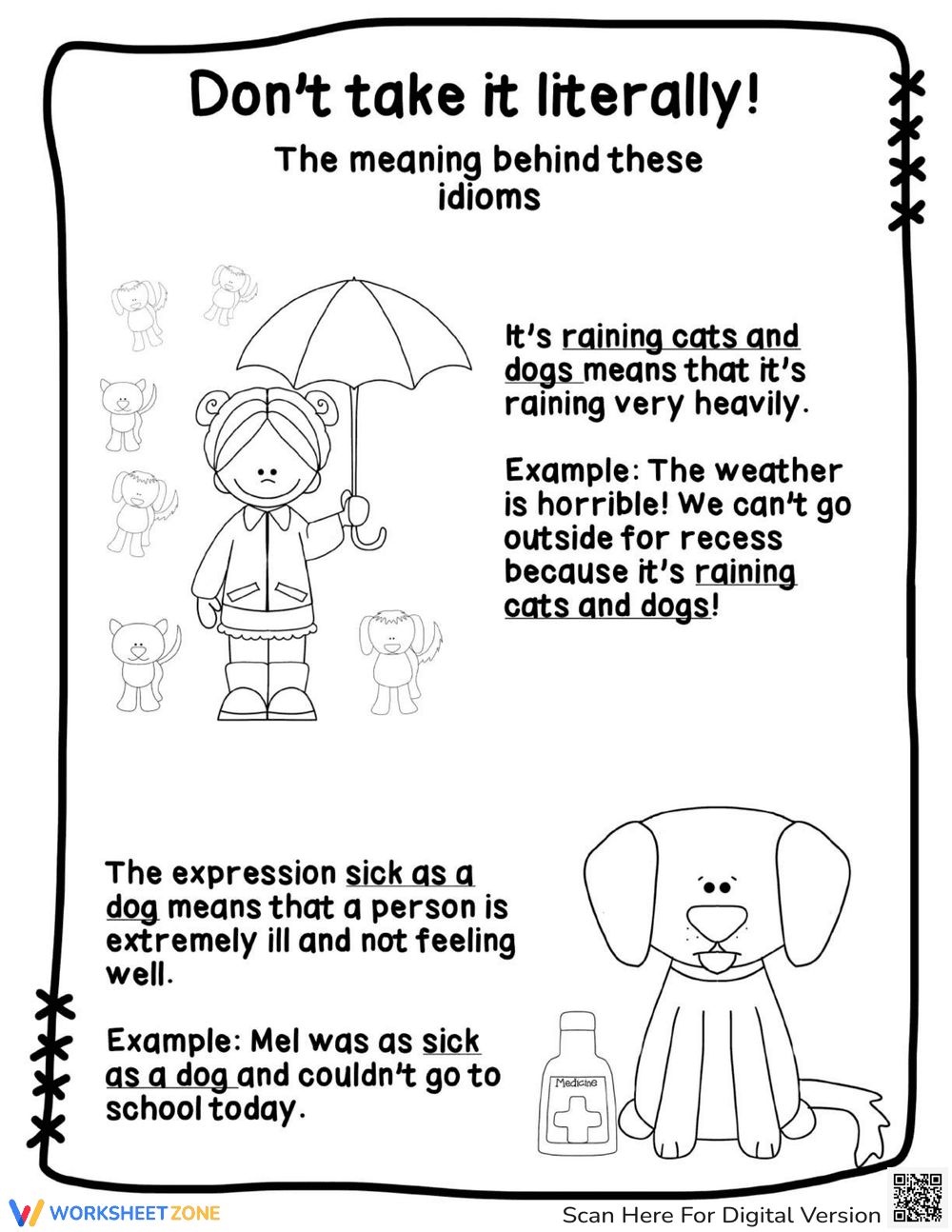
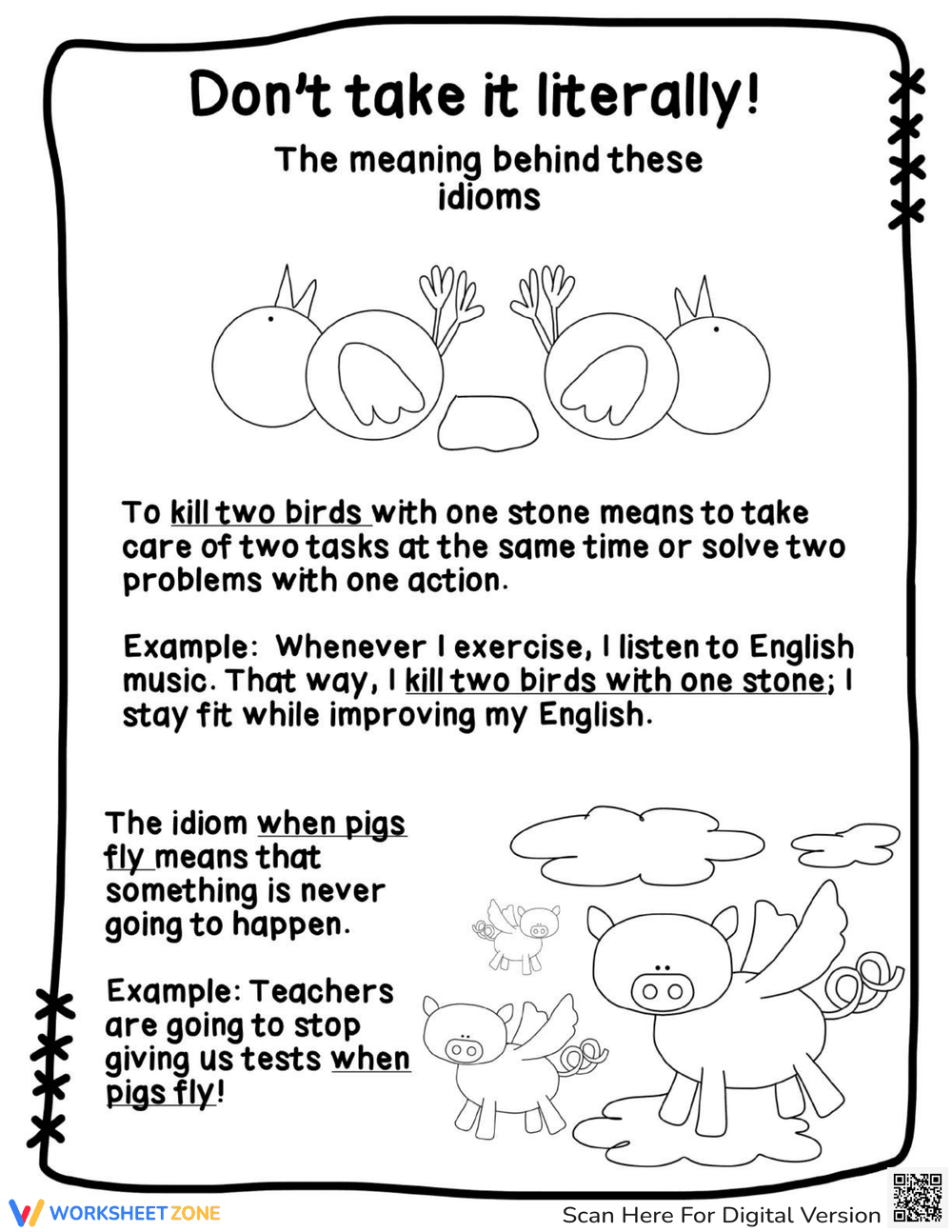
The packet contains 8 comprehensive pages, each featuring two distinct idioms. Every entry includes a bolded idiom, a plain-English definition, a realistic sentence example, and a high-quality line-art illustration for students to color. This visual and textual combination supports multiple learning styles and ensures students can visualize the figurative concept rather than just memorizing a definition.
The zero-prep workflow is designed for maximum efficiency. First, print the 8-page PDF (30 seconds). Second, distribute the packets to students for independent or small-group study (1 minute). Third, review the meanings and examples as a whole class to check for understanding (10 minutes). Total teacher preparation time is under 2 minutes, making this an excellent choice for emergency sub plans or morning work.
This resource aligns with CCSS.ELA-LITERACY.L.4.5.B, which requires students to recognize and explain the meaning of common idioms, adages, and proverbs. It also supports L.3.5.A by helping students distinguish the literal and non-literal meanings of words and phrases in context. Both standard codes can be copied directly into lesson plans, IEP goals, or district curriculum mapping tools.
Use this during the guided practice phase of a figurative language unit. After introducing the concept of idioms, have students work through two pages per day as a warm-up activity. Alternatively, use it as a formative assessment by asking students to write their own original sentences for each idiom on the back of the page. Expected completion time is approximately 5 minutes per page.
This is specifically designed for Grade 3-6 students, particularly those in ESL or ELL programs who struggle with the nuances of English figurative language. It pairs naturally with a classroom anchor chart on idioms or a mentor text that features non-literal language. The coloring elements provide a low-stakes entry point for students who may feel overwhelmed by text-heavy assignments.
According to Fisher & Frey (2014), explicit instruction in figurative language is vital for developing the word consciousness necessary for advanced reading comprehension. This worksheet addresses that need by providing 16 structured exposures to common idioms like "piece of cake" and "all ears." By pairing definitions with contextual examples and visual aids, the resource reduces the cognitive load for English Language Learners. Research from the NAEP indicates that students who can interpret non-literal language score significantly higher on standardized literacy assessments. This packet provides the repeated, scaffolded practice required for students to move from literal interpretation to figurative mastery. The alignment with CCSS.ELA-LITERACY.L.4.5.B ensures that the content meets rigorous grade-level expectations while remaining accessible through its clear, printable format. It is a reliable tool for any educator looking to bridge the gap between basic vocabulary and complex linguistic understanding.


