


























Views
Downloads
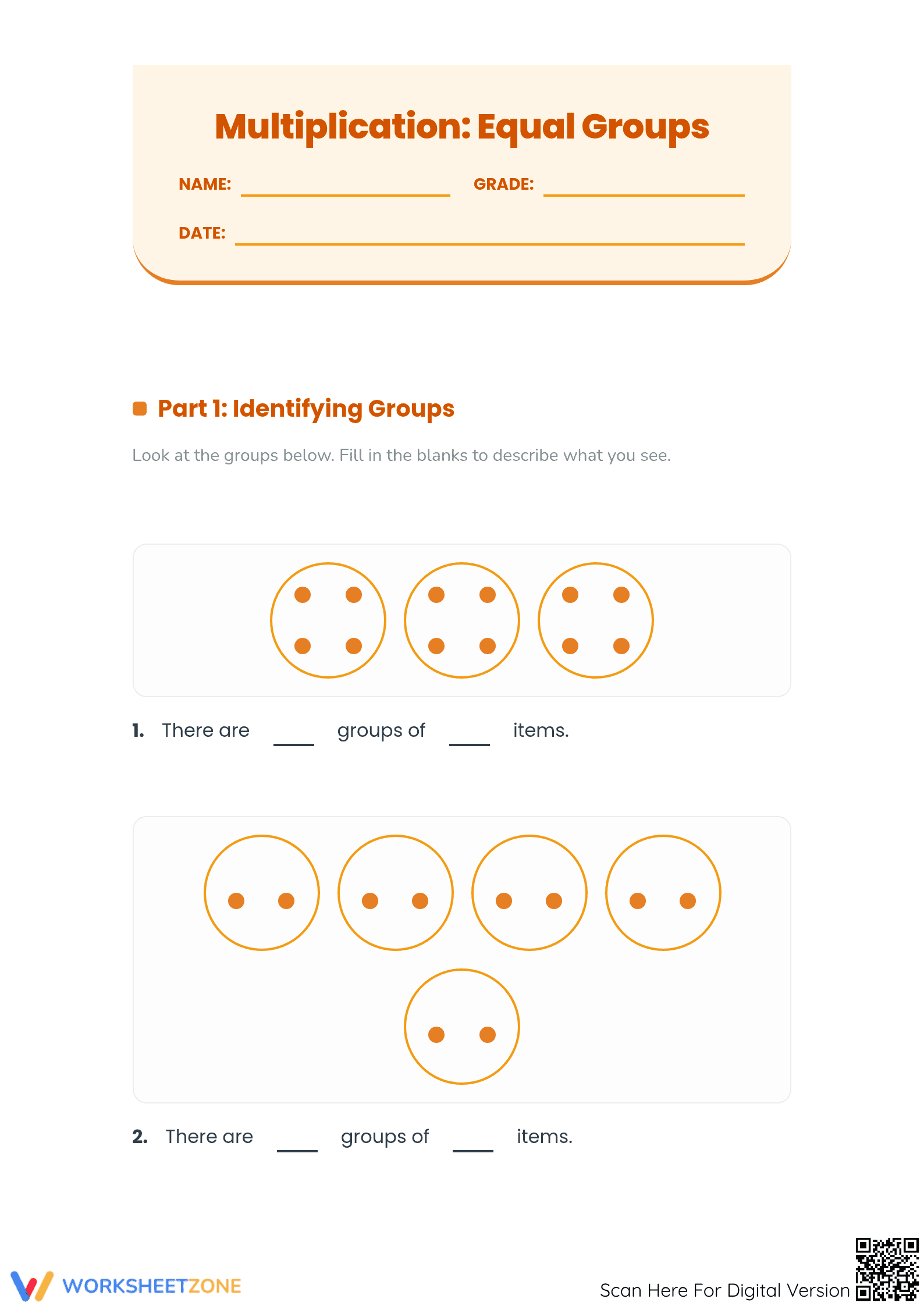
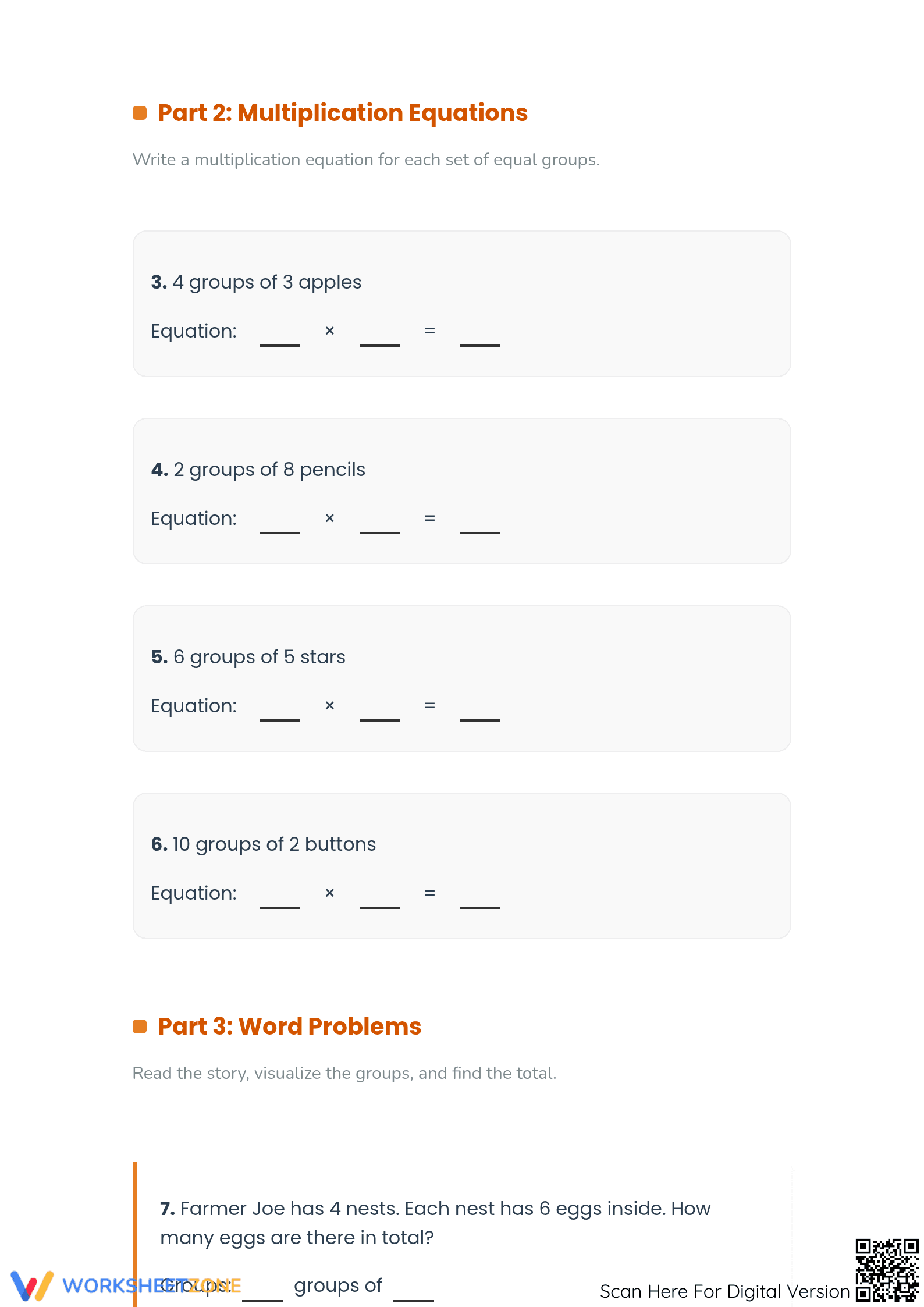
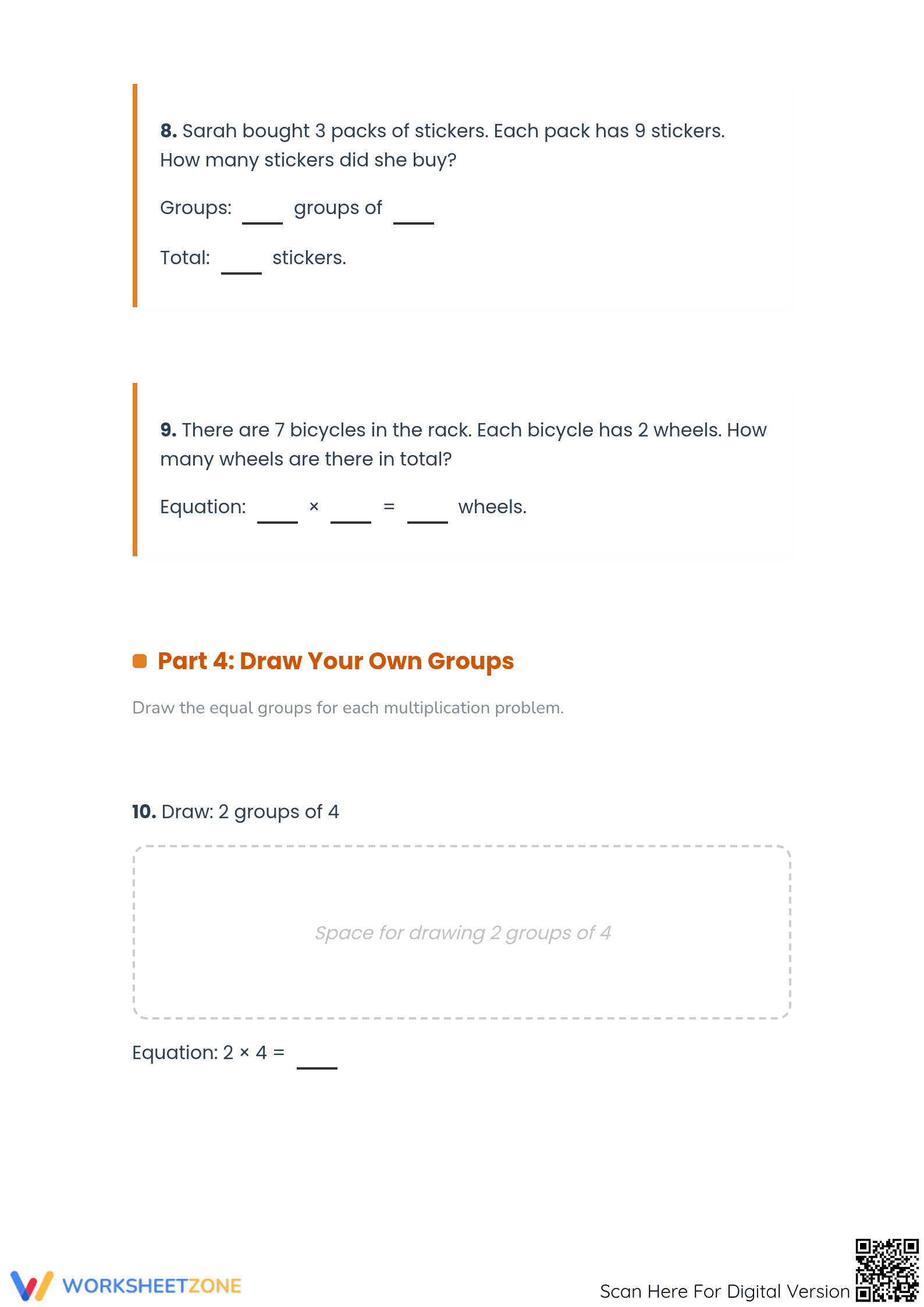
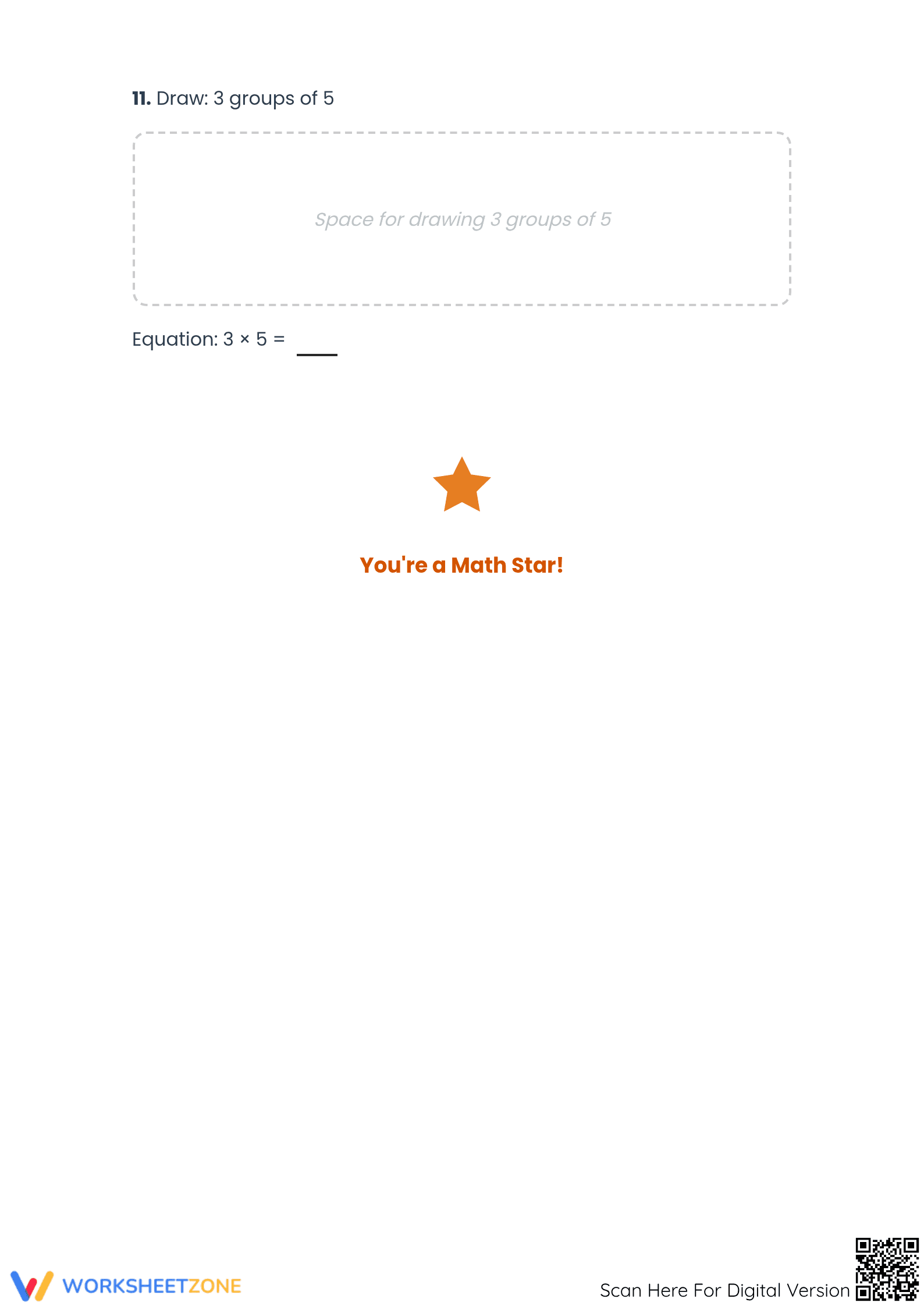

Essential Equal Groups Multiplication Worksheet | Grade 3
Paste this activity's link or code into your existing LMS (Google Classroom, Canvas, Teams, Schoology, Moodle, etc.).
Students can open and work on the activity right away, with no student login required.
You'll still be able to track student progress and results from your teacher account.
Mastering the concept of multiplication begins with a solid understanding of equal groups. This comprehensive four-page worksheet package guides students through the transition from repeated addition to formal multiplication sentences. By visualizing items arranged in distinct groups, learners build the conceptual foundation necessary for fluency with basic facts and problem-solving strategies in mathematics.
At a Glance
- Grade: 3 · Subject: Math
- Standard:
CCSS.MATH.CONTENT.3.OA.A.1— Interpret products of whole numbers as total objects in groups- Skill Focus: Multiplication with Equal Groups
- Format: 4 pages · 16 problems · Answer key included · PDF
- Best For: Introduction to multiplication and repeated addition
- Time: 25–35 minutes
What's Inside
This resource features four dedicated pages of practice, providing 16 distinct problems that utilize varied visual models. Each task requires students to identify the number of groups and the number of objects within each group. The layout includes clear workspace for writing both addition and multiplication equations, accompanied by a complete answer key for rapid grading.
Skill Progression
- Guided Practice: Introduction to simple groupings with explicit prompts for counting items and sets.
- Supported Practice: Students independently derive equations from visual models with reduced scaffolding.
- Independent Practice: Learners synthesize their understanding to create multiplication sentences from scratch.
This gradual-release model follows the I Do, We Do, You Do instructional framework to ensure a smooth transition from concrete counting to abstract mathematical reasoning.
Standards Alignment
The primary focus is CCSS.MATH.CONTENT.3.OA.A.1: Interpret products of whole numbers, such as interpreting 5 × 7 as the total number of objects in 5 groups of 7 objects each. The tasks also support the development of algebraic thinking by connecting addition to multiplication. Both standard codes can be copied directly into lesson plans, IEP goals, or district curriculum mapping tools.
How to Use It
Use this worksheet during the initial exploration phase of a multiplication unit to reinforce the connection between addition and grouping. It serves as an excellent formative assessment tool; observe if students correctly identify the groups versus items to catch misconceptions early. The four-page format allows for split sessions over multiple days or a comprehensive review packet.
Who It's For
This resource is designed for Grade 3 students beginning their multiplication journey, but it also provides valuable remediation for Grade 4 learners needing conceptual support. It pairs naturally with a hands-on lesson using physical manipulatives like counters or tiles, allowing students to bridge the gap between physical objects and paper-based representations of mathematical concepts.
Research from NAEP indicates that students who possess a strong conceptual understanding of multiplication as equal groups perform significantly better in multi-step word problems later in elementary school. According to Fisher & Frey (2014), the use of intentional visual scaffolding helps reduce cognitive load during the acquisition of new mathematical symbols. By explicitly linking addition and multiplication through the CCSS.MATH.CONTENT.3.OA.A.1 standard, this worksheet aligns with evidence-based practices for early numeracy development. Providing 16 structured opportunities for practice ensures that the grouping concept is internalized before students move toward memorization of facts. This approach is consistent with findings from ScienceDirect TpT Analysis suggesting that high-quality visual models are a key predictor of student engagement and retention. Educators can confidently integrate this printable into their curriculum to support rigorous, standards-aligned instruction that meets the diverse needs of all learners in the classroom.


