


























Views
Downloads
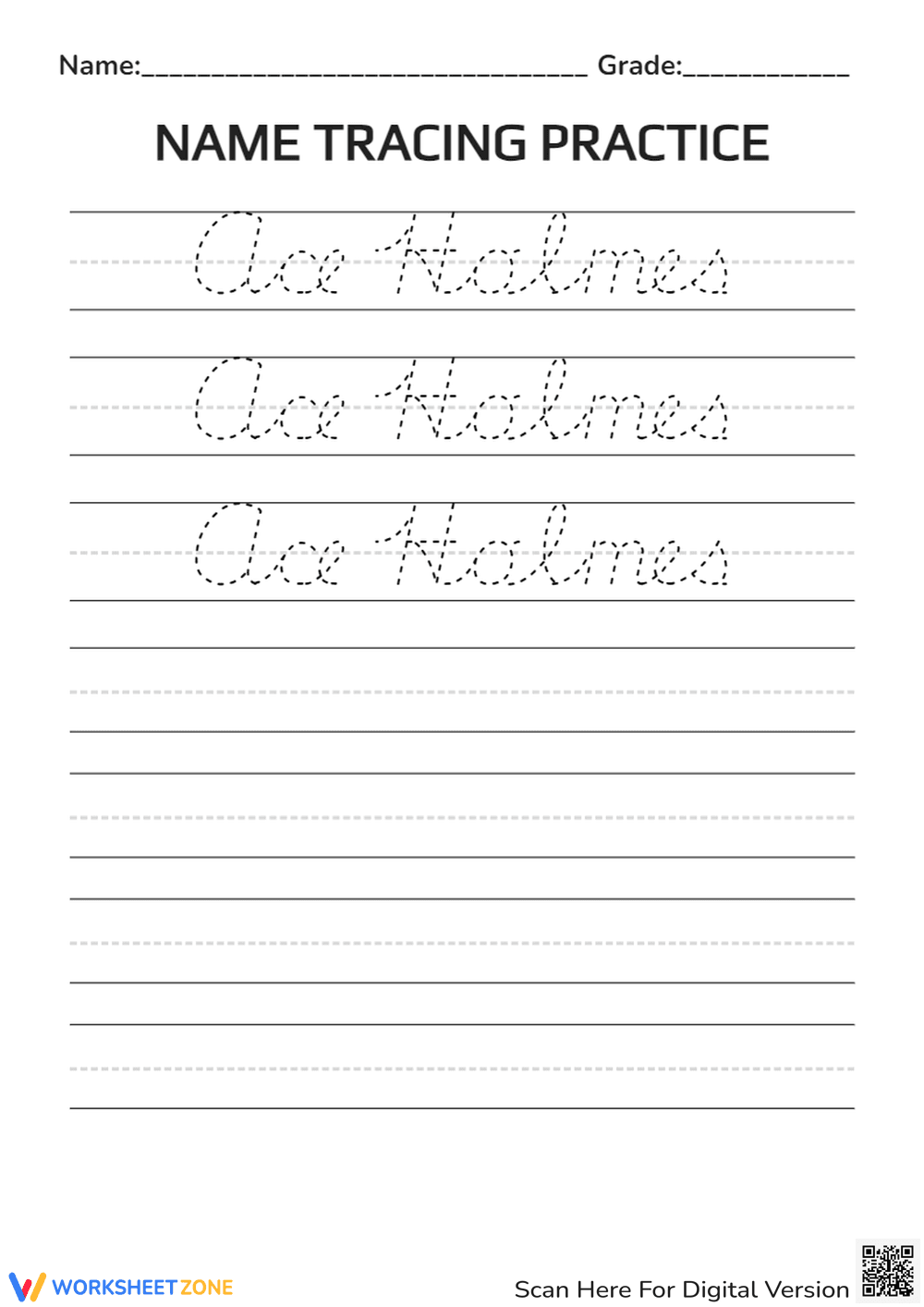


Name Tracing Practice Worksheet | Grade K-1 Essential
Paste this activity's link or code into your existing LMS (Google Classroom, Canvas, Teams, Schoology, Moodle, etc.).
Students can open and work on the activity right away, with no student login required.
You'll still be able to track student progress and results from your teacher account.
This Grade K-1 handwriting worksheet helps young learners master the specific fine motor movements required for name writing. By providing a structured path from guided tracing to independent production, students build the muscle memory necessary for legible penmanship. It is an effective tool for morning work or early finisher activities.
At a Glance
- Grade: Kindergarten · Subject: Handwriting
- Standard:
CCSS.ELA-LITERACY.L.K.1.A— Print many upper- and lowercase letters correctly- Skill Focus: Name recognition and letter formation
- Format: 2 pages · 3 tracing tasks · Independent practice lines · PDF
- Best For: Daily morning work and fine motor practice
- Time: 10–15 minutes
Inside this 2-page PDF, you will find a focused layout designed for minimal distraction. The first page features three large-format tracing lines using a model name, followed by five empty primary lines for free-hand practice. The second page provides a full sheet of primary ruled lines to extend the lesson or practice additional words, ensuring students have ample space to refine their technique.
This resource is designed for a zero-prep workflow. First, print the required number of copies for your group (30 seconds). Second, distribute the sheets to students during your writing block or as they arrive in the morning (1 minute). Finally, walk the room to provide immediate corrective feedback on pencil grip and stroke order. Total teacher preparation time is under 2 minutes, making it an ideal choice for busy classrooms or emergency sub plans.
This worksheet aligns with CCSS.ELA-LITERACY.L.K.1.A, which requires students to print many upper- and lowercase letters. It specifically targets the transition from imitation to production. Both standard codes can be copied directly into lesson plans, IEP goals, or district curriculum mapping tools to ensure your instruction remains compliant with state and national frameworks.
Use this worksheet during the "You Do" phase of a gradual release model. After demonstrating proper letter formation on the whiteboard, assign the tracing portion to stabilize student hand movements. For formative assessment, observe if students start their letters from the top down and maintain consistent sizing within the primary lines. This 10-minute activity provides a clear snapshot of student progress.
This is ideal for Kindergarten and Grade 1 students who are beginning to formalize their writing skills. It serves as an excellent scaffold for English Language Learners (ELLs) or students with occupational therapy goals. Pair this with an alphabet anchor chart to help students reference letter shapes independently while they work through the blank lines on the second page.
Research from Fisher & Frey (2014) emphasizes the importance of guided practice in the development of foundational literacy skills. Handwriting is a critical component of the writing process that directly impacts a student's ability to express complex thoughts later in their academic career. By utilizing structured tracing exercises like those found in this CCSS.ELA-LITERACY.L.K.1.A aligned resource, educators provide the necessary scaffolding for students to move from simple imitation to fluent, independent writing. This worksheet addresses the mechanical requirements of letter formation, allowing students to focus on the cognitive aspects of writing as they progress. Consistent use of primary ruled lines helps establish spatial awareness and letter proportionality, which are key indicators of writing readiness according to NAEP standards. This 2-page printable ensures that every student has the opportunity to practice these essential skills in a clear, distraction-free environment that promotes mastery.


