


























Views
Downloads

Easter Reading Comprehension | Printable Grade 1 ELA
Paste this activity's link or code into your existing LMS (Google Classroom, Canvas, Teams, Schoology, Moodle, etc.).
Students can open and work on the activity right away, with no student login required.
You'll still be able to track student progress and results from your teacher account.
Support early literacy development with this engaging Easter reading activity designed specifically for first-grade students. This resource provides a clear pathway for young learners to practice extracting information from a text while celebrating the spring season. By connecting reading skills with holiday themes, students remain motivated and focused on their instructional goals.
At a Glance
- Grade: 1 · Subject: English Language Arts
- Standard:
CCSS.ELA-LITERACY.RL.1.1— Ask and answer questions about key details in a text- Skill Focus: Evidence retrieval and thematic vocabulary
- Format: 3 pages · 8 problems · Answer key included · PDF
- Best For: Seasonal morning work or sub plans
- Time: 15–20 minutes
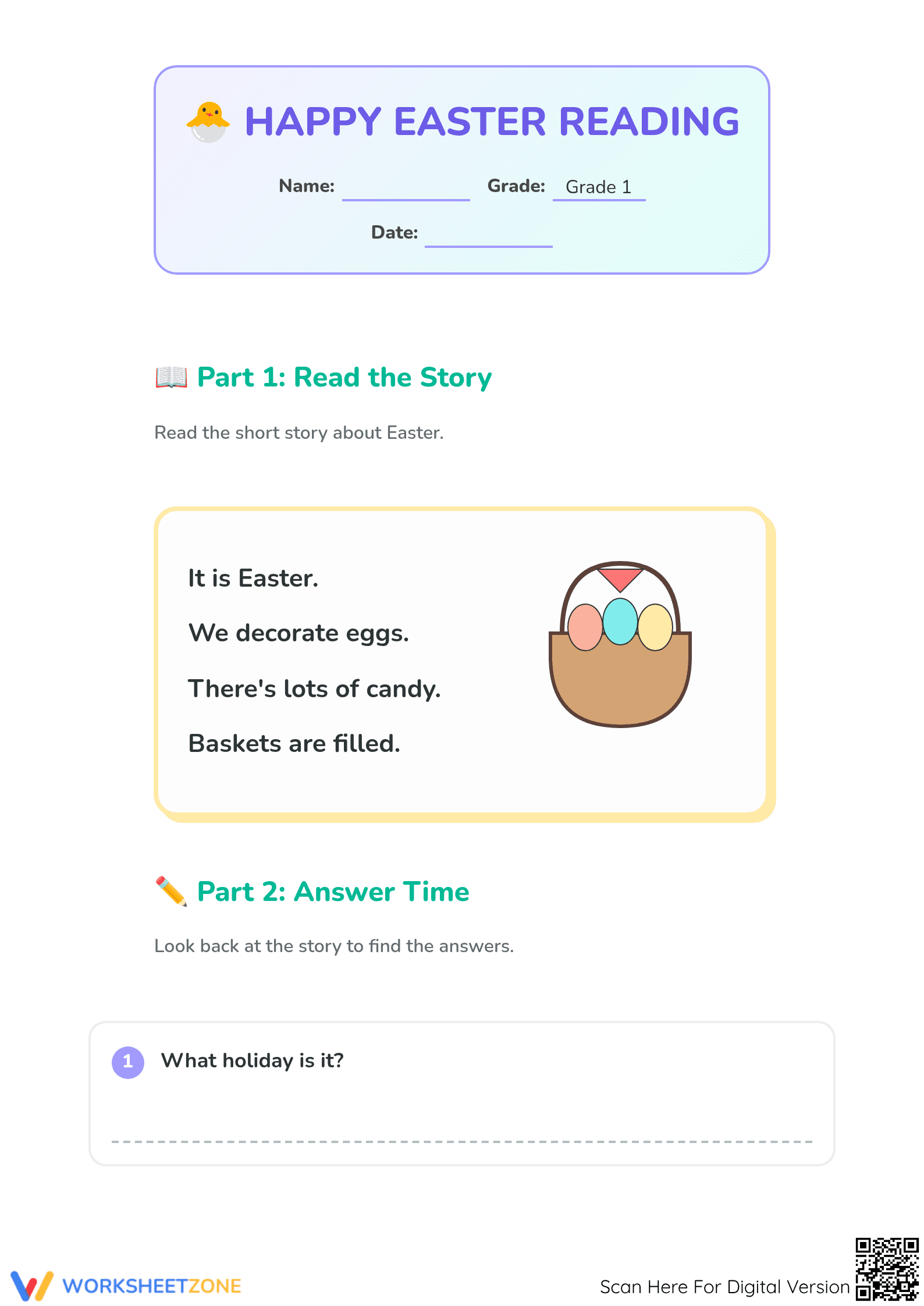
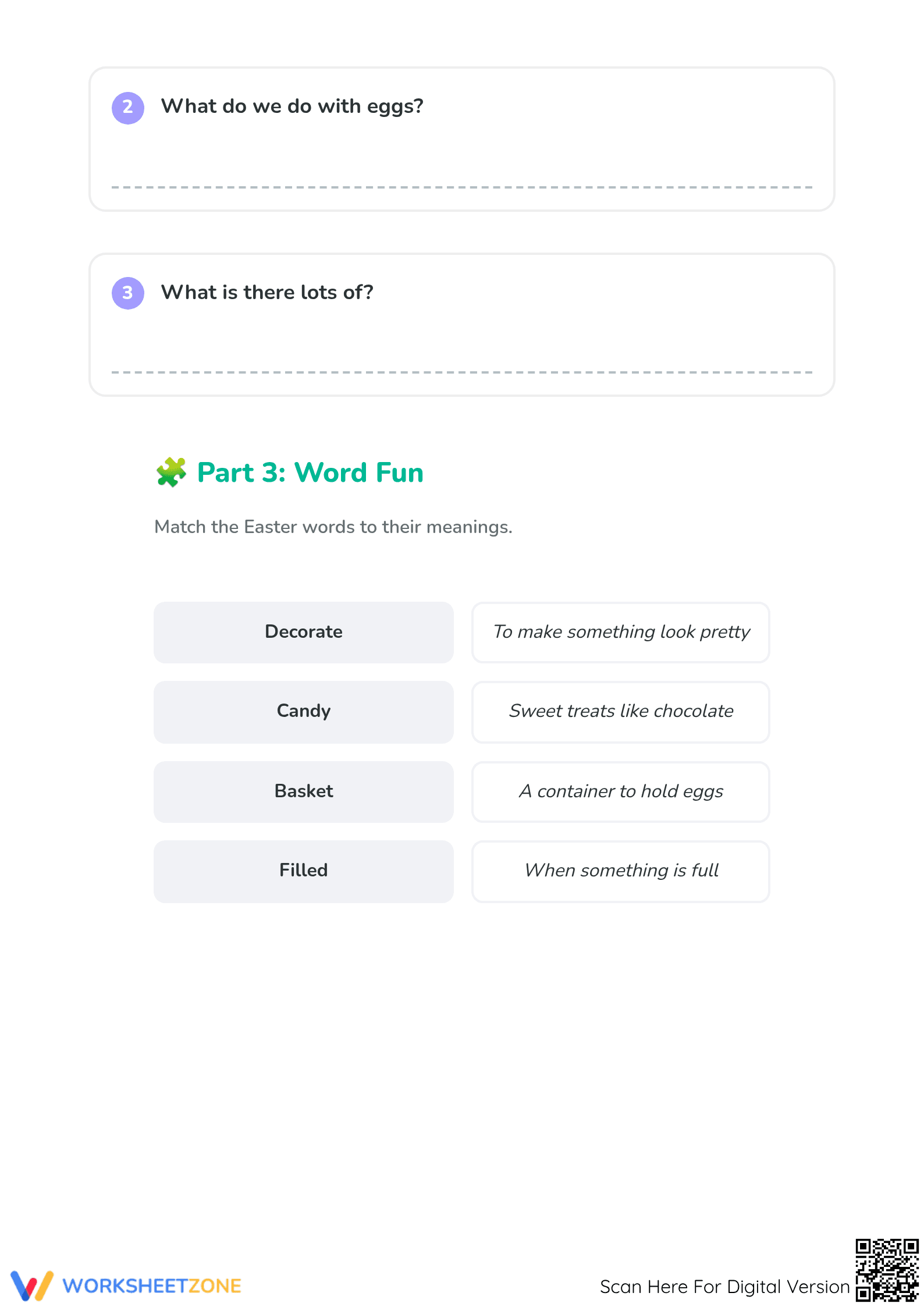
What's Inside: This three-page PDF features a concise four-sentence story that introduces core Easter concepts using high-frequency words. The second page contains three text-based comprehension questions and a vocabulary matching section with four key terms. The final page offers a creative "Design Your Egg" drawing prompt to encourage fine motor skills and personal expression.
Zero-Prep Workflow
This resource is engineered for immediate classroom utility with a target teacher prep time of under two minutes. Educators can follow a simple three-step process: First, print the document (30 seconds). Second, distribute the packets to students for independent or guided work (1 minute). Finally, use the included answer key to review responses collectively or during small-group intervention (5 minutes). Its self-contained nature makes it an ideal candidate for emergency sub plans or quiet seatwork during seasonal transitions.
Standards Alignment
The primary focus of this worksheet is `CCSS.ELA-LITERACY.RL.1.1`, which requires students to identify key details within a text. By looking back at the provided story to answer specific questions, students practice essential evidence-based reading strategies. This standard code can be copied directly into lesson plans, IEP goals, or district curriculum mapping tools to ensure instructional accountability.
How to Use It
Incorporate this worksheet during the week leading up to Easter as a thematic morning work assignment or as part of a literacy center rotation. For a formative assessment observation, watch for students who naturally "look back" at the story on page one to verify their answers on page two. Most first graders will complete the reading and comprehension portions in approximately 15 minutes, with the drawing task serving as an excellent buffer for early finishers.
Who It's For
This resource is perfect for Grade 1 students, including those in ESL/ELL programs who benefit from clear visual cues and simplified sentence structures. It pairs naturally with an Easter-themed read-aloud or a classroom anchor chart focused on spring vocabulary words.
Research from a 2024 ScienceDirect TpT Analysis highlights that thematic, holiday-based literacy activities significantly increase student engagement and persistence in early reading tasks compared to generic skill drills. This Grade 1 Easter Reading Comprehension worksheet aligns with CCSS.ELA-LITERACY.RL.1.1 by requiring students to identify key details within a seasonal narrative. By combining a short reading passage with explicit evidence-based questions, vocabulary matching, and a creative design task, the resource provides a multi-modal approach to text interaction. Fisher & Frey (2014) emphasize the importance of scaffolds like the word-meaning matches included here to bridge the gap between simple decoding and deeper conceptual understanding. This resource serves as an effective tool for formative assessment during the spring season, allowing educators to monitor student ability to retrieve information and apply thematic vocabulary in context. The clear, structured layout ensures that students can navigate the tasks independently, fostering confidence in their burgeoning literacy skills.


