


























Views
Downloads
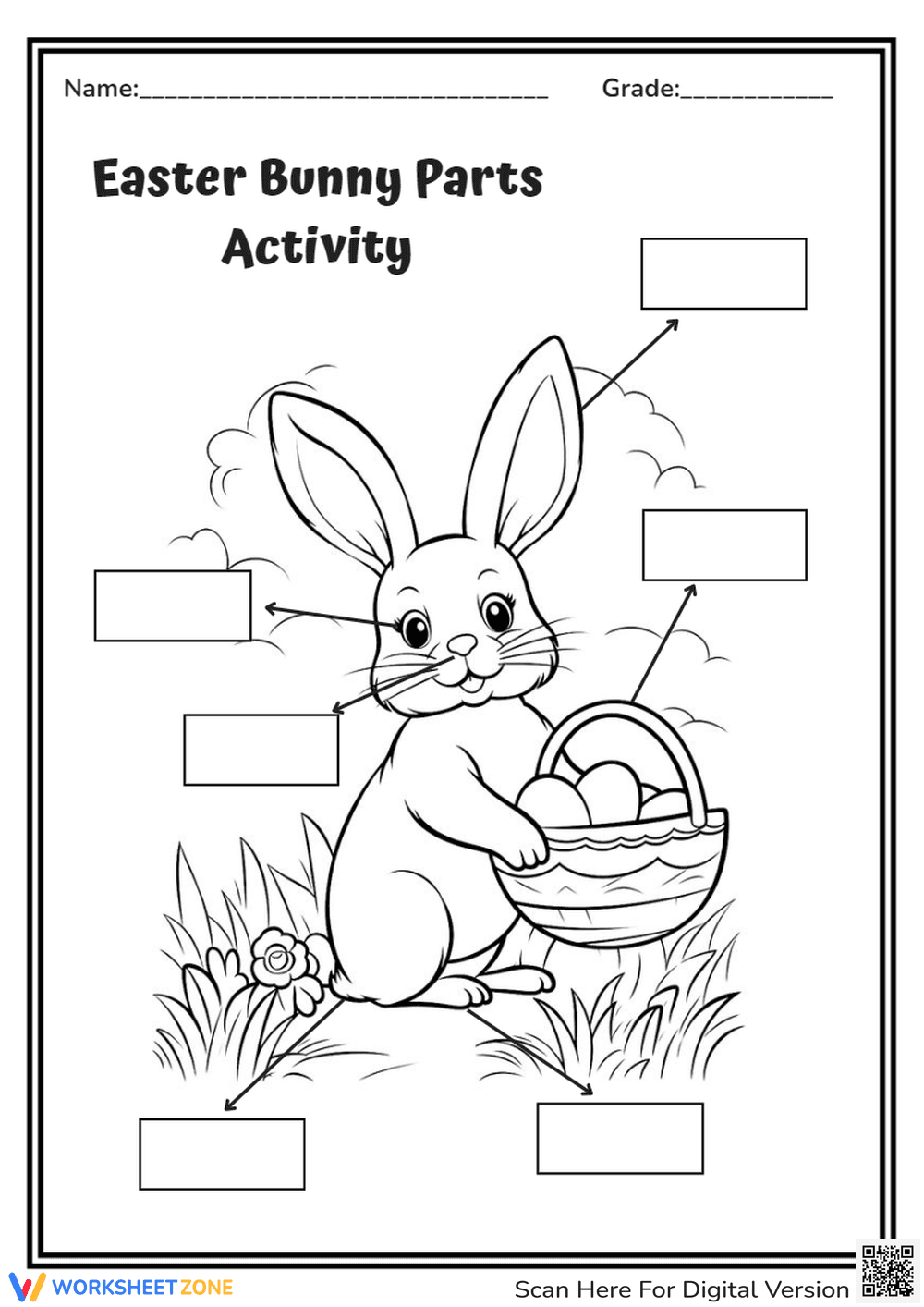

Easter Bunny Parts Activity — Printable Grade K-2 Worksheet
Paste this activity's link or code into your existing LMS (Google Classroom, Canvas, Teams, Schoology, Moodle, etc.).
Students can open and work on the activity right away, with no student login required.
You'll still be able to track student progress and results from your teacher account.
This Easter Bunny Parts Activity helps young learners identify and label animal anatomy through a festive, holiday-themed lens. Students practice essential vocabulary and fine motor skills by identifying five distinct parts of the bunny. It provides a clear, engaging way to bridge seasonal excitement with foundational literacy and science objectives in early elementary classrooms.
At a Glance
- Grade: K-2 · Subject: ELA & Science
- Standard:
CCSS.ELA-LITERACY.L.K.1— Demonstrate command of the conventions of standard English grammar and usage when writing.- Skill Focus: Labeling animal body parts
- Format: 1 page · 5 problems · Answer key included · PDF
- Best For: Morning work or holiday science centers
- Time: 10–15 minutes
The resource features a high-quality illustration of an Easter bunny holding a basket of eggs. Five clear labeling boxes are connected by arrows to specific anatomical features, including the ears, eyes, and paws. This single-page PDF is designed for immediate use, featuring a clean layout that leaves plenty of room for coloring once the vocabulary tasks are completed.
Zero-Prep Workflow
- Print: Generate copies of the single-page PDF for the entire class in under 1 minute.
- Distribute: Hand out the sheets and provide a brief verbal word bank if students need spelling support (30 seconds).
- Review: Check labels together as a group or use the included answer key for quick individual grading (30 seconds).
This streamlined process makes the worksheet an ideal choice for emergency sub plans or transition periods during the busy holiday season.
Standards Alignment
The primary alignment is `CCSS.ELA-LITERACY.L.K.1`, which focuses on the command of standard English conventions and vocabulary acquisition. By identifying and writing nouns associated with animal parts, students strengthen their understanding of word-object relationships. Both standard codes can be copied directly into lesson plans, IEP goals, or district curriculum mapping tools.
How to Use It
Use this worksheet during a "Signs of Spring" science unit to discuss how animals use their senses, or as a thematic ELA center during the week before Easter. For a formative assessment, observe whether students can independently identify the starting sound of each body part before writing the full word. Completion typically takes 10 to 15 minutes depending on the grade level.
Who It's For
This activity is tailored for Kindergarten through 2nd-grade students, including English Language Learners who benefit from visual-to-text associations. It pairs naturally with a read-aloud about rabbits or a seasonal anchor chart displaying common spring vocabulary. The simple design ensures accessibility for students still developing their handwriting and fine motor control.
According to the Fisher & Frey (2014) framework for gradual release of responsibility, visual labeling serves as a critical bridge between oral language and formal writing. This worksheet targets CCSS.ELA-LITERACY.L.K.1 by requiring students to apply specific nouns to a visual context, a process that reinforces long-term vocabulary retention. Research from the RAND AIRS 2024 report suggests that thematic, high-interest materials significantly increase engagement in early childhood literacy tasks. By combining seasonal themes with structured labeling, educators provide a low-stakes environment for students to practice spelling and anatomical identification. This resource ensures that holiday celebrations remain academically rigorous while supporting the developmental needs of K-2 learners. The inclusion of clear directional arrows and defined response areas minimizes cognitive load, allowing students to focus entirely on the linguistic task at hand.


