


























Views
Plays


Printable Earth Day Animal Quiz | Grade 1 English
Paste this activity's link or code into your existing LMS (Google Classroom, Canvas, Teams, Schoology, Moodle, etc.).
Students can open and work on the activity right away, with no student login required.
You'll still be able to track student progress and results from your teacher account.
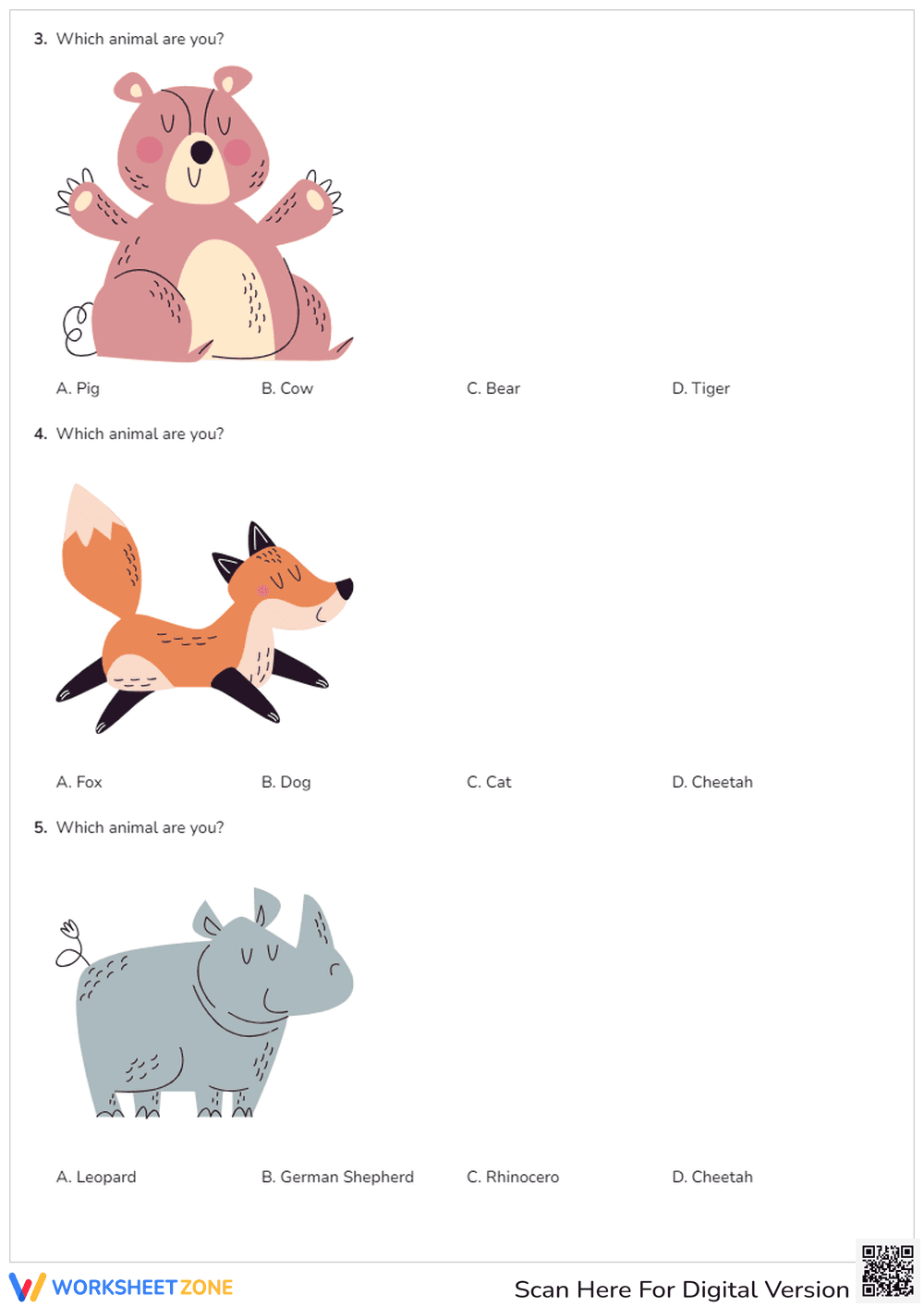
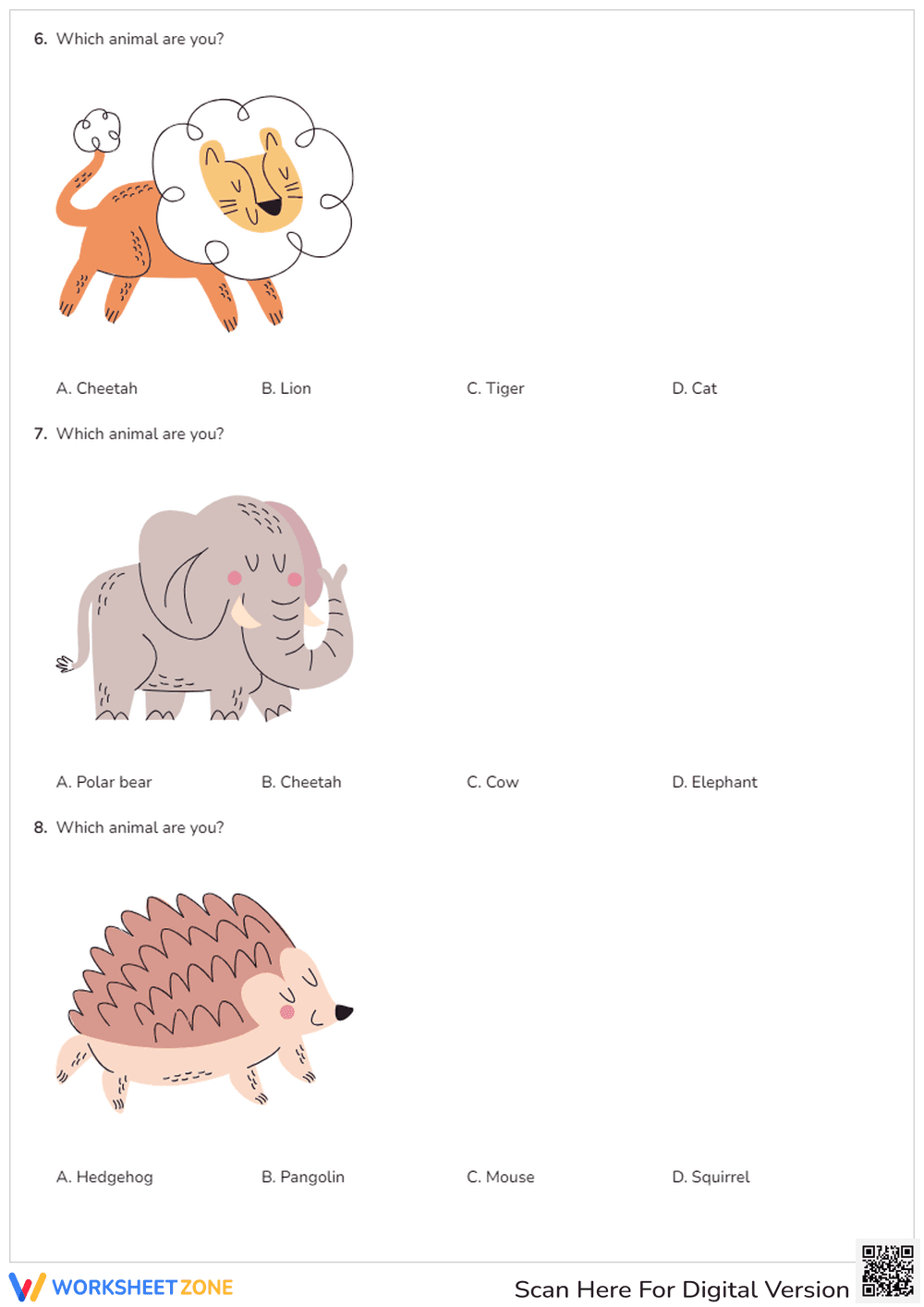
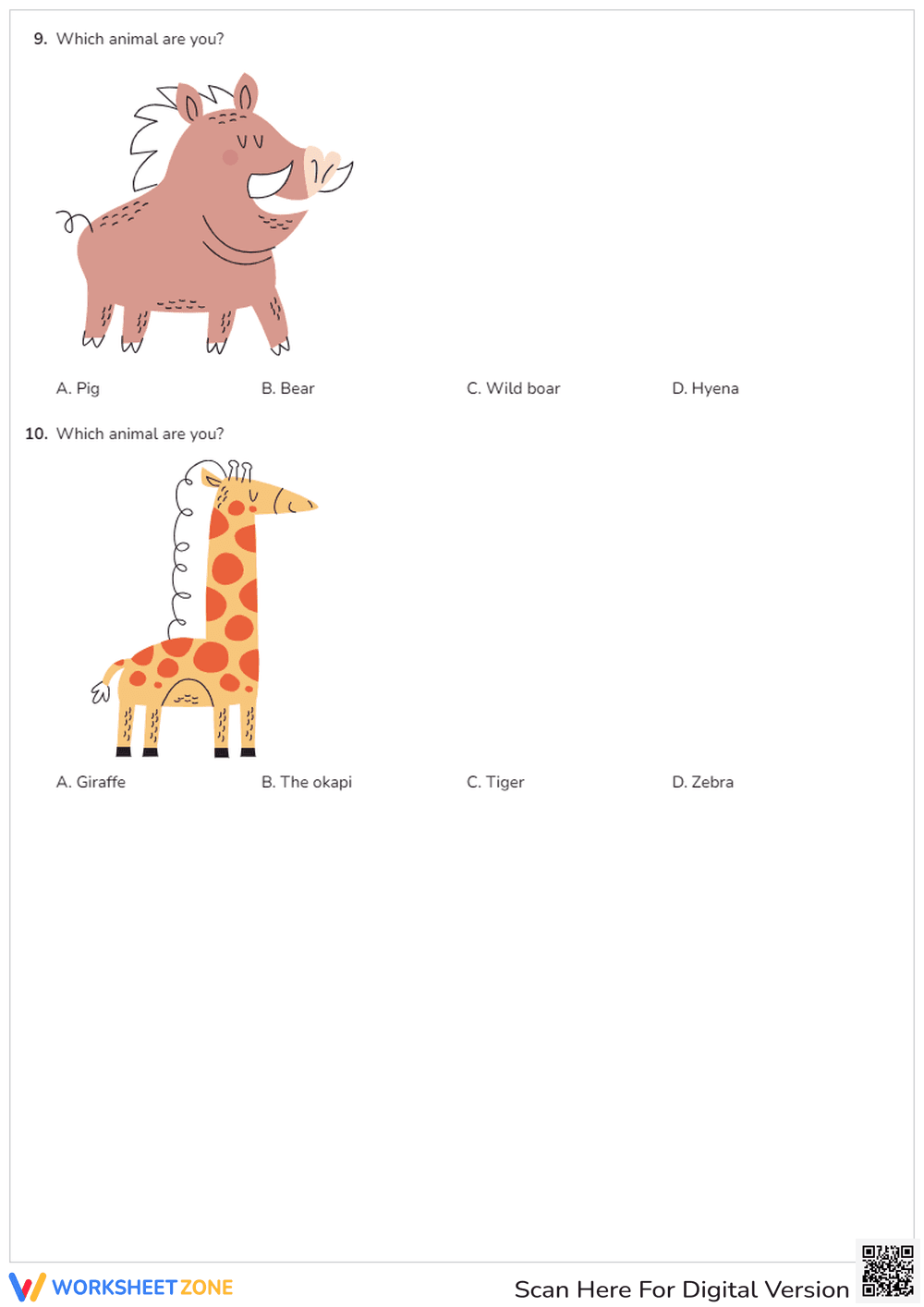
This engaging Earth Day animal quiz helps early learners build foundational vocabulary by matching familiar and exotic animals to their correct written names. Students will practice visual recognition and reading comprehension as they identify ten different animals, strengthening their language skills while celebrating wildlife.
At a Glance
- Grade: 1 · Subject: English
- Standard:
CCSS.ELA-LITERACY.L.1.6— Use acquired words and phrases- Skill Focus: Animal Vocabulary
- Format: 4 pages · 10 problems · Answer key included · PDF
- Best For: Morning work or holiday activities
- Time: 10–15 minutes
This comprehensive resource features a four-page multiple-choice assessment containing ten distinct visual identification tasks. Each problem presents a high-quality, child-friendly illustration of an animal alongside four clearly written text options. The spacious layout makes it accessible for early readers. An included answer key ensures quick and accurate grading for educators.
Zero-Prep Workflow
This resource is designed for immediate classroom implementation.
- Print (1 minute): Simply download the PDF and print the four-page assessment. The clear text and distinct illustrations print beautifully on standard paper.
- Distribute (1 minute): Hand out the packets to students during morning work, a holiday center, or as a fun Earth Day activity.
- Review (3 minutes): Use the provided answer key to quickly check student responses or conduct a whole-class review session where students share their favorite animals.
With a total prep time of under two minutes, this worksheet is an excellent addition to any emergency sub plan or last-minute holiday lesson.
Standards Alignment
This worksheet is carefully aligned to CCSS.ELA-LITERACY.L.1.6: Use words and phrases acquired through conversations, reading and being read to, and responding to texts. By connecting visual representations of animals to their written names, students reinforce their growing expressive and receptive vocabulary. Both standard codes can be copied directly into lesson plans, IEP goals, or district curriculum mapping tools.
How to Use It
This versatile quiz is perfect for independent practice after a whole-group read-aloud about Earth Day or animal habitats. Teachers can also use it as a formative assessment during a science or language arts block to gauge students' baseline vocabulary knowledge. While students work, observe whether they are using phonetic decoding skills to read the options or relying purely on sight word recognition. Most early learners will complete this engaging activity within 10 to 15 minutes.
Who It's For
This activity is primarily designed for first-grade students, though it serves as excellent enrichment for kindergarteners or foundational review for second graders. For students needing extra support, teachers can read the multiple-choice options aloud, transforming the task into a listening comprehension exercise. It pairs wonderfully with an anchor chart displaying common animal names or a picture book about global wildlife.
Building early vocabulary is critical for long-term reading comprehension. According to Fisher & Frey (2014), explicit vocabulary instruction combined with visual scaffolds significantly improves students' ability to retain and accurately use new words. This worksheet directly supports CCSS.ELA-LITERACY.L.1.6 by requiring students to use acquired words and phrases to correctly identify ten distinct animals. By integrating high-interest topics like Earth Day and wildlife into foundational literacy practice, educators can foster higher levels of student engagement and motivation. The multiple-choice format also introduces young learners to standardized testing structures in a low-stakes, supportive environment. Providing targeted opportunities to connect visual concepts with written text ensures that early readers develop the automaticity necessary for fluent reading and effective communication across all subject areas.


