


























Views
Downloads
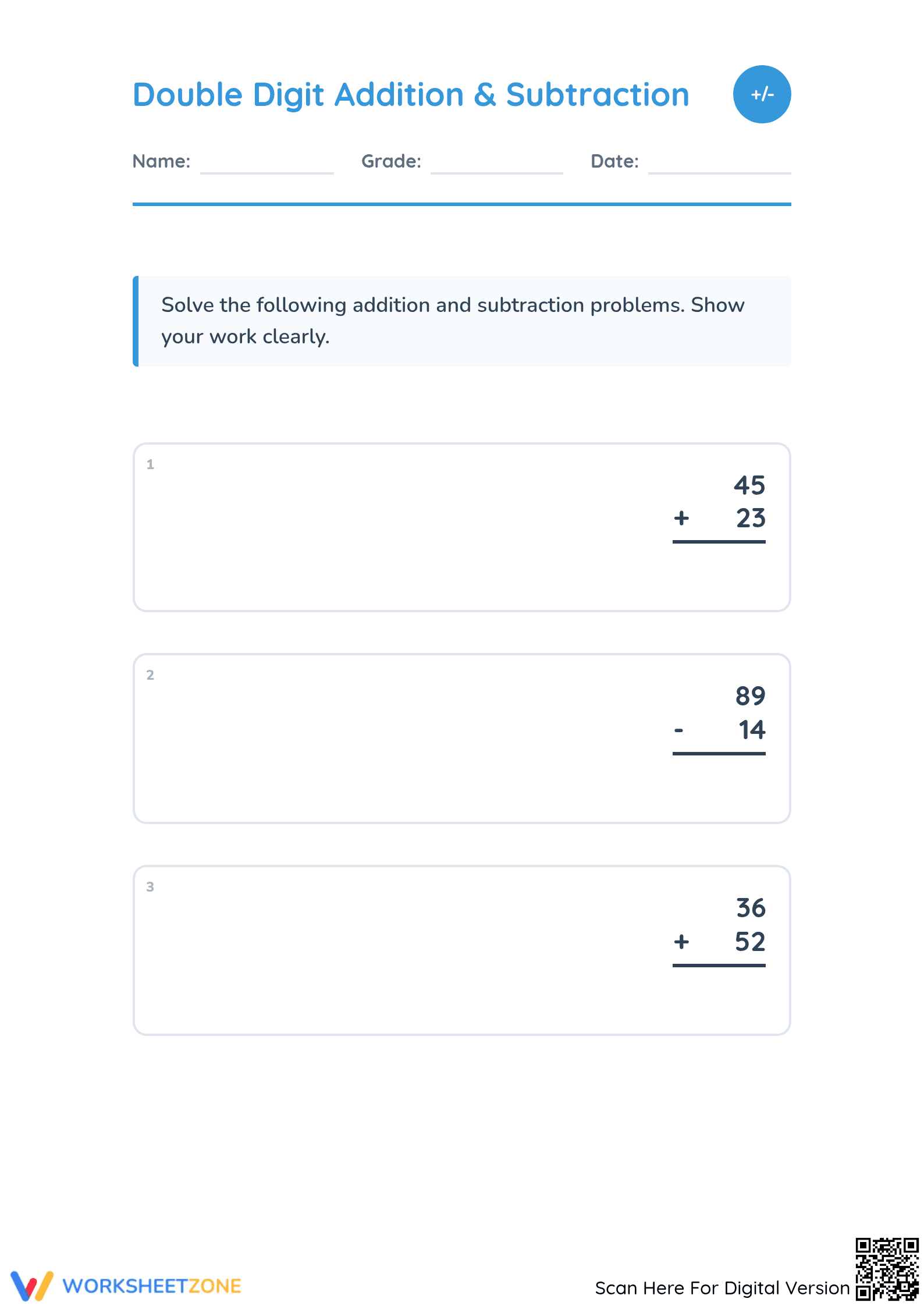
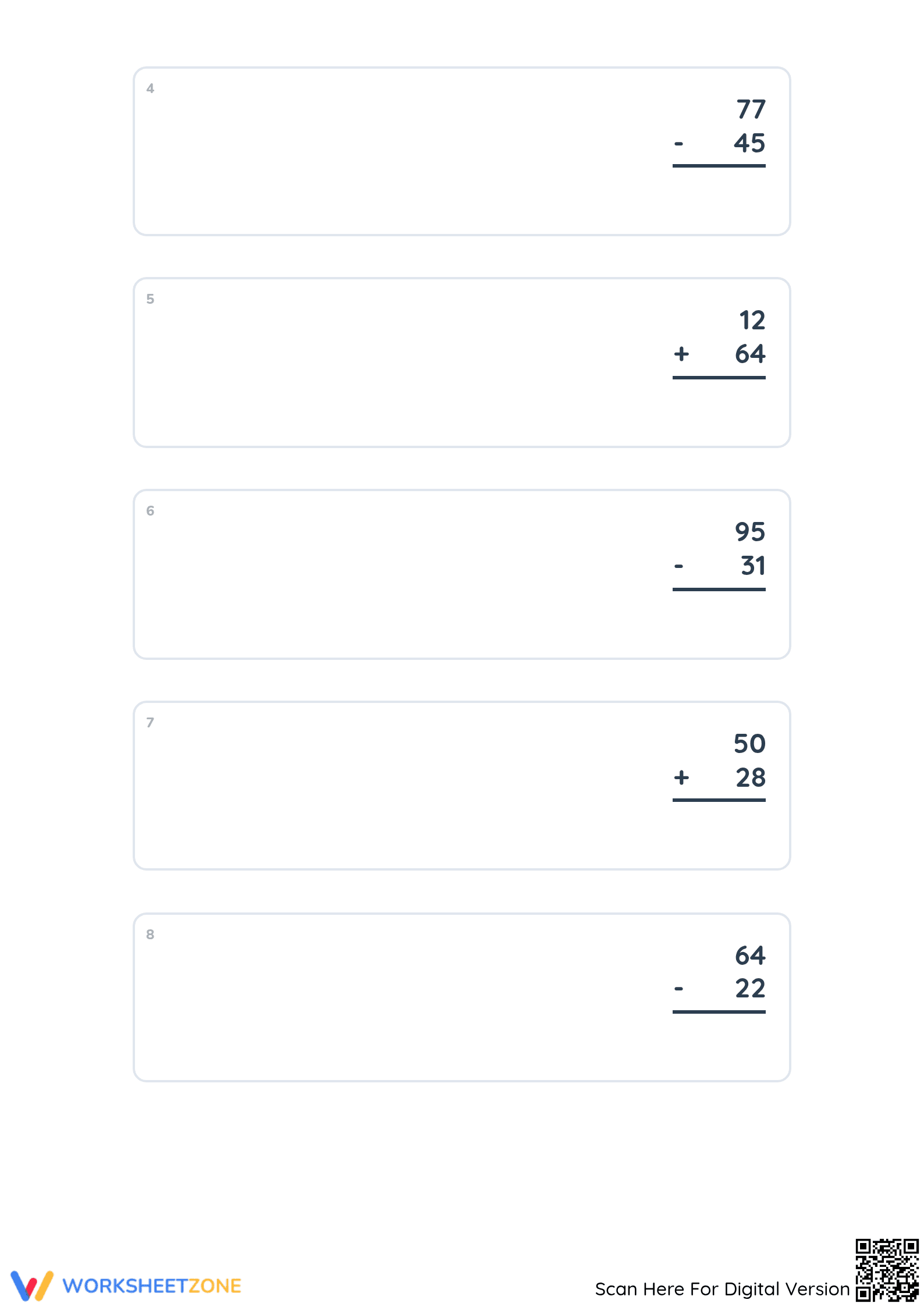
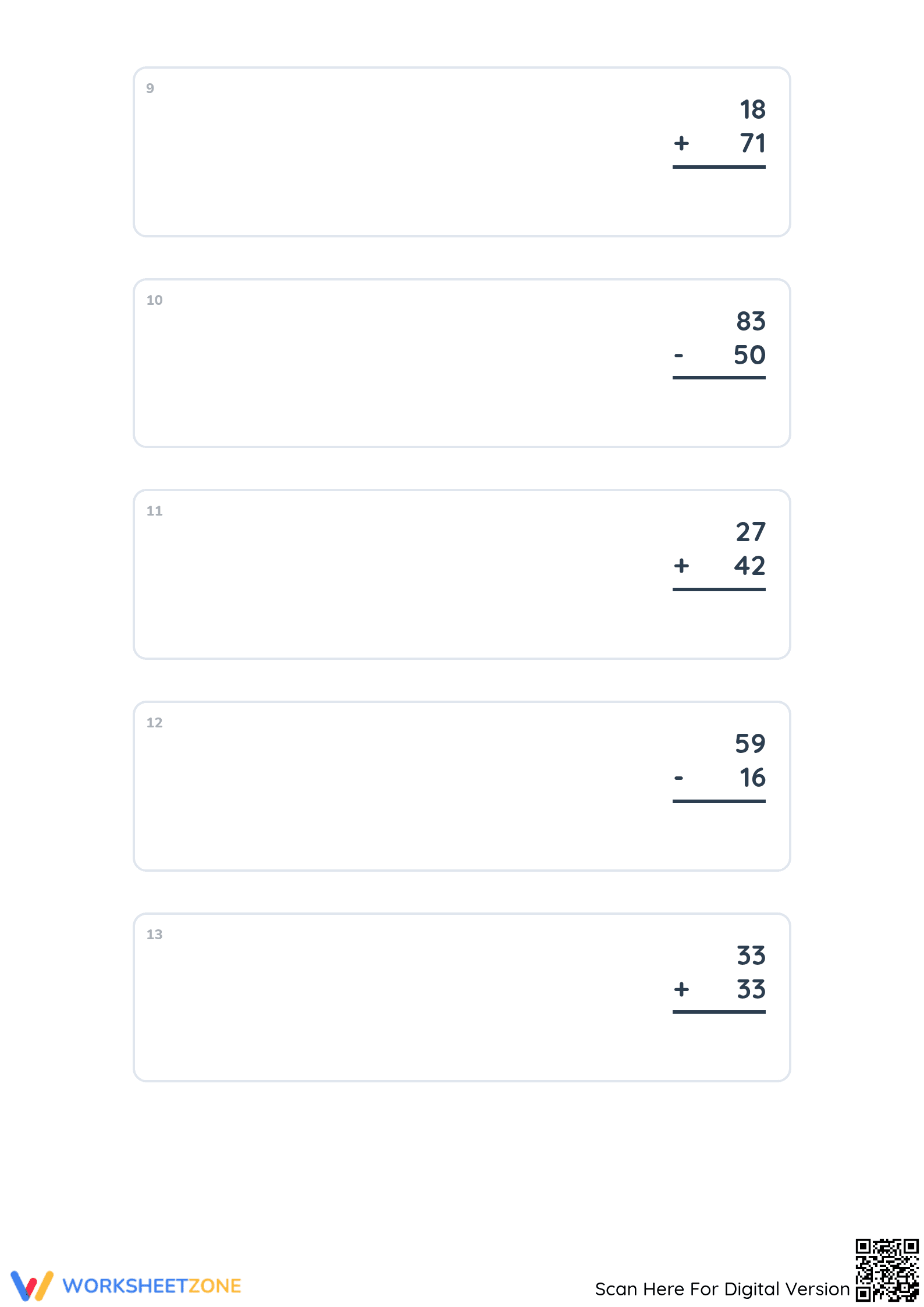
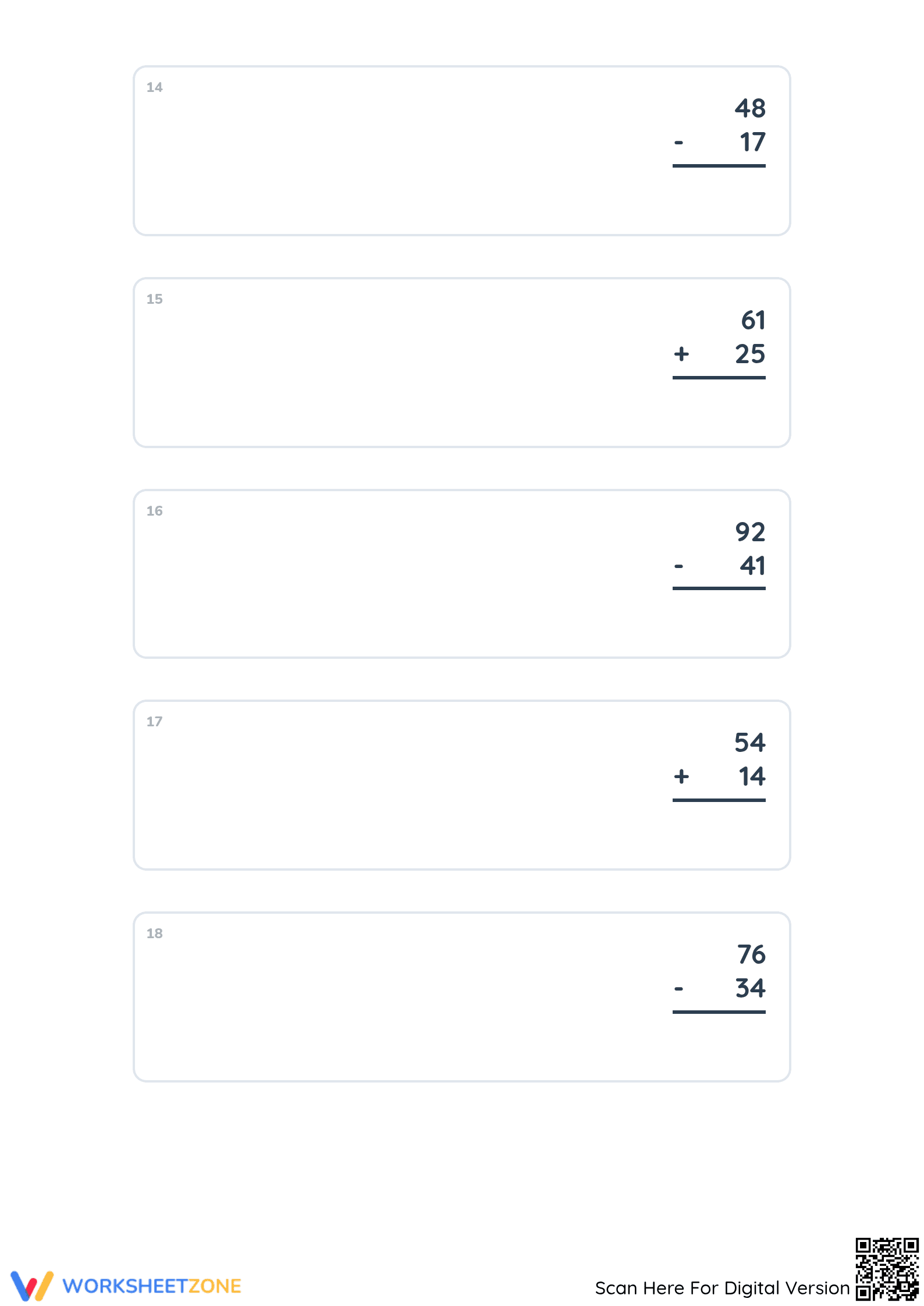

Grade 2 Double-Digit Math — Printable No-Prep Worksheet
Paste this activity's link or code into your existing LMS (Google Classroom, Canvas, Teams, Schoology, Moodle, etc.).
Students can open and work on the activity right away, with no student login required.
You'll still be able to track student progress and results from your teacher account.
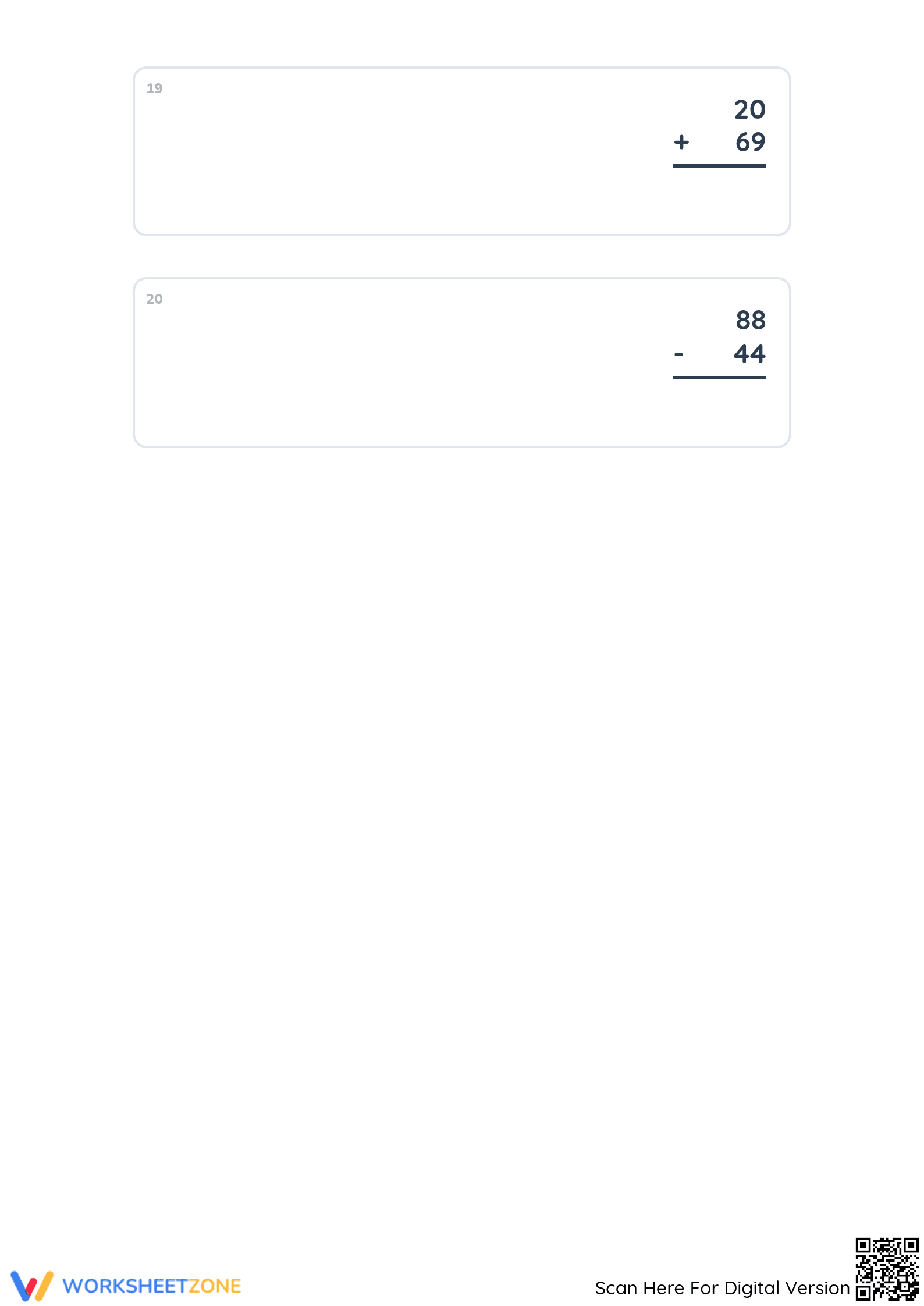
This five-page worksheet offers focused practice on double-digit addition and subtraction without regrouping. Grade 2 students solve twenty mixed problems, reinforcing place value and basic operations. It is designed for independent practice, helping build computational fluency in a clear, structured format for young learners.
At a Glance
- Grade: 2 · Subject: Math
- Standard:
CCSS.MATH.CONTENT.2.NBT.B.5— Fluently add and subtract within 100 using place value strategies.- Skill Focus: Double-Digit Addition & Subtraction (No Regrouping)
- Format: 5 pages · 20 problems · Answer key included · PDF
- Best For: Independent practice, homework, or formative assessment
- Time: 15–25 minutes
What's Inside
This resource contains a five-page printable PDF with 20 mixed addition and subtraction problems. Each item provides ample space for students to show work. A complete answer key is included on separate pages for efficient grading or student self-checking, ensuring clarity and immediate feedback.
A Seamless Zero-Prep Workflow
This worksheet is engineered to save valuable teacher time. The workflow is simple and efficient: a single PDF file is ready for immediate use.
- Print (1 min): The entire packet, including answer keys, is ready to print. No complex assembly needed.
- Distribute (1 min): Hand out the pages for independent work. Clear top-level instructions allow students to begin right away.
- Review (5 min): Use the provided answer key for fast grading or a whole-class review session.
With total prep time under two minutes, this resource is an ideal choice for substitute plans or homework.
Standards Alignment for Clear Goals
This worksheet is directly aligned with a critical standard for second-grade math, ensuring practice is targeted and meaningful. The primary standard is:
CCSS.MATH.CONTENT.2.NBT.B.5: Fluently add and subtract within 100 using strategies based on place value, properties of operations, and/or the relationship between addition and subtraction.
Mastery of this skill builds the foundation for more complex computation. The standard code can be copied directly into lesson plans or curriculum maps.
Flexible Classroom Implementation
Use this worksheet for independent practice after a lesson on two-digit computation or as a homework assignment. For formative assessment, circulate as students work and observe their strategies: are they using number lines, drawings, or a standard algorithm? This provides insight into their thinking process. The expected completion time is between 15 and 25 minutes. It can also serve as a quick quiz to check for understanding before moving to problems involving regrouping.
Designed for Grade 2 Learners
This resource is built for second graders developing fluency with two-digit computation. The problems avoid regrouping, making it accessible for students starting this unit. For extra support, pair this worksheet with base-ten blocks. To challenge advanced learners, ask them to write a word problem for three completed equations. It pairs well with a lesson on place value strategies and serves as concrete practice to solidify the concept.
This worksheet delivers targeted practice for CCSS.MATH.CONTENT.2.NBT.B.5, which builds fluency in adding and subtracting within 100. This skill is a vital gateway to multi-digit arithmetic. Procedural fluency must be built upon a strong conceptual understanding of place value, a finding supported by extensive research in mathematics education. The RAND AIRS 2024 report on foundational math skills highlights that structured practice is essential for moving students from conceptual knowledge to automaticity. By mixing addition and subtraction without regrouping, this resource solidifies a student's grasp of base-ten operations in a low-cognitive-load format. This approach is a proven method for building the confidence and competence required for future mathematical success and is easily documented for progress monitoring.


