


























Views
Downloads
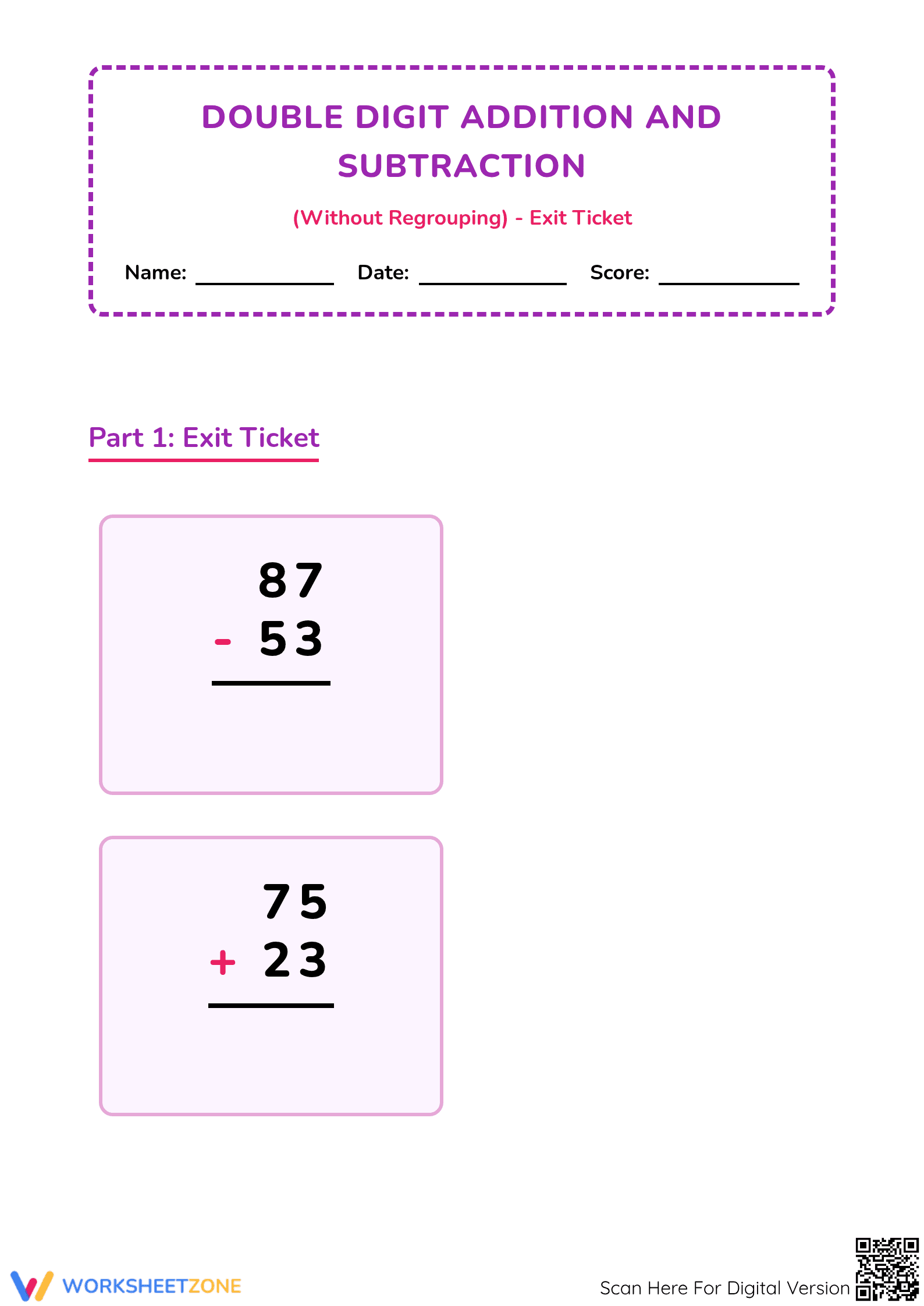
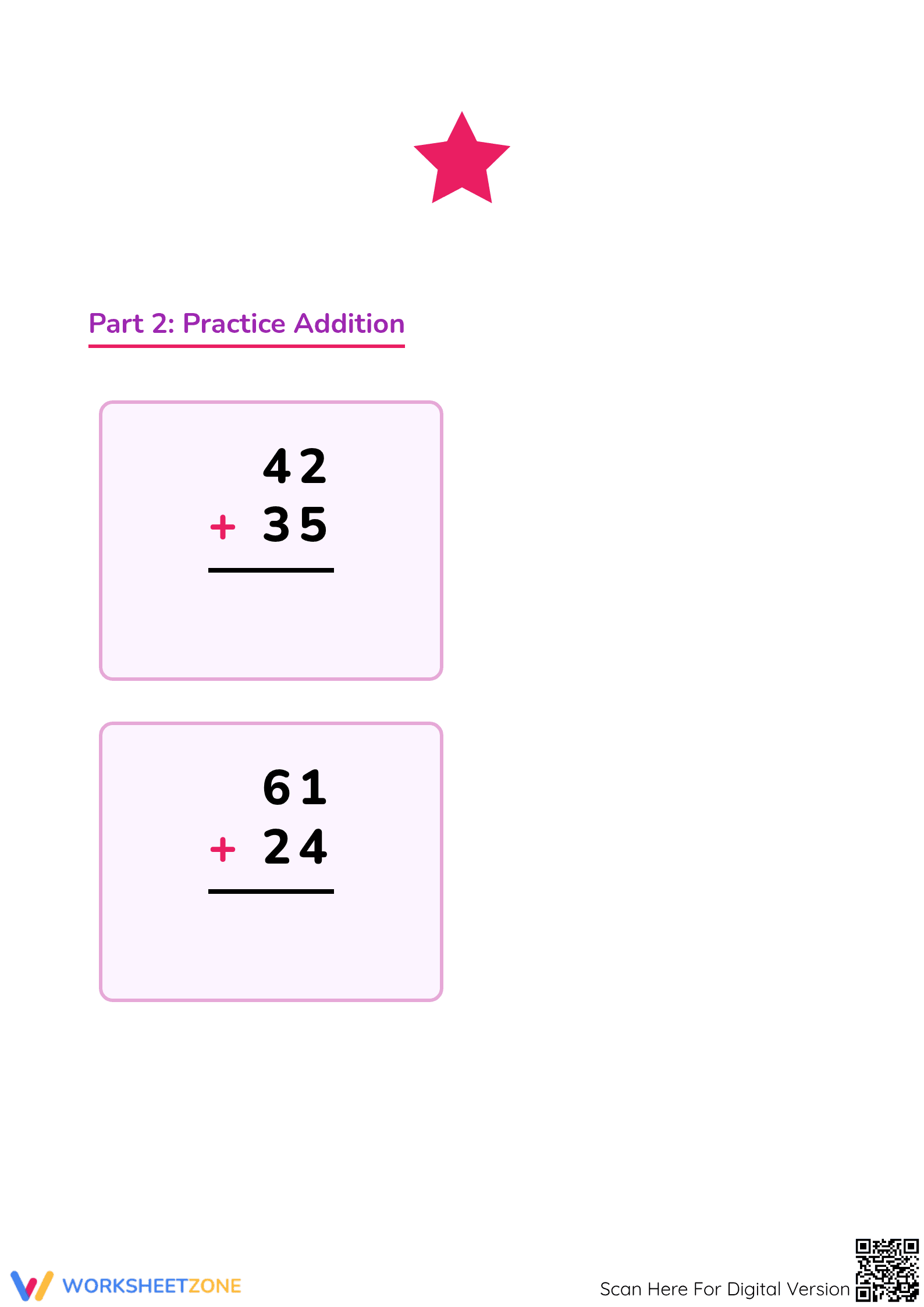
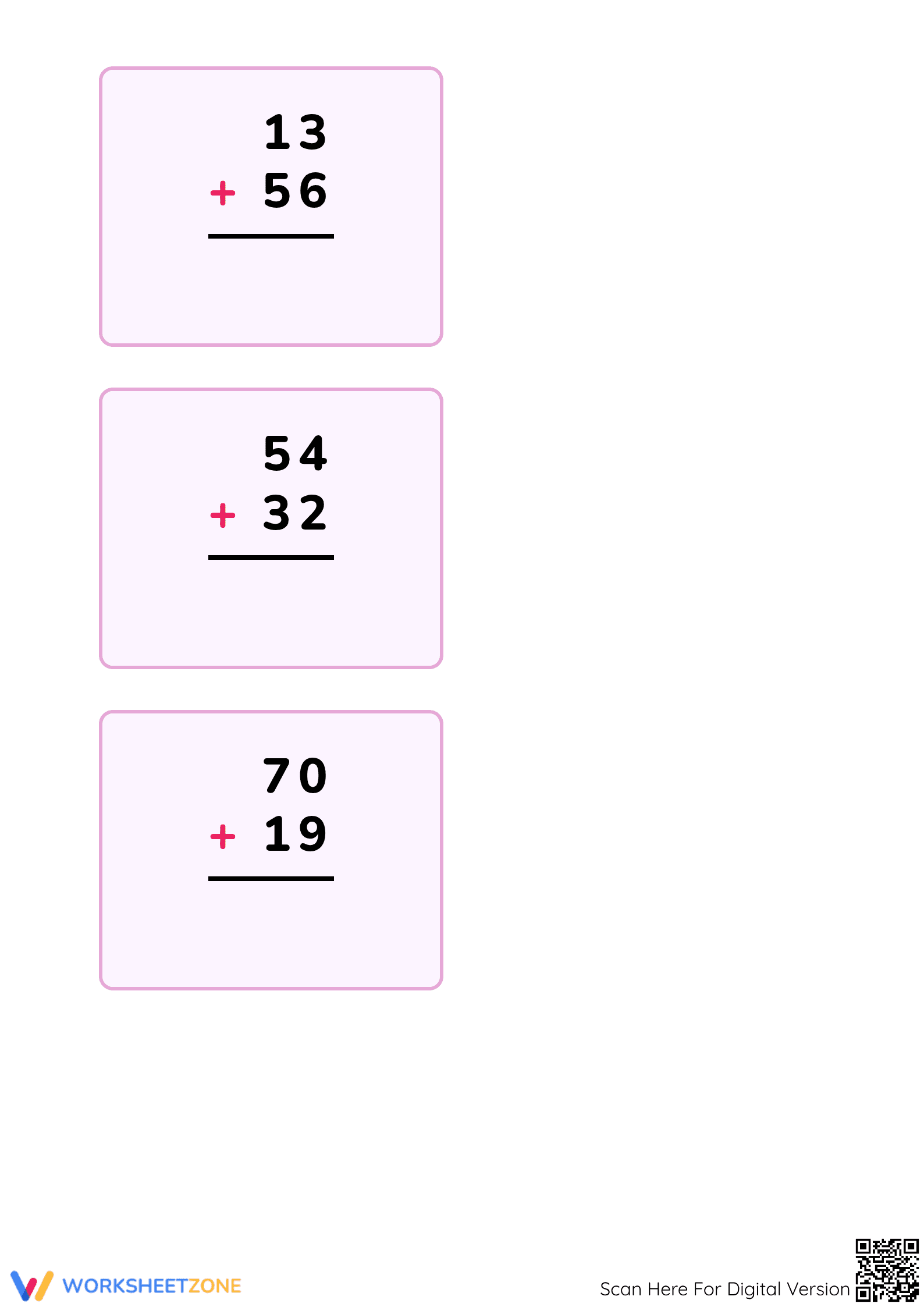
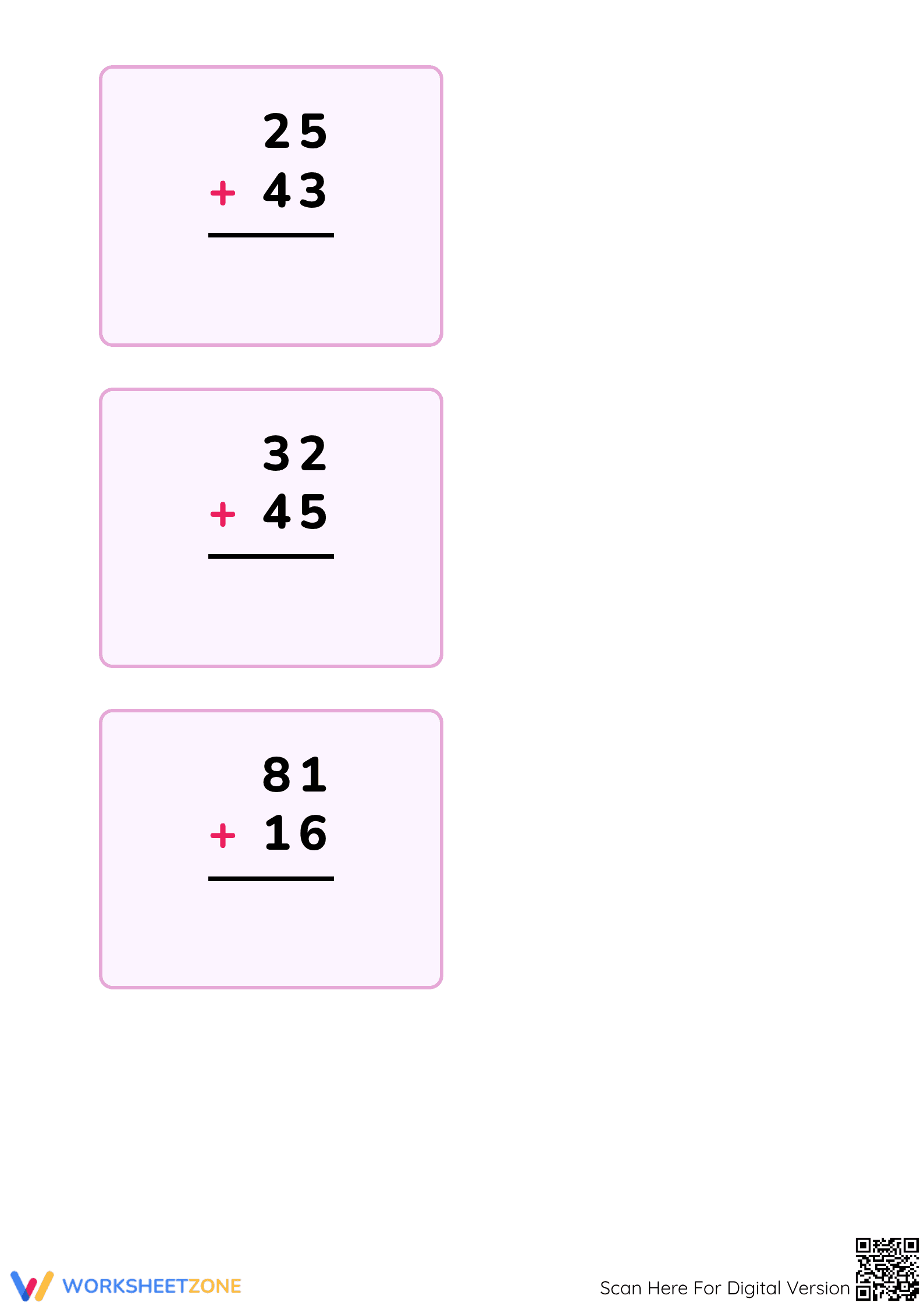

Double Digit Addition & Subtraction — Printable Grade 2
Paste this activity's link or code into your existing LMS (Google Classroom, Canvas, Teams, Schoology, Moodle, etc.).
Students can open and work on the activity right away, with no student login required.
You'll still be able to track student progress and results from your teacher account.
This worksheet provides targeted practice for students mastering double-digit addition and subtraction without regrouping. By focusing on place value alignment, students build the foundational fluency required for complex multi-digit operations. This 5-page resource ensures learners can confidently solve equations using standard algorithms while reinforcing basic number sense.
At a Glance
- Grade: 2 · Subject: Math
- Standard:
CCSS.MATH.CONTENT.2.NBT.B.5— Fluently add and subtract within 100 using strategies based on place value- Skill Focus: Double-digit addition and subtraction (no regrouping)
- Format: 5 pages · 12 problems · Answer key included · PDF
- Best For: Formative assessment and independent practice
- Time: 15–20 minutes
What's Inside
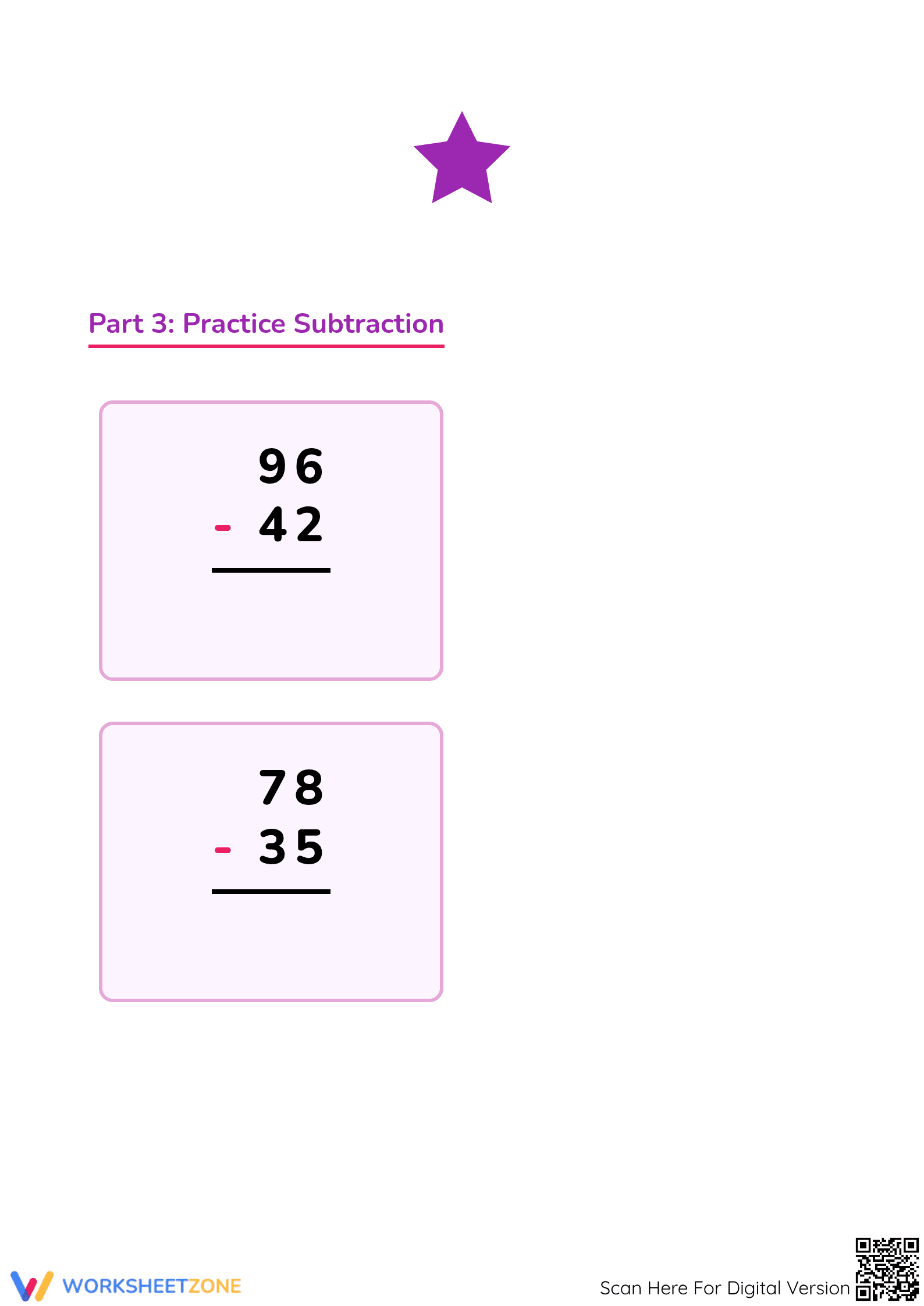
This comprehensive 5-page PDF contains 12 large-print vertical problems designed for clarity and focus. The packet is divided into three distinct sections: an initial exit ticket for quick checks, a dedicated practice section for addition, and a concluding section for subtraction. A complete answer key is provided for immediate feedback or grading.
Zero-Prep Workflow
Teachers can implement this resource in three simple steps. First, print the required pages (1 minute). Second, distribute them to students as an entry task or exit ticket (1 minute). Finally, review the answers using the included key (10 minutes). The total teacher prep time is under 2 minutes, making this packet ideal for emergency sub plans or quick lesson transitions.
Standards Alignment
Aligned to CCSS.MATH.CONTENT.2.NBT.B.5, which requires students to fluently add and subtract within 100 using strategies based on place value, properties of operations, and/or the relationship between addition and subtraction. This worksheet focuses on the standard algorithm without regrouping to solidify procedural accuracy. This standard code can be copied directly into lesson plans, IEP goals, or district curriculum mapping tools.
How to Use It
Use the first page as a mid-lesson check-in to identify students struggling with vertical alignment before assigning the remaining practice pages. For formative assessment, observe if students consistently start in the ones column, even when regrouping is not required, as this establishes the correct habit for future Grade 2 math standards. This resource works best as a post-instruction reinforcement tool.
Who It's For
Designed for Grade 2 students in general education settings, this resource also supports Grade 3 intervention groups or Grade 1 students ready for enrichment. It pairs naturally with base-ten block manipulatives or place-value anchor charts to provide visual scaffolding for early learners. The clear layout is especially helpful for students who need extra space for digit alignment.
According to EdReports 2024, high-quality instructional materials must prioritize procedural fluency alongside conceptual understanding in early mathematics. This Grade 2 worksheet aligns with that goal by providing structured, repetitive practice in double-digit operations without the added complexity of regrouping. Research by Fisher & Frey (2014) emphasizes that "exit tickets" like the one included here are vital for checking for understanding and adjusting instruction in real-time. By isolating the operation from the regrouping hurdle, students can demonstrate mastery of place value alignment—a critical milestone in the CCSS.MATH.CONTENT.2.NBT.B.5 progression. This resource offers 12 targeted opportunities for students to develop the automaticity needed for the mental math demands of later elementary grades, ensuring a smooth transition to more complex multi-digit calculations. By removing the cognitive load of borrowing and carrying, learners focus entirely on the mechanics of vertical computation.


