


























Views
Downloads

Printable Idiom Worksheet: Dead Horse | Grade 4 ELA
Paste this activity's link or code into your existing LMS (Google Classroom, Canvas, Teams, Schoology, Moodle, etc.).
Students can open and work on the activity right away, with no student login required.
You'll still be able to track student progress and results from your teacher account.
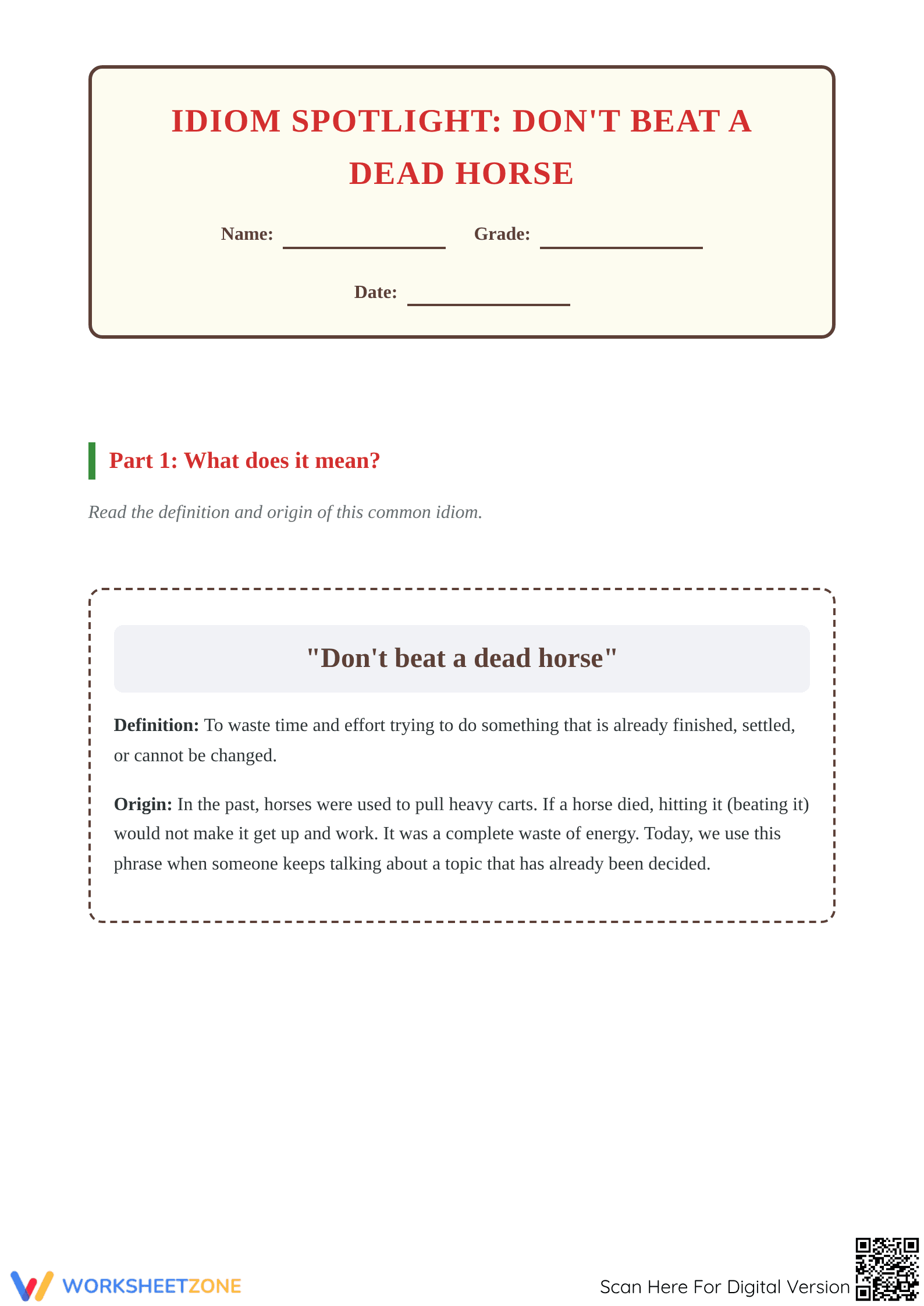
This focused Grade 4 ELA worksheet helps students master the common idiom "don't beat a dead horse." By exploring its definition, historical origin, and real-world application, learners will build essential vocabulary skills and learn how to incorporate figurative language into their own writing and daily conversations.
At a Glance
- Grade: 4 · Subject: ELA
- Standard:
CCSS.ELA-LITERACY.L.4.5.B— Recognize and explain the meaning of common idioms.- Skill Focus: Figurative Language (Idioms)
- Format: 4 pages · 6 problems · Answer key included · PDF
- Best For: Vocabulary practice and independent work
- Time: 15–20 minutes
What's Inside
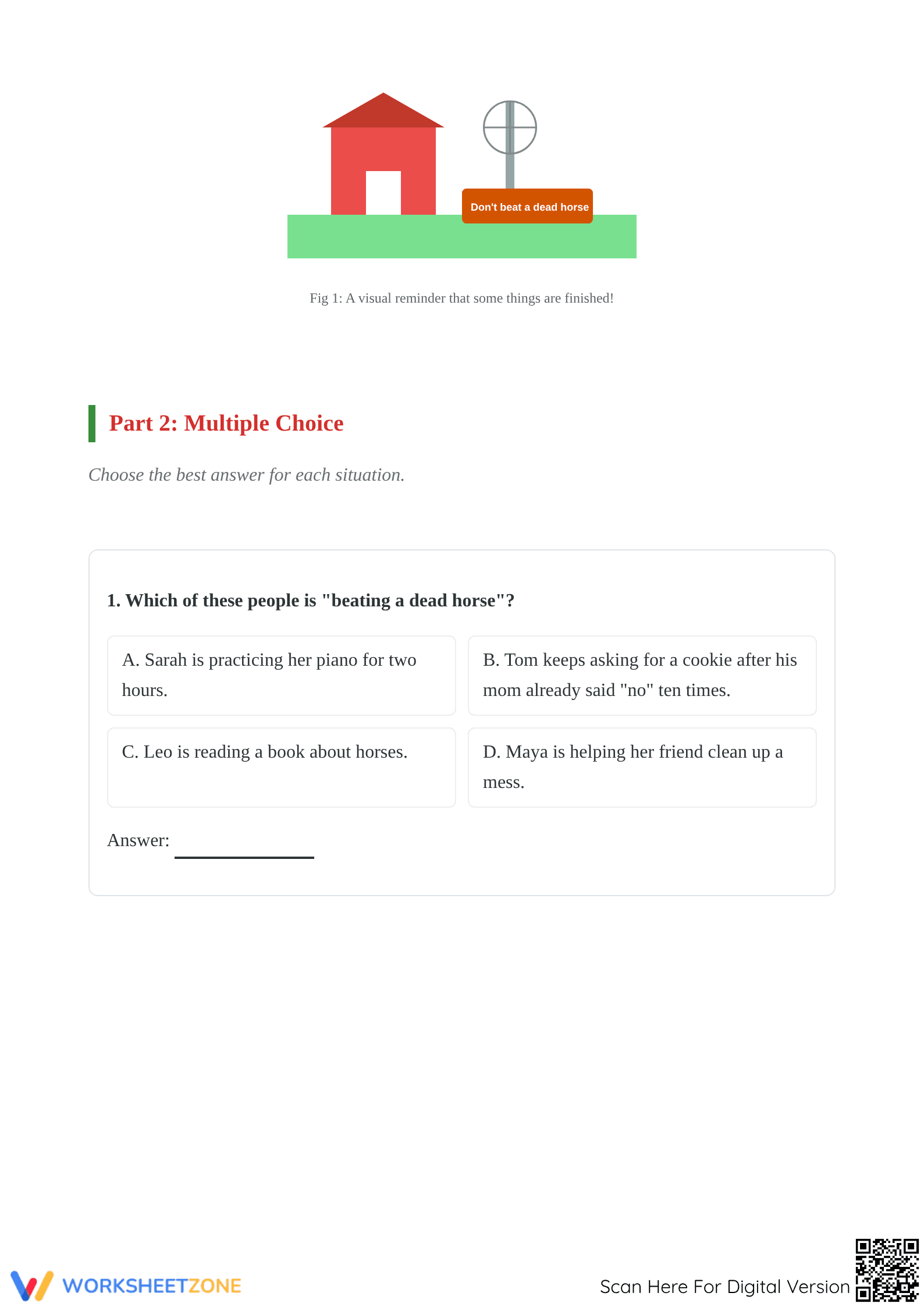
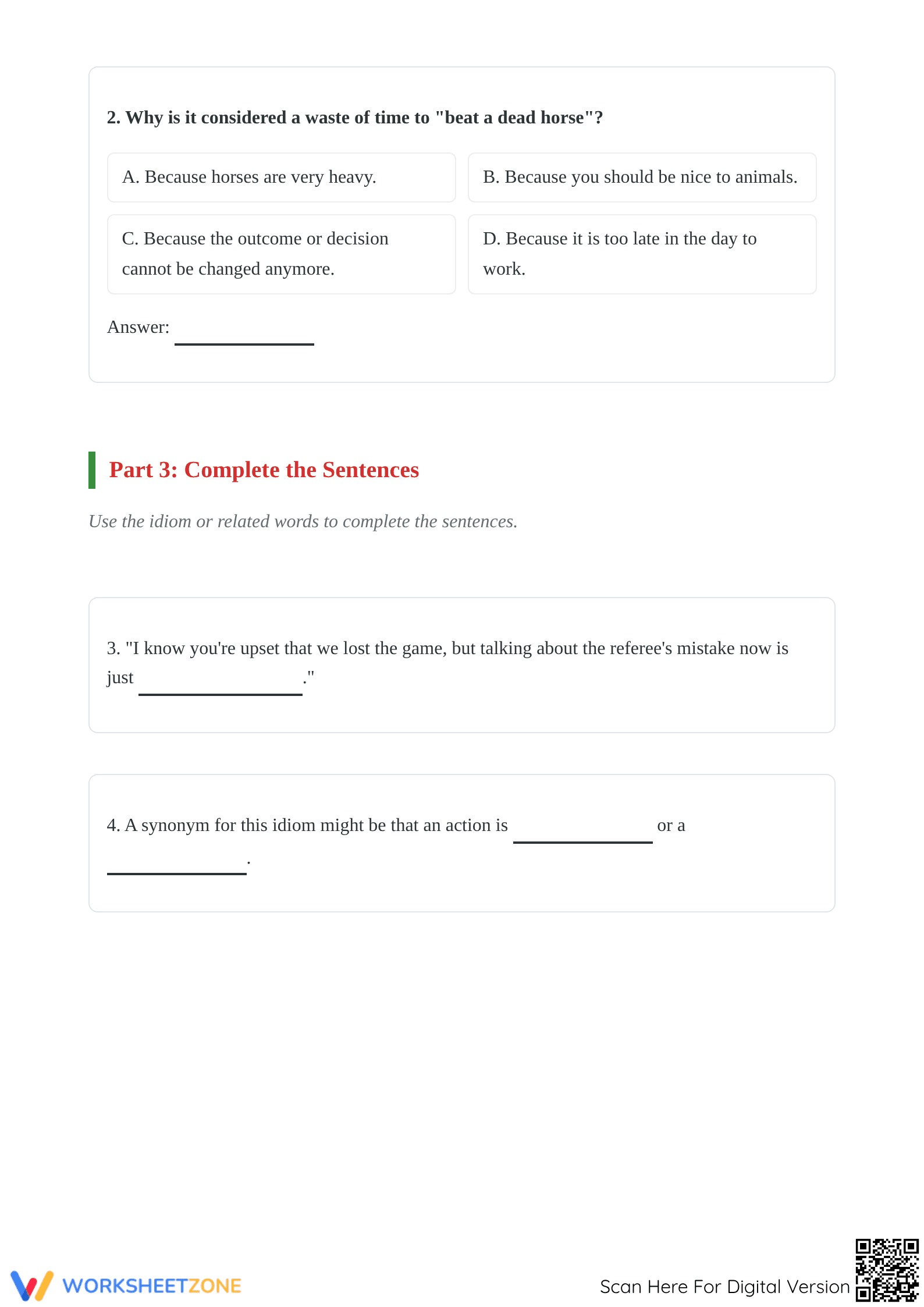
This comprehensive four-page resource provides a thorough exploration of a single idiom. The worksheet includes a reading section detailing the phrase's definition and origin, followed by multiple-choice questions to check comprehension. Students will also find sentence completion exercises and a creative writing section where they draft their own dialogue. A complete answer key is provided for quick grading.
Skill Progression
- Guided practice: Students read the explicit definition and historical context of the idiom, establishing a strong foundational understanding.
- Supported practice: Two multiple-choice questions and two fill-in-the-blank sentences allow learners to identify correct usage in context.
- Independent practice: Two open-ended writing prompts require students to generate their own examples and construct a short dialogue using the phrase.
This I Do, We Do, You Do approach ensures students can confidently apply the idiom independently.
Standards Alignment
This resource is directly aligned to CCSS.ELA-LITERACY.L.4.5.B, requiring students to recognize and explain the meaning of common idioms, adages, and proverbs. It also supports broader language acquisition goals by encouraging students to use newly learned figurative language in their writing. Both standard codes can be copied directly into lesson plans, IEP goals, or district curriculum mapping tools.
How to Use It
Teachers can use this worksheet as a targeted morning work activity or as a focused station during literacy centers. It works exceptionally well after a mini-lesson on figurative language. As a formative assessment tip, review the student-generated dialogues in Part 4 to quickly gauge if they grasp the nuanced tone of the idiom. Most students will complete the 6 tasks in 15 to 20 minutes.
Who It's For
This printable is ideal for 3rd through 6th-grade general education students, as well as English Language Learners (ELLs) who often need explicit instruction in figurative language. The clear definitions and structured progression make it accessible for students reading slightly below grade level. Pair this activity with a broader anchor chart on common English idioms for maximum impact.
Explicit instruction in figurative language, such as the activities aligned to CCSS.ELA-LITERACY.L.4.5.B (Recognize and explain the meaning of common idioms), is critical for developing advanced reading comprehension. According to Fisher & Frey (2014), students who receive targeted vocabulary and idiom instruction demonstrate significantly higher proficiency in understanding complex texts and conversational nuances. Because idioms often lack literal translations, structured practice that includes historical origins and contextual application helps bridge the gap for diverse learners. By breaking down phrases like "don't beat a dead horse" into manageable, multi-modal tasks—from multiple-choice identification to generative dialogue writing—educators can foster deeper linguistic connections. This targeted approach ensures that students do not just memorize definitions, but actively internalize the vocabulary for long-term retention and expressive use in their own writing.


