


























Views
Downloads

DNA Structure Coloring Worksheet | Grade 9 Essential
Paste this activity's link or code into your existing LMS (Google Classroom, Canvas, Teams, Schoology, Moodle, etc.).
Students can open and work on the activity right away, with no student login required.
You'll still be able to track student progress and results from your teacher account.
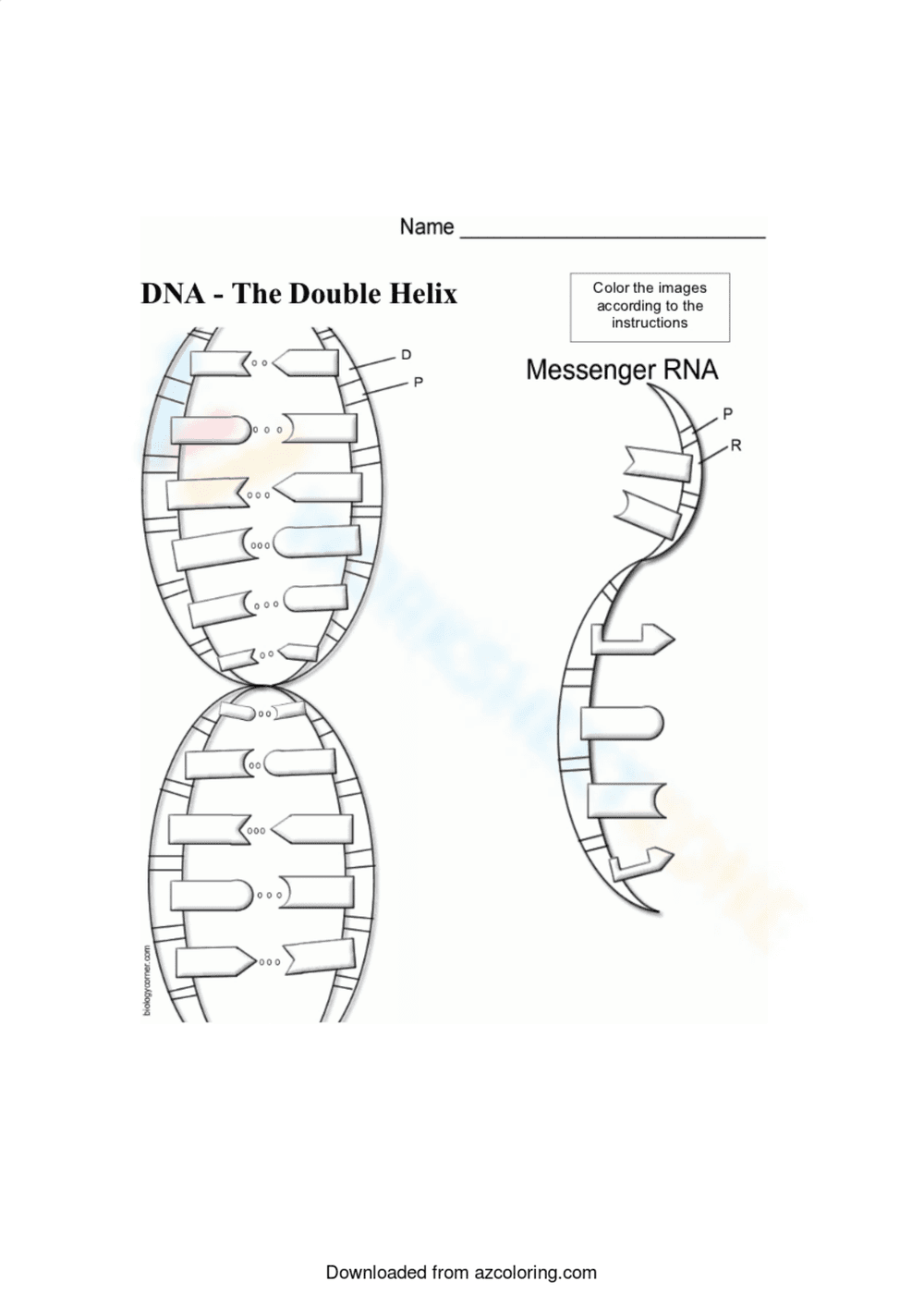
This Grade 9 DNA structure worksheet provides a visual and kinesthetic approach to understanding the fundamental building blocks of life. By engaging in a structured coloring activity, students identify the specific components of the double helix and messenger RNA. This method ensures that learners can distinguish between deoxyribose and ribose sugars while mastering the spatial arrangement of nucleotides.
At a Glance
- Grade: 9 · Subject: Biology
- Standard:
HS-LS1-1— Construct an explanation for how DNA structure determines protein synthesis- Skill Focus: Molecular structure identification
- Format: 1 page · 2 diagrams · Answer key included · PDF
- Best For: Introductory biology lessons and visual learners
- Time: 15–25 minutes
The worksheet features two primary anatomical diagrams: a detailed DNA double helix and a corresponding messenger RNA strand. Each component is labeled with letter codes to guide students in applying specific colors to the sugar-phosphate backbone and the nitrogenous base pairs. This 1-page PDF is designed for immediate use, providing a clear visual reference that simplifies the complexity of molecular biology for high school students.
Zero-Prep Workflow
The workflow for this resource is designed for maximum classroom efficiency. First, print the single-page PDF for your class (30 seconds). Second, distribute the sheets along with colored pencils or markers (1 minute). Third, review the completed diagrams as a whole-class check to ensure correct base-pairing and structural identification (5 minutes). This process makes it an ideal choice for emergency sub plans or a quick transition activity.
Standards Alignment
This resource is aligned with `HS-LS1-1`, which requires students to understand how the structure of DNA provides instructions for forming specialized proteins. By focusing on the physical differences between DNA and RNA, the worksheet also supports MS-LS3-1 regarding structural changes. Both standard codes can be copied directly into lesson plans, IEP goals, or district curriculum mapping tools.
How to Use It
Use this worksheet during the introductory phase of a genetics unit to allow students to discover the patterns of the double helix before formal vocabulary is introduced. Alternatively, assign it as a formative assessment after a lecture on nucleic acids to check for misconceptions regarding the single-stranded nature of mRNA. Expect students to complete the coloring and labeling within a 20-minute window.
Who It's For
This activity is specifically designed for Grade 8 and 9 biology students, particularly those who benefit from visual-spatial learning strategies. It provides necessary scaffolding for English Language Learners (ELLs) by using visual cues rather than dense text. Pair this worksheet with a 3D DNA model or a short video clip on replication to provide a multi-sensory learning experience for your classroom.
According to research from EdReports 2024, high-quality science materials must bridge the gap between abstract molecular concepts and concrete visual representations. This DNA coloring worksheet addresses this need by requiring students to physically interact with the structural components of nucleic acids. By distinguishing between the double-stranded helix of DNA and the single-stranded nature of messenger RNA through color-coding, learners develop a more robust mental model of genetic storage and transmission. Studies in cognitive load theory suggest that dual-coding—combining linguistic labels with visual spatial tasks—enhances long-term retention of complex biological terminology. This resource aligns with HS-LS1-1 by focusing on the hierarchical organization of matter in living systems. Educators can utilize this tool to ensure that 100% of students can identify the phosphate-sugar backbone and nitrogenous bases before moving into the more complex mechanisms of protein synthesis and replication.


