


























Views
Downloads
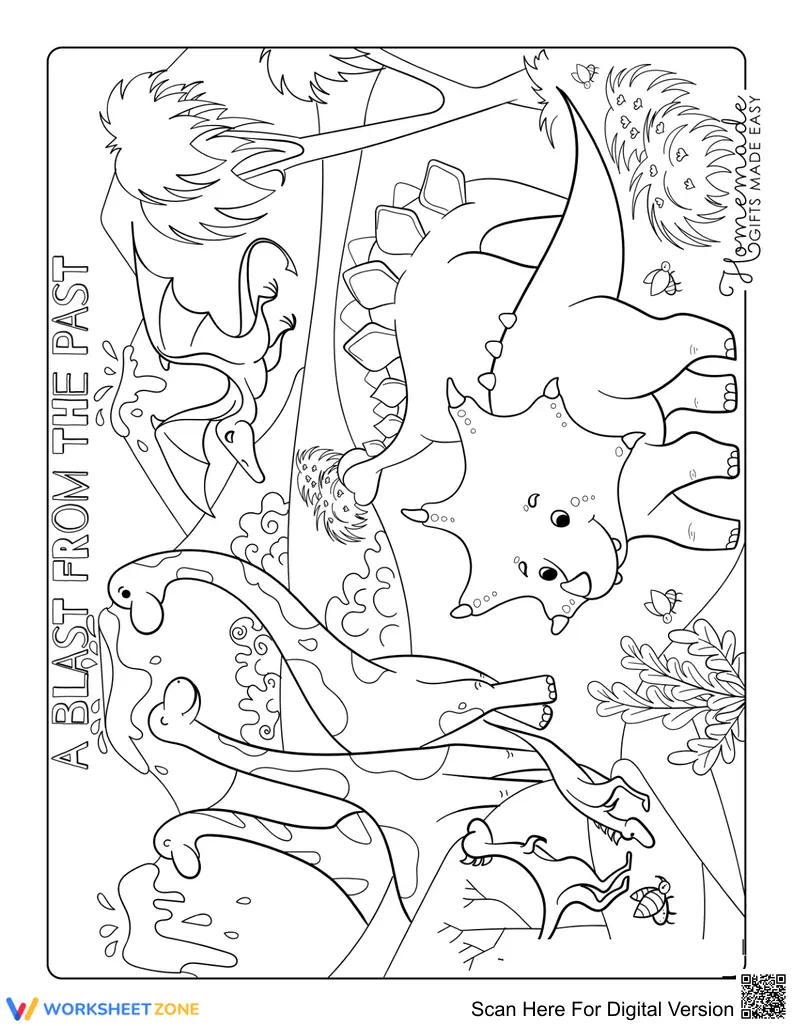

Dinosaur Coloring Page — Printable Grade K-2 Worksheet
Paste this activity's link or code into your existing LMS (Google Classroom, Canvas, Teams, Schoology, Moodle, etc.).
Students can open and work on the activity right away, with no student login required.
You'll still be able to track student progress and results from your teacher account.
This printable dinosaur coloring page provides young students with an engaging creative outlet while developing essential fine motor skills. By coloring the detailed prehistoric forest scene, learners practice grip control and spatial awareness, setting a strong physical foundation for early handwriting and artistic expression.
At a Glance
- Grade: K · Subject: English
- Standard:
CCSS.ELA-LITERACY.SL.K.5— Add drawings or visual displays to provide additional detail- Skill Focus: Fine Motor Skills
- Format: 1 printable page · 1 creative task · No answer key · PDF format
- Best For: Morning work, early finishers, or art centers
- Time: 15–20 minutes
Inside this single-page PDF, educators will find a black-and-white illustration featuring popular dinosaurs in a prehistoric forest. The page includes species like the Triceratops and Stegosaurus, surrounded by volcanoes and trees. The open-ended format allows students to choose their own color palettes, encouraging creativity without an answer key.
Zero-Prep Workflow
This resource is designed for immediate classroom implementation with absolutely no teacher setup required.
- Print (1 minute): Simply download the PDF and print the desired number of copies.
- Distribute (1 minute): Hand out the pages along with crayons, colored pencils, or markers. The instructions are entirely self-explanatory.
- Review (0 minutes): Because this is an open-ended creative task, there is no formal grading or review required.
With a total prep time of under two minutes, this worksheet serves as an ideal emergency sub plan or a quick transition activity between core academic subjects.
Standards Alignment
This activity aligns with CCSS.ELA-LITERACY.SL.K.5, which encourages students to add drawings or other visual displays to descriptions as desired to provide additional detail. While primarily an art activity, coloring supports the physical dexterity required for early literacy and writing tasks. Both standard codes can be copied directly into lesson plans, IEP goals, or district curriculum mapping tools.
How to Use It
This coloring page works perfectly as a calming morning assignment as students arrive. It also serves as an excellent early finisher activity during literacy or science blocks, keeping fast workers quietly engaged. As a formative assessment observation tip, teachers can monitor students' pencil grip and hand-eye coordination while they color within the lines. Expected completion time ranges from 15 to 20 minutes, depending on the student's attention to detail.
Who It's For
This resource is primarily designed for Kindergarten and early elementary students developing their fine motor control. It naturally differentiates itself, as students can engage with the material at their own developmental level—from basic scribbling to intricate, multi-colored shading. It pairs wonderfully with a read-aloud book about dinosaurs or a foundational science lesson on prehistoric life.
Developing fine motor skills through activities like coloring is a critical precursor to academic success in early childhood education. This worksheet targets these foundational abilities while aligning with CCSS.ELA-LITERACY.SL.K.5, helping students add drawings to provide additional detail. According to Fisher & Frey (2014), integrating low-stakes, highly engaging tasks into the daily routine builds stamina and focus, which are essential for more rigorous academic work later in the day. By providing a structured yet creative outlet, educators can foster both physical dexterity and artistic expression. The open-ended nature of this dinosaur scene ensures that learners remain on task, practicing the grip control necessary for handwriting. This simple, effective tool supports holistic early childhood development, bridging the gap between play and formal educational requirements in a way that feels natural and enjoyable for young learners.


