


























Views
Downloads

Essential Diamond Shape Recognition Worksheet | Grade K
Paste this activity's link or code into your existing LMS (Google Classroom, Canvas, Teams, Schoology, Moodle, etc.).
Students can open and work on the activity right away, with no student login required.
You'll still be able to track student progress and results from your teacher account.
This comprehensive diamond shape packet helps early learners master geometric identification through a multi-sensory approach. Students progress from recognizing the shape in everyday objects to precise tracing and independent drawing. By engaging with these structured activities, children build the visual-spatial awareness and fine motor control necessary for higher-level geometry and handwriting success.
At a Glance
- Grade: Kindergarten · Subject: Math
- Standard:
K.G.A.2— Correctly name shapes regardless of their orientations or overall size- Skill Focus: Diamond shape recognition and tracing
- Format: 3 pages · 4 activities · Answer key included · PDF
- Best For: Introduction to shapes and fine motor practice
- Time: 15–20 minutes
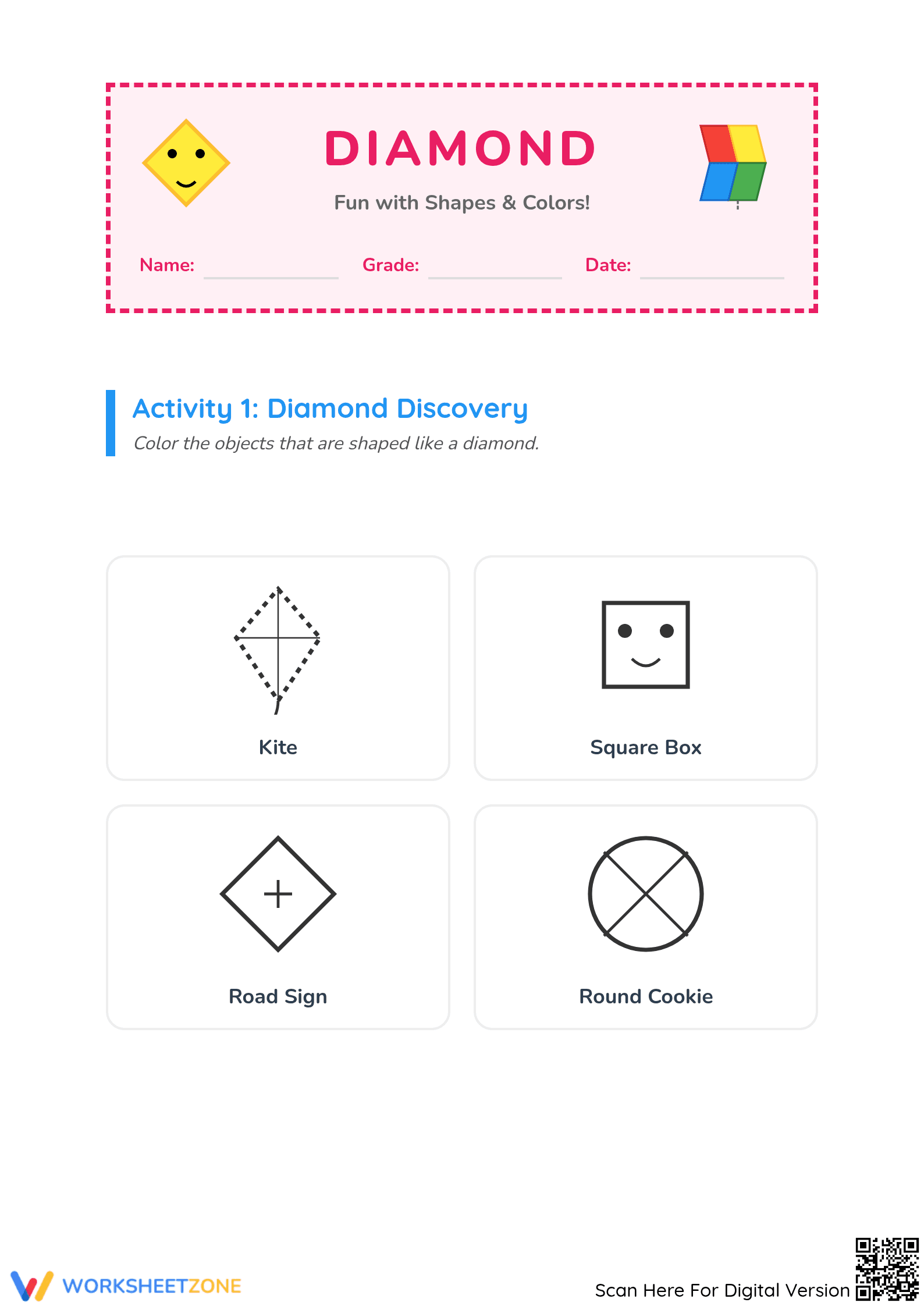
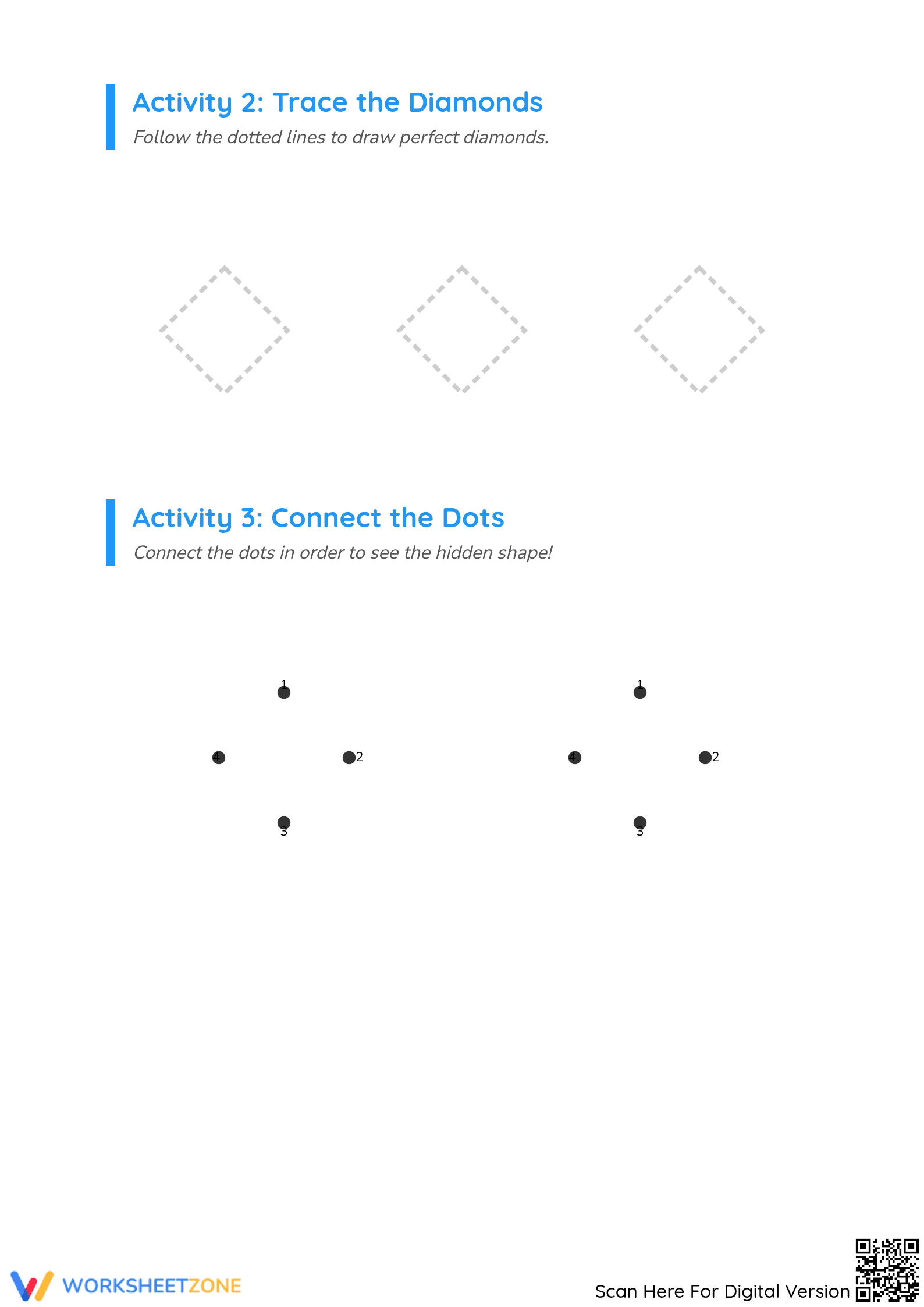
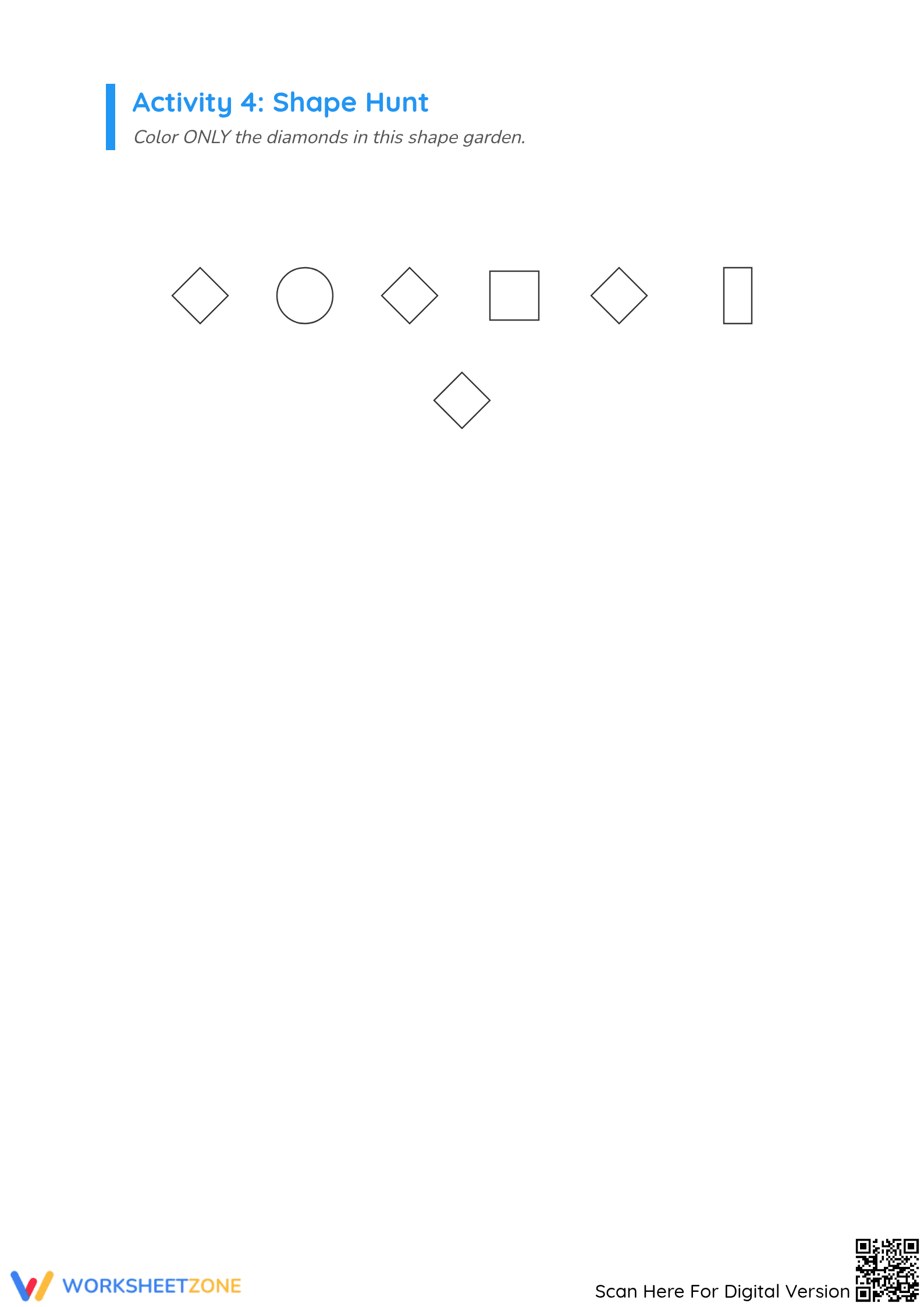
Inside this three-page PDF packet, you will find four distinct activities designed to solidify shape mastery. The first page features "Diamond Discovery," connecting abstract geometry to real-world items like kites and road signs. The second page focuses on visual-motor skills with guided tracing and a numbered connect-the-dots exercise. The final page includes a "Shape Hunt" garden that challenges students to discriminate between diamonds and other common polygons.
This resource follows a zero-prep workflow to save teacher time: 1. Print the three-page packet (30 seconds). 2. Distribute to students for independent or guided center work (1 minute). 3. Review completed work using the provided answer key (2 minutes). The self-explanatory instructions and clear visual cues make this an ideal choice for emergency sub plans or quiet morning work transitions.
The primary alignment is to `K.G.A.2`, which requires students to name shapes accurately in various sizes and orientations. It also supports `K.G.B.5` as students model shapes in the world by building and drawing them through tracing and connecting dots. These standard codes can be copied directly into lesson plans, IEP goals, or district curriculum mapping tools to ensure instructional compliance.
For best results, use this worksheet after a hands-on shape sorting lesson to transition students into paper-and-pencil application. During the Shape Hunt activity, observe whether students correctly identify the diamond even when its proportions change. This instructional moment provides a perfect opportunity for formative assessment, as you can quickly spot students who may be confusing diamonds with squares or rectangles based on corner counts.
This packet is specifically designed for preschool and kindergarten students who are developing foundational geometric literacy. It is highly effective for students requiring extra fine motor support, as the tracing lines provide significant scaffolding. Pair this resource with a physical attribute block set or a shape-themed read-aloud to create a well-rounded instructional block that caters to diverse learning styles and needs.
Research by Fisher & Frey (2014) emphasizes that gradual release of responsibility is crucial for early childhood skill acquisition, moving from modeled identification to independent production. This worksheet facilitates that transition by providing clear visual anchors and scaffolded tracing paths before asking for independent identification in the Shape Hunt garden. Aligned to CCSS.MATH.CONTENT.K.G.A.2, the activities ensure that students can recognize the diamond shape through real-world context and abstract geometric representations. Developing these visual-motor skills is a key predictor of later academic success in both mathematics and literacy. The inclusion of real-world objects like kites and signs helps bridge the gap between classroom theory and daily observation, promoting deeper cognitive encoding. Teachers can rely on this structured approach to provide the 15 to 20 minutes of focused practice necessary for mastery. This resource serves as a reliable tool for building the geometric foundations required in early elementary frameworks.


