


























Views
Downloads

Descending Order within 30 Worksheet | Printable Math
Paste this activity's link or code into your existing LMS (Google Classroom, Canvas, Teams, Schoology, Moodle, etc.).
Students can open and work on the activity right away, with no student login required.
You'll still be able to track student progress and results from your teacher account.
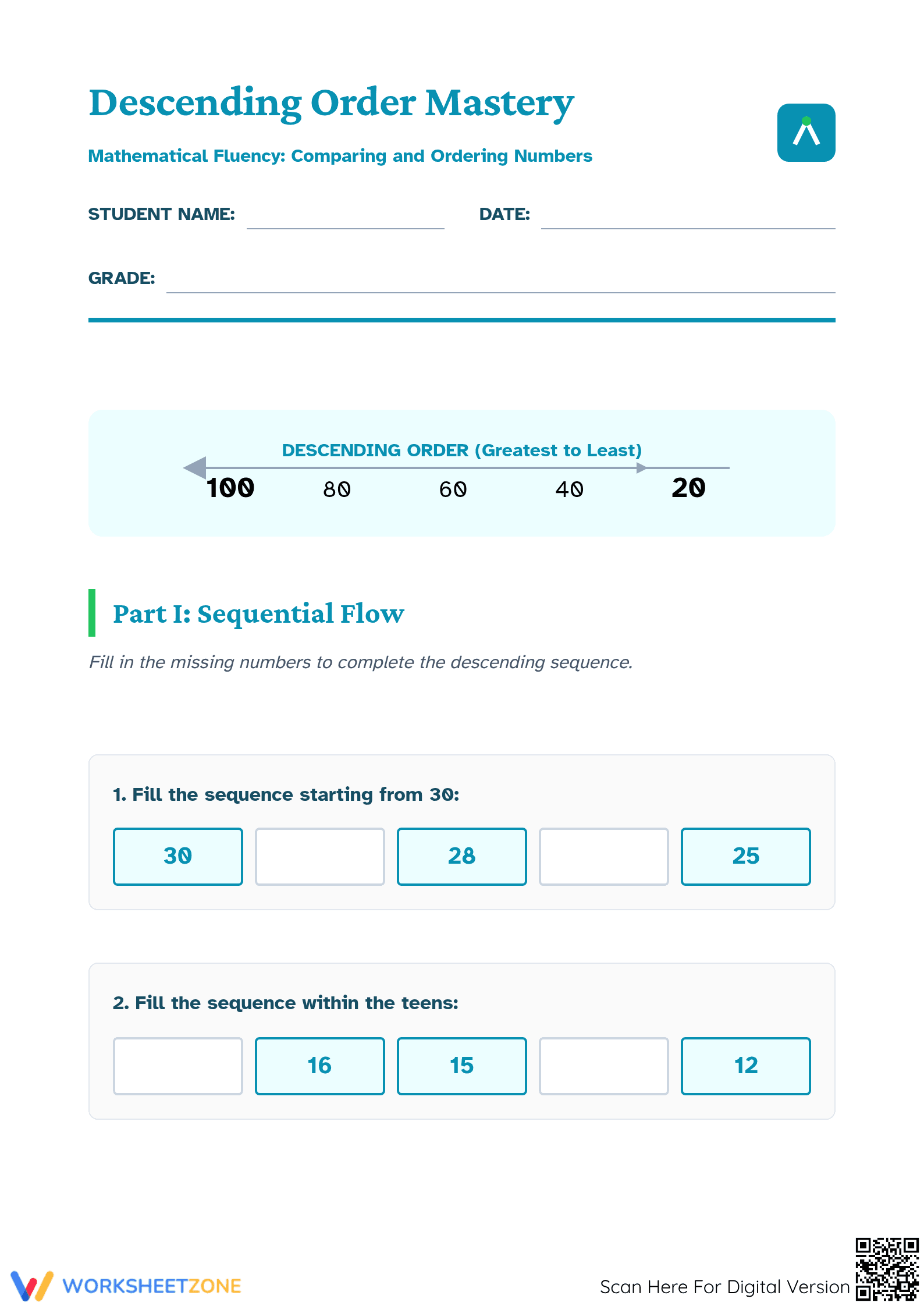
This descending order within 30 worksheet provides students with comprehensive practice in sequencing numbers from largest to smallest. By arranging values up to 30 in decreasing order, learners strengthen their understanding of number relationships and place value. This focused math resource ensures students can confidently compare and order numbers, building a vital foundation for arithmetic success.
At a Glance
- Grade: 1 · Subject: Math
- Standard:
CCSS.MATH.CONTENT.1.NBT.B.3— Compare and order two-digit numbers based on the tens and ones digits.- Skill Focus: Descending order within 30
- Format: 5 pages · 50 problems · Answer key included · PDF
- Best For: Small group instruction or independent practice
- Time: 20–30 minutes
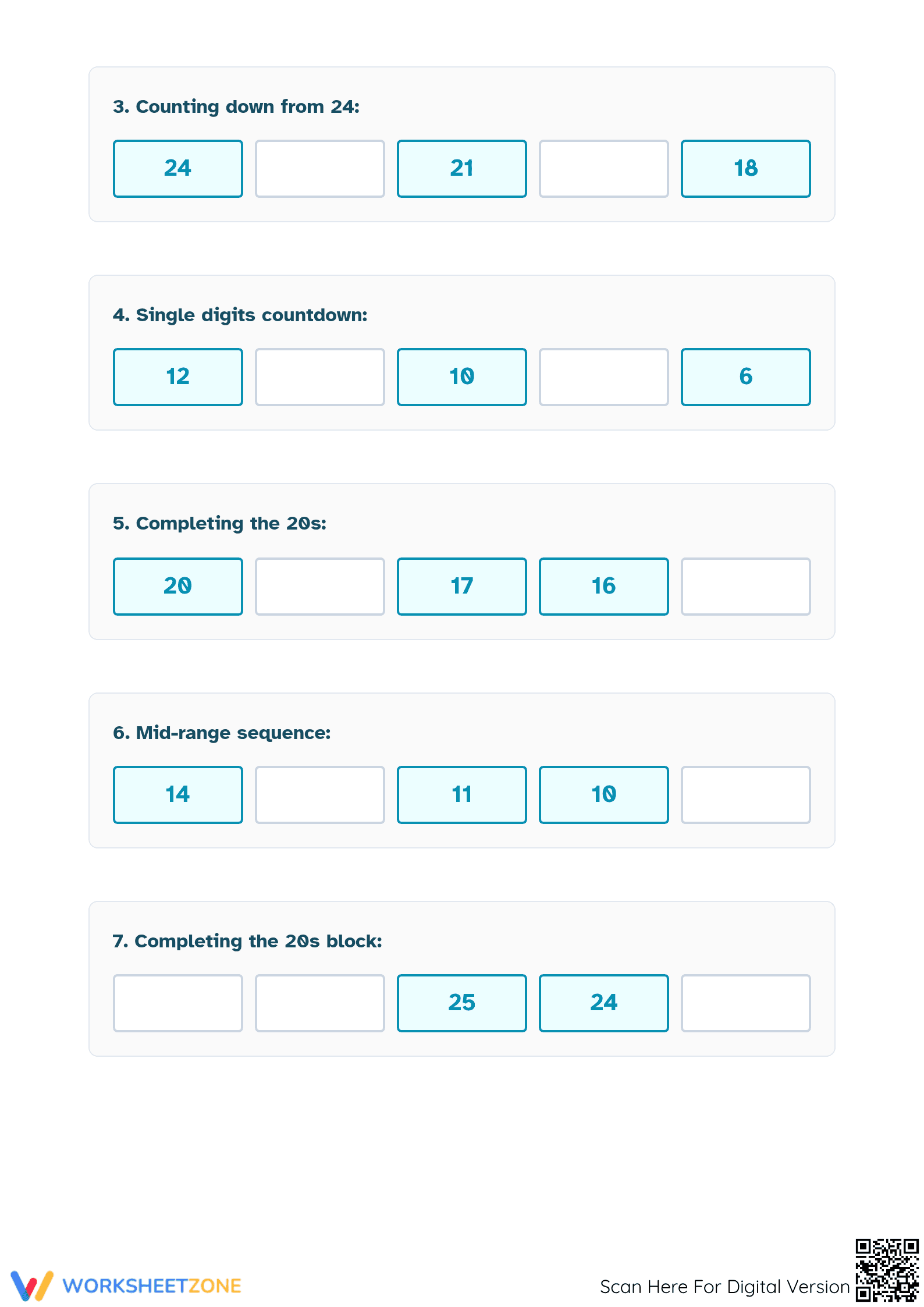
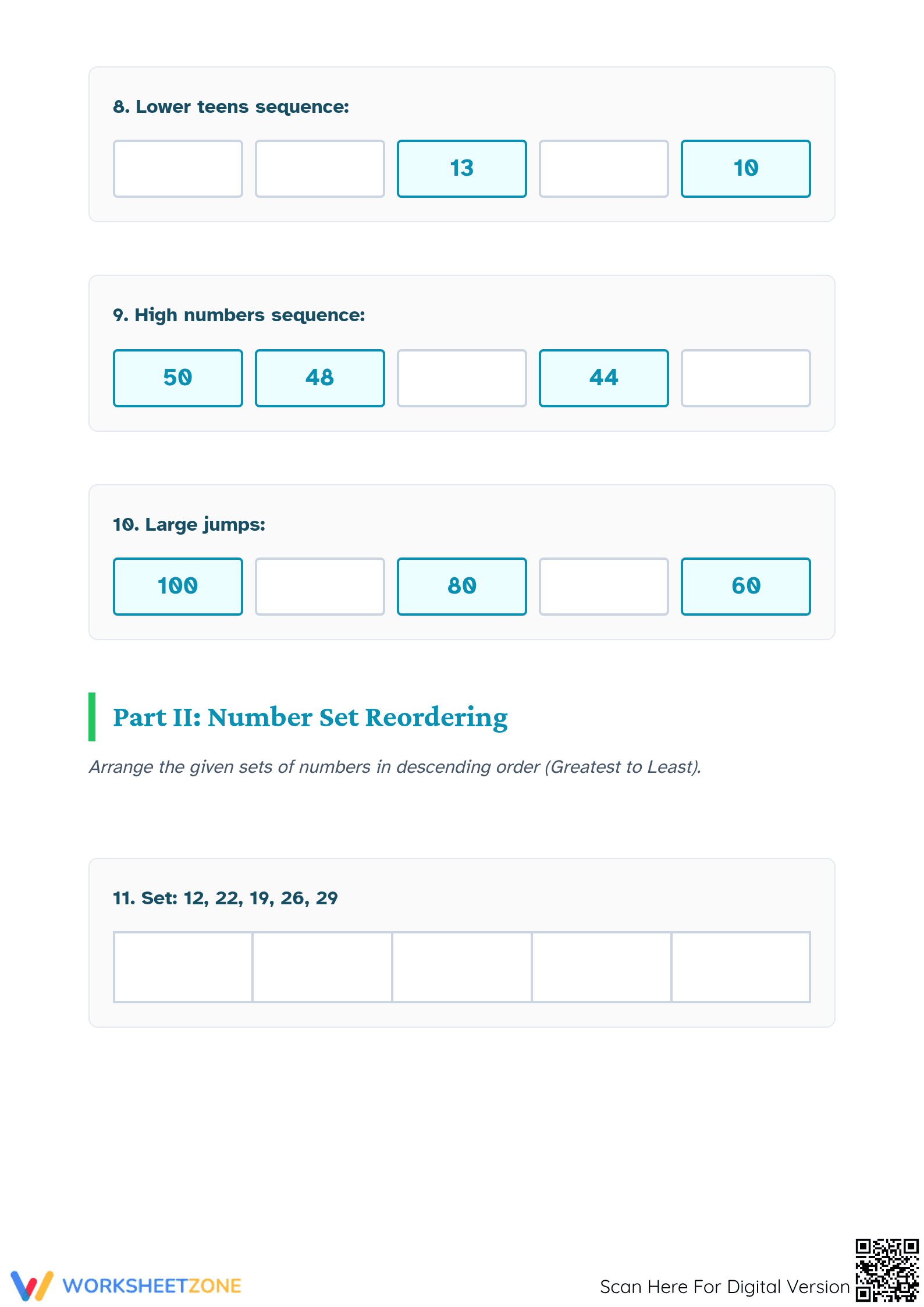
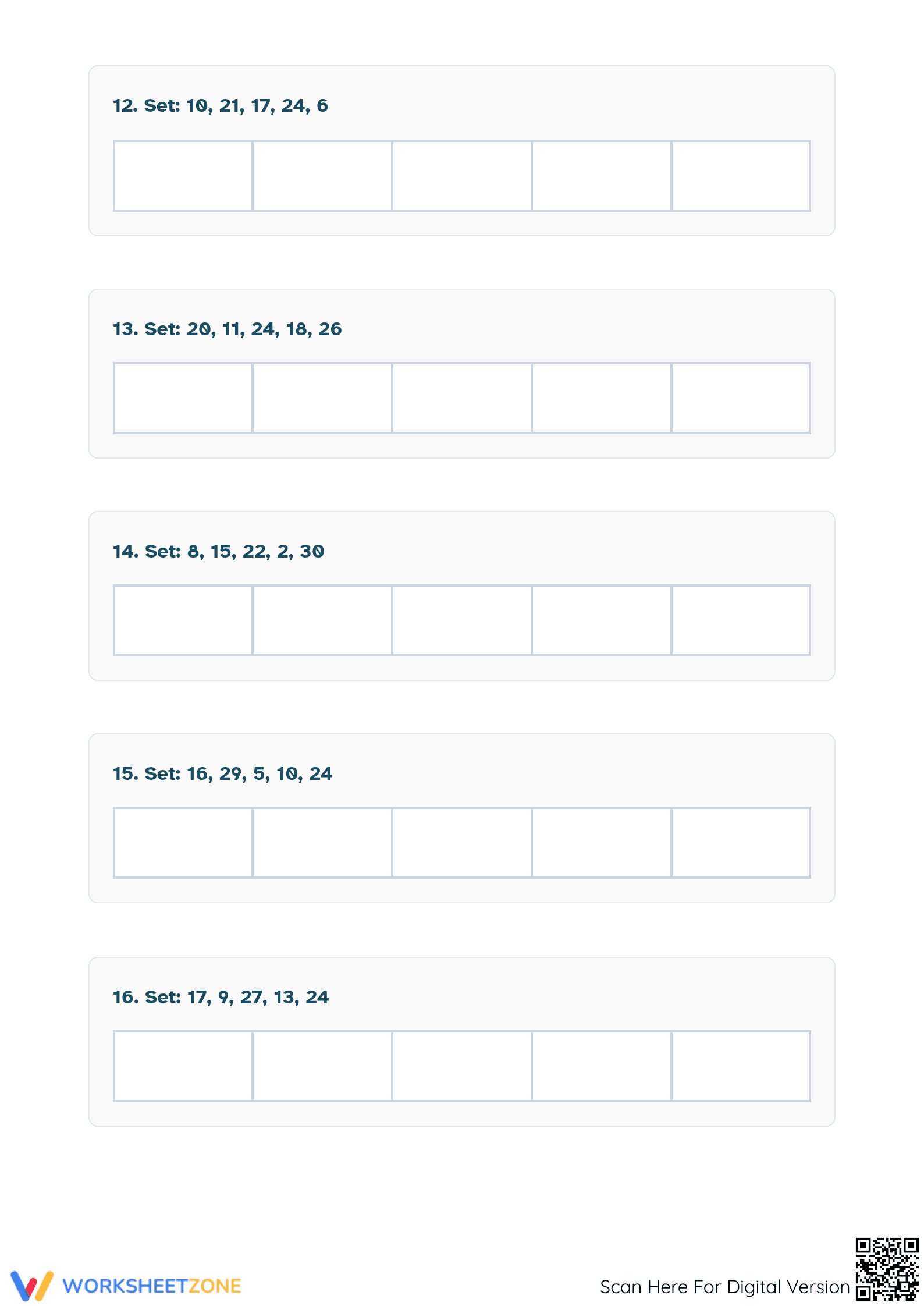
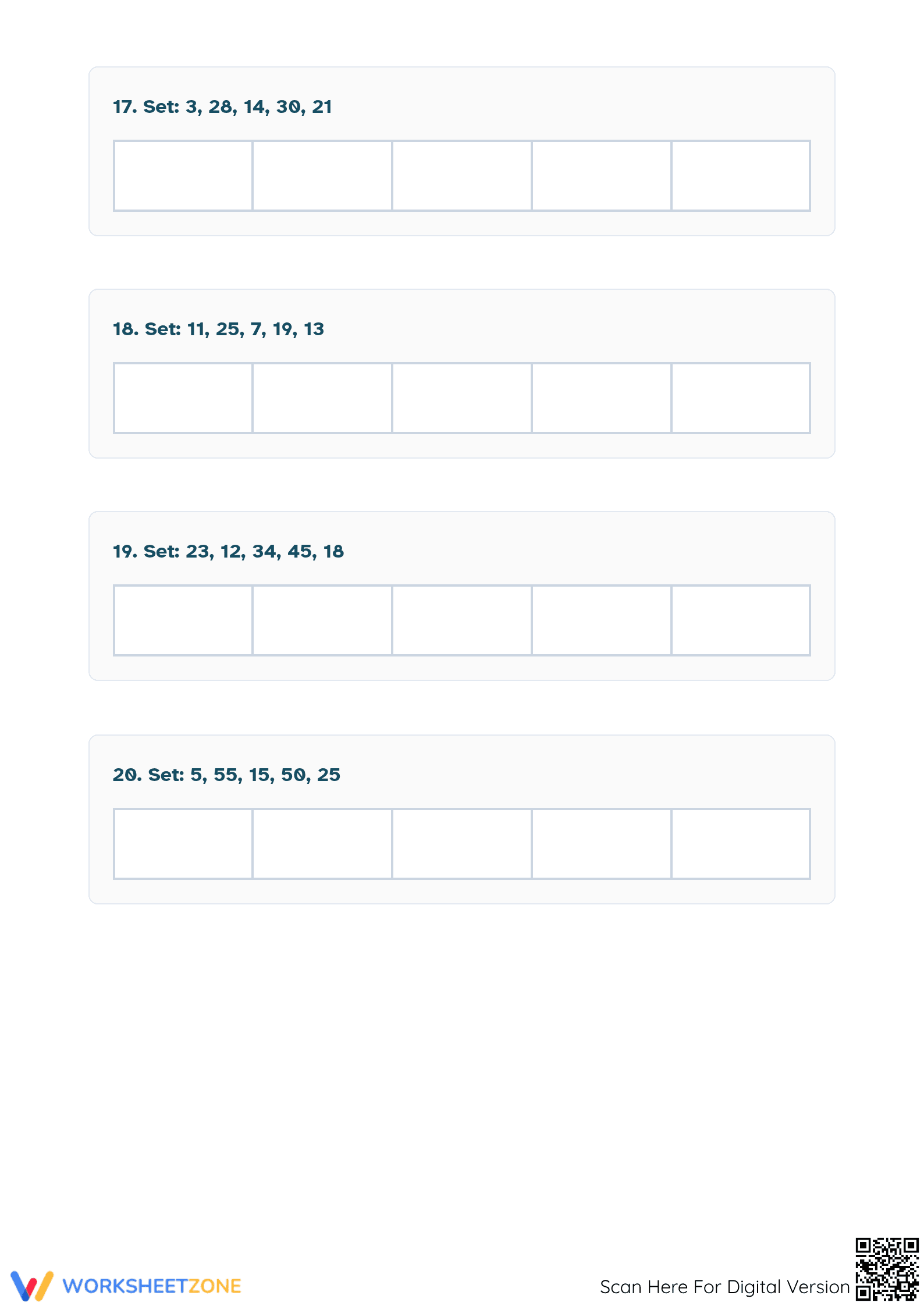
This 5-page PDF contains 50 structured problems designed to reinforce number sequencing. Each page presents a variety of number sets within the 1-30 range, requiring students to identify the highest value and arrange the subsequent numbers in descending order. The layout is clean and distraction-free, featuring large text for young learners. A complete answer key is provided, allowing for quick grading or student self-correction.
- Guided practice (15 problems) — Initial tasks provide number lines or visual cues to help students visualize the decreasing sequence before writing.
- Supported practice (20 problems) — Students work with sets of three to four numbers, arranging them with minimal prompts as they gain confidence in comparing values.
- Independent practice (15 problems) — The final set of tasks challenges students to order larger groups of numbers without scaffolds, ensuring total mastery of the concept.
This gradual release approach follows the I Do, We Do, You Do model, helping Grade 1 students transition from basic number recognition to fluent ordering.
Standards Alignment
The primary alignment is CCSS.MATH.CONTENT.1.NBT.B.3, which requires students to compare two two-digit numbers based on the meanings of the tens and ones digits. By ordering numbers in a descending sequence, students must repeatedly compare values and apply their knowledge of place value. This standard code can be copied directly into lesson plans, IEP goals, or district curriculum mapping tools.
How to Use It
Use this worksheet during the independent practice portion of a math lesson on number comparisons. It is particularly effective as a "Do Now" activity or a formative assessment to check for understanding after a direct instruction session. Teachers can observe how students handle the transition from single-digit to two-digit numbers (like 9 to 11) to identify any place-value misconceptions.
Who It's For
This resource is designed for first-grade students, but it also serves as an excellent intervention tool for second graders or an enrichment activity for advanced Kindergarteners. It pairs naturally with a classroom number line or base-ten blocks, which students can use to model the numbers before sequencing them on the page.
Effective math instruction relies on the gradual release of responsibility, a concept supported by Fisher & Frey (2014) which emphasizes moving from guided support to independent mastery. This descending order worksheet implements this pedagogical framework by structuring tasks that build place-value fluency within the 1-30 range. According to the NAEP 2022 Mathematics framework, early mastery of number properties and operations is a significant predictor of later achievement in algebra and complex problem-solving. By requiring students to compare and order numbers systematically, this resource addresses core competencies in number sense as outlined in current curriculum standards. The inclusion of 50 tasks across 5 pages provides the repetitive practice necessary for cognitive retrieval and long-term retention of sequencing skills. Teachers can integrate these printable pages into daily rotations to ensure all students meet the Grade 1 benchmark for comparing and ordering numbers based on place-value logic.


