


























Views
Downloads
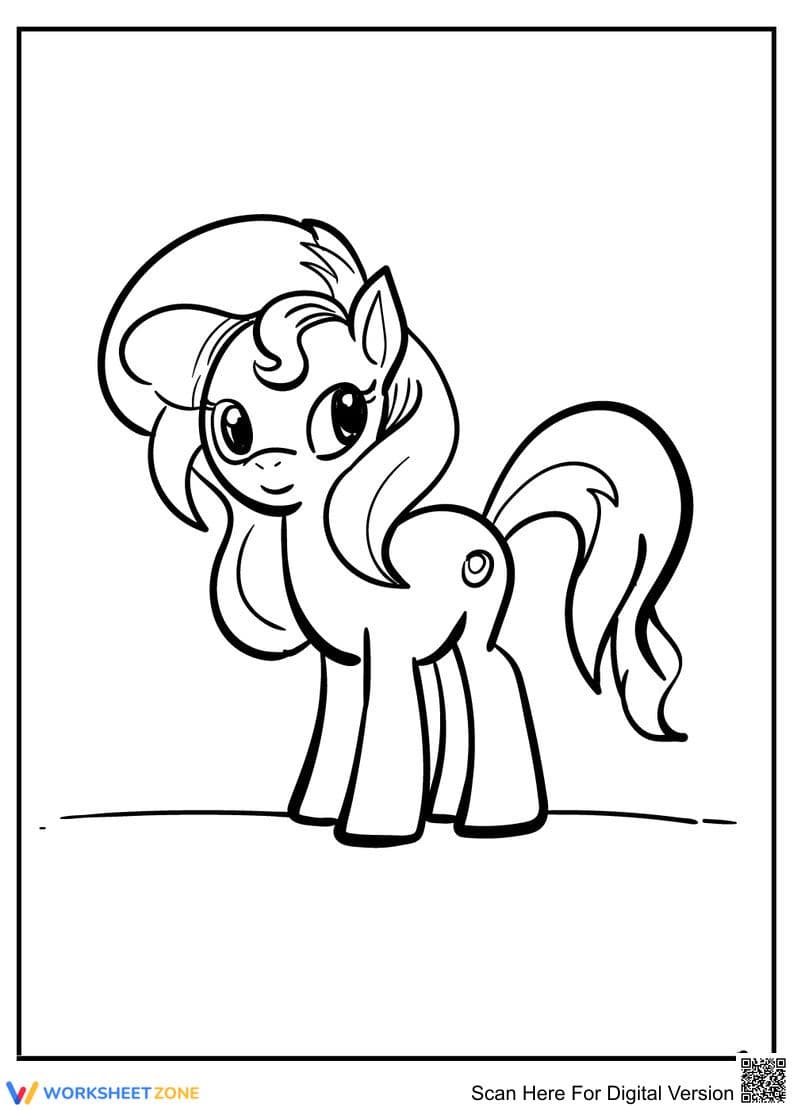

Cute Little Pony Coloring Page | Essential Printable
Paste this activity's link or code into your existing LMS (Google Classroom, Canvas, Teams, Schoology, Moodle, etc.).
Students can open and work on the activity right away, with no student login required.
You'll still be able to track student progress and results from your teacher account.
This printable coloring page provides a high-quality illustration of a pony to help young learners develop essential fine motor skills. By focusing on staying within lines and selecting colors, students build the hand-eye coordination necessary for early writing tasks. It serves as a creative outlet that supports artistic expression and concentration while providing a calming classroom environment.
At a Glance
- Grade: Kindergarten · Subject: Arts & English
- Standard:
CCSS.ELA-LITERACY.L.K.1.A— Print many upper- and lowercase letters (via fine motor control)- Skill Focus: Fine motor control and color recognition
- Format: 1 page · 1 task · No answer key · PDF
- Best For: Early finishers and morning work
- Time: 15–20 minutes
What's Inside
Inside this resource, you will find a single-page, high-resolution PDF featuring a clean line-art drawing of a stylized pony. The image is centered with ample white space to allow for additional drawing or background creation. There are no complex instructions, making it accessible for students to begin immediately without teacher intervention, ensuring a smooth transition between core subjects.
Zero-Prep Workflow
The workflow for this resource is designed for maximum efficiency in a busy classroom. First, print the single page (30 seconds). Second, distribute the sheets to students along with crayons or markers (1 minute). Third, allow students to work independently while you manage other classroom tasks or provide 1-on-1 support. Total teacher preparation time is under 2 minutes, making it an ideal sub-plan filler.
Standards Alignment
This activity aligns with `CCSS.ELA-LITERACY.L.K.1.A`, which focuses on the physical command of writing tools. While primarily an artistic task, the grip and pressure control practiced during coloring are foundational to letter formation and general literacy development. This standard code can be copied directly into lesson plans, IEP goals, or district curriculum mapping tools.
How to Use It
Use this worksheet as a bridge activity during transitions or as a reward for completing primary assignments. It is also an excellent formative assessment tool; observe how students hold their coloring utensils to identify those who may need additional occupational therapy support or pencil-grip corrections. Expected completion time ranges from 15 to 20 minutes depending on the student's detail level.
Who It's For
This resource is ideal for Kindergarten and First Grade students, as well as special education settings where fine motor development is a primary goal. It pairs naturally with a read-aloud story about animals or a basic lesson on the color wheel. It is also suitable for indoor recess or as a quiet-time activity for students who finish tests early.
According to the RAND AIRS 2024 report on early childhood development, the integration of low-stakes creative tasks like coloring is vital for developing the intrinsic motivation and manual dexterity required for later academic success. This worksheet targets CCSS.ELA-LITERACY.L.K.1.A by providing a structured environment for students to practice the physical command of conventions through the act of manipulating coloring tools. Research from Fisher & Frey (2014) emphasizes that gradual release of responsibility begins with tasks that students can navigate with high success rates, building the confidence necessary for complex literacy. By engaging with this 1-page pony illustration, learners refine their visual-motor integration, a skill that NAEP data suggests is a significant predictor of early reading and writing fluency. This resource provides a necessary scaffold for students who are still mastering the spatial awareness needed to navigate the page effectively during formal instruction.


