


























Views
Downloads
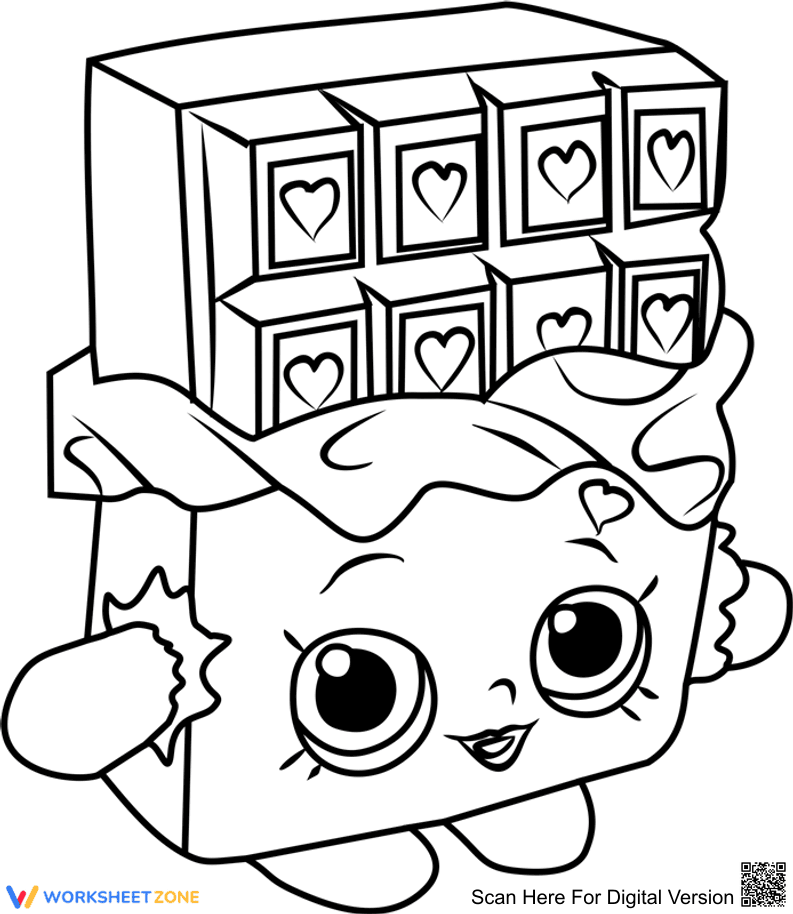

Shopkins Chocolate Coloring Page | Essential K-2 Art
Paste this activity's link or code into your existing LMS (Google Classroom, Canvas, Teams, Schoology, Moodle, etc.).
Students can open and work on the activity right away, with no student login required.
You'll still be able to track student progress and results from your teacher account.
This printable Shopkins chocolate coloring page provides early learners with a high-interest creative activity to develop essential fine motor control. By engaging with familiar characters, students practice hand-eye coordination and color selection in a low-stakes environment. This resource serves as an effective tool for transition periods or as a reward for completed academic tasks.
At a Glance
- Grade: Kindergarten · Subject: Arts & Crafts
- Standard:
CCSS.ELA-LITERACY.L.K.1.A— Print many upper- and lowercase letters through fine motor control- Skill Focus: Fine motor development and color recognition
- Format: 1 page · 1 task · No answer key required · PDF
- Best For: Early finisher activity or morning work
- Time: 15–20 minutes
What's Inside
This single-page PDF features a large, high-resolution line-art illustration of a popular chocolate-themed Shopkins character. The design includes bold outlines to assist younger students in staying within the lines, along with smaller detail areas like hearts and facial features to challenge more advanced motor skills. No additional teacher preparation is required beyond printing the document.
Zero-Prep Workflow
- Print: Select the single-page PDF and print enough copies for your group (30 seconds).
- Distribute: Provide the sheets along with crayons, markers, or colored pencils (1 minute).
- Review: Allow students to work independently while you conduct small-group instruction or manage administrative tasks (0 minutes prep).
Total teacher preparation time is under 2 minutes, making it an ideal emergency sub plan component.
Standards Alignment
The primary standard addressed is `CCSS.ELA-LITERACY.L.K.1.A`, which focuses on the physical mechanics of printing. While primarily an arts-based task, it supports early literacy by strengthening the intrinsic hand muscles necessary for writing. This standard code can be copied directly into lesson plans, IEP goals, or district curriculum mapping tools to document creative expression and fine motor progress.
How to Use It
Use this worksheet during the "You Do" phase of a fine motor lesson or as a quiet-time activity following lunch. It is particularly effective as a formative assessment tool; observe how students grip their coloring utensils and their ability to control strokes within defined boundaries. Expected completion time ranges from 15 to 20 minutes depending on the student's detail orientation.
Who It's For
This activity is designed for Kindergarten and Grade 1 students, though it remains popular through Grade 5 for Shopkins enthusiasts. It is an excellent resource for Occupational Therapy (OT) sessions or for students requiring sensory breaks. Pair this coloring page with a character-description writing prompt or a short story about the chocolate character to integrate ELA skills.
Research from Fisher & Frey (2014) emphasizes the importance of purposeful independent work that reinforces foundational skills without constant teacher intervention. Coloring activities, while often viewed as purely recreational, play a significant role in the development of the tripod grasp and visual-motor integration. According to the RAND AIRS 2024 report on early childhood education, high-interest visual materials increase student engagement and persistence in task completion. This Shopkins-themed worksheet aligns with CCSS.ELA-LITERACY.L.K.1.A by providing a structured yet creative outlet for imaginative play. By focusing on a single, recognizable character, the worksheet reduces cognitive load, allowing students to concentrate entirely on the physical mechanics of coloring. This balance of interest and skill-building is essential for developing the stamina required for later academic writing and complex artistic endeavors in primary education settings.


